

2024 Trax & Envista 1.2L E-Turbo: Problems, Identification, and Used Replacement
Identifying the 1.2L LIH engine, what causes catastrophic failure, and when to swap in a used OEM assembly.
- You must use GM-approved dexos1 Gen 3 oil to prevent the wet timing belt from degrading, which leads to catastrophic engine failure.
- Before purchasing a used engine, verify the 8th digit of the VIN is '2' and the RPO code 'LIH' is on the SPID label to ensure correct fitment.
- After installation, a Crankshaft Position (CKP) Sensor Variation Relearn and an ECM software update are mandatory and require a dealer-level scan tool.
- This LIH engine is not interchangeable with the 1.2L LBP, 1.3L L3T, or any older GM engines due to significant differences in mounting, wiring, and timing systems.
- If the original engine failed, the charge air cooler (intercooler) must be thoroughly flushed or replaced to prevent debris from destroying the replacement engine.
Engine Identification: Confirming the 1.2L LIH

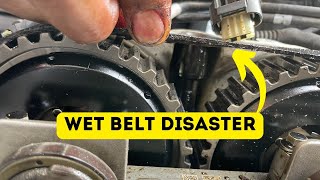
The engine used in the 2024 Chevrolet Trax and 2024 Buick Envista is a turbocharged 1.2-liter inline 3-cylinder known as the GM E-Turbo. Its specific engine code, or Regular Production Option (RPO) code, is LIH. This engine is part of the GM CSS Prime family and features direct injection and a timing belt that runs through engine oil, commonly called a "wet belt."
🎬 Watch: How wet timing belts work and why they fail| Family Name | GM CSS Prime / E-Turbo |
| Configuration | Inline 3-Cylinder (I3) |
| Displacement | 1.2 Liters |
| Aspiration | Turbocharged |
| RPO Code | LIH |
| Drivetrain | Front-Wheel Drive (FWD) |
How to Confirm Fitment
Before purchasing a used engine, you must verify it is the correct one for your vehicle. Mismatched engines can lead to significant installation problems with wiring, mounting, and internal components. A pre-purchase verification interview with your parts supplier is an industry best practice to ensure you get the exact match.
- Check the VIN: The 8th digit of your vehicle's Vehicle Identification Number (VIN) must be a '2'.
- Confirm the RPO Code: Locate the Service Parts Identification (SPID) label, often found in the glove box or trunk area. This label lists all the three-digit RPO codes for your vehicle's factory options. Ensure 'LIH' is on this list.
- Verify Drivetrain: This engine is only for Front-Wheel Drive (FWD) models.
Pro Tip: The engine's broadcast code is printed on a barcode label on the front engine cover, between the two camshaft position (CMP) actuators. This can be a final check to identify the unit.
Interchange and Compatibility
This specific 1.2L LIH engine fits:
- 2024 Buick Envista (FWD)
- 2024 Chevrolet Trax (FWD)
Warning: This engine is NOT interchangeable with other similar-looking GM engines. Key differences in mounting, wiring, and timing systems make them incompatible. Do not attempt to use:
- The 1.2L LBP engine
- The 1.3L L3T engine (which uses a timing chain)
- Any older generation GM 1.2L or 1.4L engines
What Comes With a Used Replacement Engine?
When buying a used OEM engine assembly from a professional auto recycler, it typically follows Automotive Recyclers Association (ARA) standards. Knowing what is included helps you plan your installation.
| Usually Included | Engine block, cylinder head, internally lubricated parts, oil pan, valve covers, intake manifold, timing covers, fuel injectors, fuel rail, throttle body, harmonic balancer, and the integral engine wiring harness. |
| Not Included | A/C compressor, starter motor, alternator, exhaust manifold, and power steering pump. You will need to transfer these from your old engine. |
Common Failure Symptoms

A failing 1.2L LIH engine can present several distinct symptoms. Recent class-action lawsuits allege that these engines may have defects leading to premature failure. 🎬 Watch: 5 most common problems with the new Trax Symptoms reported by owners include a sudden loss of power, loud knocking or banging sounds, and the engine stalling, sometimes followed by a complete inability to restart.
- Catastrophic Engine Failure: A loud bang or pop, followed by a complete loss of power and significant oil leaks, often points to a thrown connecting rod piercing the engine block.
- Engine Knock or Rough Idle: A persistent engine knock, especially after an auto-stop event, could be related to a spark timing issue addressed by a recall. Rough idling can also be caused by carbon buildup on intake valves or a faulty evaporative emissions purge pump.
- No-Start Condition: An engine that cranks smoothly but doesn't start may have a broken timing belt or a failed camshaft-driven vacuum pump, which can cause the belt to fail.
- Low Oil Pressure Warning: Illumination of the oil pressure light, along with diagnostic trouble codes like P0521, P06DD, or P06DE, can indicate debris in the oil pressure control solenoid valve.
Diagnostic Flowchart
Known Problems, Recalls, and Technical Service Bulletins (TSBs)
Several official documents from GM address known issues with the 1.2L LIH engine. Always check with a GM dealer to see if a specific recall or special coverage applies to your vehicle's VIN.
Voluntary Emission Recall A242435780: Engine Spark Timing
This recall applies to certain 2024 Trax and Envista models. The Engine Control Module (ECM) software may incorrectly manage spark timing after an engine auto-stop event, causing a rough idle, engine knock, and illuminating the check engine light. In some cases, driving with this condition can lead to engine damage. The fix is a simple ECM reprogram performed by a dealer.
Warning: Wet Timing Belt (Belt-in-Oil) Degradation
A critical issue for this engine family is the degradation of the wet timing belt. This belt runs inside the engine and is lubricated by engine oil. Using oil that is not certified to GM's dexos1 Gen 3 specification can cause the belt material to swell, crack, or fray. This leads to catastrophic engine failure when the belt breaks. Strict adherence to oil specifications and change intervals is mandatory.
TSB PIP5932 / 24-NA-021: Oil Pressure Sensor & Solenoid Debris
This bulletin addresses issues in 2023-2024 models where the check engine light illuminates with oil pressure-related codes (P0521, P06DD, P06DE). Technicians are instructed to inspect the oil pressure control solenoid valve for debris, check the wiring harness for proper terminal tension, and perform an engine oil pump screening test.
TSB PIP5739: Incorrect Oil Pan Sealant Application
Affecting 2020 and newer models, this TSB warns technicians to be extremely precise when applying RTV sealant to the oil pan. An exact 4 mm (0.16 in) bead must be centered exactly on the groove of the lower crankcase extension. Using too much RTV or applying it incorrectly can cause excess sealant to break off and clog the oil pump pickup screen, starving the engine of oil.
TSB 20-NA-084: Normal Engine Thudding Noise
This bulletin, covering 2020-2024 models, documents a normal characteristic of the LIH engine. Some customers may report a deep thudding noise under 2,000 RPM during cold acceleration. GM states this is an inherent design characteristic and not a sign of a problem.
Special Coverage N232395310 & N232407740
A faulty evaporative emissions purge pump can cause the check engine light to come on. GM extended the warranty coverage for this specific part to 15 years or 150,000 miles under Special Coverage N232395310. Additionally, early production 2020 models with the 1.2L engine were subject to a special coverage program (N232407740) for potential turbocharger failure.
What Fails at Every Mileage Band
Pro Tip: The mileage bands below describe what to expect from USED REPLACEMENT UNITS of that mileage. The checklists provided are things to do WHILE INSTALLING the purchased engine, not general maintenance for your current vehicle.
Under 60,000 Miles
Even at low mileage, catastrophic failures have been reported. A class-action lawsuit alleges that some 2024 models may experience connecting rod failure as early as 11,581 miles. Owner reports also note turbo failures around 20,000 miles and evaporative emissions system issues around 11,000 miles. Electrical issues, such as the infotainment screen freezing, are also common but usually resolved with software updates.
- ✓Do during install (required): Verify all software-related recalls, especially Recall A242435780 for spark timing, have been performed. Perform a mandatory Crankshaft Position (CKP) Sensor Variation Relearn procedure. Use only GM-approved dexos1 Gen 3 full synthetic oil and a new OEM oil filter. Replace all single-use Torque-to-Yield (TTY) bolts.
- ✓Do during install (recommended): Inspect the turbocharger for any signs of oil leakage or shaft play, especially on early production units.
- ✓Cheap insurance while the engine is out: Inspect the wet timing belt through the oil fill port for any early signs of fraying or cracking.
60,000 to 100,000 Miles
The wet timing belt is a primary concern in this range. While GM's official replacement interval is 150,000 miles, many mechanics recommend replacing it between 60,000 and 75,000 miles to prevent degradation. Belt degradation contaminates the oil, leading to clogged passages and oil pump failure. Carbon buildup on intake valves also starts causing rough idling or power loss in this range. A head gasket leak was reported on a 2024 Trax at 70,000 miles, though this is rare.
- ✓Do during install (required): Flush the engine oil and coolant systems thoroughly. Replace all associated gaskets and seals, including the intake manifold, exhaust manifold, and turbo mounting gaskets.
- ✓Do during install (recommended): Perform an intake valve cleaning (walnut blasting) to remove carbon deposits. Replace the spark plugs.
- ✓Cheap insurance while the engine is out: Strongly consider replacing the wet timing belt and oil pump belt. Many experts advise against following the 150,000-mile interval and suggest replacement around 75,000 miles or sooner.
100,000 to 150,000 Miles
This is considered high mileage for the 1.2L LIH engine. Failures are highly likely if maintenance, especially oil changes with the correct dexos1 Gen 3 oil, has been neglected. The risk of wet timing belt failure is critical if it hasn't been replaced. Turbocharger wear and oil consumption are also common. Many independent mechanics are skeptical that this engine will last much beyond 150,000 miles without major repairs.
- ✓Do during install (required): Mandatory replacement of the wet timing belt and oil pump belt is required. Do not install a used engine in this mileage band without replacing them. Replace all accessible seals and gaskets to prevent leaks, including the front crankshaft seal and valve cover gasket.
- ✓Do during install (recommended): Assume the turbocharger has significant wear. A thorough inspection is critical, and replacement should be considered.
- ✓Cheap insurance while the engine is out: Perform a comprehensive service including intake valve cleaning, new spark plugs, all filters (oil, air), and all fluids (oil, coolant, transmission fluid).
Real Owner Experiences
The following table highlights real-world failures reported by owners of vehicles equipped with the 1.2L LIH engine.
| Source | Mileage | What Happened | Cost |
|---|---|---|---|
| carcomplaints.com | 11,581 | A 2024 Chevrolet Trax experienced a reduced engine power message, loud knocking, and stalling. The dealership diagnosed a broken connecting rod requiring a full engine replacement. | Warranty |
| Reddit r/buickenvista | 20,000 | The turbo went out on a 2025 Buick Envista. | Warranty |
| Reddit r/AskMechanics | 37,000 | A 2024 Buick Envista experienced catastrophic engine failure with holes on both sides of the block after previously having the torque converter replaced. | Warranty |
| Reddit r/ChevyTrax | ~23,500 | Owner heard a loud bang, the engine was smoking with a burnt oil smell, and the car became undrivable. A month later, it was determined the camshaft needed to be replaced. | Warranty |
| Reddit r/ChevyTrax | 62,000 | A high-mileage driver reported zero major engine issues after one year, having only performed regular oil changes every 5,000-7,000 miles. | N/A (Preventative Maintenance) |
| Reddit r/ChevyTrax | 70,000 | Owner reported a head gasket leak. | Not specified |
| Reddit r/Opel (Astra K with same engine) | ~60,000 | Owner reported absolutely no problems with the engine, noting it still felt powerful. | N/A |
| YouTube Commentator | 100,000+ | Some examples of the 1.2L LIH in the Encore GX (in use since 2020) have been seen with over 100,000 miles without issues. | N/A |
| 37,000 | Owner reported a loud boom while accelerating, followed by total loss of function. The dealer found holes on both sides of the engine block. This occurred after previous visits for acceleration issues (diagnosed as a bad torque converter) and fluid leaks. | $0 | |
| 455 | Engine light came on, followed by the engine shutting off and leaking all of its oil. A tow truck driver observed a connecting rod had gone through the oil pan. The dealer confirmed a cracked engine block and replaced it under warranty. | $0 | |
| 3,800 | Owner reported a lemon law claim after the engine blew and that no replacement engines were available, suggesting a high demand for them. | $0 | |
| 48,000 | The turbo failed and was replaced under the powertrain warranty. The owner was quoted over $3,500 for an out-of-warranty turbo replacement and decided to trade the vehicle to avoid future costs. The quoted repair cost does not include labor, which was estimated at 10-12 hours. | $0 (Warranty) |
Repair or Replace?

When facing engine trouble, deciding whether to repair your current engine or replace it with a used OEM assembly comes down to the type of failure and the associated costs.
- Wet Timing Belt Replacement: If the belt hasn't broken, replacing it is a maintenance item. Typical repair costs range from $700 to $1,287. This makes sense if the engine is otherwise healthy.
- Turbocharger Failure: Replacing a turbocharger typically costs between $2,000 and $4,000+. One owner was quoted over $3,500 for the part alone, with labor adding 10-12 hours. Repair makes sense only if the engine hasn't been starved of oil or ingested metal debris.
- Intake Valve Carbon Buildup: Cleaning the valves typically costs $400 to $800. This is a standard maintenance task for direct-injection engines and does not require engine replacement.
When Replacement is Smarter: Replacing the engine is the best option when catastrophic failure has occurred. If a connecting rod breaks and punctures the engine block, if the block is cracked, or if severe internal damage results from a broken timing belt or oil starvation, rebuilding is too expensive. Used replacement units typically run $600 to $2,700, while a new OEM assembly exceeds $4,500. With shop labor estimated at $1,200 to $3,000 (10 to 18 hours), swapping in a low-mileage used assembly is often the most economical choice for severe failures.
Installation & Post-Install Programming
Required Tools and Consumables
Installing the 1.2L LIH engine is an expert-level job that requires specific GM special tools:
- EN-52458 Variable Camshaft Phaser Holding Tool
- EN-52455 (or Tool 122920) Camshaft Turning Wrench
- EN-52476 Flywheel Locking Tool
- EN-52432 Front Crankshaft Seal Installation Tool
- EN-955-A / EN-955-10-A Timing belt and chain tensioner fixing pins
- A GM-compatible diagnostic scan tool (GDS2 / Techline Connect / MDI 2)
You will also need the following consumables at the time of installation:
- 4.2 quarts of GM-approved dexos1 Gen 3 Full Synthetic 0W-20 or 5W-30 oil
- New OEM ACDelco oil filter (PF64 or equivalent)
- GM-approved Dex-Cool coolant
- Three (3) new OE-spec spark plugs
- Intake manifold gasket set and exhaust manifold gasket
- Turbocharger mounting gasket and oil feed/return line seals
- Front crankshaft seal
- GM-approved high-temperature RTV sealant
Key Installation Steps & 'Gotchas'
Proper installation is critical to the longevity of the replacement engine. Technicians should pay special attention to the following points:
- Inspect the Wet Belt: Before installation, look through the oil filler opening to inspect the condition of the timing belt on the used engine. Check for any signs of cracking, fraying, or swelling.
- Apply RTV Sealant Correctly: Follow the procedure in TSB PIP5739. Use a precise 4mm bead of GM-approved RTV sealant in the oil pan groove to prevent oil starvation.
- Replace Turbo Seals: Always install new gaskets and seals for the turbocharger oil feed and return lines. Reusing old seals can cause immediate oil leaks and lead to turbo failure.
- Flush the Intercooler: If the original engine failed, its intercooler (also called a charge air cooler) is likely contaminated with metal debris and oil. This must be thoroughly flushed or replaced to avoid sending debris into the new engine.
- Do Not Reuse TTY Bolts: Torque-to-Yield bolts, such as those for the cylinder head, harmonic balancer, and camshaft phasers, are single-use and must be replaced.
- Inspect the Vacuum Pump: Inspect the transferred mechanical vacuum pump for smooth operation and debris to prevent camshaft or timing belt breakage.
- Harness Routing: Ensure harness routing around the oil pressure sensor and connector X125 is secure to prevent wiring issues noted in TSB PIP5932.
Questions to Ask Your Installer
To ensure a successful swap, ask your mechanic these questions before work begins:
- Have you inspected the wet timing belt on the used engine for any signs of fraying, cracking, or degradation?
- Will you be replacing all single-use Torque-to-Yield (TTY) bolts as per factory procedure?
- Can you confirm you will be using GM-certified dexos1 Gen 3 oil and a new OEM filter?
- Will you be performing the mandatory Crankshaft Position (CKP) Sensor Variation Relearn procedure after installation?
- Will you be checking for and installing any required ECM software updates, including for Recall A242435780?
- How will you be cleaning and flushing the charge air cooler (intercooler) and lines to remove debris from the previous engine's failure?
- Will you replace the turbocharger oil feed and return line seals?
- What is your procedure for applying RTV sealant to the oil pan to avoid excess material clogging the oil pickup?
Required Post-Installation Programming
After the mechanical installation is complete, the vehicle's computers must be programmed for the new engine. This is not optional and requires a dealer-level scan tool.
- Crankshaft Position (CKP) Sensor Variation Relearn: This procedure calibrates the engine computer to the precise position of the new engine's crankshaft. Skipping this step will cause persistent misfires and a rough idle.
- ECM Software Update: The Engine Control Module (ECM) must be flashed with the latest software, which includes the fix for Recall A242435780, and re-married to the vehicle's immobilizer system.
Freight & Delivery Reality

When ordering a used 1.2L LIH engine assembly, it is important to understand how it will arrive. Verified shipping data shows this engine assembly weighs approximately 198 lbs and measures roughly 31" x 31" x 28" before crating. Because of its size and weight, it ships as Less-Than-Truckload (LTL) freight on a wooden pallet—it is NOT a standard parcel delivery.
You or your shop must be prepared to receive a freight shipment. If delivering to a residential address or a shop without a loading dock, you must request a truck with a liftgate. Always inspect the engine and the pallet for any signs of damage before signing the delivery receipt. Signing without noting damage can void your ability to file a freight claim.
Before the First Start: Priming and Fluids
When installing a used engine, it has likely been sitting dry for weeks or months. You must add fresh fluids and prime the oil system before letting the engine actually run. This prevents a "dry start," which can instantly ruin the internal bearings and the turbocharger.
Mandatory Fresh Fluids
Never reuse old fluids. You must install a new oil filter and fill the engine with the correct, factory-approved fluids:
- Engine Oil: Use only oil that meets the GM dexos1 Gen 3 specification. Check the oil fill cap for the exact weight (typically 5W-20 for the 1.2L LIH).
- Coolant: Use only DEX-COOL antifreeze mixed 50/50 with clean, drinkable water (or buy pre-mixed). Using the wrong coolant can clog the system and cause the engine to overheat.
Oil Priming Procedure (Crank Without Start)
You must build oil pressure before the engine fires up. Follow these steps to safely prime the system:
- Disable the fuel system: Remove the fuel pump fuse or relay from the fuse box. This stops fuel from entering the engine.
- Disable the ignition: Unplug the ignition coils so the spark plugs cannot fire.
- Crank the engine: Turn the key or press the start button to crank the engine for 10 to 15 seconds.
- Wait and repeat: Let the starter motor cool down for one minute. Crank the engine again for another 10 to 15 seconds. Check the dashboard for the oil pressure warning light to turn off, which means oil is flowing.
- Reconnect and start: Plug the ignition coils back in and reinstall the fuel pump fuse. The engine is now safe to start.
Frequently Asked Questions (FAQ)
What is the most common cause of catastrophic failure for the 1.2L LIH engine?
The two most widely reported causes are internal failure from a broken connecting rod and timing belt failure. The timing belt is a known weak point if incorrect engine oil is used, as it can degrade the belt material and cause it to snap, resulting in severe internal engine damage.
Is it safe to reuse the turbocharger from my old engine?
It is risky. If the original engine failed due to oil starvation or internal debris, the turbocharger was likely damaged as well. If you must reuse it, ensure the charge air cooler, oil feed lines, and oil return lines are perfectly clean or replaced to prevent debris from destroying the replacement engine.
Does this engine require a computer "relearn" after installation?
Yes, a Crankshaft Position (CKP) Sensor Variation Relearn procedure is mandatory. Failure to perform this step with a compatible scan tool will result in rough running, misfire codes, and poor performance.
What kind of oil must I use in the 1.2L LIH engine?
You must use exactly 4.2 quarts of GM-approved dexos1 Gen 3 Full Synthetic 0W-20 or 5W-30 oil. Using generic or non-certified oil chemically degrades the wet timing belt, leading to engine failure.
Can I use an older 1.2L engine to replace my 2024 LIH engine?
No. The 1.2L LIH engine is not interchangeable with older GM 1.2L engines, the 1.2L LBP, or the 1.3L L3T due to major differences in mounting, wiring, and timing belt/chain configurations.
How long is the 1.2L LIH engine expected to last?
While GM specifies a timing belt interval of 150,000 miles, many independent mechanics suggest a realistic lifespan might be around 150,000 miles before major repairs are needed. Longevity is heavily dependent on strict adherence to oil changes using the correct dexos1 Gen 3 oil.
Helpful Videos




Technical Specifications
Family Name: GM CSS Prime / E-Turbo; Configuration: Inline 3-Cylinder (I3); Displacement: 1.2 Liters; Aspiration: Turbocharged; RPO Code: LIH; Drivetrain: Front-Wheel Drive (FWD); Timing System: Wet Belt (Belt-in-Oil); Oil Specification: dexos1 Gen 3; Oil Capacity: 4.2 quarts; Shipping Weight: ~198 lbs
We Have This Part in Stock


The information in this article is provided for general reference and educational purposes only. Vehicle specifications, procedures, and part compatibility can vary by production date, trim level, and region. Always consult your vehicle's factory service manual and verify part numbers before purchasing or performing repairs. Safety-critical components such as airbags, seat belts, and braking systems should be installed by a qualified professional.
- Chevrolet Trax:
- Buick Envista:
- 🎬 Helpful Videos
- 🛍️ Shop This Part
- Engine Identification: Confirming the 1.2L LIH
- How to Confirm Fitment
- Interchange and Compatibility
- What Comes With a Used Replacement Engine?
- Common Failure Symptoms
- Diagnostic Flowchart
- Known Problems, Recalls, and Technical Service Bulletins (TSBs)
- Voluntary Emission Recall A242435780: Engine Spark Timing
- TSB PIP5932 / 24-NA-021: Oil Pressure Sensor & Solenoid Debris
- TSB PIP5739: Incorrect Oil Pan Sealant Application
- TSB 20-NA-084: Normal Engine Thudding Noise
- Special Coverage N232395310 & N232407740
- What Fails at Every Mileage Band
- Under 60,000 Miles
- 60,000 to 100,000 Miles
- 100,000 to 150,000 Miles
- Real Owner Experiences
- Repair or Replace?
- Installation & Post-Install Programming
- Required Tools and Consumables
- Key Installation Steps & 'Gotchas'
- Questions to Ask Your Installer
- Required Post-Installation Programming
- Freight & Delivery Reality
- Before the First Start: Priming and Fluids
- Mandatory Fresh Fluids
- Oil Priming Procedure (Crank Without Start)
- Frequently Asked Questions (FAQ)
- 🎟️ Get 5% Off