

2014-2019 Cadillac CTS 3.6L Twin-Turbo V6 (LF3): Problems, Identification, and Used Replacement
Identify the LF3 twin-turbo V6, learn what causes timing chain failure, and know exactly when to replace it with a used OEM unit.
- The most significant failure is timing chain stretch; it is critical to replace the timing chain kit on any used LF3 engine before installation to prevent catastrophic failure.
- The LF3 engine for the CTS is not interchangeable with other GM 3.6L V6s, including the transverse-mounted LF3 from the XTS V-Sport or the higher-performance LF4 from the ATS-V.
- Always verify you are ordering the correct engine by checking that the 8th digit of the VIN is '8' and confirming the LF3 code on the timing cover label.
- Used engine assemblies are sold without turbochargers; you must transfer your old ones, and they must be inspected for damage or replaced to avoid contaminating the new engine.
- For 2014-2015 models, check for the critical safety recall (NHTSA 20V-038) related to rear differential lockup, which is a separate but crucial issue for the vehicle.
Engine Identification: Confirming the LF3 V6

The engine used in the 2014-2019 Cadillac CTS V-Sport is the 3.6L twin-turbocharged V6, known by its Regular Production Option (RPO) code LF3. This is a direct-injected, dual overhead cam (DOHC), 24-valve engine with Variable Valve Timing (VVT). It is part of the GM High Feature V6 family and was specifically engineered for high performance in rear-wheel drive (RWD) and all-wheel drive (AWD) luxury sedans.
To ensure you are ordering the correct engine for your vehicle, use these key identifiers:
- VIN Check: The 8th digit of your vehicle's 17-digit Vehicle Identification Number (VIN) must be an '8'.
- Engine Code Label: A white adhesive label on the front timing cover (driver's side), near the oil filler neck, will identify the engine code as LF3.
- Block Stamping: The physical engine number is stamped on the cylinder block itself, located under the exhaust manifold on the rear driver's side.
Warning: This engine is not interchangeable with other GM 3.6L V6 engines. Do not order this engine if you have:
- A Cadillac XTS V-Sport: The XTS uses a transverse (sideways) mounted version of the LF3. Its engine block, oil pan, mounting brackets, wiring harness, accessory drive, and ECU calibration are different and will not work in a CTS.
- A Cadillac ATS-V: The ATS-V uses the higher-performance LF4 engine, which has different turbochargers, connecting rods, and other internal components.
- A naturally aspirated (non-turbo) Cadillac CTS: Standard CTS models with a 3.6L V6 use the LFX or LGX engines, which are completely different. Do not confuse it with the 2.0L Turbo (LTG) either.
Common Symptoms of a Failing LF3 Engine

Several signs can indicate a serious problem with your LF3 engine. While some issues can be repaired, others may signal that a complete engine replacement is the most cost-effective solution.
- Engine Rattle on Startup: A distinct rattling or clattering sound from the front of the engine, especially when cold, is a classic symptom of stretched timing chains. This noise is caused by the loose chain slapping against its plastic guides. 🎬 Watch: Cadillac CTS timing chain replacement walkthrough
- Rough Idle and Misfires: The engine may shake, stumble, or run poorly at idle or during acceleration. This can be caused by stretched timing chains throwing off engine timing, or by heavy carbon buildup on the intake valves, a common issue with direct-injected engines.
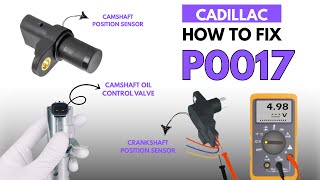
- Check Engine Light: A stretched timing chain will eventually cause the camshaft and crankshaft position sensors to disagree, triggering diagnostic trouble codes (DTCs) like P0008, P0009, P0016, P0017, P0018, or P0019. 🎬 Watch: How to diagnose and fix the P0017 error code A general misfire code (P0300) is also common.
- High Oil Consumption: Some LF3 engines may consume oil, requiring frequent top-offs between oil changes. Running the engine low on oil accelerates wear on all internal components, especially the timing chains.
- Metal Shavings in Oil: Finding metallic particles in the engine oil during an oil change is a sign of severe internal wear, often from the timing chain or other components disintegrating. This usually indicates the engine is beyond simple repair.
Diagnostic Flowchart
Known Problems, Recalls, and Service Bulletins
The LF3 engine and the CTS platform have several well-documented issues. Always check for open recalls using your vehicle's VIN on the manufacturer's website or the NHTSA database.
Severe Issues
Timing Chain Stretch & Wear (2014-2019): This is the most significant known issue. The primary and secondary timing chains can stretch over time, exacerbated by long oil change intervals. This leads to rattling noises, rough running, and eventually catastrophic engine failure if a chain breaks. It is strongly recommended to replace the timing chains, tensioners, and guides on any used LF3 engine before installation.
Warning: Critical Safety Recall - Rear Differential Lockup (NHTSA 20V-038)
This critical safety recall affects 2014-2015 Cadillac CTS V-Sport models. Roll pins inside the rear differential can fracture, potentially causing the rear wheels to lock up while driving and increasing the risk of a crash. The remedy is a complete replacement of the rear axle differential by a dealer. This issue is specific to the differential, not the engine itself, but is a crucial check for any V-Sport owner in this year range. (NHTSA Campaign 20V038000)
Moderate to Minor Issues
Intake Valve Carbon Buildup (2014-2019): Because the LF3 is a direct-injection engine, fuel is sprayed directly into the cylinders, not over the intake valves. This means oil vapor from the PCV (Positive Crankcase Ventilation) system can bake onto the back of the hot intake valves, forming hard carbon deposits. Over time, these deposits restrict airflow, causing misfires and a rough idle. The only effective remedy is manual cleaning (e.g., walnut blasting) of the valves.
Transmission Shudder (TSB 18-NA-355): Owners of vehicles equipped with the 8-speed automatic transmission (8L45/8L90) may experience a shudder or vibration that feels like driving over rumble strips, especially during light acceleration. This is a known issue with the original transmission fluid. The official fix is to perform a complete transmission fluid flush and replace the old fluid with Mobil 1 Synthetic LV ATF HP.
Turbocharger Wastegate Actuator Rattle (2014-2015): A buzzing or rattling noise may be heard from the turbo wastegate actuators. GM has stated that a brief rattle on a cold start is considered normal. However, persistent buzzing during operation may indicate failing actuators that need replacement.
Cold Start Misfires (PI1234): Some 2014-2015 CTS models may experience rough running or misfires on a cold start, particularly with seasonal fuel blend changes. This issue, related to stale summer-blend fuel, can often be resolved by filling the tank with fresh fuel and driving the vehicle for 20 miles.
Incorrect Turbo Vacuum Hose Routing (Service Update Bulletin 13239): Originally noted for the 2014 Cadillac XTS (LF3), this highlights a family-wide sensitivity. Inspect and reroute vacuum hoses to prevent the wastegate from remaining open.
What Fails at Every Mileage Band
Pro Tip: The mileage bands below describe what to expect from used replacement units of that mileage. The checklists provided are things to do WHILE INSTALLING the purchased engine, not routine maintenance for your current engine.
Under 60,000 Miles
Engines in this range are generally healthy but may show early signs of common platform issues. You might see early signs of transmission shudder (torque converter related, addressed by TSB 18-NA-355), turbocharger wastegate actuator rattle on cold starts (especially 2014-2015 models), or rough idle/hesitation that is difficult to diagnose without fault codes.
- ✓Do during install (required): Perform a thorough visual inspection of all gaskets for any leaks.
- ✓Do during install (recommended): Consider a preventative transmission fluid flush with the updated fluid if records are unavailable. Inspect turbo wastegate actuators for excessive play.
- ✓Cheap insurance while the engine is out: Change oil and filter with high-quality full synthetic dexos1-spec oil.
60,000 - 100,000 Miles
This is the critical window where timing chain stretch and wear becomes a prominent concern, especially if previous owners extended their oil change intervals. Intake valve carbon buildup also begins to reduce performance. Water pump and thermostat failures start appearing.
- ✓Do during install (required): Replace the timing chain kit (chains, guides, tensioners) as a preventative measure.
- ✓Do during install (recommended): Perform a manual cleaning (walnut blasting) of the intake valves to remove carbon buildup. Replace the water pump and thermostat while access is easy.
- ✓Cheap insurance while the engine is out: Replace all spark plugs and inspect ignition coils. Replace all accessible seals and gaskets, including valve cover gaskets, intake gaskets, and the rear main seal.
100,000 - 150,000 Miles
Engines in this band have a high probability of timing chain failure if the chains have not already been replaced. Turbocharger failure becomes much more likely due to age and heat cycles, as their average life is often cited as 100,000-150,000 miles. Increased oil consumption and failure of the magnesium engine mounts are also common.
- ✓Do during install (required): Replace timing chain kit, water pump, thermostat, and all external seals/gaskets.
- ✓Do during install (recommended): Thoroughly inspect, clean, and test the turbochargers. Check for shaft play and wastegate function. Strongly consider replacing the turbo oil feed and return lines and gaskets. If the previous engine failed, replacing the turbos is recommended to avoid contamination. Perform intake valve cleaning (walnut blasting).
- ✓Cheap insurance while the engine is out: Replace engine mounts. Replace all fluids, filters, and spark plugs.
Over 150,000 Miles
At this mileage, expect general engine wear on all internal components. There is a high likelihood of needing turbocharger replacement if they are original. You will also see an increased risk of various oil and coolant leaks from aging seals and hoses, along with failures of ancillary components like the starter, alternator, and A/C compressor.
- ✓Do during install (required): Assume a full rebuild or comprehensive refresh is needed for long-term reliability. Replace all "while you're in there" items listed in the 100-150k band (timing kit, water pump, seals, mounts, plugs).
- ✓Do during install (recommended): Strongly consider replacing or rebuilding the turbochargers. Flush the charge-air cooler system thoroughly to ensure no debris from a previous failure contaminates the new engine.
- ✓Cheap insurance while the engine is out: Replace all rubber hoses (coolant, vacuum) and belts.
Real Owner Experiences
The following table highlights real-world issues reported by owners of the LF3 and related GM 3.6L platforms, showing what failed and at what mileage.
| Source | Mileage | What Happened | Cost |
|---|---|---|---|
| ScannerDanner Forum | 22,000 | Owner reported rough idle, intermittent hesitation, and sluggish performance shortly after a dealer oil change. No fault codes were present, making diagnosis difficult. The issue was suspected to be related to low MAF sensor readings. | N/A (dealer diagnosis) |
| 49,000 | Owner of a 2014 model reported multiple failures including the rear differential, heated/vented seats, HVAC actuators, CUE screen, and a jammed sunroof screen. | Over $2,000 for the differential alone. | |
| 41,000 | An owner of a 2008 CTS with the 3.6L DI engine (related design) required timing chain replacement despite following the oil life monitor, which resulted in long 10-12k mile oil change intervals. | N/A (covered under warranty/recall) | |
| 80,000s | A prospective buyer was advised by a Cadillac technician that cars approaching 100k miles are likely due for a timing chain job, especially with a spotty oil change history. Suspension replacement around this mileage was also noted. | N/A (preventative advice) | |
| 60,000 | A 2014 CTS V-Sport owner had a warranty pay out $14,000 over 4 years and 40,000 miles for various non-engine issues, highlighting potential costs for surrounding components. | $14,000 (covered by warranty) | |
| Just over 60,000 | A GM 3.6L engine entered limp mode and was diagnosed with stretched timing chains requiring replacement. This was attributed to extended oil change intervals. | N/A | |
| ~130,000 | An owner of a GM 3.6L engine stated that regardless of care, timing chains should be expected to be replaced around 130,000 miles. | N/A (general expectation) | |
| Quora | 125,000 | A potential buyer passed on a 2014/2015 V-Sport at this mileage due to concerns about the known faulty rear differential and potential 8-speed automatic transmission issues, anticipating major expensive repairs. | N/A (purchase avoided) |
| CaddyInfo Cadillac Forum | 129,000 | An owner of a 2008 CTS (related 3.6L engine) was informed by the dealer that the timing chain needed replacement due to premature wear. | N/A (seeking dealer assistance) |
| 200,000+ | A mechanic notes that with proper maintenance, GM 3.6L engines in commercial use can exceed 200,000 miles before major issues, but timing chains are still an expected replacement item around 130k-200k miles. | N/A (general observation) | |
| 195,000 | A potential buyer was considering a high-mileage 3.6L Cadillac and received feedback that if it made it that far, it must have been maintained well, but acknowledged the significant risk. The pre-LFX versions were noted as having particularly bad timing chain issues. | N/A (purchase consideration) | |
| Reddit r/personalfinance | Unknown | Considering an engine swap at a GM dealership for a grinding noise diagnosed as rod knock. | $4500.00 (quoted) |
| Reddit r/Cadillac | 132000 | Owner has worn piston rings after recently replacing transmission and turbo. Seeking advice on whether to pay for an engine replacement out of pocket if warranty denies the claim. | N/A |
| CaddyInfo Cadillac Forum | Unknown | Owner was quoted 20-25 hours of labor for a long block swap, but the final estimate was much higher. The discussion highlights the variance in labor quotes and what should be included. | $2,000 initially, then raised to $3,500-$4,100 |
| Reddit r/Cadillac | 49000 | An owner reported a rear differential failure that cost over $2,000 to repair. This is a known issue under NHTSA Recall 20V038000 for 2014-2015 models. | $2000.00+ |
Repair or Replace?

When facing major engine trouble, deciding whether to repair your current engine or replace it with a used unit comes down to economics and the extent of the damage.
When Repair Makes Sense
| Issue | Typical Repair Cost | Repair Viability |
|---|---|---|
| Timing Chain Stretch (P0008, P0017) | $2,100 - $2,800 | Makes sense when the rest of the engine is in good health (good compression, no bottom-end noise, no significant oil consumption) and has lower mileage. Given the high cost, it's often done preventatively on a used engine before installation. |
| Transmission Shudder (TSB 18-NA-355) | $300 - $500 | This is a transmission issue, not an engine issue. The fix is a complete fluid flush with a specific synthetic fluid. It almost always makes sense to perform this service rather than replace the transmission. |
| Rear Differential Failure (Recall 20V038000) | $2,000+ | For 2014-2015 models, this should be a free recall repair at a dealership. If outside the recall scope, repair is the only option as it's unrelated to the engine's health. |
| Intake Valve Carbon Buildup | $600 - $1,200 | This is a routine maintenance item for direct-injection engines. If causing misfires or poor performance, manual walnut-shell blasting is required. It makes sense to repair unless the engine has other, more severe issues. |
When Replacement is Smarter
Replacement is the smarter choice when catastrophic failure occurs, such as a spun connecting rod bearing, a cracked block from overheating, or severe piston/cylinder wall damage. It also becomes the logical choice when a high-mileage engine suffers from multiple concurrent issues, like stretched timing chains, high oil consumption, and low compression. In these cases, the cost of multiple major repairs quickly exceeds the price of a lower-mileage used engine assembly.
Questions to Ask Your Installer
- What is your experience with the GM LF3/High Feature V6 platform?
- Will you be replacing the timing chains, guides, and tensioners on the used engine before installation? This is a critical failure point.
- How do you plan to bleed the charge air cooler (intercooler) system? Do you have a vacuum-fill tool like the GM-47716-30A to prevent air pockets?
- Will you be transferring my original wiring harness to the new engine to ensure compatibility?
- What is your process for the required ECU/PCM programming, specifically the Crankshaft Position (CKP) Variation Relearn and the immobilizer relearn?
- Does your quote include all necessary one-time-use consumables like torque-to-yield bolts, all required gaskets (intake, exhaust, turbo lines), new spark plugs, oil, and coolant?
- What is the warranty on the engine itself, and what is the warranty on your labor? Are they separate?
Used Engine Replacement Considerations
If your LF3 engine has failed, a quality used OEM assembly can be a cost-effective replacement. Understanding what you are buying is critical.
What's Included in a Used Assembly?
A standard used engine assembly, often called a "long block," typically includes the core internal components but not the external accessories. Based on industry standards, you should expect to receive:
- Cylinder Block and Rotating Assembly (Crankshaft, Pistons, Connecting Rods)
- Complete Cylinder Heads (Camshafts, Valves)
- Oil Pan and Valve Covers
- Intake Manifold
- Timing Covers, Chain, and Gears (Replacement is still recommended)
- Fuel Injectors, Fuel Rail, and Throttle Body
- Harmonic Balancer
Warning: Turbochargers Are Not Included. Used engines are almost always sold without the twin turbochargers. You will need to transfer your original turbos to the replacement engine. Before doing so, have them inspected for shaft play or damage. If your previous engine failed catastrophically, do not reuse the old turbos, as metal debris may have contaminated them and will destroy the new engine.
Accessories such as the A/C compressor, starter motor, alternator, power steering pump, and exhaust manifolds are also not included and must be transferred from your original engine.
Estimated Replacement Costs
Costs can vary significantly based on your location, the shop's labor rate, and the condition of the replacement engine. The following estimates provide a general guideline:
| Item | Estimated Cost (USD) |
|---|---|
| Used OEM Engine Assembly | $2,150 - $7,900 |
| Remanufactured OEM Engine Assembly | $4,750 - $7,500+ |
| New OEM Engine Assembly (Crate Engine) | $8,000+ (Generally unavailable) |
| Shop Labor for Installation (12 to 20 hours) | $1,800 - $3,500 |
Installation Essentials and Common Mistakes
Installing an LF3 is an expert-level job that requires special tools and procedures. To ensure a successful swap, pay close attention to the following details.
Pro Tip: Before installation, replace common wear items on the used engine while it is on a stand. This includes the timing chain kit, spark plugs, thermostat, and all accessible gaskets and seals like the valve covers, oil pan, and intake manifold gaskets.
Required Tools and Consumables
This job requires specific GM specialty tools, including the EN-48383 Camshaft Retaining Tool Set, EN-49982 Timing Chain Retention Tool, EN-46106 Flywheel/Crankshaft Locking Tool, and the GM-47716-30A Cooling System Fill Adapter. You will also need an engine hoist, a fuel line disconnect tool set, and a torque wrench with an angle gauge.
At installation, you must use the following consumables:
- 7.0 quarts (6.6 liters) of full synthetic 5W-30 motor oil meeting GM dexos1 Gen 2 or Gen 3 specifications.
- New high-quality spin-on oil filter (e.g., AC Delco PF63).
- DEX-COOL 50/50 pre-diluted coolant (approx. 14.5 quarts total capacity).
- 6 new iridium spark plugs (AC Delco 41-147 / GM 12662396) gapped to 0.030" to 0.035".
- Intake manifold gasket set (upper and lower), valve cover gaskets, exhaust manifold gaskets, and turbocharger oil feed/drain line gaskets/O-rings.
- Torque-to-yield (TTY) bolts (head bolts, main bearing bolts, HPFP mounting bolts).
Critical Installation Steps ("Gotchas")
- Intercooler Vacuum Filling: The LF3 has a charge-air cooler (intercooler) system that is integrated into the intake. This system has its own coolant and must be properly bled using a vacuum-fill tool (like GM-47716-30A) to avoid air pockets, which cause high intake temperatures and poor performance.
- Turbocharger Lines: Always use new O-rings and gaskets for the turbo oil and coolant lines. Reusing old, hardened seals is a primary cause of post-swap leaks and potential fire hazards.
- High-Pressure Fuel Pump (HPFP): The bolts for the HPFP are torque-to-yield and must be replaced with new ones. Do not reuse them. Follow the precise torque-plus-angle specification to avoid stripping the threads in the aluminum cylinder head.
- Vacuum Lines: The vacuum lines controlling the turbo wastegates become extremely brittle with age and heat. Handle them with extreme care, as a cracked line will cause boost control problems.
- Tight Clearances: The engine bay is very tight; removal of the entire front cooling package (radiator, condenser) is often required to clear the passenger side.
- Ground Straps: Ensure all engine-to-chassis ground straps are clean and securely reconnected.
Programming and Calibration
After the physical installation, the vehicle's computer systems must be programmed for the new engine. This is not optional and requires a professional bi-directional scan tool (such as GM GDS2 or a dealership-level scan tool).
- Immobilizer Relearn: The engine control module (ECM) must be synchronized with the vehicle's anti-theft system (VTD).
- Crankshaft Position (CKP) Variation Relearn: This procedure calibrates the ECM to the minor manufacturing variations of the new engine's crankshaft reluctor wheel, ensuring accurate misfire detection.
- Idle Relearn Procedure: Required to stabilize the engine's idle after the battery has been disconnected and the throttle body replaced.
Harness Compatibility: The engine wiring harness must match your vehicle's specific model year and options. It is highly recommended to transfer your original engine wiring harness to the replacement engine to avoid pinout or connector discrepancies.
Common Buyer Mistakes
Warning: Avoid These Common Mistakes
Failing to account for these common issues can lead to a failed installation, wasted money, and damage to the replacement engine.
- Ordering for an XTS V-Sport: The XTS is a transverse platform, whereas the CTS is longitudinal. The engine blocks, oil pans, and accessory drives are not compatible.
- Assuming Turbos are Included: Overlooking the 'LESS TURBOS' note and expecting a complete assembly with turbochargers.
- Neglecting the Timing Chains: Installing a used 109,607-mile engine without replacing the timing chains and tensioners first.
- Reusing Spark Plugs: Reusing old plugs or failing to gap new ones correctly (0.030" to 0.035") causes severe misfires under boost.
- Ignoring Turbo Health: Reusing old turbochargers that may contain metal debris from a previous engine failure, which will destroy the new engine.
Freight and Delivery Reality

When ordering a used LF3 engine assembly, it is crucial to understand how it will arrive. This is a heavy industrial part, not a standard parcel.
- Size and Weight: A fully dressed LF3 engine assembly weighs approximately 430 lbs. Before crating, its physical dimensions are roughly 43" x 34" x 31".
- Shipping Method: It will ship as Less-Than-Truckload (LTL) freight on a sturdy wooden pallet. It will arrive via a large commercial freight truck.
- Delivery Requirements: If you are having the engine delivered to a residential address or a shop without a loading dock or forklift, you must request a truck with a liftgate service to lower the pallet to the ground.
- Inspect Before Signing: Never sign the driver's delivery receipt until you have thoroughly inspected the engine for transit damage (e.g., cracked sensors, crushed oil pan, broken valve covers). Once you sign, you accept the condition of the freight.
- Pre-Purchase Verification: A reputable supplier will conduct a pre-purchase verification interview to confirm your VIN (8th digit '8'), drivetrain (RWD/AWD), and exact model (CTS V-Sport) before shipping to ensure perfect fitment.
Before the First Start: Priming and Fluids
A used engine sits on a shelf for months. During this time, the oil drains away from moving parts. You must add fresh fluids and prime the oil system before you let the engine start. If you skip this step, the dry turbochargers will fail in seconds.
First, fill the engine with the correct, brand-new fluids:
- Engine Oil: Use only 5W-30 full synthetic oil that meets the GM dexos1 specification. Install a new, high-quality oil filter.
- Engine Coolant: Use only GM Dex-Cool (orange) coolant. Use a 50/50 mix of coolant and distilled water.
Next, perform the oil priming procedure. This forces oil through the engine block and into the turbochargers using the starter motor, without actually starting the engine.
- Disable the fuel system: Remove the fuel pump fuse from the fuse box. Alternatively, you can use the "clear flood" mode. To do this, press the gas pedal all the way to the floor and hold it there. This tells the computer to turn off the fuel injectors.
- Crank the engine: Turn the key or press the start button to crank the engine for 10 to 15 seconds.
- Let the starter cool: Stop cranking and wait 30 seconds. This prevents the starter motor from overheating and burning out.
- Repeat: Crank the engine again for 10 to 15 seconds. Repeat this cycle until you see oil pressure register on the dashboard gauge.
- Start the engine: Once you have oil pressure, put the fuel pump fuse back in (or release the gas pedal). Start the engine normally and check for leaks.
Frequently Asked Questions (FAQ)
Will this engine fit my Cadillac XTS V-Sport?
No. While the XTS V-Sport also uses an LF3 engine, it is mounted transversely (sideways) for a front-wheel-drive-based platform. The CTS engine is mounted longitudinally (front to back) for a rear-wheel-drive platform. The engine block, oil pan, and accessories are different and not compatible.
Do I have to replace the timing chains on a used engine?
It is very strongly recommended. Given the high rate of timing chain stretch on this engine family, installing a used unit without replacing the chains, guides, and tensioners is a major risk. A failure of the new chain set would be far more expensive than the preventative replacement.
What is the difference between the LF3 and the LF4 engine?
The LF4 is the higher-output version of the 3.6L twin-turbo V6 found in the Cadillac ATS-V. It features larger turbochargers, stronger titanium connecting rods, and a different tune to produce more horsepower at higher RPMs. The LF3 was optimized for low-end torque and refinement in the heavier CTS V-Sport.
Are the turbochargers included with a used LF3 engine?
No. Used engine assemblies are almost always sold without the turbochargers. You will need to transfer your original turbos to the replacement engine, or purchase new ones if your old turbos are damaged or contaminated with metal debris.
What oil should I use in the LF3 engine?
You must use 7.0 quarts (6.6 liters) of a high-quality full synthetic 5W-30 motor oil that meets the GM dexos1 Gen 2 or Gen 3 specification. Frequent oil changes (every 4,000-5,000 miles) are critical to preventing premature timing chain wear.
Why is my CTS V-Sport shuddering when I accelerate?
If you feel a shudder or vibration that feels like driving over rumble strips, it is likely related to the 8-speed automatic transmission, not the engine itself. This is a known issue covered under TSB 18-NA-355, and the fix requires a complete transmission fluid flush using Mobil 1 Synthetic LV ATF HP fluid.
Helpful Videos

Technical Specifications
Engine Code: LF3; Displacement: 3.6L; Configuration: Twin-Turbocharged V6; Valvetrain: DOHC, 24-valve with VVT; Fuel System: Direct Injection; VIN Digit 8: '8'; Oil Type: 5W-30 Full Synthetic dexos1 Gen 2/3; Oil Capacity: 7.0 quarts (6.6 liters); Coolant Type: DEX-COOL 50/50; Coolant Capacity: approx. 14.5 quarts; Spark Plug: AC Delco 41-147 / GM 12662396; Spark Plug Gap: 0.030" to 0.035"
We Have This Part in Stock


The information in this article is provided for general reference and educational purposes only. Vehicle specifications, procedures, and part compatibility can vary by production date, trim level, and region. Always consult your vehicle's factory service manual and verify part numbers before purchasing or performing repairs. Safety-critical components such as airbags, seat belts, and braking systems should be installed by a qualified professional.
- Cadillac CTS:
- 🎬 Helpful Videos
- 🛍️ Shop This Part
- Engine Identification: Confirming the LF3 V6
- Common Symptoms of a Failing LF3 Engine
- Diagnostic Flowchart
- Known Problems, Recalls, and Service Bulletins
- Severe Issues
- Moderate to Minor Issues
- What Fails at Every Mileage Band
- Under 60,000 Miles
- 60,000 - 100,000 Miles
- 100,000 - 150,000 Miles
- Over 150,000 Miles
- Real Owner Experiences
- Repair or Replace?
- When Repair Makes Sense
- When Replacement is Smarter
- Questions to Ask Your Installer
- Used Engine Replacement Considerations
- What's Included in a Used Assembly?
- Estimated Replacement Costs
- Installation Essentials and Common Mistakes
- Required Tools and Consumables
- Critical Installation Steps ("Gotchas")
- Programming and Calibration
- Common Buyer Mistakes
- Freight and Delivery Reality
- Before the First Start: Priming and Fluids
- Frequently Asked Questions (FAQ)
- 🎟️ Get 5% Off