

2020-2025 Cadillac CT4 & CT5 2.0L LSY Engine: Problems, Identification, and Used Replacement
Identify the 2.0L LSY engine, understand what causes top-end ticking or catastrophic failure, and learn when to swap it for a used OEM unit.
- Verify the used engine is for an AWD model; if installing in an RWD vehicle, the upper oil pan must be swapped using special tools (EN-52441, EN-52442) to correctly time the internal balance shafts.
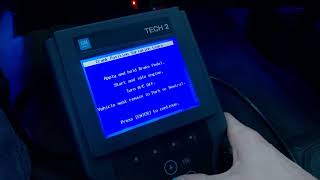
- A mandatory Crankshaft Position (CKP) System Variation Relearn must be performed with a GM-specific scan tool after installation to prevent rough running and false misfire codes.
- Always replace the single-use turbocharger oil feed line and associated gaskets during installation to prevent oil starvation and immediate failure of the turbocharger.
- Before purchasing, confirm your vehicle has the LSY engine by checking that the 8th digit of the VIN is 'K'.
- Do not install this engine in a transversely mounted vehicle like a Cadillac XT4 or Chevrolet Blazer, as the engine block and mounting points are incompatible.
Is This the Right Engine for Your Cadillac?


The engine used in 2020-2025 Cadillac CT4 and CT5 models is a 2.0L turbocharged inline four-cylinder known by the Regular Production Option (RPO) code LSY. This engine is part of the General Motors Cylinder Set Strategy (CSS) family, which focuses on efficiency with features like direct injection and turbocharging. [36] It was designed as a successor to the previous LTG engine, prioritizing fuel economy. [36]
Confirming Your Vehicle's Engine
Before purchasing a replacement, it is essential to verify that your vehicle is equipped with this specific engine. There are two primary ways to confirm this:
- Check the VIN: The 8th digit of your vehicle's Vehicle Identification Number (VIN) must be 'K'.
- Engine Broadcast Code: This code can be found on a label near the top of the engine's front cover, just below the oil fill cap.
Critical Interchange and Fitment Warnings
Not all LSY engines are the same. Ordering the wrong version can lead to costly and time-consuming installation problems.
Warning: This specific used engine assembly is for All-Wheel Drive (AWD) models. It will not directly fit a Rear-Wheel Drive (RWD) vehicle. RWD models use a different upper oil pan, also known as the 'F Extension'. To install an AWD engine into a RWD car, you must transfer the original upper oil pan from your old engine. This process requires special tools (EN-52441 and EN-52442) to correctly time the internal balance shafts to the crankshaft, 🎬 Watch: How to perform a crankshaft variation learn and failure to do so will cause severe, destructive engine vibrations.
Warning: Do not attempt to install this engine in a Cadillac XT4, XT5, XT6, or other GM crossover SUVs like the GMC Acadia, Buick Envision, or Chevrolet Blazer. [6] Although those vehicles also use an LSY engine, they are mounted transversely (sideways) and have different engine blocks, mounting points, and wiring that make them incompatible with the longitudinal (front-to-back) layout of the CT4 and CT5 sedans.
Diagnostic Flowchart
Known Issues and Failure Symptoms

While generally considered reliable, the LSY engine family has several documented issues that owners and technicians should be aware of. [14]
Coolant and Overheating-Related Problems
A cluster of issues can lead to overheating or warnings of high engine temperature. One potential cause is a faulty Engine Coolant Temperature (ECT) sensor, which may give false overheating readings (TSB PIP5839A). Another is the failure of the rotary Coolant Flow Control Valve, which can trigger trouble codes P1098 and/or P26BB (TSB PIP5675G). Additionally, some 2020 CT4 and 2020-2021 CT5 models were subject to a customer satisfaction program (N202320510) to replace water pumps that could fail due to a printed circuit board (PCB) defect.
Top-End Ticking Noise and Valvetrain Wear
A ticking sound from the top of the engine can be a symptom of a problem detailed in Technical Service Bulletin PIP6101A. [1, 4] According to the bulletin, manufacturing debris from the valve rocker arms can contaminate the hydraulic lash adjusters (lifters), preventing them from filling with oil. [2, 5] This creates a "soft" lifter, causing the audible tick. [2] The official repair requires removing the camshaft carrier and replacing all 16 lifters and all 16 rocker arms to purge debris if even one is found to be soft. [2, 7]
Rough Running, Misfires, and Emissions Faults
Rough running or misfire codes (like P0300, P050D, P0106, P1101) can be related to valvetrain wear or sensor calibration issues as outlined in TSB 25-NA-246. Separately, a failure of the evaporative emission purge pump can trigger a check engine light with code P1467. This specific issue is covered by GM Special Coverage N232395310 and N242441120, which extends the warranty for this part to 15 years or 150,000 miles for affected 2020-2021 models. [9, 13]
Oil Leaks
A common source of oil leaks is the T-joint where the structural cam carrier (which functions as a valve cover) meets the front timing cover and cylinder head. TSB 21-NA-240 provides a diagnostic procedure using UV dye to trace and properly reseal this area.
What Fails at Every Mileage Band
Pro Tip: The mileage bands below describe what to expect from used replacement units of that mileage. The checklists provided are things to do WHILE INSTALLING the purchased engine, not maintenance for your current engine.
Under 60,000 Miles
Engines in this band are generally very healthy, but early-life defects can occasionally surface. In very rare, low-mileage cases (under 5,000 miles), complete engine failure has occurred due to metal shavings circulating in the oil. [7] Another rare but severe issue is a harsh rattle, grind, or tick from the balance shaft chain on vehicles under 1,000 miles, which may require full engine replacement per GM service bulletin 22-NA-204. [15, 36] The top-end ticking noise (TSB PIP6101A) and failures of the Coolant Flow Control Valve or EVAP Purge Pump are also documented in this range. A teardown of a 24,500-mile engine revealed excessive oil consumption and heavy carbon buildup on pistons due to stuck oil control rings. [3, 13, 18] Cylinder failures have also been reported on some turbocharged models with as few as 30,000 miles. [1]
- ✓Do during install (required): Replace the turbocharger oil feed line with a new one. This is critical, as the old line can be clogged with carbon, which will starve the turbo of oil and cause immediate failure. [26]
- ✓Do during install (required): Replace the rear main seal, front crankshaft seal, and any gaskets disturbed during the swap (intake manifold, exhaust manifold, turbo mounting). [14]
- ✓Do during install (recommended): Install new OEM iridium spark plugs and inspect the ignition coils to provide a fresh baseline for the ignition system.
- ✓Do during install (recommended): Install a new accessory drive/serpentine belt.
- ✓Cheap insurance while the engine is out: Replace the water pump and thermostat. While access is easy, this is inexpensive insurance against future cooling system failures. [14]
60,000 - 100,000 Miles
As the LSY ages into this band, oil leaks from the cam carrier (valve cover) and front timing cover become more common as rubber seals harden from heat cycles. [12] While not widely reported specifically for the LSY yet, timing chain stretch is a known issue on other GM engines around the 75,000 to 100,000-mile mark and should be considered a potential risk. [9] Torque converter shudder and harsh shifting from the 10-speed automatic transmission can also develop in this range. [9, 19]
- ✓Do during install (required): All required items from the 'Under 60K' list.
- ✓Do during install (required): Perform a full "reseal" of the engine, including the oil pan gasket, valve cover (cam carrier) gasket, and front/rear cover seals to prevent future leaks.
- ✓Do during install (recommended): Replace the oil pump. Given reports of debris and potential wear, this ensures proper lubrication for the engine's second life. [23]
- ✓Do during install (recommended): Replace all coolant and vacuum hoses, as they become brittle with age and heat cycles. [14, 24]
- ✓Cheap insurance while the engine is out: Strongly consider replacing the timing chain, guides, and tensioner. This is a major labor expense if it fails later, but relatively easy while the engine is out.
100,000 - 150,000+ Miles
Data for the LSY engine at this mileage is limited as of mid-2026, but failures are likely an escalation of issues seen in the previous band. There is an increased likelihood of turbocharger failure due to bearing wear from extended heat cycles and potential oil contamination over time. Significant timing chain wear or stretch is a high probability if not previously replaced. [9, 28] Piston ring wear leading to increased oil consumption and loss of compression is also expected.
- ✓Do during install (required): All required items from the '60-100K' list are considered mandatory at this mileage.
- ✓Do during install (recommended): Thoroughly inspect the turbocharger for shaft play, cracking, and wastegate function. If the budget allows, replacing it with a remanufactured unit is the safest option.
- ✓Do during install (recommended): Consider having the direct fuel injectors cleaned and tested, or replacing them to ensure proper fueling and prevent a lean condition that could damage the engine.
- ✓Cheap insurance while the engine is out: Beyond the water pump and thermostat, consider replacing the radiator, as its cooling efficiency may be reduced by internal deposits. [24]
Expected Service Life & Maintenance
The GM 2.0L LSY is considered a modern and robust engine designed for longevity, with a life expectancy that should exceed 200,000 miles with meticulous care. [2, 26] The single most critical factor for LSY engine longevity is frequent oil changes with high-quality, full-synthetic oil. Owners and technicians recommend intervals of 3,000 to 5,000 miles, which is often shorter than the manufacturer's suggestion. [12, 26] This practice is crucial for protecting the turbocharger bearings from heat-related breakdown and preventing sludge that can clog oil passages, foul the PCV system, and lead to timing chain wear. [17, 26] Using Top Tier gasoline can also help mitigate carbon buildup on the intake valves. [20]
Real Owner Experiences
| Source | Mileage | What Happened | Cost |
|---|---|---|---|
| Reddit r/Cadillac | < 5,000 miles | A 2025 CT5 Sport experienced a rough idle and reduced acceleration, followed by multiple warning lights. The dealer diagnosed it as a major internal failure requiring a full engine replacement, citing a GM bulletin about metal shavings in the oil. [7] | Covered under manufacturer warranty. [7] |
| Reddit r/Cadillac | 1,500 miles | 2025 CT5 Sport required a full engine replacement under warranty. | $0 |
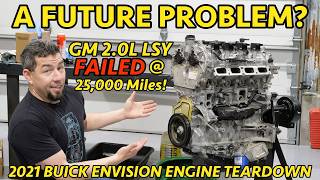
| Autoblog / I Do Cars Teardown | ~24,500 miles | An LSY engine from a 2021 Buick Envision was sold for parts after being returned by a previous buyer. A teardown revealed severe carbon deposits on the piston crowns and stuck oil control rings, indicating it was likely suffering from excessive oil consumption. [3, 13, 18] | N/A (Engine was already a salvage core) |
| Cadillac Forums / General Repair Shop Data | 80,000 - 150,000 miles | While not specific to the LSY, general Cadillac reports indicate that oil leaks from hardened rubber seals and gaskets (valve cover, oil pan) become more frequent in this mileage range, exacerbated by heat. [9] | Varies depending on the source of the leak. |
| 75,000 miles | 2019 Silverado (5.3L V8, not LSY, but relevant cost data). Owner was having it repaired after GM offered to cover 20% of the cost. Failure was lifters causing camshaft and block damage. Dealer quoted $10,400, independent shop $10,200. | ~$8,320 (after GM assistance) |
Repair or Replace?
Deciding whether to repair your current LSY engine or replace it with a used unit comes down to the specific failure and the overall health of the engine.
When Repair Makes Sense
| Issue / TSB | Typical Repair Cost | Recommendation |
|---|---|---|
| Top-End Ticking Noise (TSB PIP6101A) | $1,600 to $2,800 | This makes sense when the vehicle is out of powertrain warranty and this is the only known issue. The repair involves replacing all lifters and rocker arms. [18, 16] The parts kit alone costs between $700 and $900, and labor is extensive (estimated at 9 to 17 hours). [18, 16] |
| Coolant Flow Control Valve Failure (DTC P1098/P26BB) | $400 to $800 | Almost always repair this. It is a bolt-on component (part costs $200-$320) with minimal labor compared to internal engine work. [23, 24] |
| Evaporative Emission Purge Pump Failure (DTC P1467) | $0 | Always repair, as this is covered by a special GM extended warranty for 15 years or 150,000 miles. |
| Cam Carrier Oil Leak (TSB 21-NA-240) | $1,000 to $2,000+ | Repair if the leak is minor and the engine is otherwise healthy. This is labor-intensive as the camshafts must be removed. If the engine has other issues (like ticking), replacement may be more economical. |
When Replacement is Smarter
Replacing the engine is the smarter choice when catastrophic failure occurs, such as a thrown rod, spun bearings, balance shaft failure, or severe overheating causing head or block warpage. It is also the better financial decision when multiple issues are present simultaneously (e.g., a top-end tick combined with high mileage and heavy oil consumption), as the cumulative cost of separate repairs can quickly exceed the cost of a lower-mileage used engine. Furthermore, per TSB 22-NA-204, if a rattle or grind from the balance shaft is validated on a vehicle with under 1,000 miles, the official GM procedure is to replace the entire engine. [36]
Questions to Ask Your Installer
Before handing over the keys, ensure your mechanic is prepared for the specific quirks of the LSY engine swap:
- Are you aware that this is an AWD-spec engine and that the upper oil pan (F Extension) must be swapped from my old engine if my car is RWD?
- Do you have the special tools (EN-52441, EN-52442) required to correctly time the balance shafts if the oil pan needs to be swapped?
- Do you have a GM-specific scan tool (like an MDI 2 with GDS2 software) to perform the mandatory Crankshaft Position (CKP) System Variation Relearn after installation?
- Will you be replacing the single-use Torque-to-Yield (TTY) bolts for the crankshaft balancer and flexplate/flywheel?
- What is your plan for the turbocharger? Will you inspect the wastegate and do you recommend replacing the fragile oil feed line to prevent turbo failure?
- How will you ensure the front timing cover and rear main seal cover are properly centered to prevent immediate oil leaks?
- Will you be pre-lubing the engine and turbocharger before the first start-up to prevent dry start damage?
- Does your installation quote include all the necessary new gaskets, seals, fluids (dexos1 Gen 3 oil, Dex-Cool coolant), and spark plugs?
Engine Replacement Cost Comparison
The cost to replace a 2.0L LSY engine varies significantly based on the type of replacement unit you choose. The estimates below do not include installation labor or shipping.
| Part Type | Estimated Cost (USD) | Notes |
|---|---|---|
| New OEM | $3,400 - $6,000+ | Brand new long block from a Cadillac dealer. Highest cost but comes with a factory warranty. |
| Remanufactured OEM | $3,500 - $5,500 | Rebuilt to meet or exceed original specifications, often with updates to fix known flaws. Typically includes a multi-year warranty. [24, 29, 32] |
| Used OEM | $1,850 - $4,400 | A recycled engine from a donor vehicle. [8, 12] Price depends heavily on mileage and condition. Warranty is typically shorter (e.g., 180 days). [3] |
Installation Labor: Professional installation is highly recommended due to the complexity. Shops typically quote between 13 and 25 labor hours for this job. Depending on the shop's hourly rate, this can translate to $1,500 to $5,000 in labor costs.
Key Considerations for Installation

What's Included in a Used Assembly?
A used engine is typically sold as a "long block." According to standards from the Automotive Recyclers Association (ARA), this includes the core components but excludes bolt-on accessories. Plan to transfer these parts from your original engine.
- Typically Included: Cylinder block and head, all internal lubricated parts, oil pan (upper crankcase extension and lower pan), valve cover (cam carrier), intake manifold, timing covers, fuel injectors, throttle body, harmonic balancer, and high-pressure fuel pump.
- Typically NOT Included: Turbocharger, A/C compressor, starter, alternator, exhaust manifold, ignition coils, external sensors, power steering pump, and the engine control module (ECU/PCM).
Pro Tip: Always confirm with the seller in writing whether the turbocharger is included. Many used engines are sold "LESS TURBO," and you will need to reuse your original or buy a new one.
Installation Traps to Avoid
The LSY engine has several unique design features that can trap an unprepared installer.
Warning: A Crankshaft Position (CKP) System Variation Relearn is mandatory after installation. Failure to perform this procedure with a GM-specific scan tool (like a GDS2/MDI) will cause the engine to run rough and may set false misfire codes (P0300/P0315). Many people mistakenly blame the used engine for this issue when it is a required programming step.
- The Cam Carrier Design: The LSY engine uses a structural cam carrier instead of a traditional valve cover. Loosening the top cover bolts will cause the camshafts to lift out, disrupting engine timing. Do not touch without camshaft locking tools (EN-52462-A).
- TTY Bolts: Do not reuse torque-to-yield (TTY) bolts, such as those for the crankshaft balancer or flywheel/flexplate. They are designed to stretch and must be replaced to ensure proper clamping force.
- Turbo Oil Line: Always replace the turbocharger's oil feed line and gaskets. The old line can be clogged with carbon deposits, which will starve the turbo of oil and destroy it almost instantly.
- Turbocharger Wastegate Binding (DTC P2B81): Inspect the transferred turbocharger's wastegate linkage for smooth operation before installation to avoid transferring a binding wastegate issue.
- Cover Alignment: The front timing cover and rear main seal cover do not use alignment dowels. They must be centered with special alignment tools during installation to prevent immediate and significant oil leaks.
- Wiring Harness: Plan to transfer your vehicle's original engine wiring harness to the replacement engine to ensure all connectors, pinouts, and routing match your vehicle's specific options and model year perfectly.
Special Tools and Programming
Beyond standard mechanic's tools, replacing this engine correctly requires several GM-specific tools:
- Engine Hoist / Lift
- GM MDI 2 Scan Tool with GDS2 Software (for programming)
- Camshaft Alignment/Locking Tool (EN-52462-A)
- Flywheel Locking Tool (EN-52476)
- Cam Phaser Torque Reaction Tool (EN-52461)
- Balance Shaft Timing and Holding Tools (EN-52441, EN-52442)
- Timing Cover & Rear Main Seal Alignment Tools
- Harmonic Balancer Puller/Installer Kit
- Fuel Line Disconnect Tools
- Torque-Angle Gauge
You can reuse your vehicle's original Engine Control Unit (ECU). However, if the ECU is swapped, it will require an Immobilizer/Security Re-marriage (VTD Relearn) and full ECM programming by a dealer or qualified specialist.
Freight and Delivery Reality

When ordering a used LSY engine, it is crucial to understand how it will arrive. This assembly weighs approximately 475 lbs and measures roughly 40" x 36" x 36" before crating. Because of its size and weight, it ships as Less-Than-Truckload (LTL) freight strapped to a pallet—it will NOT arrive via standard parcel services like UPS or FedEx Ground.
Delivery to a residential address or a shop without a loading dock will require a truck equipped with a liftgate to safely lower the pallet to the ground. A best practice in the industry is to undergo a pre-purchase verification interview with the seller to confirm your VIN, drivetrain (AWD vs RWD), and delivery logistics. Finally, always thoroughly inspect the engine for shipping damage before signing the driver's delivery receipt.
Frequently Asked Questions
Do I need to buy a new computer (ECU) for the used engine?
No, you should reuse your vehicle's original ECU. However, a mandatory programming step called a Crankshaft Position System Variation Relearn must be performed with a GM-specific scan tool after the engine is installed to ensure it runs smoothly.
Will this engine fit my Rear-Wheel Drive (RWD) CT4 or CT5?
Yes, but with major modifications. This AWD engine has the wrong upper oil pan for a RWD car. You must have a qualified mechanic swap the upper oil pan (F Extension) from your old engine onto the replacement. This process also requires re-timing the internal balance shafts with special tools (EN-52441 and EN-52442).
Is the turbocharger included with the used engine?
Usually not. Most used engines are sold without the turbocharger, alternator, or A/C compressor. You should always verify with the seller exactly what parts are included and what you will need to transfer from your old engine.
Why is my car misfiring after installing the replacement engine?
The most common cause of misfires after an LSY engine swap is failing to perform the mandatory Crankshaft Position (CKP) System Variation Relearn. This calibration must be done with a GM-specific scan tool to sync the new engine with the car's computer.
What type and how much oil does the 2.0L LSY require?
The LSY engine requires 5.3 quarts (5.0 liters) of SAE 0W-20 Full Synthetic oil that meets the GM dexos1 Gen 3 (or Gen 2) specification. Failing to use the correct oil can lead to premature turbocharger and timing chain failure.
Can I use this engine in my Cadillac XT4 or Chevrolet Blazer?
No. While those crossover SUVs also use a 2.0L LSY engine, they feature a transverse (sideways) mounting layout. The engine blocks, mounting points, and wiring differ significantly from the longitudinal (front-to-back) layout used in the CT4 and CT5 sedans.
Helpful Videos
Technical Specifications
RPO Code: LSY; Displacement: 2.0L; Configuration: Turbocharged Inline Four-Cylinder; Engine Family: General Motors Cylinder Set Strategy (CSS); VIN Identifier (8th Digit): K; Oil Type: SAE 0W-20 Full Synthetic (dexos1 Gen 3); Oil Capacity: 5.3 quarts (5.0 liters); Weight: ~475 lbs
We Have This Part in Stock


The information in this article is provided for general reference and educational purposes only. Vehicle specifications, procedures, and part compatibility can vary by production date, trim level, and region. Always consult your vehicle's factory service manual and verify part numbers before purchasing or performing repairs. Safety-critical components such as airbags, seat belts, and braking systems should be installed by a qualified professional.
- Cadillac CT4:
- Cadillac CT5:
- 🎬 Helpful Videos
- 🛍️ Shop This Part
- Is This the Right Engine for Your Cadillac?
- Confirming Your Vehicle's Engine
- Critical Interchange and Fitment Warnings
- Diagnostic Flowchart
- Known Issues and Failure Symptoms
- Coolant and Overheating-Related Problems
- Top-End Ticking Noise and Valvetrain Wear
- Rough Running, Misfires, and Emissions Faults
- Oil Leaks
- What Fails at Every Mileage Band
- Under 60,000 Miles
- 60,000 - 100,000 Miles
- 100,000 - 150,000+ Miles
- Expected Service Life & Maintenance
- Real Owner Experiences
- Repair or Replace?
- When Repair Makes Sense
- When Replacement is Smarter
- Questions to Ask Your Installer
- Engine Replacement Cost Comparison
- Key Considerations for Installation
- What's Included in a Used Assembly?
- Installation Traps to Avoid
- Special Tools and Programming
- Freight and Delivery Reality
- Frequently Asked Questions
- 🎟️ Get 5% Off