

2016-2017 Audi S3 & TT 2.0L TFSI (EA888): Problems, Identification, and Used Replacement
Identify the high-output CYFB engine, understand its common failures like water pump leaks and timing chain stretch, and learn when to replace it with a used OEM unit.
- Before purchasing, you must verify the engine code is 'CYFB' and the 5th digit of the VIN is '1' to ensure correct fitment.
- During installation, it is mandatory to replace the plastic water pump and thermostat assembly with an updated metal version to prevent premature failure.
- Never reuse single-use Torque-to-Yield (TTY) bolts or the turbocharger installation hardware, as this will lead to component failure and dangerous leaks.
- The oil system must be properly primed before the first start by cranking the engine with fuel and ignition disabled to prevent immediate, catastrophic bearing damage.
- Professional diagnostic tools like VCDS or ODIS are required after installation to perform immobilizer adaptation, component protection re-marriage, and other basic settings.
Identifying the Correct EA888 Engine Variant


The 2016-2017 Audi S3 and 2016 Audi TT Quattro use a specific, high-output version of the 2.0L Turbocharged Inline 4-cylinder engine, which is part of the EA888 Gen 3 engine family. This engine is identified by the manufacturer's code CYFB. It is a direct-injection, 16-valve, dual overhead camshaft (DOHC) engine designed for Audi's Quattro all-wheel-drive system.
How to Confirm Fitment on Your Vehicle
Before purchasing a replacement engine, you must verify it is the correct unit for your car. An incorrect engine will not work due to differences in internal components, electronics, and turbochargers.
- Check the VIN: The 5th digit of your vehicle's Vehicle Identification Number (VIN) must be '1'.
- Locate the Engine Code: The engine code 'CYFB' is printed on a white barcode label, usually found on the upper plastic timing chain cover. It may also be stamped on the engine block itself, though the sticker is easier to find.
- Confirm Drivetrain: Ensure your vehicle is an AWD (Quattro) model equipped with the automatic (S-Tronic/DSG) transmission.
Pro Tip: If you cannot find the sticker on the engine, a duplicate is often located in the spare tire well in the trunk or on the inside cover of the original service manual.
Critical Interchange Mismatches
The CYFB engine is unique to the S3 and specific TT models. Do not assume any 2.0L turbo engine from another Audi or Volkswagen will fit.
Warning: The standard Audi A3, A4, and Volkswagen Golf GTI use different versions of the EA888 Gen 3 engine. The S3's CYFB engine has a lower compression ratio, a different cylinder head design, stronger pistons, unique camshafts, and is paired with a larger IS38 turbocharger to produce more power. Attempting to install a standard A3 or GTI engine will result in significant fitment, ECU calibration, and performance issues.
Common Failure Symptoms

Engine failure can manifest in several ways. If you experience these symptoms, a professional diagnosis is necessary to confirm if the engine assembly needs replacement.
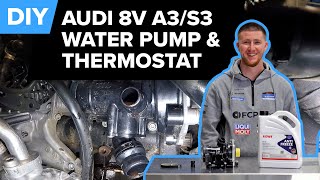
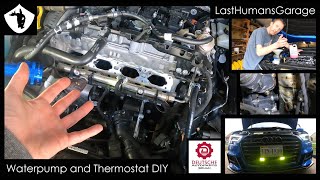
- Coolant Loss and Overheating: A sweet smell of coolant, visible puddles under the car, or a constantly illuminated low coolant light often points to a leaking water pump and thermostat assembly, a very common issue on this engine. 🎬 Watch: Step-by-step S3 water pump and thermostat replacement
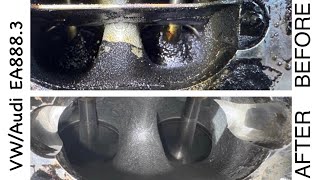
- Rough Idle, Misfires, and Power Loss: These symptoms can be caused by severe carbon buildup on the intake valves, a known side effect of direct-injection engines. This buildup restricts airflow, causing the engine to run poorly, especially during cold starts.
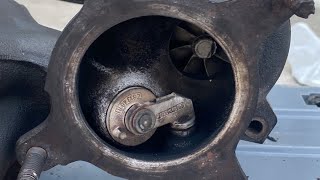
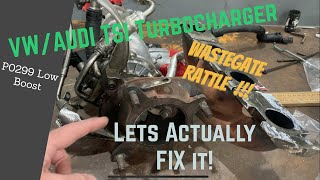
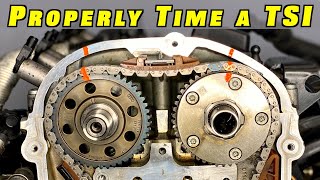
- Rattling Noises: A distinct rattle, especially during deceleration or on startup, can indicate a failing turbocharger wastegate actuator. A more severe rattling or grinding from the front of the engine could signal stretched timing chains or a failing tensioner, which is a critical failure that can destroy the engine. 🎬 Watch: How to properly time and install timing chains
- Sudden Engine Stall: While often caused by other factors, a recall was issued for some 2017 models for an ECU software issue that could cause the engine to stall at low speeds.
Diagnostic Flowchart
Known Problems, Recalls, and Technical Service Bulletins (TSBs)
The EA888 Gen 3 engine is generally robust, but it has several well-documented weak points. When replacing the engine, it is wise to address these issues at the same time.
| Problem | Severity | Details & Common Solution |
|---|---|---|
| Water Pump & Thermostat Housing Leak | Severe | The original plastic assembly is prone to cracking. The fix is replacing it with an updated metal housing version. TSB 2052657 details the repair. A class-action lawsuit extended the warranty to 8 years or 80,000 miles. |
| Carbon Buildup on Intake Valves | Moderate | Direct injection allows oil vapor to bake onto valves, restricting airflow. The only effective remedy is manual cleaning (walnut blasting) every 40,000 to 60,000 miles. |
| Turbocharger Wastegate Actuator Failure | Moderate | The IS38 turbo actuator fails, causing underboost code P029900. TSB 2027585/3 addresses a retaining clip issue; otherwise, the actuator or entire turbo may need replacement. |
| NHTSA Recall 17V508000 - Engine Stall | Moderate | Affects some 2017-2018 models. An ECU software misinterpretation can cause a stall at low speeds. The fix is a dealer-performed software update. |
| High-Pressure Fuel Pump (HPFP) Failure | Severe | Early revisions (2015-2017) can fail, causing fuel starvation and stalling. It is recommended to replace it with an updated part if the engine's history is unknown. |
| Timing Chain Stretch | Severe | On higher-mileage units, the chain can stretch and jump time, causing catastrophic engine damage. The chain and tensioner should be inspected and replaced as a set. |
What Fails at Every Mileage Band
Pro Tip: The mileage bands below describe the typical condition and wear of USED replacement units at that mileage. The checklists provided are things to do WHILE INSTALLING the purchased engine, not maintenance for your current engine.
Under 60,000 Miles
Engines in this range are generally in excellent condition, but the plastic water pump is a known weak point that can fail early. Some owners report failures as early as 50,000 miles. You may also see the beginnings of carbon buildup and early signs of IS38 wastegate rattle.
- ✓Do during install (required): Water Pump & Thermostat Assembly (replace with an updated metal housing unit), Turbocharger Install Kit (if transferring your old turbo).
- ✓Do during install (recommended): PCV Valve (prevents future oil consumption), Spark Plugs & Ignition Coils.
- ✓Cheap insurance while the engine is out: All Seals and Gaskets (replace the rear main seal and intake manifold gasket now while access is easy).
60,000 - 100,000 Miles
At this stage, carbon buildup becomes a significant issue that restricts airflow and causes rough idling. The PCV valve diaphragm frequently fails around 56,000 miles (90,000 km), leading to boost issues and oil consumption. Timing chain stretch begins to be a concern, especially if the previous owner used extended 10,000-mile oil change intervals.
- ✓Do during install (required): PCV Valve.
- ✓Do during install (recommended): Carbon Cleaning (Walnut Blasting) of the intake valves, Timing Chain Inspection (check stretch via VCDS `camshaft adaptation intake bank 1, phase position`; if it exceeds -5 degrees, replace it).
- ✓Cheap insurance while the engine is out: Fuel Injectors (clean and test to ensure proper spray patterns).
100,000 - 150,000+ Miles
High-mileage units carry the highest risk of timing chain and tensioner failure, which typically requires replacement between 120,000 and 150,000 miles. The IS38 turbocharger is also at a higher risk of bearing failure due to cumulative heat cycles. Rear main seal leaks are common, and in rare cases of oil starvation, spun rod bearings can occur.
- ✓Do during install (required): Timing Chain & Tensioner Kit (replace the complete chain, tensioner, and all guides), Rear Main Seal.
- ✓Do during install (recommended): Turbocharger Inspection/Replacement (check for shaft play and wastegate wear).
- ✓Cheap insurance while the engine is out: Oil Pump & Balance Shafts (inspect the oil pump and pickup tube for debris).
Real Owner Experiences
The following table highlights real-world failures, repairs, and costs reported by Audi S3 and EA888 Gen 3 owners across various mileages.
| Source | Mileage | What Happened | Cost |
|---|---|---|---|
| ~50,000 miles | Water pump on an Audi S3 failed. | N/A (Warranty) | |
| Audi-Sport.net | 31,000 miles | Engine misfired while cold; a specialist diagnosed severe cylinder wall scoring and warped pistons, requiring a new engine. | N/A (Implied engine replacement) |
| GOLFMK7 Forum | N/A | A dealership identified wastegate rattle and replaced the entire IS38 turbo under CPO warranty. | $50 (Deductible) |
| Au7o.io | 40,000-60,000 miles | Carbon buildup becomes noticeable, causing rough idle, misfires, and power loss. | $400-$1,500 (Walnut blasting service) |
| YouTube / Humble Mechanic | 87,000 miles | Owner of a high-mileage S3 performed extensive preventative maintenance including oil, Haldex fluid, DSG fluid, transmission filter, spark plugs, and coil packs. | N/A (DIY with parts) |
| BobIsTheOilGuy Forum | 65,000 miles | Owner reported coolant weeping from the water pump area. A shop quote for replacement was nearly $2,000. | ~$2,000 (Shop quote) |
| 80,000-150,000 miles | A VW technician reports seeing Gen 3 engines from 2016-2017 needing timing chains replaced in this mileage range. | N/A | |
| 134,000 miles | Owner of a 2016 S3 reported only needing to replace the water pump and struts, with no catastrophic failures. | N/A | |
| New German Performance | 120,000-150,000 miles | Specialist shop states that timing chain stretch typically hits the maximum safe level in this range, requiring replacement. | N/A |
| 195,000 miles | A GTI owner with the same engine family had the timing chains replaced as preventative maintenance. | N/A | |
| YouTube / Humble Mechanic | 110,000 miles | A 2017 S3 engine suffered catastrophic failure with all four rod bearings spun, destroying the engine. | Engine Replacement |
| PistonHeads UK Forum | N/A | Considering options after a cylinder lost compression. Quoted rebuild at least £4,000, New engine at least £7,000. | N/A |
| AudiWorld Forums | 73,000 miles | Warranty covered up to car's value ($23k) for a $30,000 full engine replacement from dealer, leaving a $7k out-of-pocket expense. | $7,000 (out of pocket) |
| Reddit r/Audi | N/A | Seeking advice on high repair quote ($24,000) from an independent shop for rod knock. | N/A |
| Audi-Sport.net | N/A | Owner was quoted £1250 for bottom-end rebuild, another £400 for head work to address excessive oil burning. | N/A |
Repair or Replace?
Deciding whether to repair your current CYFB engine or replace it entirely depends on the severity of the failure and the cost of parts and labor.
- Water Pump & Thermostat Housing Leak: Typical repair costs range from $1,500 to $2,000. This is a common maintenance item, and repairing it is almost always the correct choice unless the engine suffered catastrophic overheating damage.
- IS38 Turbocharger Failure: Typical repair costs range from $1,200 to $4,000. If only the turbocharger has failed, replacement is economical. Repair makes sense as long as the failure did not send metal debris through the intercooler and into the engine.
- Timing Chain Stretch & Tensioner Wear: Typical repair costs range from $1,300 to $2,500. If caught early based on noise or diagnostic data, replacing the timing components is a viable repair. If the chain fails completely, it will cause catastrophic engine damage.
- Carbon Buildup on Intake Valves: Typical repair costs range from $600 to $1,000. This is a routine cleaning service, not a repair of a broken part, and does not warrant engine replacement.
When Replacement is Smarter: Replacement becomes the smarter option when the engine has suffered catastrophic internal failure, such as a broken timing chain leading to piston-to-valve contact, spun rod bearings from oil starvation, or a cracked block. If the estimated cost of repairing multiple concurrent issues approaches or exceeds 50-60% of the cost of a quality used or remanufactured engine, replacement is the more financially sound long-term solution.
Questions to Ask Your Installer
- Have you worked on EA888 Gen 3 engines, specifically the CYFB variant, before?
- Does your quote include replacing all required torque-to-yield (TTY) stretch bolts?
- Will you be using a vacuum-fill tool to bleed the cooling system?
- How will you prime the oil system and new turbocharger before the first start?
- Does the quoted price include all necessary fluids, gaskets, and seals, such as the rear main seal and a new turbo install kit?
- What diagnostic tools (e.g., VCDS, ODIS) do you have for performing the necessary electronic adaptations and resets after installation?
Replacement Cost Estimates
The cost to replace a CYFB engine varies based on the type of replacement unit and local labor rates. The job is complex and typically takes a professional mechanic between 12 and 20 hours.
| Part / Service | Estimated Cost (USD) |
|---|---|
| New OEM Engine | $3,199 - $3,999 |
| Remanufactured Engine | $3,499 - $5,400 |
| Used OEM Engine | $4,050 - $12,144 |
| Installation Labor | $1,800 - $4,000 |
Installation Essentials

Proper installation is critical for the long-term reliability of a replacement engine. Certain parts must be replaced, and specific procedures must be followed.
Required Parts & Consumables at Install
To prevent leaks and ensure longevity, always use new gaskets, seals, and fluids during installation. Do not reuse old parts.
- Engine Oil & Filter: Approximately 5.7 quarts (5.4 liters) of synthetic oil meeting VW 502 00 or 504 00 specification (e.g., 5W-40 or 0W-30) and a new OEM-spec cartridge filter.
- Coolant: G13 or G12evo specification coolant, mixed 50/50 with distilled water.
- Spark Plugs: New OE-specification spark plugs.
- Gaskets & Seals: A complete turbocharger installation kit (exhaust manifold gasket, turbo-to-downpipe gasket, oil/coolant line O-rings, copper nuts), intake manifold gasket, high-pressure fuel pump O-ring, vacuum pump gasket, and rear main seal are mandatory.
- Torque-to-Yield (TTY) Bolts: These are one-time-use stretch bolts for components like engine mounts, the subframe, crankshaft pulley, and flywheel/flexplate. They must be replaced.
- Water Pump Assembly: It is strongly recommended to install a new water pump/thermostat assembly, preferably an updated version with a metal housing, while the engine is out of the car.
- Drivetrain Fluids: Fresh Haldex fluid and front differential/bevel box gear oil.
Warning: Many fasteners on this engine are Torque-to-Yield (TTY), or stretch bolts. They are designed for single use and must be replaced whenever they are removed. Reusing them can lead to component failure.
Common Buyer and Installer Mistakes
- Reusing Turbo Gaskets and Hardware: Reusing metal exhaust gaskets and copper nuts leads to severe exhaust leaks.
- Failing to Prime the Oil System: Starting a dry engine without priming can spin bearings. You must disable fuel/ignition and crank the engine to build oil pressure first.
- Cracking the Oil Pan: The oil pan is fragile plastic. Resting the weight of the engine on a wooden block under the pan during installation will crack it. Over-tightening the plastic drain plug will also cause cracks.
- Ordering for the Wrong Vehicle: Assuming any 2.0T EA888 engine from an Audi A3 or VW GTI will fit the S3.
- Incorrect ECU/Immobilizer Handling: Assuming the engine is plug-and-play without planning for the required professional immobilizer adaptation.
- Ground Straps: Forgetting to connect a small ground strap on the cylinder head can fry the ECU or cause sensor communication codes.
- Haldex AWD System: Failing to properly support and align the transfer case (angle gear) during removal and installation.
Special Tools and Programming
This is not a simple DIY job. The difficulty level is Expert, and specialized tools and software are required for a successful installation.
- Specialty Tools: An engine hoist and load leveler, VAG-specific coolant vacuum purge tool, Triple Square (XZN) socket set, Torx socket set (T20 to T50), Teflon injector seal installer/compressor tool (T10133), Camshaft locking tools, and Crankshaft pulley removal/installation tools are necessary.
- ECU & Immobilizer Programming: The vehicle's immobilizer system must be adapted to the replacement engine. This requires a dealer-level diagnostic scan tool like ODIS or a professional tool like VCDS (VAG-COM) to perform Immobilizer & Component Protection Re-marriage, Throttle Body Alignment (TBA), Cam/Crankshaft Position Sensor Adaptation, Fuel Injector Coding (IMA), and DSG/S-Tronic Transmission Basic Settings.
Freight, Delivery, and Pre-Purchase Verification

Because this is a complete engine assembly, it does not ship as a standard parcel. A verified CYFB engine assembly weighs approximately 254 lbs and measures roughly 24" x 16" x 32" before crating. It will ship as LTL (Less Than Truckload) freight on a wooden pallet.
When receiving the shipment, ensure the delivery truck has a liftgate if you do not have a loading dock or forklift. You must thoroughly inspect the engine for any shipping damage (such as a cracked plastic oil pan or broken sensors) before signing the delivery receipt.
Long Block vs. Complete Assembly
When buying a used CYFB engine, you will usually see two options: a long block or a complete assembly. Always ask the seller exactly what parts come with the engine.
- Long Block: This includes the main engine block, the cylinder head, and the internal moving parts like pistons and camshafts. It usually does not include the turbocharger, intake manifold, or fuel injectors. You will need to move these bolt-on parts from your old engine to the new one.
- Complete Assembly: This is a fully dressed engine. For the CYFB, a complete assembly should include the valuable IS38 turbocharger, the high-pressure fuel pump (HPFP), the intake manifold, and the fuel injectors.
Frequently Asked Questions
Is this the same engine as in the Volkswagen Golf R?
The Audi S3 (CYFB) and the contemporary VW Golf R share the same basic EA888 Gen 3 engine architecture, including the IS38 turbocharger and all-wheel-drive layout. They have very similar power outputs and a nearly identical compression ratio of 9.3:1. While mechanically very similar, there can be differences in software tuning and some ancillary components, so it's always best to match the engine code exactly.
Can I reuse my old turbocharger?
Yes, the turbocharger is considered an external component and is typically transferred from the old engine to the replacement unit. However, you MUST use a brand-new turbocharger installation kit, which includes new gaskets, O-rings, and single-use copper nuts. Reusing old hardware is a common mistake that leads to dangerous and damaging oil and exhaust leaks.
What is the most important step during installation?
Priming the oil system is arguably the most critical step. Before starting the engine for the first time, you must disable the fuel and ignition systems and crank the engine for 15-20 seconds at a time until the oil pressure light goes out. Starting a dry engine, even for a moment, can cause immediate and irreversible damage to the engine bearings and turbocharger.
Is ECU remarriage or programming required?
Yes. Even if you reuse your original engine wiring harness (which is recommended), you must perform Immobilizer and Component Protection Re-marriage. You will also need to perform basic settings and adaptations for the throttle body, camshaft/crankshaft position sensors, fuel injectors, and the DSG transmission using a tool like VCDS or ODIS.
What parts are included with a used engine assembly?
A standard used engine assembly typically includes the engine block, cylinder head, all internally lubricated parts, oil pan, valve cover, intake manifold, timing covers, fuel injection system (rail, injectors, HPFP), throttle body, harmonic balancer, and the engine wiring harness. It generally does NOT include the A/C compressor, starter, power steering pump, alternator, exhaust manifold, or turbocharger.
Helpful Videos

Technical Specifications
Engine Code: CYFB; Family: EA888 Gen 3; Displacement: 2.0L; Cylinders: Inline 4-cylinder; Aspiration: Turbocharged; Valvetrain: 16-valve, DOHC; Fuel System: Direct Injection; Compression Ratio: 9.3:1; Turbocharger: IS38; Drivetrain: Quattro (AWD); Transmission: S-Tronic/DSG (Automatic); VIN Digit 5: '1'; Oil Capacity: 5.7 quarts (5.4 liters); Oil Spec: VW 502 00 or 504 00; Coolant Spec: G13 or G12evo; Weight (uncrated): ~254 lbs
We Have This Part in Stock


The information in this article is provided for general reference and educational purposes only. Vehicle specifications, procedures, and part compatibility can vary by production date, trim level, and region. Always consult your vehicle's factory service manual and verify part numbers before purchasing or performing repairs. Safety-critical components such as airbags, seat belts, and braking systems should be installed by a qualified professional.
- Audi S3:
- Audi TT Quattro:
- 🎬 Helpful Videos
- 🛍️ Shop This Part
- Identifying the Correct EA888 Engine Variant
- How to Confirm Fitment on Your Vehicle
- Critical Interchange Mismatches
- Common Failure Symptoms
- Diagnostic Flowchart
- Known Problems, Recalls, and Technical Service Bulletins (TSBs)
- What Fails at Every Mileage Band
- Under 60,000 Miles
- 60,000 - 100,000 Miles
- 100,000 - 150,000+ Miles
- Real Owner Experiences
- Repair or Replace?
- Questions to Ask Your Installer
- Replacement Cost Estimates
- Installation Essentials
- Required Parts & Consumables at Install
- Common Buyer and Installer Mistakes
- Special Tools and Programming
- Freight, Delivery, and Pre-Purchase Verification
- Long Block vs. Complete Assembly
- Frequently Asked Questions
- 🎟️ Get 5% Off