

2016-2018 Audi A8 4.0T EA824: Problems, Identification, and Used Replacement
Identify the CTGF engine, understand what kills it, and learn when to replace it with a used OEM unit.
- Before starting a used engine, you MUST replace the turbocharger oil strainer with the updated part (079115175G) and the oil check valve (079103175C) to prevent immediate turbo failure.
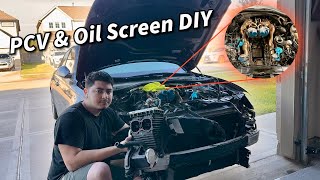
- Always replace the PCV valve/oil separator with the revised part (079103542E) during an engine swap to avoid major vacuum leaks and oil consumption issues.
- Verify the replacement engine has the correct code 'CTGF' and that the vehicle's VIN has a '3' in the 5th digit; engines from S6, S7, S8, or RS models are not compatible and will not work.
- Installation is an expert-level job requiring special tools and Audi's ODIS software to code fuel injectors and adapt the ECU for Component Protection.
- When a turbo fails, immediately check for metal shavings in the oil; if shavings are present, the entire engine must be replaced to avoid a repeat failure.
Is Your Engine Failing?

The 4.0L twin-turbo V8 in the 2016-2018 Audi A8, engine code CTGF, is a powerful and complex unit. When it runs well, it's exceptional. When it fails, however, it can be catastrophic. You may need to replace the engine if you experience symptoms like a sudden loss of power, engine stalling that may prevent the car from restarting, or deep knocking sounds from inside the engine. A key indicator of severe failure is finding significant metal shavings in the engine oil and filter during an oil change, which points to the destruction of internal parts like bearings. In some cases, a failure of the turbochargers can send debris through the engine, causing total engine failure.
Identification: Is This the Right Engine for Your A8?
Before purchasing a replacement, you must confirm you have the correct engine. This specific unit is part of the Volkswagen-Audi EA824 family (a 90° V8, DOHC, 32-valve, direct-injection, turbocharged engine) but has variations. The version for the 2016-2018 A8 Quattro AWD is identified by the engine code CTGF.
Vehicle Confirmation
The easiest way to check if your vehicle uses this engine is to look at your Vehicle Identification Number (VIN). The 5th digit of the VIN must be '3'. This confirms the car was built with this specific 4.0L turbo gasoline engine variant.
Engine Code Verification
You should also verify the engine code directly on the replacement unit. The code "CTGF" can be found in a few places:
- On a white paper barcode label, often located on one of the cylinder head covers or the upper timing chain cover.
- Stamped directly onto the engine block, typically on the front-left side near the main crankshaft pulley.
Warning: Do not order an engine from an Audi S6, S7, S8, RS6, or RS7. While they are also 4.0T engines, they use different engine codes (like CEUC, CTGE, CGTA, or DDTA) and have critical differences in mounting brackets, active engine mount electronics, wiring harness pinouts, internal compression ratios, and ECU calibrations. They will not work in your A8 without extensive modifications.
Diagnostic Flowchart

Critical Known Issues and Recalls
The CTGF engine and its siblings in the 4.0T family have well-documented issues. When installing a used engine, it is critical to address these problems to prevent immediate or premature failure.
Turbocharger Oil Strainer Blockage (NHTSA Recall 21H7)
This is the most severe issue affecting this engine family. The original oil strainer (a small filter screen) for the turbochargers has a very fine 30 µm mesh that can become clogged with oil and carbon deposits. This starves the turbos of oil, leading to bearing failure, which can cause the engine to stall suddenly and without warning.
| Affected Years | 2013–2017 |
| NHTSA Campaign Number | 22V178 (Audi internal code 21H7) |
| TSB Reference | 2044640 |
| Remedy | During installation, you MUST replace the old strainer with the updated part (079115175G), which features a larger 90 µm mesh. You must also replace the associated oil check valve (079103175C). Failing to do this can destroy your turbochargers within minutes of starting the engine. |
Crankcase Ventilation (PCV) Valve Failure
The PCV valve, also called an oil separator, is another common failure point. The internal diaphragm can tear, causing a massive vacuum leak. Symptoms include a loud whistling noise from the engine, rough idling, high oil consumption, and various engine fault codes.
| Affected Years | 2013–2018 |
| Warranty Extension | U38 |
| TSB Reference | 2046724/5 |
| Remedy | Replace the entire crankcase breather module with the brand-new revised part (079103542E) during the engine swap. Reusing an old one is a major risk. |
Other Common Issues
- Active Engine Mount Failure: These fluid-filled electronic mounts are known to fail, causing excessive vibration. It's wise to replace both while the engine is out.
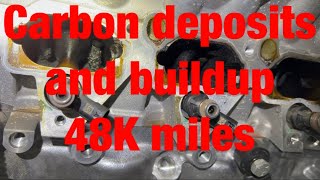
- Carbon Buildup: Like many direct-injection (FSI/TFSI) engines, the intake valves accumulate carbon deposits over time. The best time to perform a carbon cleaning service is when the engine is removed from the vehicle.
What to Expect: Cost of Replacement
Replacing the CTGF engine is a significant expense. The complexity of the job and the need for specialized programming contribute to high labor costs, which can often equal or exceed the price of a used engine.
| Part or Service | Estimated Cost (USD) | Notes |
|---|---|---|
| Used OEM Engine | $3,800 - $9,000 | Price varies widely based on mileage and condition. |
| Remanufactured OEM Engine | $5,000 - $15,000+ | Often includes updates for known issues and a warranty. |
| New OEM Engine | $25,000 - $40,000+ | Typically sourced from an Audi dealer and can be prohibitively expensive. |
| Installation Labor | $3,000 - $7,500 | Estimate based on 20 to 30 shop hours. Requires specialized tools and programming. |
Installation: Key Considerations & Common Mistakes

This is an expert-level job. It requires deep knowledge, special tools, and access to Audi's diagnostic software.
Special Tools & Programming
A successful installation requires several special tools, including a Camshaft Timing Tool Kit (OEM T40264 / Baum Tools BT40264), a High-Pressure Fuel Pump Tool (034-106-Z058), Crankshaft turning tools (T40272), Triple Square (XZN) Sockets (M10, M12, M14), an engine support brace, and a Coolant Refill/Air Purge Tool (Schwaben ES#2712734 or equivalent vacuum filler). After installation, the engine's electronic systems must be programmed. This involves:
- Component Protection: Audi's anti-theft system (Immo 5) will be triggered if you swap the Engine Control Unit (ECU). The dealer or a qualified specialist must perform an online adaptation using the ODIS software with an active GeKo connection to "remarry" the ECU to the car.
- Fuel Injector Coding: The fuel injectors that come with the used engine have specific flow-rate calibration codes (IMA codes). These codes MUST be programmed into your vehicle's original ECU. Failure to do so will cause rough idling, misfires, and can lead to melted pistons.
Pro Tip: The turbochargers are located in the valley between the cylinder heads, an area often called the "Hot Vee." Extreme heat makes all plastic hoses, vacuum lines, and wiring harnesses in this area incredibly brittle. Be extremely gentle or plan to replace them, as they will likely break upon removal.
Parts to Replace During the Swap
To ensure a reliable installation, always replace the following consumable and known-failure parts:
- Turbocharger Oil Strainer (079115175G) & Check Valve (079103175C) - Mandatory to prevent turbo failure.
- PCV Valve / Oil Separator (079103542E) - Mandatory to prevent vacuum leaks.
- Engine Oil (9.2 quarts / 8.7 liters of VW 502 00 or VW 504 00 approved full-synthetic 5W-40 or 0W-30) and Oil Filter (Part No. 079115561J or equivalent).
- Engine Coolant (G13 pink spec coolant, diluted 50/50 with distilled water).
- Spark Plugs (OE-spec double platinum or iridium).
- All one-time-use Torque-to-Yield (TTY) stretch bolts, such as for engine mounts, flywheel/flexplate, and the harmonic balancer.
- All gaskets and seals that were disturbed, including valve covers, intake manifold, intercooler seals, high-pressure fuel pump O-rings, exhaust manifolds, and turbocharger mounting gaskets/seals.
Warning: The single most common and costly mistake is reusing the old, clogged turbo oil screen. Failing to replace the oil screen in the valley will instantly starve transferred or new turbos of oil, destroying them within minutes. Do not skip this step.
What Fails at Every Mileage Band
Pro Tip: The mileage bands below describe what to expect from used replacement units of that mileage. The checklists provided are critical steps to perform WHILE INSTALLING the purchased engine, not just maintenance advice for your current vehicle.
Under 60,000 Miles
Even low-mileage engines are susceptible to the major design flaws of the EA824 family. Turbocharger failure can occur as early as 53,100 miles due to the original oil strainer design. A rough idle on a cold start can be a warning sign. The PCV/oil separator diaphragm can tear, causing significant vacuum leaks. Water pump and thermostat plastic housings can become brittle and leak (one owner reported a leak at 59k miles). Active engine mounts can also leak and fail, storing soft codes in the ECU.
- ✓Do during install (required): Replace the turbocharger oil strainer (079115175G) and check valve (079103175C).
- ✓Do during install (required): Replace the PCV valve/oil separator (079103542E).
- ✓Do during install (required): Replace all single-use Torque-to-Yield (TTY) bolts for engine mounts, flywheel, and the harmonic balancer.
- ✓Do during install (required): Replace all necessary gaskets and seals as listed in the consumables section.
- ✓Do during install (recommended): Perform a carbon cleaning of the intake valves.
- ✓Cheap insurance while the engine is out: Inspect and strongly consider replacing the water pump and thermostat.
60,000 to 100,000 Miles
The risk of turbo failure continues and is well-documented in this range if the oil screen recall has not been performed (failures are often noted around 60k miles). PCV failure remains very common, often occurring around 60-80k miles. Active engine mount failure becomes more frequent, leading to noticeable vibration. Cooling system leaks from water pumps and thermostats are common (e.g., a water pump failure reported at 66k miles). Carbon buildup becomes more significant, impacting performance.
- ✓Do during install (required): All required items from the 'Under 60k' band.
- ✓Do during install (recommended): Replace the water pump and thermostat assembly as a preventative measure.
- ✓Do during install (recommended): Replace both active engine mounts. Replacing them with the engine out is significantly easier.
- ✓Cheap insurance while the engine is out: Replace spark plugs if their service history is unknown. Inspect all plastic coolant and vacuum lines in the 'hot V' for brittleness and replace as necessary.
100,000 to 150,000 Miles
Turbocharger failures continue to be reported (e.g., at 122,000 and 168,000 miles). While timing chains are designed for the life of the engine, persistent rattling on cold starts may indicate wear on the tensioners or plastic guides. High-Pressure Fuel Pumps (HPFP) can develop leaks (one owner reported replacing leaky HPFPs for around $1,200).
- ✓Do during install (required): All required items from previous bands.
- ✓Do during install (required): If original turbochargers are being transferred, have them inspected for shaft play and oil leakage. Budgeting for new or rebuilt turbo cores is wise.
- ✓Do during install (recommended): Replace high-pressure fuel pump O-rings and seals.
- ✓Cheap insurance while the engine is out: Inspect timing chain guides for cracking or wear. Listen for startup rattle on the donor engine before purchase if possible. Replace all accessible plastic cooling pipes and vacuum lines.
Over 150,000 Miles
At this mileage, failures are about the service life of individual components. Sensors, injectors, and seals are more likely to fail. The plastic guides and hydraulic tensioners are the most likely points of failure in the timing system. Oil consumption can increase due to wear on piston rings or valve stem seals. However, with diligent maintenance, many owners report these engines reaching 200,000 miles or more.
- ✓Do during install (required): All required items from previous bands.
- ✓Do during install (required): Plan for turbocharger replacement. It is not advisable to install a 150k+ mile engine with its original turbos.
- ✓Do during install (recommended): A thorough inspection of the timing system. If there is any doubt, replacing the timing chains, guides, and tensioners is a major but wise investment while the engine is out.
- ✓Cheap insurance while the engine is out: Have the fuel injectors cleaned and tested for proper flow. Replace every rubber hose and plastic connector that is accessible.
Real Owner Experiences
| Source | Mileage | What Happened | Cost |
|---|---|---|---|
| AudiWorld Forums | 53,100 | Turbos blew with no warning, though the owner noted a rough idle for a few weeks prior. The cause was suspected oil starvation from the original oil screen design. Impeller splinters can cause further engine damage if the car is driven after failure. | $4,900 (owner's portion after Audi contributed 60% of the $12,000 total repair cost) |
| 30,000 | An owner of a different Audi model with a 4.0T engine had the entire engine replaced under warranty due to excessive oil consumption. | $0 (Warranty) | |
| AudiWorld Forums | 59,000 | Owner of a 2013 S8 experienced a significant coolant leak that nearly drained the reservoir, located near the thermostat. | Not specified |
| 81,000 | Owner of a 2018 model reports no turbo issues, even with a tune and aftermarket intakes. | N/A | |
| 70,000 | Owner of a 2016 S8 (similar engine) with significant modifications reports zero issues. | N/A | |
| AudiWorld Forums | 60,000 | A 2013 model's engine completely shut down on the highway due to turbo failure with no prior warning signs. | Not specified, at dealership |
| AudiWorld Forums | 75,000 | An owner is proactively replacing the oil separator, oil screen, and check valve to prevent turbo failure. | Not specified (preventative maintenance) |
| 122,000 | Left turbo failed. Owner replaced both with upgraded aftermarket units. | Not specified, but described as 'worth every penny' | |
| AudiWorld Forums | 168,000 | Passenger side turbo shaft broke, driver side had serious play. Replaced both turbo cores. | Not specified |
| 150,000 | Owner of a 2014 A8 4.0T reports zero problems with yearly maintenance and frequent oil changes. | N/A | |
| 192,000 | Owner of a 2017 A8L 4.0T reports the car is still running well. | N/A | |
| 160,000 | An S8 owner who replaced turbos at 122k is still driving and enjoying the car at 160k miles. | N/A | |
| 200,000+ | Forum users describe the EA824 as a '200,000 mile motor' if maintained properly. Other Audi models with different engines are frequently reported to exceed 200k and even 300k miles with proper care. | N/A | |
| AudiWorld Forums | 72,000 | Paid nearly $10,000 for turbo replacement at an independent shop, but the problem persisted and metal shavings were found in the oil. Dealer then diagnosed a failed engine and quoted a full engine replacement. Cost of new engine would equal market value of the car. | $10,000+ |
| CarComplaints.com | 69,000 | Vehicle required replacement of both turbos due to oil starvation. The owner had the car towed to a dealership for the repair. Quoted $11,071. | $11,071 |
| CarComplaints.com | 72,000 | Experienced turbo failure, which was a known issue. The estimated repair cost was $11,000. | Not specified |
| AudiWorld Forums | Not specified | Had turbos replaced by the dealer due to failure. Audi covered 60% of the cost after the dealer advocated for the owner. Quoted $12,000. | $4,900 |
| Not specified | Replaced two blown turbos. The owner had purchased an extended warranty just two weeks prior, which covered the repair. Quoted $11,000. | $3,400 (for warranty) |
Repair or Replace?
Deciding whether to repair your current engine or replace it entirely depends heavily on the type of failure and the extent of the damage.
- Turbocharger Failure: If the failure is isolated to the turbochargers and there is NO evidence of metal debris in the engine oil, repairing makes sense. Typical repair costs range from $9,000 to $14,000 at a dealer, or $5,000 to $10,000 at an independent shop. You must replace the turbos, the updated oil screen (079115175G), and the check valve (079103175C).
- PCV / Oil Separator Failure: Always repair this. It typically costs $800 to $1,500. It is a common maintenance item and does not require engine replacement on its own.
- Timing Chain Tensioner Failure: Repairing this typically costs $4,271 to $5,804. It makes sense to repair if the engine has not suffered catastrophic failure (like jumping time and bending valves). Because it is an engine-out service, labor costs are substantial.
When Replacement is Smarter: Replacement is the only viable option when metal shavings or debris from a failed turbocharger have circulated through the engine oil, causing internal damage to bearings and other lubricated parts. Additionally, if you are facing a turbo replacement AND a timing chain service simultaneously, the combined labor and parts cost may approach or exceed the cost of a lower-mileage used engine, making replacement a more economically sound decision.
Freight & Delivery Reality

Buying a used engine assembly is not like ordering a standard parcel. A verified used CTGF engine assembly weighs approximately 510 lbs and measures roughly 48" x 40" x 36" before being crated. Because of this size and weight, it ships as LTL (Less Than Truckload) freight on a wooden pallet.
When arranging delivery, ensure your shop has a loading dock or a forklift. If delivering to a residential address or a shop without a forklift, you must request a truck with a liftgate service. It is an industry best practice to conduct a pre-purchase verification interview with the seller to confirm the VIN 5th digit is '3' and the engine code is 'CTGF'. Upon delivery, you must thoroughly inspect the engine for any shipping damage before signing the driver's delivery receipt.
Frequently Asked Questions (FAQ)
What is included with a typical used engine assembly?
A used engine assembly from a recycler generally includes the core long block (cylinder block, cylinder heads, and all internally lubricated parts), oil pan, valve covers, intake manifold, timing covers, fuel injection system (high-pressure fuel pumps, injectors), throttle body, harmonic balancer, and the water-to-air intercooler. Bolt-on accessories like the A/C compressor, starter, alternator, power steering pump, exhaust manifolds, engine wiring harness, and turbochargers are typically not included and must be transferred from your old engine.
Will an engine from an Audi S8 fit my A8?
No. While it is the same 4.0T engine family, the S8 version (and those from the S6/S7/RS6/RS7) has different internal components, electronics, and mounting points. You must use an engine with the CTGF code for a direct, trouble-free swap.
Does the ECU need to be reprogrammed after installation?
Yes. At a minimum, the unique calibration codes for the fuel injectors (IMA codes) must be programmed into your car's original ECU. If you also swap the ECU from the donor car, it will trigger Audi's Component Protection system (Immo 5), which requires an online connection to Audi's servers by a dealer or certified specialist using ODIS to unlock.
What maintenance changes the outcome for this engine?
The single most critical maintenance practice for the 4.0T engine is performing frequent oil changes with high-quality, VW-specification synthetic oil (VW 502 00 or 504 00) at intervals of 5,000 to 7,000 miles. This prevents the oil coking that clogs the turbo oil strainer. Proactively replacing the updated oil strainer, PCV valve, water pump, and engine mounts during an engine swap is the best insurance against costly failures.
What questions should I ask my installer before the swap?
You should ask: Have you performed the turbo oil strainer recall (NHTSA 22V178 / Audi 21H7) before, and will you install the updated screen (079115175G) and check valve? Will you replace the PCV/Oil Separator (079103542E)? Do you have the necessary Audi-specific tools (camshaft timing kit, ODIS software with GeKo connection)? How will you handle coding the fuel injectors? Will you replace all one-time-use TTY bolts? How do you ensure the water-to-air intercooler's separate cooling circuit is bled properly to prevent airlocks? What is your process for priming the oil system before the first start-up?
How do I prevent vacuum system contamination?
Leaking water pumps can allow coolant to be sucked into the vacuum system, which ruins wastegate actuators. You must inspect your original vacuum lines for pink crust (dried G13 coolant) and replace any contaminated lines during the engine swap.
Helpful Videos

Technical Specifications
OEM Part Numbers: CTGF 079115175G 079103175C 079103542E 079115561J
Engine Family: Volkswagen-Audi EA824; Engine Code: CTGF; Displacement: 4.0L; Configuration: 90° V8; Valvetrain: DOHC, 32-valve; Induction: Twin-Turbocharged; Fuel System: Direct Injection (FSI/TFSI); Vehicle Application: 2016-2018 Audi A8 Quattro AWD; VIN Identifier: 5th digit must be '3'; Oil Specification: VW 502 00 or VW 504 00; Oil Capacity: 9.2 quarts / 8.7 liters; Coolant Specification: G13 (pink); Weight: Approx. 510 lbs
We Have This Part in Stock


The information in this article is provided for general reference and educational purposes only. Vehicle specifications, procedures, and part compatibility can vary by production date, trim level, and region. Always consult your vehicle's factory service manual and verify part numbers before purchasing or performing repairs. Safety-critical components such as airbags, seat belts, and braking systems should be installed by a qualified professional.
- Audi A8:
- 🎬 Helpful Videos
- 🛍️ Shop This Part
- Is Your Engine Failing?
- Identification: Is This the Right Engine for Your A8?
- Vehicle Confirmation
- Engine Code Verification
- Diagnostic Flowchart
- Critical Known Issues and Recalls
- Turbocharger Oil Strainer Blockage (NHTSA Recall 21H7)
- Crankcase Ventilation (PCV) Valve Failure
- Other Common Issues
- What to Expect: Cost of Replacement
- Installation: Key Considerations & Common Mistakes
- Special Tools & Programming
- Parts to Replace During the Swap
- What Fails at Every Mileage Band
- Under 60,000 Miles
- 60,000 to 100,000 Miles
- 100,000 to 150,000 Miles
- Over 150,000 Miles
- Real Owner Experiences
- Repair or Replace?
- Freight & Delivery Reality
- Frequently Asked Questions (FAQ)
- 🎟️ Get 5% Off