

2013-2017 Audi Q5 3.0L Supercharged V6 Transmission: Problems, Identification, and Used Replacement
Identify the correct MQY transmission, understand common Mechatronic and torque converter failures, and learn when to replace it with a used OEM unit.
- You must verify the 3-letter transmission code is 'MQY' for the 3.0L Supercharged V6; transmissions from other engines or models are not compatible.
- A used transmission requires programming to remove 'Component Protection'; this must be done by a dealer or by swapping the Mechatronic unit from your original transmission.
- Regular fluid and filter service every 50,000 to 75,000 miles is the single most critical factor for preventing premature failure.
- When installing a replacement, it is mandatory to flush the cooler lines, use new single-use subframe bolts, and perform the fluid fill procedure at the correct temperature (30-45°C).
Identifying the Correct Transmission for Your Audi Q5

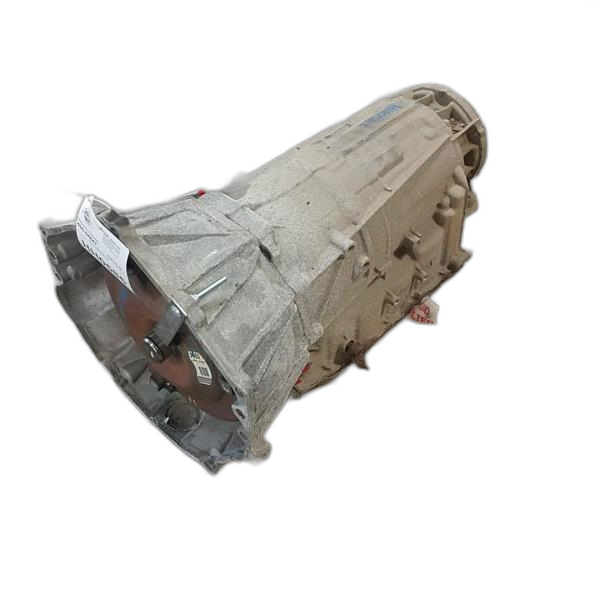
The 2013–2017 Audi Q5 equipped with the 3.0L Supercharged V6 gasoline engine uses a specific 8-speed automatic transmission known as the ZF 8HP55A. In Audi's parts system, this unit is often identified by the code 0BK (with specific part numbers like 0BK 300 036 M or AL551). It is a longitudinal, all-wheel-drive transmission featuring an integrated torque converter and both a front and a Torsen center differential. This entire assembly is often referred to by its 3-letter transmission code, MQY.
To ensure you are purchasing the correct used transmission, you must verify these identifiers on your own vehicle:
| Verification Method | What to Look For |
|---|---|
| Engine Confirmation | Your Q5 must have the 3.0L Supercharged V6 gasoline engine. Transmissions from the 2.0T gasoline or 3.0L TDI diesel models will not fit. |
| Vehicle Identification Sticker | Located in the trunk near the spare tire or in the maintenance booklet. The transmission code must be MQY. |
| VIN Check | The 7th and 8th digits of your Vehicle Identification Number (VIN) should be FP. |
| Transmission Tag | A metal tag on the transmission case itself will list the ZF model (8HP55A) and the Audi part number, which starts with 0BK. |
Warning: Transmissions from other Audi models like the A6, A7, or Q7, even if they use a ZF 8-speed, are not interchangeable. They have different bellhousing bolt patterns, internal gear ratios, torque converter stall speeds, and crucial software differences that make them incompatible.
Expected Service Life and Maintenance

With proper maintenance, the ZF 8HP55A transmission can comfortably exceed 150,000 miles, with many owners reporting 200,000+ miles of reliable service. However, if the fluid is not changed, failures can begin to occur shortly after 100,000 miles.
Warning: The "lifetime" fluid claim by Audi is generally interpreted by experts and ZF itself as the lifetime of the warranty period, not the vehicle. Neglecting service based on this claim is the primary cause of premature failure.
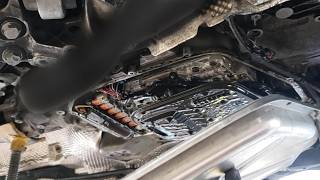
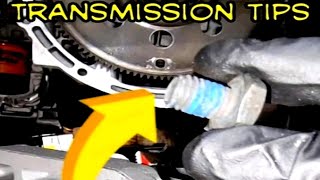
The single most critical factor for longevity is 🎬 Watch: Step-by-step Audi Q5 transmission fluid and filter service performing a transmission fluid and filter service. The filter is integrated into the plastic oil pan. ZF (the manufacturer) and independent specialists recommend a service interval of every 50,000 to 75,000 miles. Neglecting this allows fluid to degrade, causing accelerated wear on the torque converter lock-up clutch, solenoids, and valve body.
Common Failure Symptoms

When the ZF 8HP55A transmission begins to fail, it can present several distinct symptoms. Recognizing these signs early can help you diagnose the problem correctly and avoid unnecessary repairs.
- Harsh or Jerky Shifting: The most common complaint is a noticeable clunk or jolt, especially during low-speed shifts between 1st and 2nd gear. This can feel like being lightly rear-ended in stop-and-go traffic.
- 'Quattro Rumble' or Vibration: A shudder or vibration felt during slow, tight turns, such as in a parking garage, is a well-known issue. This is often caused by a problem within the integrated center differential.
- Torque Converter Shudder: A vibration or shuddering feeling at steady cruising speeds can indicate a problem with the torque converter's lock-up clutch, often due to fluid degradation or high mileage.
- Delayed Engagement: A noticeable pause when shifting from Park into Drive or Reverse is an early sign of potential issues with the internal Mechatronics unit (valve body) or low fluid pressure.
- Fluid Leaks: Puddles of red or brown fluid under the vehicle are a clear sign of a leak. Common sources on this transmission include the plastic oil pan gasket, the Mechatronics electrical connector sleeve, and O-rings at the cooler line connections.
Diagnostic Flowchart
Known Issues, Bulletins, and Recalls
Several Technical Service Bulletins (TSBs) have been issued for this transmission family, and it's important to be aware of any safety recalls for the vehicle.
| Identifier | Issue Addressed | Official Remedy |
|---|---|---|
| TSB 2082027/1 | Harsh or jerky shifting, particularly between 1st and 2nd gear. | A Transmission Control Module (TCM) software update performed by an Audi dealer using SVM code 02A072. Applies to 0BK transmissions. |
| TSB 2056020/11 | 'Quattro Rumble' - a low-speed vibration or shudder during tight turns. | A specific double drain-and-fill procedure of the center differential fluid with a special friction-modifier additive. |
| NHTSA Recall 17V297000 | (2017 models only) A manufacturing defect that could allow the vehicle to roll away when in Park. | Complete gearbox replacement. |
| Other Recalls | Issues unrelated to the transmission, such as a cracking fuel pump flange (NHTSA 17V298) and an electric coolant pump. | Varies by recall. |
What Fails at Every Mileage Band
Pro Tip: The mileage bands below describe used replacement units of that mileage. The checklists are things to do WHILE INSTALLING the purchased transmission, not maintenance for your current transmission.
Under 60,000 Miles
While generally reliable at this stage, premature Mechatronic unit failures can occur, sometimes showing a "Transmission Failure" message on the dash due to a software glitch or snapped mounting bolts. Some units may also exhibit harsh shifting that requires a software update (TSB 2082027/1).
- ✓Do during install (required): Software Check. Ensure the vehicle's ECU and the transmission's TCM have the latest available software updates to prevent known shifting issues.
- ✓Do during install (recommended): Fluid and Filter Service. While the fluid may be relatively fresh, installing a used transmission is the perfect time for a new integrated filter/pan assembly and the correct ZF Lifeguard 8 fluid.
- ✓Cheap insurance while the engine is out: Replace Seals. Proactively replace the torque converter seal, axle seals, and the Mechatronics connector sleeve O-ring as they are inexpensive parts that are easy to access with the transmission out.
60,000 - 100,000 Miles
This is a critical service interval. Torque converter shudder often appears here, felt during light acceleration as the lock-up clutch engages. As fluid ages, Mechatronic solenoids can become sticky, leading to harsh shifts and fault codes. Valve body wear from contaminated fluid can also cause pressure losses.
- ✓Do during install (required): Mandatory Fluid and Filter Service. A unit in this mileage range without service records is running on degraded fluid. Use a new pan/filter assembly and proper ZF Lifeguard 8 fluid.
- ✓Do during install (recommended): Replace Mechatronics Connector Sleeve and Seals. The plastic sleeve and its O-rings are a known leak point and become brittle with age.
- ✓Cheap insurance while the engine is out: Consider Torque Converter Replacement. If the donor vehicle's history is unknown or the purchased unit has over 90,000 miles, proactively replacing the torque converter is strong insurance against future shudder issues.
100,000 - 150,000 Miles
Internal clutch wear becomes a major factor here. The 'E' clutch (gears 2, 3, 4, 6, 8) and 'D' clutch (gears 4-8, R) are common failure points, causing slipping or a shutter in reverse. Torque converter lock-up clutches can fail completely, and Mechatronic failures are more common due to electronic solenoid failure and mechanical wear in the valve body bores.
- ✓Do during install (required): Assume a Rebuild/Refresh is Needed. Budget for more than just a basic install. At a minimum, replace all external seals, the Mechatronics sleeve, the pan/filter, and the fluid.
- ✓Do during install (recommended): Strongly Recommend Torque Converter Replacement. It is highly advised to install a new or remanufactured torque converter to prevent near-certain future failure.
- ✓Cheap insurance while the engine is out: Consider Mechatronic/Solenoid Service. Have the Mechatronic unit's solenoids tested or replaced as a preventative measure.
Over 150,000 Miles
Beyond 150,000 miles, especially on units with deferred maintenance, the risk of catastrophic hard part failure increases significantly. Severe wear in the valve body can lead to cross-leaks and major pressure losses that the TCM can no longer compensate for.
- ✓Do during install (required): Treat as a Core for Rebuilding. A used transmission with over 150,000 miles should be considered a 'core' unit. It is not recommended for direct installation without a professional inspection or rebuild.
- ✓Do during install (recommended): Full Refresh is Mandatory. If installation is attempted, it must be accompanied by a new torque converter, a full seal replacement, a new pan/filter/fluid, and a new Mechatronics connector sleeve.
- ✓Cheap insurance while the engine is out: Professional inspection of internal clutches and bushings, as they carry a high risk of near-term failure.
Real Owner Experiences
| Source | Mileage | What Happened | Cost |
|---|---|---|---|
| 48,000 | A 2021 Q5 displayed a "Transmission Failure" message. The dealer diagnosed a failed Mechatronic unit where the three mounting bolts had snapped. | Quoted ~$5,000 | |
| CoverageX | 48,000 | A 2019 Q5 3.0T required a turbo wastegate and MMI module replacement, indicating other expensive electronic issues can arise early. | $4,700 (covered by extended warranty) |
| Ross-Tech Forums | 98,000 | Owner experienced shuddering when coming to a stop. VCDS scan showed a clutch adaptation value had reached its software limit of 255. A fluid and filter change, along with an adaptation reset, was performed. | DIY |
| 80,000 | Owner of a 2015 Q5 3.0T had the PCV, water pump, and thermostat replaced preventatively. Performed a transmission service at 100,000 miles. | N/A | |
| AudiWorld Forums | 72,000 | Owner had two dealerships refuse a transmission service, citing "lifetime fluid." An independent shop performed the service and noted the old fluid smelled burnt. | ~$450 |
| AudiWorld Forums | 100,000 | Owner experienced a sudden "Transmission failure" message while driving, where the engine revved as if in neutral. Restarting the car temporarily resolved the issue (limp mode reset). | N/A |
| 140,000 | A 2015 Q5 3.0T owner who performed a transmission service at 100k miles reports the transmission is still running strong. | N/A | |
| ~81,000 | 2016 S7 (similar drivetrain concept) owner received a massive dealer quote for a Mechatronic and full transmission replacement. | Quoted $10,000 (Mechatronic) or $27,000-$32,000 (Full) | |
| 50,000 | 2015 A4 (different transmission, but relevant dealer pricing) quoted for Mechatronics replacement at the dealership. | Quoted $12,000 | |
| YouTube | Unknown | Audi A6 (similar transmission) owner opted to remove, send out for specialist repair, and reinstall the Mechatronic unit rather than buy new. | £1,520 (approx. $1,900 USD) |
Repair or Replace?
Deciding whether to repair your existing transmission or replace it with a used unit depends heavily on the specific failure mode.
| Failure Mode | Repair Viability & Cost |
|---|---|
| Mechatronic (Valve Body/TCM) Failure | Repair makes sense if mechanical parts are good. DIY rebuild service: ~$500. Installed specialist repair: up to $4,000. Dealer replacement: $9,000-$12,000. |
| Torque Converter Shudder | Makes sense if shudder is confirmed to be the converter. Professional replacement: $600-$1,000+ labor, plus $150-$2,200 for the part. |
| Fluid Leaks | Always repair. Fixing pan, connector sleeve, or cooler lines: $200-$800. A fluid/filter service costs $450-$650. |
| 'Quattro Rumble' | Always repair. Fix via TSB 2056020/11 fluid flush for $250-$500. Does not require transmission removal. |
When Replacement is Smarter: If there is evidence of widespread internal mechanical failure, such as metal debris in the oil pan beyond fine particles, multiple clutch pack failures, or damage to the main gear sets or oil pump, replacement is the better route. Used replacement units typically run $450 to $1,700, making them a highly economical choice compared to a $3,000-$6,000 remanufactured unit or a $10,000-$13,000+ new OEM unit.
Questions to Ask Your Installer
- Have you worked on the ZF 8HP transmission in an Audi Q5 before?
- How will you handle the Component Protection programming? Do you have an online ODIS subscription, or do you recommend swapping my original Mechatronic unit?
- Will you be replacing all single-use torque-to-yield bolts for the subframe and crossmembers? Can you confirm the part numbers?
- What brand of transmission fluid will you use? (It should be ZF Lifeguard 8 or Audi G 060 162 A2).
- How do you perform the fluid level check to ensure it's done at the correct temperature (30-45°C)?
- Do you have a procedure for the post-installation shift adaptation relearn drive cycle?
- Does your quote include a full flush of the external transmission cooler and lines?
- Does your quote include performing a four-wheel alignment after the subframe is reinstalled?
Replacement Cost Estimates
| Part or Service | Estimated Cost (USD) | Notes |
|---|---|---|
| New OEM Unit | $10,000 - $13,000+ | Brand new from an Audi dealer. Often has limited availability. |
| Remanufactured Unit | $3,000 - $6,000+ | Remanufactured by a third-party specialist. Quality can vary by rebuilder. |
| Used OEM Unit | $450 - $1,700 | From a recycled vehicle. Price depends on mileage and condition. |
| Shop Labor | $1,200 - $3,000 | Estimate based on 8 to 15 hours of labor. Requires specialized tools and procedures. |
Installation and Programming: What to Know

Installing a used transmission in this Audi Q5 is an expert-level job. It is not a simple plug-and-play process due to Audi's anti-theft and electronic systems. You will need specialized tools, including a Triple Square (XZN) socket set (specifically M12 and M14), Torx bit sockets (T20 through T50), an engine support bridge, a heavy-duty transmission jack, a fluid transfer pump, and an OBD-II diagnostic scan tool capable of reading real-time transmission fluid temperature (like VCDS/Ross-Tech or OBDeleven/ODIS).
Component Protection and Programming
The most critical step after physical installation is dealing with Component Protection. The Transmission Control Module (TCM), which is located inside the transmission on the Mechatronic unit, is electronically locked to the original donor vehicle's VIN. When installed in a new vehicle, the car will enter a "limp mode" and may not shift out of Park.
- Dealer Programming: The protection must be removed by an authorized Audi dealer or a qualified independent shop with a dealer-level tool (like ODIS) and an online connection to Audi's servers.
- Mechatronic Swap: A common workaround is to carefully remove the original Mechatronic unit (valve body and TCM) from your old transmission and install it into the replacement unit. This bypasses the need for programming but requires a clean, careful, and technical procedure.
Pro Tip: Before purchasing a used transmission, discuss the Component Protection plan with your mechanic. Confirm they have the tools and experience to either program the replacement unit or properly swap the Mechatronic assembly.
Installation Gotchas
Several common mistakes can lead to immediate failure of the replacement transmission or other vehicle systems.
Warning: The torque converter must be installed onto the transmission's input shaft correctly, typically identified by feeling three distinct "clicks" or drops as it seats. Failure to fully seat it will crush and destroy the transmission's internal oil pump when the engine and transmission are bolted together.
- Temperature-Sensitive Fluid Fill Procedure: The fluid level must be set while the engine is running, the vehicle perfectly level, and the transmission fluid is strictly between 30°C and 45°C. This temperature must be monitored with a proper diagnostic scan tool. Incorrect fluid level is a primary cause of post-install shifting problems.
- Subframe Bolts: The front subframe must be lowered to remove the transmission. The large bolts that hold it in place are single-use "stretch" bolts and must be replaced with new ones (x2 14mm triple square bolts WHT005372, x4 18mm hex bolts N91151101, x4 square nuts WHT002305) to prevent them from breaking or backing out while driving.
- Cooler Line Flush: It is mandatory to flush the external transmission cooler and lines. If this step is skipped, metal debris from the previously failed transmission will circulate into the replacement unit and cause it to fail quickly. Reusing old compressed O-rings on the cooler lines will also cause high-pressure fluid leaks.
- Subframe Realignment: Lowering the front subframe throws off the front-end alignment; a professional 4-wheel alignment must be performed immediately after installation.
- Adaptation Relearn: Shift adaptations must be reset and a specific calibration drive cycle performed to prevent rough shifting.
Freight and Delivery Reality

When ordering a used ZF 8HP55A transmission, understand that this is a massive, heavy industrial component. Verified shipping data shows this assembly weighs approximately 215 lbs and measures roughly 32" x 22" x 20" before crating. It will not arrive in a cardboard box via standard parcel delivery.
It ships as LTL (Less-Than-Truckload) freight on a wooden pallet. Because of its size and weight, delivery requires a freight truck equipped with a liftgate to lower the pallet to the ground. It is an industry best practice to perform a pre-purchase verification interview with the seller to confirm the MQY code and VIN match. Upon delivery, you or your shop must thoroughly inspect the transmission for physical damage (such as cracked bellhousings, broken sensors, or crushed oil pans) before signing the driver's delivery receipt.
Frequently Asked Questions
Can I use a transmission from a Q5 with a 2.0T engine?
No. The transmission for the 2.0T engine has a different part number, bellhousing, and internal specifications. It is not compatible with the 3.0L Supercharged V6 engine.
Does this transmission have to be programmed?
Yes. Due to Audi's Component Protection system, the internal Transmission Control Module (TCM) must be adapted to your vehicle's VIN by a dealer or a specialized shop. Alternatively, your original TCM/Mechatronic unit can be swapped into the replacement transmission to avoid programming.
What is the most important thing to do when installing this transmission?
Beyond the mandatory Component Protection programming, you must ensure the torque converter is fully seated (feeling three distinct clicks), use new stretch bolts for the subframe, flush the cooler lines, and perform the temperature-sensitive fluid fill procedure correctly between 30°C and 45°C. Skipping any of these steps can lead to catastrophic failure.
What fluid does the ZF 8HP55A take and how much does it cost?
You must use ZF Lifeguard 8 fluid, or the Audi equivalent specification G 060 162 A2. Using generic multi-vehicle ATF will lead to clutch chatter, harsh shifts, and solenoid failure. A full fluid and filter service typically costs between $450 and $650 at an independent shop.
What is the "Quattro Rumble" and how is it fixed?
The Quattro Rumble is a low-speed vibration or shudder felt during tight turns, often noticed in parking lots. It is addressed by Audi TSB 2056020/11. The fix does not require replacing the transmission; it involves a specific double drain-and-fill flush of the center differential using a specialized Audi OE fluid containing a friction modifier.
Helpful Videos



Technical Specifications
OEM Part Numbers: 0BK 300 036 M 0BK
Manufacturer: ZF; Model: 8HP55A; Audi Family Code: 0BK; Audi Transmission Code: MQY; Audi Software Variant: AL551; Type: 8-Speed Automatic; Drivetrain: Longitudinal, All-Wheel-Drive; Differentials: Integrated Front and Torsen Center; Fluid Type: ZF Lifeguard 8 (Audi G 060 162 A2); Weight: ~215 lbs
We Have This Part in Stock

The information in this article is provided for general reference and educational purposes only. Vehicle specifications, procedures, and part compatibility can vary by production date, trim level, and region. Always consult your vehicle's factory service manual and verify part numbers before purchasing or performing repairs. Safety-critical components such as airbags, seat belts, and braking systems should be installed by a qualified professional.
- Audi Q5:
- 🎬 Helpful Videos
- 🛍️ Shop This Part
- Identifying the Correct Transmission for Your Audi Q5
- Expected Service Life and Maintenance
- Common Failure Symptoms
- Diagnostic Flowchart
- Known Issues, Bulletins, and Recalls
- What Fails at Every Mileage Band
- Under 60,000 Miles
- 60,000 - 100,000 Miles
- 100,000 - 150,000 Miles
- Over 150,000 Miles
- Real Owner Experiences
- Repair or Replace?
- Questions to Ask Your Installer
- Replacement Cost Estimates
- Installation and Programming: What to Know
- Component Protection and Programming
- Installation Gotchas
- Freight and Delivery Reality
- Frequently Asked Questions
- 🎟️ Get 5% Off