

2000-2001 Audi TT Wiper Transmission Failure: The Critical VIN Split You Must Know
This guide details the common failure of the wiper linkage on early Mk1 Audi TT models and explains the crucial VIN-specific compatibility you need to check before buying a replacement.
- A critical VIN split exists for 2001 models; this part only fits vehicles with a VIN ending in 031904 or lower.
- Failure is almost always caused by corrosion and seizure of the linkage pivot points, not the motor itself.
- When buying a used part, physically check that the pivots move freely by hand before purchasing.
- New OEM parts are scarce, and specific aftermarket replacements for this early version are not common, making a good used OEM part the most practical solution.
Understanding the Early Audi TT Wiper Problem
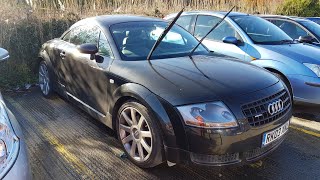
A common and frustrating problem for owners of early first-generation (Mk1) Audi TT models is the failure of the windshield wiper system. The typical cause is not the wiper motor itself, but the mechanical linkage it drives. Over time, the pivot points on the wiper transmission corrode and seize. This puts immense strain on the wiper motor, leading to slow or erratic wiper movement, incorrect parking, and eventual failure of the entire system.
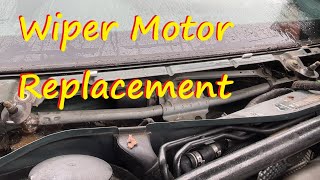
🎬 Watch: Diagnosing and fixing a seized Mk1 wiper linkageCompatibility Warning: This is the most important part of buying this component. There was a change made during the 2001 model year. This part only fits 2000 and early 2001 models. You MUST verify your vehicle's VIN before ordering.
- Fits Vehicles: 2000-2001 Audi TT with the last 6 digits of the VIN being 031904 or lower.
- Does NOT Fit Vehicles: 2001 Audi TT with the last 6 digits of the VIN being 031905 or higher.
The later-style part has a different design and will not fit or function correctly on the earlier vehicles.
Symptoms of a Failing Wiper Transmission
If your wiper transmission is beginning to fail, you will likely notice one or more of the following symptoms:
- Slow or Labored Wipers: The wipers move across the glass much slower than they used to, even on the highest setting. This is often the first sign of seized pivots.
- Wipers Stop Mid-Windshield: The wipers get stuck in the middle of their sweep and may or may not be able to return to the parked position.
- Incorrect Parking Position: When turned off, the wipers don't return to their proper resting place at the bottom of the windshield. They may stop partway up the glass.
- Jerky or Skipping Movement: The blades chatter or skip across the glass because the seized linkage can't maintain smooth, consistent pressure.
- Only One Wiper Moves: The linkage connecting the two wiper pivots has broken or one pivot is completely seized, causing one arm to stop moving while the other may still try to work.
- Grinding or Whirring Noises: You can hear the wiper motor straining to move the seized linkage, but the arms barely move or don't move at all.
Buying a Used Windshield Wiper Transmission Gear
Since new OEM parts for the early models are largely unavailable and specific aftermarket replacements are scarce, a good-quality used OEM part is often the best solution. Here’s what to check before you buy:
- Confirm the Part Number and VIN Split: This is non-negotiable. The correct part for the 2000-2001 models (up to VIN ...031904) is typically numbered 8N1955023 or 8N1955023A. The later part is 8N1955603A. Do not buy the later part; it will not fit. Ask the seller to confirm the part number or verify it came from a vehicle within the correct VIN range.
- Physically Test the Pivots: This is the most important physical check. Hold the main frame of the linkage and try to move the two wiper pivots (the splined shafts where the wiper arms attach) by hand. They should move through their range of motion with moderate, smooth resistance. If they are extremely stiff, gritty, or completely seized, the part is no good.
- Inspect for Corrosion: Look closely at the base of the pivot shafts. Heavy rust and corrosion are red flags indicating significant water intrusion. While some surface rust may be present, avoid parts that are caked in rust.
- Check the Ball Joints: The linkage arms are connected by small plastic or metal ball-and-socket joints. Make sure these are intact and not popped apart or broken. While they can sometimes be popped back on, it may indicate excessive wear.
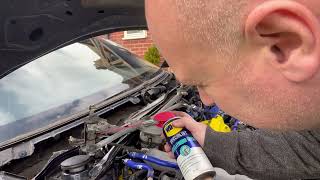
Pro Tip: Even a good used linkage can benefit from preventative maintenance. Before installation, it's a great idea to clean and re-grease the pivot shafts to ensure longevity. A high-quality marine grease can help prevent future water intrusion and corrosion.
🎬 See how to disassemble, clean, and lubricate the pivotsCost of Replacement
Pricing can vary based on your location and the chosen repair route. Here are typical cost estimates:
| Part Type | Estimated Cost |
|---|---|
| New OEM | $250 - $400 (Largely discontinued/unavailable) |
| New Aftermarket | $100 - $200 (Note: Most aftermarket options are for the later VIN-split, not this early version) |
| Used OEM | $75 - $195 |
| Shop Labor | $150 - $300 (1.5-2.5 hours) |
Installation Overview & Difficulty
Replacing the wiper transmission is a common DIY job for those with basic mechanical skills. The main challenge is removing the wiper arms without damaging them and carefully removing the plastic cowl panel.
- Difficulty: 3 out of 5
- Estimated Time: 1.5 - 2.5 hours
- Special Tools: A battery terminal puller or a dedicated wiper arm puller is highly recommended to safely remove the wiper arms from the splined pivot shafts. Trying to pry them off can damage the arms or the cowl.
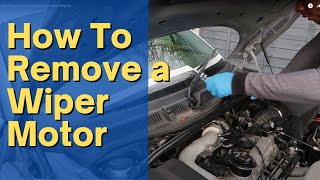
The basic steps involve removing the wiper arm nut covers, the nuts themselves, and then using the puller to pop the arms off. After that, the plastic cowl panel can be unclipped and removed to provide access to the three bolts holding the wiper transmission and motor assembly in place. The entire assembly is then maneuvered out, and the motor is swapped over to the new transmission before reinstalling.
🎬 Watch: Step-by-step wiper arm and motor removal guideFrequently Asked Questions (FAQ)
How do I find my Audi TT's VIN to check the cutoff?
Your car's 17-digit Vehicle Identification Number (VIN) can be found on a plate on the driver's side of the dashboard (visible through the windshield), on the driver's side door jamb sticker, and on your vehicle's registration and insurance documents. You only need to check the last six digits for this specific part.
Can I just lubricate my old seized linkage instead of replacing it?
Sometimes, yes. If the pivots are not too badly seized, you can remove the assembly, disassemble the pivots, clean out all the corrosion with a wire brush or sandpaper, and re-pack them with grease. However, this can be a time-consuming job, and if the corrosion is severe or the original seals are damaged, the problem may return quickly. Replacement is often the more reliable long-term solution.
Is my wiper motor bad, or is it the transmission?
A good way to test this is to listen. If you turn on the wipers and hear the motor whirring or humming but the blades don't move (or move very slowly), the problem is almost certainly the seized transmission/linkage. If you hear no sound at all from the motor, you could have an electrical issue, a blown fuse, or a failed motor. Often, a seized linkage will cause the motor to burn out from the strain.
Will the wiper transmission from a 2002+ Audi TT fit my 2000 model?
No. The part was redesigned for vehicles manufactured from VIN ...031905 onwards. The later part (8N1955603A) will not fit or work correctly on the earlier models. You must use the correct part for your VIN range.
Helpful Videos
Technical Specifications
OEM Part Numbers: 8N1955023 8N1955023A 8N0955113
Fits 2000-2001 Audi TT models with VIN ending in 031904 or lower.
We Have This Part in Stock


The information in this article is provided for general reference and educational purposes only. Vehicle specifications, procedures, and part compatibility can vary by production date, trim level, and region. Always consult your vehicle's factory service manual and verify part numbers before purchasing or performing repairs. Safety-critical components such as airbags, seat belts, and braking systems should be installed by a qualified professional.
- Audi TT: