

2017-2023 Tesla Model 3 Window Regulator: Noises, Failures, and Replacement Guide
Diagnose common grinding noises and slow window operation, and learn what to look for when buying a used replacement regulator for your Model 3.
- The most common failure symptom is a loud grinding or crunching noise, indicating the internal cable is damaged.
- A used OEM regulator is often a better choice than a new aftermarket part to ensure proper fitment with the Model 3's frameless glass.
- Replacement is a moderately difficult DIY job, but requires careful handling of the glass and a window recalibration procedure via the touchscreen after installation.
- A 2022 recall (22V-702) addressed a software issue with the window's pinch protection and is unrelated to mechanical regulator failure.
Common Symptoms of a Failing Model 3 Window Regulator

A failing window regulator in a 2017-2023 Tesla Model 3 often gives clear warning signs. Being aware of these symptoms can help you diagnose the problem before the window fails completely.
- Grinding or Crunching Noises: The most frequently reported symptom is a loud grinding, crunching, or popping sound as the window moves, especially as it nears the fully closed position. This is often caused by the regulator's drive cable fraying, kinking, or jumping off its pulley.
- Slow or Stuttering Movement: The window may move noticeably slower than usual or move in a jerky, stuttering motion. This can indicate a failing motor struggling to overcome resistance from a damaged regulator.
- Window Drops or Won't Stay Up: The window may suddenly drop down inside the door or refuse to stay in the closed position. This happens when a critical component, like a plastic guide or the cable itself, breaks completely.
- Crooked or Misaligned Window: If the glass appears to tilt forward or backward as it moves, it suggests that one of the regulator's lift points has failed, causing the glass to bind in its tracks. This can prevent the door from closing properly as the glass may hit the trim.
- Auto-Up/Down Failure: While sometimes just a calibration issue, a failure of the automatic one-touch up or down feature can be an early sign of a struggling motor or regulator. The system may detect excess resistance and stop, thinking an obstruction is present.
Known Issues, Recalls, and Technical Service Bulletins (TSBs)

While there are no widespread recalls specifically for the mechanical failure of the window regulator assembly itself, there was a significant software-related recall that affected the window operation.
NHTSA Recall 22V-702: Window Automatic Reversal System
In September 2022, Tesla issued a recall for over one million vehicles, including 2017-2022 Model 3s, because the window's automatic reversal system might not react correctly to an obstruction. A closing window could exert excessive force before retracting, increasing the risk of injury. This issue did not comply with federal safety standards. The remedy was a free over-the-air (OTA) software update, and no hardware replacement was required. This recall is not related to the mechanical grinding or failure of the regulator assembly.
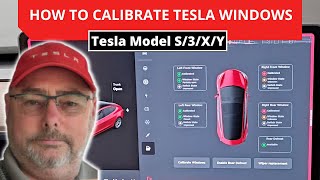
Pro Tip: Before assuming the regulator is bad, try recalibrating the windows. This can sometimes fix issues with travel limits or auto-up/down functionality. Calibration can be done through the vehicle's touchscreen in Service Mode or by holding the window switch down for 15-20 seconds after the window is fully down, and then holding it up for 15-20 seconds after it is fully closed.
Buying a Used 2017-2023 Model 3 Window Regulator: What to Check

Purchasing a used OEM window regulator can be a cost-effective solution, but a thorough inspection is key. Given the precise fit required for the Model 3's frameless windows, a quality used original part is often a better choice than a new, cheap aftermarket one.
Physical Inspection Checklist:
- Check the Cables: This is the most critical step. Inspect the full length of the steel cables for any signs of fraying, kinks, or bird-caging (where the cable strands have unraveled and bunched up). A damaged cable is the primary failure point.
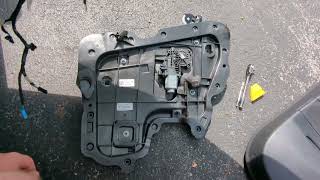
- Inspect the Spool/Pulley: Look at the main plastic spool that the cables wind onto. Check for cracks, deep grooves, or broken plastic pieces. This area is under high tension and can be a point of failure.
- Examine Plastic Guides: Check all plastic guide pieces and mounting points. Ensure they are not cracked, brittle, or broken. These guides keep the window stable in its track.
- Verify the Motor is Included: Most used regulators are sold as a complete assembly with the motor attached. Confirm this, as separating the motor from the regulator can be difficult.
- Look for Corrosion: Check for any rust or corrosion on the metal rails or the electric motor housing, which could indicate water damage from a leaky door seal.
Compatibility:
Tesla frequently updates part numbers. Always match the part number from your original regulator if possible. However, later part numbers often supersede earlier ones. The most important factor is ensuring you are buying for the correct door (e.g., Front Left/Driver, Rear Right/Passenger). Do not assume they are interchangeable.
Cost of Replacing a Tesla Model 3 Window Regulator
The cost can vary significantly depending on the source of the part and who performs the labor.
| Item | Estimated Cost |
|---|---|
| New OEM (from Tesla) | $150 - $275 |
| New Aftermarket | $70 - $160 |
| Used OEM | $80 - $160 |
| Shop Labor | $225 - $400 |
Replacement Overview

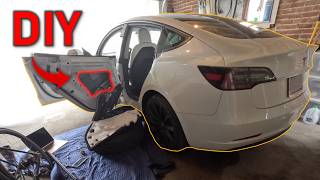
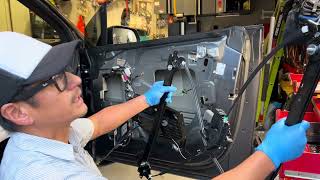
Replacing the window regulator is a moderately difficult job suitable for a DIYer with some experience. The process involves removing the interior door panel, the inner foam/plastic shield, and carefully unbolting the glass from the regulator clamps before swapping the assembly.
🎬 Watch this complete DIY guide for a step-by-step replacement walkthrough.- Difficulty: 3 out of 5
- Estimated Time: 1.5 - 2.5 hours
- Tools Required: Trim removal tools, socket set (8mm, 10mm, 13mm), Torx T30 driver.
Warning: The frameless window glass must be carefully handled and properly aligned during reinstallation to prevent damage, wind noise, or water leaks. After installation, the window must be recalibrated using the vehicle's touchscreen to set the proper upper and lower limits.
🎬 See how to calibrate your windows manually or in Service Mode.Frequently Asked Questions (FAQ)
Can I just replace the cable or motor instead of the whole assembly?
No, the window regulator is sold as a complete, sealed assembly including the motor, cables, and track. Individual components are generally not available for purchase.
Is a grinding window regulator an urgent repair?
It is recommended to repair it soon. While not a safety risk for driving, the noise indicates an imminent failure. If the regulator fails completely, the window could drop into the door, leaving the vehicle unsecured and exposed to the elements.
My window makes a squeaking noise against the rubber seal. Is this the regulator?
A squeaking noise is typically not the regulator, but rather the glass rubbing against dry rubber door seals. This can often be fixed by cleaning the seals and applying a silicone lubricant. A failing regulator will make a more mechanical grinding or popping sound.
Why does my window go down slightly when I open the door and not return to the top when I close it?
This is often a symptom of a failing regulator or a calibration issue. The car's computer is losing track of the window's position. If recalibration doesn't solve it, the regulator's internal sensors (part of the motor assembly) are likely failing.
Confirmed OEM Part Numbers
Part numbers are frequently superseded. The final letter in the part number often indicates a revision. Always verify fitment for your specific vehicle. The following are known base numbers:
- Front Left (Driver): 1096620-00-L (and earlier revisions like -H, -J)
- Front Right (Passenger): 1096621-00-L (and earlier revisions like -F, -H)
- Rear Left (Driver Side): 1096622-99-H (and later revisions)
- Rear Right (Passenger Side): 🎬 Watch this specific guide for replacing a rear window regulator. 1096623-00-J (and earlier/later revisions)
Helpful Videos
Technical Specifications
OEM Part Numbers: 1096620-00-H 1096620-00-J 1096620-00-L 1096620-14-J 1096620-20-J 1096621-00-F 1096621-00-H 1096621-00-L 1096622-99-H 1096622-00-K 1096623-00-J 1096623-99-H
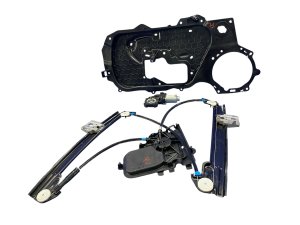
Cable-driven electric window regulator and motor assembly. Requires post-installation calibration via the vehicle's touchscreen.
We Have This Part in Stock

The information in this article is provided for general reference and educational purposes only. Vehicle specifications, procedures, and part compatibility can vary by production date, trim level, and region. Always consult your vehicle's factory service manual and verify part numbers before purchasing or performing repairs. Safety-critical components such as airbags, seat belts, and braking systems should be installed by a qualified professional.
- Tesla Model 3:
- 🎬 Helpful Videos
- 🛍️ Shop This Part
- Common Symptoms of a Failing Model 3 Window Regulator
- Known Issues, Recalls, and Technical Service Bulletins (TSBs)
- NHTSA Recall 22V-702: Window Automatic Reversal System
- Buying a Used 2017-2023 Model 3 Window Regulator: What to Check
- Physical Inspection Checklist:
- Compatibility:
- Cost of Replacing a Tesla Model 3 Window Regulator
- Replacement Overview
- Frequently Asked Questions (FAQ)
- Confirmed OEM Part Numbers
- 🎟️ Get 5% Off