

2003-2019 Cadillac CTS Window Regulator: Clicks, Drops, and Compatibility Guide
This guide covers common failures, critical compatibility differences between generations and body styles, and how to choose a reliable used regulator for your CTS.
- Compatibility is critical: 2nd Gen (2008-2014) Coupe regulators are different from Sedan/Wagon regulators.
- A mid-year production split exists for 2005 models; verify your car's build date before buying.
- The most common failure symptom is a loud clicking or grinding noise from the door as the internal cable breaks.
- When buying used, inspect the plastic pulleys and the glass carrier bracket for cracks, as these are the weakest points.
Key Compatibility Warnings for 2003-2019 Cadillac CTS
Before buying a window regulator for your Cadillac CTS, you must correctly identify your vehicle's generation and body style. Using the wrong part will lead to installation problems and improper window function. The differences are significant across the 2003-2019 model years.
Generation & Body Style Differences
- 1st Generation (2003-2007): These models often have regulators sold without the motor, as the original motor can be reused. There is a critical mid-year change for 2005 models.
Warning: For the 2005 model year, verify your vehicle's production date. Some parts only fit vehicles manufactured on or after April 25, 2005. The production date is found on a sticker in the driver's side door jamb.
- 2nd Generation (2008-2014): The most important distinction for this generation is the body style. Regulators for the Sedan and Wagon are different from those for the Coupe. The Coupe uses a different rail length to accommodate its longer doors and unique window shape. Always confirm the body style of the donor vehicle when purchasing a used part.
- 3rd Generation (2014-2019): While the CTS sedan was redesigned for 2014, the coupe and wagon continued on the second-generation platform for a short time. Be absolutely sure which version you have. For these later models, some replacement regulators may require a Body Control Module (BCM) recalibration to function correctly, especially if the electronics brand (e.g., Bosch, Continental) is different from the original.
Symptoms of a Failing Window Regulator
A failing window regulator can present several distinct symptoms. Identifying them correctly can help you determine if the regulator, the motor, or an electrical issue is the cause.
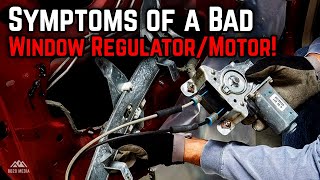
🎬 Watch: Learn how to spot a failing window regulator1. Clicking, Grinding, or Popping Noises
This is the most common symptom. When you press the window switch, you may hear a loud grinding or popping sound from inside the door. This is often caused by the drive cable snapping, bunching up, or breaking the plastic pulleys inside the regulator assembly. If you can still hear the motor running but the window doesn't move, the regulator is almost certainly the culprit.
2. Window Drops Into the Door
A sudden and complete failure of the regulator can cause the window glass to drop completely inside the door panel. This happens when the lift plate that holds the glass breaks or when the cables snap entirely. This is a security and weather-exposure risk that should be addressed immediately.
3. Crooked or Slow Window Movement
If the window tilts forward or backward as it moves, or if it moves much slower than it used to, this indicates a problem. A crooked window means one of the guide rails or a cable is damaged, causing the glass to bind. Sluggish operation can be caused by a failing motor, but it can also be a sign of a binding regulator creating extra resistance.
4. Window is Stuck or Moves Intermittently
If the window won't move at all or only works sometimes, the problem could be the regulator, motor, or the switch. A good diagnostic step is to have one person press the switch while another listens to the door. If you hear the motor trying to work, the problem is likely the mechanical regulator. If there is no sound, the issue is more likely electrical (fuse, switch, or motor).
Pro Tip: If your window is stuck down, you can often remove the door panel and manually push the glass up. Use strong tape, like painter's tape or duct tape, to hold the glass in the fully closed position until you can perform the repair.
Known Issues, TSBs, and Recalls
While there are no widespread safety recalls specifically for the window regulators on the 2003-2019 Cadillac CTS, several Technical Service Bulletins (TSBs) and related recalls exist for the vehicle's electrical systems.
- TSB #PIC6364B: For some 2013-2019 CTS-V models, the power windows may become inoperative after the battery has been disconnected or discharged. This is caused by a microcontroller in the regulator locking up and can be fixed with a specific reset procedure, not by replacing parts.
- Ignition Switch Recall (GM Recall 14172): Affecting 2003-2014 CTS models, a faulty ignition switch could cause the car to shut off while driving, which would also disable power windows. While not a regulator issue, it's an important related electrical system fault to be aware of.
- No other specific recalls for window regulator failure were found via NHTSA search.
Buying a Used Window Regulator: What to Check
A used OEM window regulator can be a cost-effective and reliable alternative to expensive new parts or failure-prone aftermarket units. However, a careful inspection is key.
Why Used OEM is Often Better
Cheap, new aftermarket regulators are widely available, but they are notorious for using lower-quality materials. The plastic components can become brittle, and the cables may be thinner, leading to premature failure. A used original equipment (OEM) part was built to a higher standard. As long as it's inspected properly, it often provides a longer service life than a cheap new alternative.
Physical Inspection Checklist:
- Inspect the Plastic Pulleys: Check the small plastic wheels that the cables ride on. Look for any cracks, chips, or signs of stress. This is a primary point of failure.
- Examine the Cables: Look for any fraying, kinks, or rust on the steel cables. Run your fingers along them (carefully) to feel for any broken strands.
- Check the Glass Carrier: This is the plastic piece that clamps onto the bottom of the window. Ensure it is not cracked or broken, especially around the mounting points.
- Verify the Motor (if included): If the regulator comes with a motor, check the electrical connector pins for any corrosion or damage.
- Confirm Part Numbers: Whenever possible, match the OEM part number from your old regulator to the used one. Cross-reference with the numbers listed in this guide.
Cost Comparison
| Part Type | Estimated Cost |
|---|---|
| New OEM (Dealer) | $224 - $347 |
| New Aftermarket | $60 - $150 |
| Used OEM | $50 - $125 |
| Shop Labor Cost | $100 - $147 |
Frequently Asked Questions
Is it difficult to replace a CTS window regulator myself?
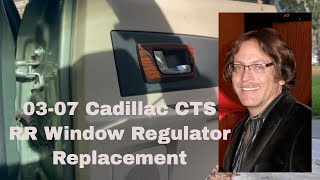
For a DIYer with basic tools, this is a moderately difficult job, rating about a 2 or 3 out of 5. The process involves removing the door panel, carefully peeling back the weather barrier, unbolting the old regulator, and swapping it out. 🎬 See this step-by-step rear window regulator replacement guide The main challenges are not breaking the plastic door panel clips and correctly aligning the window glass in the new regulator.
Do I need to replace the motor at the same time?
Not always. If your motor still runs when you press the switch (you can hear it whirring or clicking), but the window doesn't move, the motor is likely fine. Many regulators for the first-generation CTS are sold without the motor, allowing you to transfer your old one. For later generations, they are often sold as a complete assembly. If you are already inside the door, replacing a high-mileage motor with the regulator can be good preventative maintenance.
Is the front regulator the same as the rear? Is the left the same as the right?
No. Each of the four doors on a Cadillac CTS sedan uses a unique window regulator. They are not interchangeable. You must order the part for the specific location (e.g., Front Driver Side, Rear Passenger Side).
My window works, but it has a 'one-touch down' but not a 'one-touch up' feature. Is something broken?
This is often a programming issue, not a hardware failure. After a battery replacement or if the regulator has been replaced, the window may need to be re-indexed. To do this, roll the window all the way down and hold the switch for 5 seconds. Then, roll the window all the way up and hold the switch for 5 seconds. This usually restores the one-touch up/down functionality.
Helpful Videos
Technical Specifications
OEM Part Numbers: 15277680 15775229 20978536 15091384 15215271 15277681 15775228 20888398 22871018 22915378 23131102 23131141 17-50026AN 193331059035 0130822439
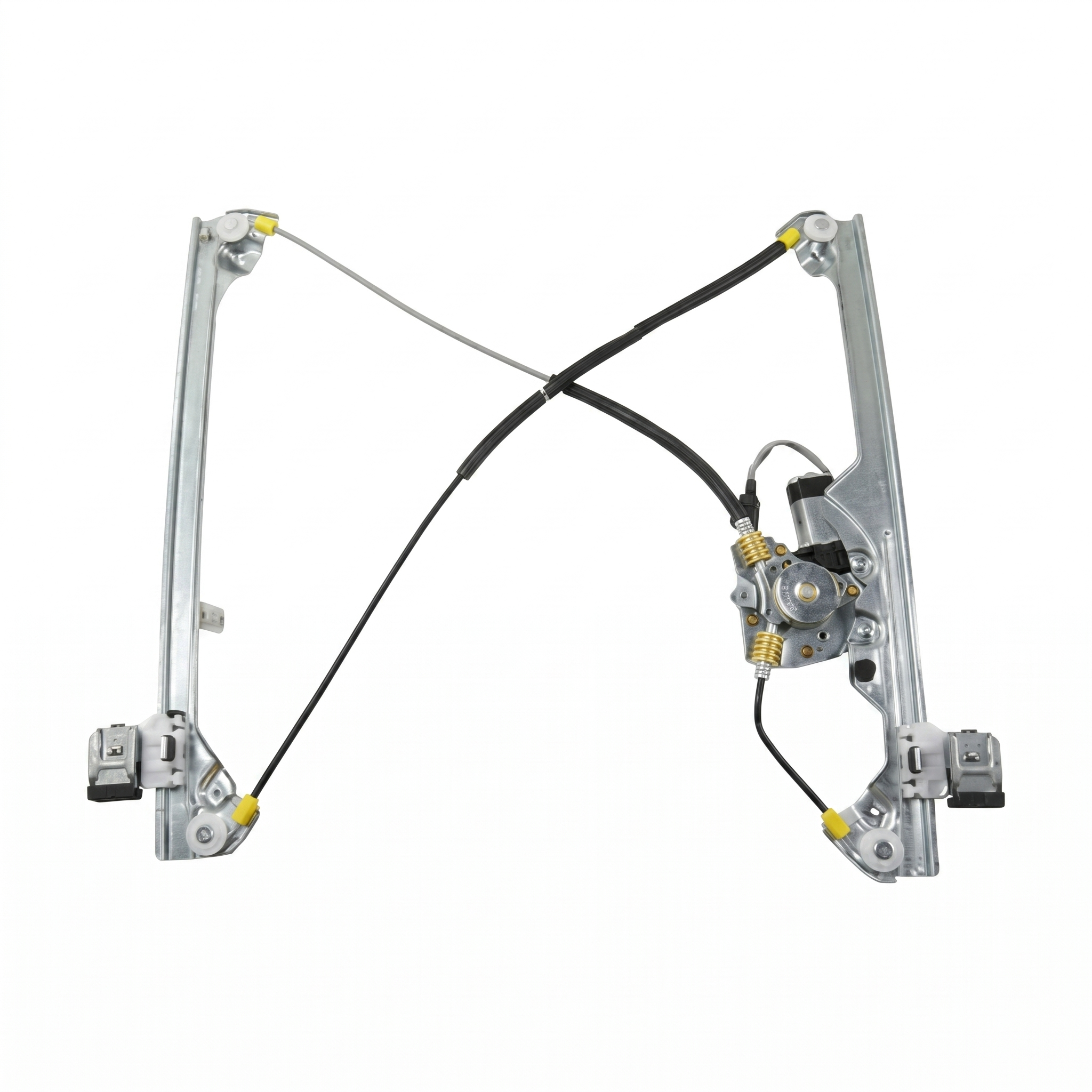
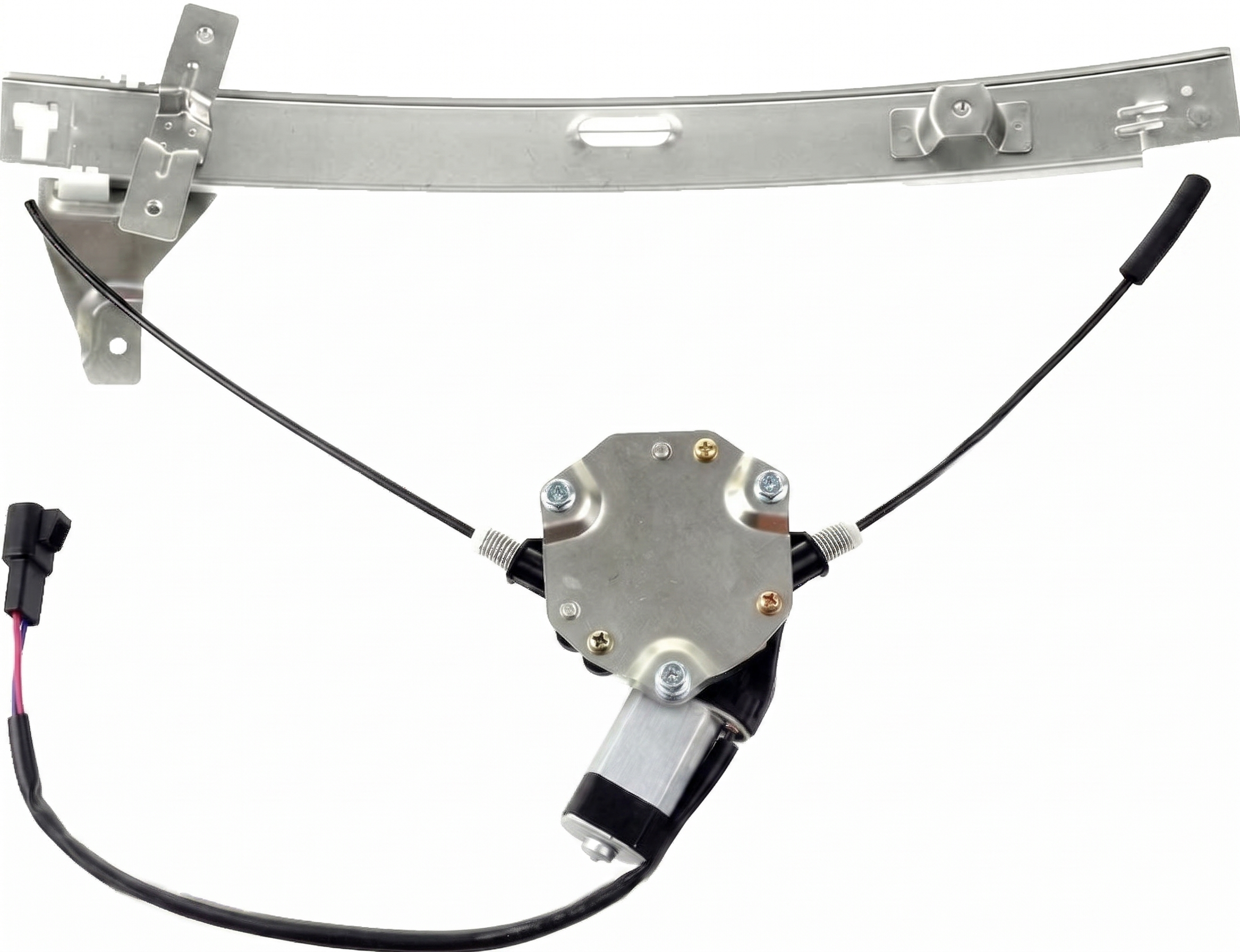
The regulator is a cable-driven, electric-powered assembly. It may or may not be sold with the motor. Different part numbers exist for front, rear, left, and right positions, as well as for different body styles (Sedan/Wagon vs. Coupe).
We Have This Part in Stock



The information in this article is provided for general reference and educational purposes only. Vehicle specifications, procedures, and part compatibility can vary by production date, trim level, and region. Always consult your vehicle's factory service manual and verify part numbers before purchasing or performing repairs. Safety-critical components such as airbags, seat belts, and braking systems should be installed by a qualified professional.
- Cadillac CTS:
- 🎬 Helpful Videos
- 🛍️ Shop This Part
- Key Compatibility Warnings for 2003-2019 Cadillac CTS
- Generation & Body Style Differences
- Symptoms of a Failing Window Regulator
- 1. Clicking, Grinding, or Popping Noises
- 2. Window Drops Into the Door
- 3. Crooked or Slow Window Movement
- 4. Window is Stuck or Moves Intermittently
- Known Issues, TSBs, and Recalls
- Buying a Used Window Regulator: What to Check
- Why Used OEM is Often Better
- Physical Inspection Checklist:
- Cost Comparison
- Frequently Asked Questions
- 🎟️ Get 5% Off