

2017-2023 Tesla Model 3 Wheel Bearing Noise: Diagnosis and Replacement
A complete guide to diagnosing the common humming or roaring noise from a failing wheel bearing and how to replace the hub assembly on your 2017-2023 Model 3.
- The most common symptom of failure is a humming or roaring noise that increases with speed, often starting around 40 mph.
- This is a known issue on 2017-2023 Model 3s, with some owners experiencing failures at low mileage (30k-40k miles).
- Replacement is a bolt-on hub assembly and is feasible for a DIYer with the right tools, including a 32mm axle nut socket and E18 Torx socket.
- When buying a used part, physically check for smooth rotation and zero play, as this is more important than mileage alone.
Symptoms of a Failing Model 3 Wheel Bearing


A bad wheel bearing in a 2017-2023 Tesla Model 3 has very distinct symptoms that are hard to ignore, especially in such a quiet car. The most common sign is a noise that changes with vehicle speed.
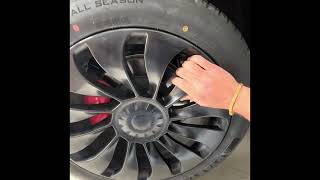
- Humming, Roaring, or Grumbling Noise: The primary symptom is a deep humming or roaring sound that starts at speeds around 40 mph and gets louder and higher in pitch 🎬 Watch: Hear what a failing Tesla wheel bearing sounds like. as you accelerate. Many owners describe it as a low grumbling or whining noise. Because Teslas lack engine noise, this sound is very prominent in the cabin.
- Noise Changes When Turning: Often, the noise will get louder when turning in one direction and quieter when turning in the other. This happens because turning loads and unloads the bearing. For example, if the noise gets louder when turning left, the failing bearing is likely on the right side of the car, and vice-versa.
- Vibration: In some cases, you may feel a slight vibration through the steering wheel or the floor of the car that corresponds with the noise.
- Uneven Tire Wear: A worn-out wheel bearing can lead to improper wheel alignment and cause uneven tire wear, often a pattern known as "feathering".
How to Diagnose a Bad Wheel Bearing at Home
If you suspect a wheel bearing is failing, you can perform a simple check. Safely jack up the corner of the car with the suspected bad bearing so the wheel is off the ground. Place your hands at the 12 and 6 o'clock positions on the tire and try to wiggle it. Then, place your hands at the 9 and 3 o'clock positions and do the same. If you feel any play or clunking, the bearing is likely worn. Another test is to spin the wheel by hand. A good bearing will spin smoothly and silently. A bad bearing will feel rough, make a grinding noise, or be difficult to turn.
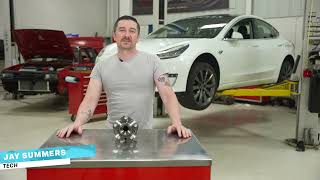
Pro Tip: To isolate which wheel bearing is bad, you can jack up the front or rear of the car, put it in Tow/Transport mode to disengage the brakes, and spin each wheel by hand. The wheel that is hard to rotate or makes a grinding sound has the faulty bearing.
Known Issues, TSBs, and Recalls

While there are no official NHTSA safety recalls or Technical Service Bulletins (TSBs) specifically for wheel bearing failure on the 2017-2023 Model 3, the issue is a well-documented complaint among owners. Failures have been reported at relatively low mileages, sometimes as early as 30,000 to 40,000 miles. This suggests that the original bearings, particularly on earlier production models, may be prone to premature wear. The repair is typically handled as a standard service item rather than a warranty or recall campaign, especially on vehicles outside of the basic warranty period.
Buying a Used Wheel Bearing for Your Model 3
A used OEM wheel bearing hub assembly can be a cost-effective alternative to a new part. Since these are sealed, non-serviceable units, the inspection process is crucial.
- Physical Inspection: Before purchasing, physically hold the used hub assembly. Turn the hub by hand. It must spin smoothly with zero grinding, roughness, or catching. Any noise or gritty feeling means the bearing is bad.
- Check for Play: Firmly grasp the inner and outer parts of the hub and try to wiggle them. There should be absolutely no play or movement between the hub flange (where the wheel bolts on) and the stationary mounting portion.
- Inspect for Damage: Check the housing for any cracks or signs of major impact from an accident. Ensure the ABS sensor ring (if visible) and mounting holes are clean and undamaged.
- Verify Part Numbers: Tesla uses different part numbers for front, rear, RWD, and AWD models. The front hub is part number 1083801-00-G. A common rear hub part number is 1044123-00-B. Always verify the part number from your old hub or provide your VIN to the seller to ensure compatibility.
- Mileage vs. Condition: While lower mileage is generally better, the physical condition is more important. A 50,000-mile bearing that spins smoothly with no play is a better bet than a 20,000-mile bearing that feels rough. Given the reports of premature failure, simply buying based on low mileage is not a guarantee of a long service life.
Cost Comparison for Model 3 Wheel Bearing Replacement
Prices can vary based on location and the chosen parts supplier. The following is an estimated breakdown for a single wheel bearing replacement.
| Item | Estimated Cost |
|---|---|
| New OEM (Tesla Service) | ~$275 (parts only, per owner report) |
| New Aftermarket | $70 - $120 |
| Used OEM | $40 - $80 |
| Shop Labor | $150 - $300 |
Replacement Overview & Difficulty

Replacing a Model 3 wheel bearing is a bolt-on procedure that is manageable for an experienced DIY mechanic. The process does not require any high-voltage safety precautions.
- Difficulty: 3 out of 5
- Tools Required: Jack and jack stands, torque wrench, breaker bar, 10mm socket, 18mm socket, 21mm socket (lugs), 32mm axle nut socket, E18 External Torx socket.
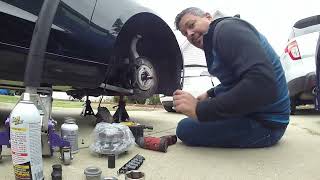
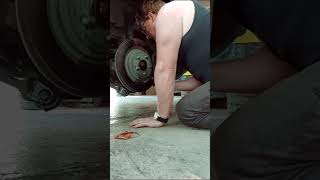
- General Steps (Front): 🎬 See this step-by-step front wheel hub replacement walkthrough.
- Loosen the axle nut with the wheel on the ground.
- Safely lift and support the vehicle and remove the wheel.
- Remove the brake caliper (E18 Torx bolts) and brake rotor (10mm screw). Hang the caliper securely to avoid straining the brake line.
- Remove the 32mm axle nut.
- From behind the knuckle, remove the three 18mm bolts that secure the hub assembly.
- Tap the old hub out of the knuckle. A hammer may be needed if it's seized by corrosion.
- Clean the mounting surface on the knuckle thoroughly before installing the new hub.
- Installation is the reverse of removal. Torque the three hub bolts to 85 Nm (63 ft-lbs). The axle nut has a much higher torque spec, around 300 Nm (221 ft-lbs) for the rear, which must be done with the vehicle's weight on the wheel.
Warning: The rear replacement is very similar but requires placing the electronic parking brake into 'Service Mode' via the touchscreen before starting. Failure to do so can damage the rear caliper.
🎬 Watch: How to replace a rear wheel bearing and knuckle.Frequently Asked Questions
Is it safe to drive with a bad wheel bearing?
You can drive for a short period, but it is not recommended. The noise will get progressively worse. In a worst-case scenario, the bearing could completely fail, causing the wheel to wobble excessively or even detach from the vehicle, leading to a total loss of control.
Do I need to replace wheel bearings in pairs?
It is not strictly necessary to replace them in pairs like brakes or tires. However, if one bearing has failed due to mileage, the other bearing on the same axle has experienced the same amount of wear and may fail soon. If your budget allows, replacing them in pairs is good preventative maintenance.
Will a bad wheel bearing affect regenerative braking?
No, a mechanical wheel bearing failure will not directly impact the function of the electric motor's regenerative braking system. However, the noise from the bearing may be more or less noticeable during acceleration versus regeneration.
Does a wheel alignment need to be performed after replacement?
While replacing the hub itself doesn't typically alter alignment angles, it's a good practice to have the alignment checked. A failing bearing can sometimes be a symptom of or a cause of alignment issues and uneven tire wear. Tesla's service procedure notes that an alignment check may be necessary.
Helpful Videos
Technical Specifications
OEM Part Numbers: 1083801-00-G (Front) 1044123-00-B (Rear)
Hub-to-Knuckle Bolt Torque: 85 Nm (63 ft-lbs). Rear Axle Nut Torque: 300 Nm (221 ft-lbs). Axle Nut Socket Size: 32mm. Hub Bolt Size: 18mm. Caliper Bracket Bolt: E18 External Torx.
We Have This Part in Stock

The information in this article is provided for general reference and educational purposes only. Vehicle specifications, procedures, and part compatibility can vary by production date, trim level, and region. Always consult your vehicle's factory service manual and verify part numbers before purchasing or performing repairs. Safety-critical components such as airbags, seat belts, and braking systems should be installed by a qualified professional.
- Tesla Model 3:
- 🎬 Helpful Videos
- 🛍️ Shop This Part
- Symptoms of a Failing Model 3 Wheel Bearing
- How to Diagnose a Bad Wheel Bearing at Home
- Known Issues, TSBs, and Recalls
- Buying a Used Wheel Bearing for Your Model 3
- Cost Comparison for Model 3 Wheel Bearing Replacement
- Replacement Overview & Difficulty
- Frequently Asked Questions
- 🎟️ Get 5% Off