

1994-2005 Acura NSX Wheels: A Guide to Sizes, Offsets & Forged Originals
This guide covers the critical differences in OEM wheels for the 1994-2005 Acura NSX, including staggered sizing, brake clearance, and special editions.
- NSX wheels changed in 1994, 1997, and 2002. The year of the wheel must match your car's year range to ensure clearance for the brake calipers.
- All OEM 1994-2005 NSX wheels are forged aluminum, making them stronger and lighter than common aftermarket cast wheels.
- The NSX uses a staggered setup (wider rear wheels) and has different center bore sizes for the front (70.1mm) and rear (64.1mm) axles.
- When buying used, always inspect for cracks and bends. A cracked forged wheel should be replaced, not repaired, for safety.
Major Generation & Model Year Wheel Variations

The 1994-2005 Acura NSX saw several key changes to its factory wheels, primarily driven by updates to the braking system and styling. All OEM wheels are forged aluminum, prized for their strength and low weight. Identifying the correct wheel for your year is essential for proper fitment, brake clearance, and maintaining the car's intended performance characteristics.
1994-1996: Forged 7-Spoke Wheels
For the 1994 model year, the NSX moved from the original 15"/16" five-spoke design to a new, larger 7-spoke forged alloy wheel. This change accommodated larger brake calipers and set the stage for future designs. These wheels are often finished in Solaris Silver (paint code NH-536M).
- Front Size: 16x7.0"
- Rear Size: 17x8.5"
- Common Finishes: Silver, Chrome
1997-2001: Updated 7-Spoke Forged Wheels
With the introduction of a larger 3.2L engine and bigger front brake calipers in 1997, the wheels were updated again. While visually similar to the 1994-1996 wheels, they feature different offsets to clear the new brake hardware. These wheels were available in several finishes, including silver, chrome, and a special Grand Prix White for certain 1997 models.
- Front Size: 16x7.0"
- Rear Size: 17x8.5"
2002-2005: Facelift 7-Spoke Forged Wheels
The 2002 facelift brought the most significant change, with both front and rear wheels moving to a 17-inch diameter to clear even larger brakes and update the car's appearance. These wheels have a slightly different spoke design, often described as being more 'grooved'. Attempting to fit these wheels on an early (1991-1996) NSX will cause the spokes to hit the front brake calipers unless a 5mm spacer is used or the brakes are upgraded to the 1997+ specification.
- Front Size: 17x7.0"
- Rear Size: 17x9.0"
Special Edition: 1999 Zanardi Edition BBS Wheels
Exclusive to the 51 Alex Zanardi Edition models built in 1999, these are lightweight forged BBS wheels. They feature a unique 16-spoke design and a specific "Washi Gray" finish. These are highly sought after and command a premium price.
- Front Size: 16x7.0"
- Rear Size: 17x8.5"
- Finish: Washi Gray Metallic
Technical Specifications

Understanding the core specifications is crucial when buying replacement wheels, as incorrect specs can lead to dangerous fitment issues.
| Specification | Value |
|---|---|
| Bolt Pattern | 5x114.3 mm |
| Center Bore | Front: 70.1 mm, Rear: 64.1 mm |
| Lug Nut Thread Pitch | M12x1.5 |
| OEM Lug Nut Style | Ball Seat |
Warning: The NSX uses different center bores for the front and rear axles. Using a wheel with the wrong center bore can cause vibration and stress on the lug nuts, as the wheel will not be properly centered on the hub.
Understanding Offset
Offset is the distance from the wheel's mounting surface to its centerline. Using a wheel with the wrong offset can cause serious problems:
- Too High Offset: The wheel sits too far inward, potentially rubbing against suspension components or the inner fender liner.
- Too Low Offset: The wheel sticks out too far, which can cause it to rub on the outer fender, especially during turns or suspension compression. This also increases stress on the wheel bearings and can negatively affect the car's steering geometry and handling.
OEM offsets for the 1994-2005 NSX vary by year and axle. For example, 1997-2001 models used a +55mm offset for the front wheels and a +60mm offset for the rears. Always verify the offset for the specific wheel you are purchasing.
Symptoms of a Damaged Wheel

A damaged wheel is a serious safety concern. Be aware of these common symptoms:
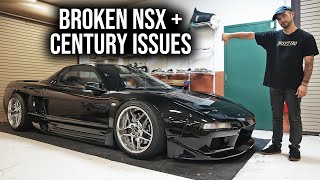
- Vibration or Shaking: A bent wheel will often cause a noticeable vibration in the steering wheel or through the chassis 🎬 Watch this video to see common NSX wheel and steering issues, which typically gets worse with speed.
- Constant Air Loss: A slow, persistent leak that can't be traced to the tire valve or a puncture may be caused by a hairline crack in the wheel, often on the inner barrel or near the bead seat where the tire seals.
- Visible Damage: Obvious signs like bends in the wheel lip (especially the inner lip, which is harder to see), cracks radiating from the lug holes, or deep gouges are clear indicators the wheel needs replacement or professional repair.
- Difficulty Balancing: If a tire shop reports that a wheel requires an excessive amount of weight to balance, it is likely bent.
Known Issues, Recalls, and TSBs
While there have been no specific NHTSA recalls issued for the wheels on the 1994-2005 Acura NSX, owners should be aware of related issues. The primary concerns are damage from road hazards due to the car's low profile and the high cost of replacement. Some owners on forums have noted that the steering rack bushings can wear out over time, causing a clunking noise that can sometimes be mistaken for a suspension or wheel issue. There are no official Technical Service Bulletins (TSBs) related to wheel failure for this period, though some exist for later model year wheels.
Buyer's Guide: How to Inspect a Used NSX Wheel

Due to the high cost of new OEM wheels, buying a used one is a common choice. A thorough inspection is critical to ensure you are getting a safe, usable part.
Verifying Compatibility: The Most Important Step
Before you even look at the condition, confirm the wheel is correct for your NSX. Check the size (diameter and width) and part number stamped on the back. Be absolutely sure you are buying a front or a rear wheel as needed—they are not interchangeable. Remember the key brake clearance differences between 1994-1996, 1997-2001, and 2002-2005 models.
Physical Inspection Checklist
- Check for Bends: Lay the wheel on a flat surface and look for any wobbling. Roll it on the ground and watch the inner and outer lips. Any deviation or wobble indicates a bend. Even a minor bend can cause vibrations that are impossible to balance out.
- Find Hairline Cracks: Clean the wheel thoroughly and inspect it under bright light. Pay close attention to the inner barrel, the area where the spokes meet the rim, and around the lug nut holes. Cracks are a major safety hazard and often make the wheel non-repairable.
- Spot Previous Repairs: Look for signs of welding on the back side of the wheel. While professional welds can be safe, they can also indicate a severe previous impact. Also, look for areas where the paint finish is uneven or has a different texture, which could hide body filler used to mask cosmetic damage.
- Inspect Lug Nut Seats: The tapered holes where the lug nuts sit should be clean and free of gouges or distortion. Damaged seats can prevent the lug nuts from torquing down correctly.
- Check for Corrosion: Look for bubbling or flaking under the paint or clear coat. This is common on wheels that have seen road salt. While often cosmetic, severe corrosion can compromise the wheel's structural integrity over time.
OEM vs. Aftermarket NSX Wheels
Original Acura NSX wheels are die-forged, making them exceptionally strong and light. Many cheaper aftermarket wheels are cast, which is a less expensive process that results in a heavier and more brittle wheel. While high-quality forged aftermarket wheels exist, a used OEM wheel is often a better value, providing proven strength, durability, and perfect fitment without requiring hub-centric rings or special lug nuts.
Verifying Paint & Finish

Where to Find Your Acura's Paint Code
The body paint code for your NSX is located on a sticker in the driver's side door jamb. This code is essential for ordering touch-up paint for the car's body. However, wheel colors often have their own separate codes or names.
Common NSX Wheel Finishes
Standard wheels were typically silver. For example, 1994-1996 wheels were often Solaris Silver (NH-536M). Other options included chrome and special colors like Grand Prix White on certain models and Washi Gray for the Zanardi edition. When buying a used wheel, a perfect color match can be difficult due to age and sun exposure. Refinishing may be necessary to match your existing set perfectly.
Cost of an Acura NSX Wheel (1994-2005)
The cost can vary significantly based on model year, condition, and whether it is a standard or special edition wheel.
| Item | Estimated Cost (per wheel) |
|---|---|
| New OEM | $900 - $1,600+ |
| Used OEM | $300 - $800 (depending on condition and rarity) |
| New Aftermarket (Cast) | $200 - $500 |
| New Aftermarket (Forged) | $850 - $2,000+ |
| Professional Refinishing | $150 - $300 |
| Shop Labor (Mount & Balance) | $35 - $75 |
Frequently Asked Questions (FAQ)
Can I put newer (2002-2005) NSX wheels on my older (1994-1996) NSX?
Yes, but it requires modification. The spokes of the 2002+ wheels will hit the smaller, earlier brake calipers. You must either install 5mm wheel spacers to provide clearance or upgrade your front brakes to the larger 1997+ components.
Are all first-generation NSX wheels forged?
Yes, all original equipment (OEM) wheels supplied on the 1991-2005 Acura NSX were manufactured using a forging process, which makes them lighter and stronger than cast wheels.
Why does the NSX have different size center bores for the front and rear wheels?
The NSX uses a 70.1 mm center bore on the front axle and a 64.1 mm center bore on the rear. This design choice is specific to Honda's engineering for the vehicle's suspension and hub assembly. It is critical to use wheels with the correct bore for each axle to ensure they are properly hub-centric, which is vital for safety and to prevent vibrations.
How much does it cost to repair a bent or cracked NSX wheel?
Straightening a bent wheel typically costs around $135-$150 per wheel. Repairing a crack with welding can cost a similar amount. However, many reputable shops will refuse to repair cracked wheels due to safety concerns. Given the high-performance nature of the NSX, replacing a cracked wheel is always the safest option.
Helpful Videos
Technical Specifications
OEM Part Numbers: 42700-SL0-A02 42700-SL0-A20ZA 42700-SL0-A30ZA 42700-SL0-A71ZA 42700-SL0-N60 42700SL0A71ZA 42700SL0N60 42750-SL0-A12 42750-SL0-A13 42750SL0A12 42750SL0A13 44700-SL0-A30ZA 44700-SL0-A30ZB 44700-SL0-A30ZC 44700-SL0-A31ZA
Bolt Pattern: 5x114.3mm | Center Bore: 70.1mm (Front), 64.1mm (Rear) | Lug Nut: M12x1.5 Ball Seat | Material: Forged Aluminum

The information in this article is provided for general reference and educational purposes only. Vehicle specifications, procedures, and part compatibility can vary by production date, trim level, and region. Always consult your vehicle's factory service manual and verify part numbers before purchasing or performing repairs. Safety-critical components such as airbags, seat belts, and braking systems should be installed by a qualified professional.
- Acura NSX:
- 🎬 Helpful Videos
- Major Generation & Model Year Wheel Variations
- 1994-1996: Forged 7-Spoke Wheels
- 1997-2001: Updated 7-Spoke Forged Wheels
- 2002-2005: Facelift 7-Spoke Forged Wheels
- Special Edition: 1999 Zanardi Edition BBS Wheels
- Technical Specifications
- Understanding Offset
- Symptoms of a Damaged Wheel
- Known Issues, Recalls, and TSBs
- Buyer's Guide: How to Inspect a Used NSX Wheel
- Verifying Compatibility: The Most Important Step
- Physical Inspection Checklist
- OEM vs. Aftermarket NSX Wheels
- Verifying Paint & Finish
- Where to Find Your Acura's Paint Code
- Common NSX Wheel Finishes
- Cost of an Acura NSX Wheel (1994-2005)
- Frequently Asked Questions (FAQ)
- 🎟️ Get 5% Off