

2014-2025 S-Class & Maybach Washer Reservoir: Leaks, Clogs & Compatibility Guide
This guide covers common failures, replacement costs, and how to choose the correct washer fluid reservoir for your 2014-2025 Mercedes-Benz S-Class or Maybach.
- Crucially verify your vehicle's generation: W222 (2014-2020) and W223 (2021-2025) use different, non-interchangeable reservoirs.
- For 2014-2020 W222 models, you must also confirm if the car has the Night Vision option, as it requires a specific tank.
- Leaks are most commonly caused by old, hardened rubber grommets for the pumps and sensor, not always a cracked tank.
- A 'Check Washer Fluid' light on a full tank points to a bad level sensor, which can be replaced separately from the reservoir.
Critical Compatibility Information: W222 vs. W223 Generations
Warning: Before purchasing a replacement washer reservoir, it is essential to identify your vehicle's specific generation and options. The 2014-2025 year range covers two different platforms that do not share the same reservoir.
- 2014-2020 (W222 Platform): This generation includes the S-Class Sedan, Coupe, Convertible, and Maybach models. Part numbers for this generation typically begin with '222', such as 222-869-04-20. Within this generation, you must also verify if your vehicle is equipped with the optional Night Vision system, as it uses a different reservoir than standard models.
- 2021-2025 (W223 Platform): This is the newer generation S-Class. Part numbers for this platform begin with '223', such as A-223-869-04-00. These reservoirs are not interchangeable with the earlier W222 models.
Failure to verify your vehicle's generation and options will result in buying a part that does not fit.
Symptoms of a Failing Washer Fluid Reservoir
When the washer reservoir or its components begin to fail, you may notice several distinct symptoms. Identifying them correctly can help you pinpoint the exact cause of the problem.
1. Visible Fluid Leaks
The most obvious sign of a problem is a puddle of blue, green, or orange washer fluid under the front passenger side of the car. Leaks can originate from several places:
- Cracked Tank: Over time, the plastic reservoir can become brittle from engine heat and develop cracks. Using plain water, which can freeze and expand in cold weather, is a common cause of a cracked tank.
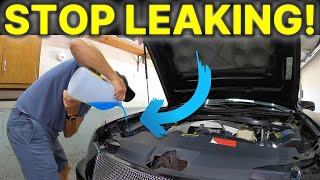
- Failed Grommets: The rubber seals where the washer pump(s) and level sensor push into the tank are frequent failure points. As the rubber ages, it can harden and shrink, allowing fluid to seep out. 🎬 Watch: How to find and repair common washer fluid leaks
- Loose or Damaged Hoses: The connection point between the pump outlet and the fluid hose can become loose or the plastic fitting can crack, causing a leak when the system is activated.
2. 'Check Washer Fluid' Light Stays On
If your dashboard displays a 'Check Washer Fluid' warning even when the reservoir is full, the fluid level sensor has likely failed. This sensor is a float switch that can get stuck or fail electronically. On many Mercedes models, using certain aftermarket washer fluids (like some types of Rain-X) has been anecdotally linked to premature sensor failure or false readings due to differences in fluid conductivity.
3. Washer Fluid Won't Spray
If you activate the washers and nothing happens, listen closely.
- Pump Sound is Audible: If you can hear the pump motor whirring, but no fluid comes out, the system is likely clogged. The small filter screen at the base of the pump is often blocked with algae or slime that grows from using plain water or from debris entering the tank.
- No Pump Sound: If you hear nothing when you activate the switch, the problem is likely electrical. This could be a failed washer pump motor, a blown fuse, or a problem with the wiring or switch itself.
Buying a Used Washer Fluid Reservoir: What to Check
A used OEM reservoir can be a cost-effective alternative to a new part, but careful inspection is key to avoiding problems. Here’s what to look for:
- Verify the Part Number: This is the most critical step. Match the part number from your old reservoir to the used one. Pay close attention to whether it's for a W222 or W223, and for W222 models, whether it's for a car with or without Night Vision.
- Inspect for Cracks: Thoroughly check the entire tank for hairline cracks, especially around the seams, mounting points, and the necks where the pumps are inserted. Stress from heat and vibration concentrates in these areas.
- Check the Grommets: Ensure the rubber grommets for the pumps and level sensor are included and are still soft and pliable. If they are hard, brittle, or missing, they will leak and must be replaced.
- Examine Pumps and Sensor: If the reservoir comes with the pumps and level sensor, inspect their plastic housings for cracks and ensure the electrical connector pins are straight and free of corrosion.
- Look Inside the Tank: Check the inside for any thick, slimy residue. While you can clean it out, heavy contamination suggests the previous owner may have used plain water, and the included pump filter could be permanently clogged.
Pro Tip: Even if the used reservoir comes with pumps and a sensor, it's often wise to install new rubber grommets during installation. These seals are inexpensive and are a primary source of leaks, so replacing them proactively can save you from having to do the job twice.
Known Issues Specific to This Platform
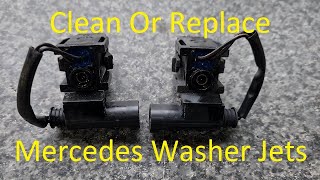
- Clogged Pump Filters: A common issue on W222 models is the filter for the washer pump becoming clogged with a gel-like substance. This is often caused by mixing different types of washer fluid or using plain water, which allows algae to grow. The symptom is a working pump motor but little to no fluid spray. 🎬 See how to clean or replace blocked Mercedes washer jets The fix requires removing the pump from the reservoir to clean or replace the small filter.
- Leaking Pump Grommets: The seals for the main washer pump and the secondary headlight washer pump (if equipped) are known to degrade over time, causing slow leaks that drain the reservoir over a day or two.
- Heated System Complications: On models with the heated washer system ('Magic Vision Control'), the reservoir has two additional ports for engine coolant lines. These add potential leak points and complicate the replacement process, as the coolant lines must be clamped and carefully disconnected.
Cost Comparison
| Part/Service | Estimated Cost |
|---|---|
| New OEM Reservoir | $95 - $160 |
| New Aftermarket Reservoir | $40 - $140 |
| Used OEM Reservoir | $75 - $150 |
| Shop Labor for Replacement | $115 - $200 |
Washer Reservoir Replacement Guide
Replacing the washer reservoir is a manageable DIY task for those with basic mechanical skills. The process is similar for both W222 and W223 generations.
- Difficulty: 3/5 (Moderate)
- Estimated Time: 1.5 - 2 hours
- Tools Required: Jack and jack stands, lug wrench, 10mm socket, plastic trim removal tools, hose clamp pliers (for heated systems), catch pan.
Step-by-Step Walkthrough
- Safely raise the front passenger side of the vehicle and remove the wheel.
- Using a 10mm socket and trim removal tools, remove the plastic fasteners and bolts securing the fender liner and peel it back to expose the washer reservoir.
- Place a catch pan underneath the reservoir. Disconnect the electrical connectors from the washer pump(s) and the fluid level sensor.
- Disconnect the washer fluid hoses from the pumps. Be prepared for the remaining fluid to drain out.
- For Heated Systems: Use hose clamp pliers to pinch off the two small coolant lines running to the reservoir before disconnecting them to minimize coolant loss.
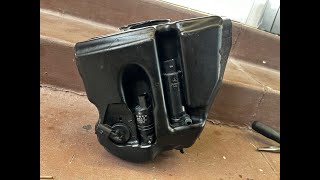
- Unbolt the reservoir from the chassis (typically two or three 10mm bolts) and carefully maneuver it out of the vehicle. 🎬 Watch this walkthrough on removing the washer tank and jets
- If your replacement reservoir does not include them, carefully pry the pumps and level sensor from the old tank and install them into the new tank with new rubber grommets.
- Installation is the reverse of removal. Reconnect all hoses and electrical connectors before bolting the new tank in place.
- Fill the reservoir with a small amount of washer fluid and test the system for leaks and proper function before reinstalling the fender liner and wheel.
Technical Specifications & Part Numbers
Part numbers are crucial for ensuring compatibility. Always verify with the seller or dealer using your VIN.
| Platform | Option | Known OEM Part Numbers |
|---|---|---|
| W222 (2014-2020) | Without Night Vision | 2228690420, A2228690420 |
| W222 (2014-2020) | With Night Vision | 2228690120, 2228690520 |
| W223 (2021-2025) | All | A2238690400 |
| All | Level Sensor (Common) | 2218209110 |
Frequently Asked Questions (FAQ)
My 'Check Washer Fluid' light is on, but the tank is full. Do I need a new reservoir?
Not usually. This symptom almost always points to a failed fluid level sensor, not the tank itself. The sensor can be purchased and replaced separately. It pushes into a grommet on the side of the reservoir, but you will still need to remove the fender liner to access it.
Can I just use water instead of washer fluid?
No, this is strongly discouraged. Using only water can lead to two major problems. First, it can freeze in cold weather, expand, and crack the reservoir or damage the pump. Second, water promotes the growth of algae and bacteria, which creates a slime that can clog the pump's filter screen, hoses, and spray nozzles. Always use a quality washer fluid rated for the appropriate climate.
How do I know if my car has the heated washer system?
The most reliable way is to use a VIN decoder to check for option code 875 (Heated Washer System). Physically, you can look at the reservoir (after removing the fender liner) and see if there are two small coolant hoses attached to it, in addition to the larger washer fluid hoses. Cars without the heated system will not have these coolant lines.
What is the difference between the Night Vision and non-Night Vision reservoirs?
While the exact engineering difference isn't widely documented, reservoirs for vehicles with Night Vision have a different shape or mounting points to accommodate the system's components, which are located in the front of the vehicle. The Night Vision system uses an infrared camera that may have its own small, high-pressure washer nozzle to keep it clean, requiring a specific reservoir design. Using the wrong tank will result in it not fitting correctly in the vehicle.
Helpful Videos

Technical Specifications
OEM Part Numbers: 2228690420 A2228690420 2228690120 2228690520 A2238690400
Material: Plastic. Capacity varies by specific part number and options. May include ports for one or two washer pumps, a fluid level sensor, and two coolant lines for the heated washer system option.
We Have This Part in Stock



The information in this article is provided for general reference and educational purposes only. Vehicle specifications, procedures, and part compatibility can vary by production date, trim level, and region. Always consult your vehicle's factory service manual and verify part numbers before purchasing or performing repairs. Safety-critical components such as airbags, seat belts, and braking systems should be installed by a qualified professional.
- Mercedes-Benz S-Class:
- Mercedes-Benz S-Class Convertible:
- Mercedes-Benz S-Class Coupe:
- Mercedes-Benz S-Class Maybach:
- Mercedes-Maybach S-Class:
- 🎬 Helpful Videos
- 🛍️ Shop This Part
- Critical Compatibility Information: W222 vs. W223 Generations
- Symptoms of a Failing Washer Fluid Reservoir
- 1. Visible Fluid Leaks
- 2. 'Check Washer Fluid' Light Stays On
- 3. Washer Fluid Won't Spray
- Buying a Used Washer Fluid Reservoir: What to Check
- Known Issues Specific to This Platform
- Cost Comparison
- Washer Reservoir Replacement Guide
- Step-by-Step Walkthrough
- Technical Specifications & Part Numbers
- Frequently Asked Questions (FAQ)
- 🎟️ Get 5% Off