

2020-2025 Honda CR-V Camera & Sensor Guide: Forward, Rear & Blind Spot Issues
A complete guide to diagnosing and replacing the forward camera, backup camera, and blind spot radar sensors on the 2020-2025 Honda CR-V, including critical calibration and software information.
- The common black-and-white backup camera issue on 2023-2025 CR-Vs is a software problem fixed by a dealer update (TSB 25-071), not a faulty camera.
- Replacing the forward-facing (Honda Sensing) camera is a complex job that REQUIRES expensive professional calibration to function. It is not a DIY repair.
- The 2020-2022 CR-V is part of a major NHTSA investigation for 'phantom braking,' a dangerous defect linked to the forward camera and radar system.
- Always distinguish between cameras and radar sensors. Blind spot and some cruise control functions use radar sensors in the bumpers/grille, which are different parts with different problems.
Understanding the Cameras and Sensors in Your CR-V

The 2020-2025 Honda CR-V uses a combination of cameras and radar sensors for its advanced driver-assistance systems (ADAS). It's crucial to distinguish between them, as they have different functions, failure symptoms, and replacement procedures. This guide covers the two main camera systems and the often-confused radar sensors.
- Forward-Facing Camera: Located behind the rearview mirror, this is the 'eye' for the Honda Sensing system.
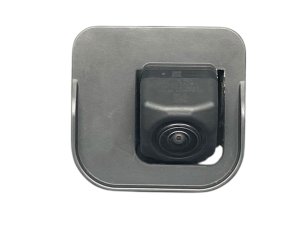
- Rearview Backup Camera: Located on the tailgate above the license plate, this camera assists with reversing.
- Radar Sensors: These are not cameras. They use radio waves and are located in the front grille (for Adaptive Cruise Control) and behind the rear bumper corners (for the Blind Spot Information system).
Generation Split: The Honda CR-V was completely redesigned for the 2023 model year. While some issues overlap, many parts and problems are specific to either the 2020-2022 (5th Gen) or 2023-2025 (6th Gen) models. Always verify part numbers for your specific year and trim.
1. Forward-Facing Camera (Honda Sensing)

What It Does
This single camera, mounted high on the windshield, constantly scans the road ahead. It identifies lane markings, other vehicles, pedestrians, and traffic signs. This information is used by systems like Adaptive Cruise Control (ACC), Lane Keeping Assist (LKAS), Road Departure Mitigation (RDM), and the Collision Mitigation Braking System (CMBS) to help keep you safe.
Symptoms of Failure
- Multiple warning lights on the dashboard, such as "Collision Mitigation System Problem," "Lane Keeping Assist Problem," or "Adaptive Cruise Control Problem."
- Safety features become disabled and cannot be activated.
- Sudden, unexpected braking (known as "phantom braking") when no obstacle is present.
- Inaccurate traffic sign recognition.
Known Issues, Investigations, and TSBs
NHTSA Investigation (2020-2022 Models): The National Highway Traffic Safety Administration (NHTSA) has an ongoing investigation into unexpected activation of the automatic emergency braking system (phantom braking) on nearly 3 million Honda vehicles, including the 2020-2022 CR-V. This is a serious safety concern linked to the forward camera and radar systems.
Front Camera Failures: There are widespread owner reports and a class-action lawsuit investigation concerning premature failure of the forward-facing camera, leading to the loss of all Honda Sensing safety features. In many cases, owners report being quoted high repair costs by dealerships.
Replacement & Calibration
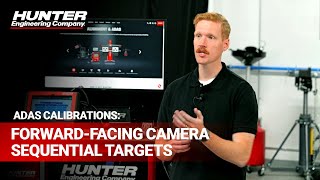
Warning: Replacing the forward-facing camera is not a simple DIY job. The new camera must be professionally calibrated to function correctly. Failure to calibrate will result in the safety systems not working and can be dangerous. This procedure requires specialized targets and diagnostic tools 🎬 Watch: How sequential targets are used for forward camera calibration that most home mechanics do not have. Even a windshield replacement requires the camera to be recalibrated.
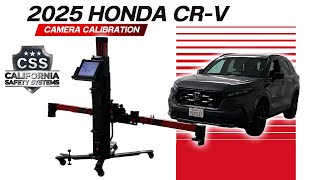
Installation involves carefully removing the interior trim around the rearview mirror, disconnecting the old camera, and installing the new one. The critical step is the static (in-shop) and/or dynamic (on-road) calibration that follows, which must be performed by a dealer or a qualified auto glass/ADAS repair facility.
2. Rearview Backup Camera

What It Does
This camera provides a live video feed of the area behind your vehicle when you shift into reverse. Most CR-V models offer multiple viewing angles (normal, top-down, and wide) to aid in parking and maneuvering in tight spaces.
Symptoms of Failure
- The screen is black or blue when in reverse.
- The camera image flickers, is distorted, or has lines running through it.
- The image intermittently switches from color to black and white.
- A warning message appears on the infotainment screen.
Known Issues, TSBs, and Recalls
TSB 25-071 (2023-2025 Models): A very common complaint on 6th generation CR-Vs is the backup camera image switching to black and white. Honda has released Technical Service Bulletin 25-071, which states the cause is an incorrect software setting in the audio unit. The fix is a software update performed by a dealer, not a camera replacement. If a dealer replaces the camera for this issue, the problem will likely persist.
In some cases discussed by owners, if the software update does not work, dealers have replaced the main audio unit to resolve the problem.
Replacement & Calibration
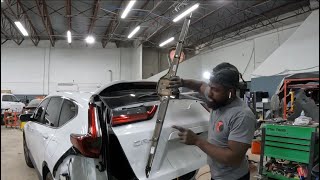
Replacing the rearview camera is a much more DIY-friendly task than the forward camera. It typically involves removing the inner tailgate trim panel to access the camera's mounting hardware 🎬 Watch: How to remove the tailgate trim and backup camera and electrical connector. No special calibration is usually required after replacement.
3. A Note on Radar Sensors (Not Cameras)
Many of the part numbers provided in the initial data, such as 36936-TLA-A21 and 36801-TNY-A03, are for radar sensors, not cameras.
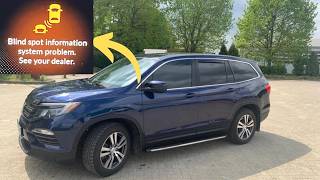
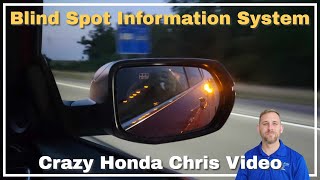
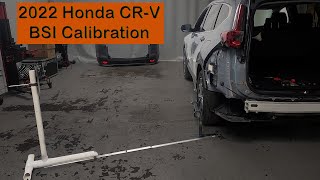
- Rear BSI Radar: Located behind the left and right corners of the rear bumper cover, these sensors detect vehicles in your blind spots. Failure triggers a "Blind Spot Information System Problem" message. Part number 36936-TLA-A21 (and its successor 36936-TLA-A22) is the left-side rear radar sensor. 🎬 See how a professional calibrates the blind spot monitor system
- Front ACC Radar: Located in the front grille, often behind the Honda emblem, this sensor works with the forward camera for the Adaptive Cruise Control system. Part number 36801-TNY-A03 is a front milliwave radar unit.
Like the forward camera, replacing these radar units may require aiming or calibration by a qualified shop.
Buying a Used CR-V Camera: What to Check
Buying a used camera can save you money, but it comes with risks. Here’s what to look for.
Inspecting a Used Forward-Facing Camera
- High Risk Purchase: Due to the absolute requirement for expensive professional calibration, buying a used forward camera is risky. The cost of calibration can sometimes approach the cost of the part itself.
- Verify Part Numbers: This is the most critical step. There are many different camera part numbers based on model year, trim (LX, EX, Touring), and engine (1.5T, Hybrid). You MUST match the part number exactly. Ask the seller for the VIN of the donor vehicle to help a dealer confirm compatibility.
- Physical Inspection: Check the lens for any deep scratches or cloudiness. Inspect the housing and connectors for any signs of cracks or damage from an accident.
Inspecting a Used Rearview Camera
- Lower Risk Purchase: A used OEM rearview camera is a good value, as it typically does not require calibration.
- Check the Lens: Look for deep scratches, hazing, or signs of water intrusion inside the lens. A cloudy image is often due to a failed seal.
- Connector Pins: Ensure the electrical connector and its pins are clean, straight, and free of corrosion.
- For 2023+ Models: Remember that the common black-and-white image problem is a software issue. A used camera will NOT fix it. Do not buy a used camera to solve this specific problem.
Pro Tip: For complex electronic parts like these, buying a used OEM component is often a better choice than a cheap new aftermarket part. Used OEM parts are designed to integrate perfectly with your vehicle's software, while aftermarket versions can sometimes cause communication errors or have lower quality imaging sensors.
Cost Comparison
Prices can vary significantly based on the specific camera and your location. The main cost driver for the forward camera is the mandatory calibration.
| Component | New OEM (Part Only) | Used OEM (Part Only) | Shop Labor (Install & Calibrate) |
|---|---|---|---|
| Forward-Facing Camera | $700 - $1,100+ | $250 - $500 | $350 - $600+ (Calibration is the main cost) |
| Rearview Backup Camera | $350 - $450 | $100 - $250 | $100 - $200 |
Frequently Asked Questions (FAQ)
Why did my 2023 CR-V backup camera turn black and white?
This is a widely known issue caused by a software glitch in the audio unit, not a faulty camera. Your Honda dealer can perform a software update under TSB 25-071 to fix it, which should be covered under the vehicle's basic warranty. Do not replace the camera, as it will not solve the problem.
Do I need to calibrate a camera after replacing it?
Yes, for the forward-facing camera. It is absolutely mandatory. The Honda Sensing systems will not work without it. No, for the rearview backup camera. It is typically a plug-and-play installation that does not require calibration.
Can I replace the forward camera myself to save money?
While you might be able to physically swap the part, you will still need to take the vehicle to a dealer or ADAS-specialist shop immediately after for calibration. Given the complexity and safety-critical nature of the system, this repair is best left to professionals from start to finish.
My windshield was just replaced and now I have warning lights. What happened?
Whenever the windshield is replaced, the forward-facing camera must be removed and reinstalled. This process requires the camera to be recalibrated to ensure it is aimed correctly through the new glass. Reputable auto glass shops will include this ADAS calibration as part of the windshield replacement service.
OEM Part Numbers
Part numbers vary greatly by year, trim, and specific system. The list below clarifies some of the numbers from the initial data and adds others found in research. Always confirm the exact part number with a dealer using your VIN before purchasing.
| Part Number | Description | Common Fitment |
|---|---|---|
| 36163-TNY-A03 | Forward-Facing Camera (Mono) | 2020-2022 CR-V (EX, LX, SE) |
| 8S100-3D4-A08 | Forward-Facing Camera (Mono) | 2023-2024 CR-V Hybrid (Sport) |
| 8S100-3A0-A09 | Forward-Facing Camera (Mono) | 2023-2024 CR-V (LX, EX) |
| 39530-TLA-A01 / A11 | Rearview Backup Camera | 2017-2020 CR-V |
| 36801-TNY-A03 | Radar Sensor (Front Grille) | 2020-2022 CR-V (FWD, non-LED) |
| 36936-TLA-A21 / A22 | Radar Sensor (Rear Bumper, Left) | 2020-2022 CR-V |
Helpful Videos

Technical Specifications
OEM Part Numbers: 36163-TNY-A03 36163-TNY-A02 8S100-3D4-A08 8S100-3A0-A09 8S103-3A0-A08 39530-TLA-A01 39530-TLA-A11 39530-TLA-A51 36801-TNY-A03 36936-TLA-A21 36936-TLA-A22
System includes forward-facing monocular camera for Honda Sensing, tailgate-mounted rearview camera, front grille-mounted millimeter-wave radar, and rear bumper-mounted blind spot information (BSI) radar sensors. Calibration is mandatory for forward camera and radar sensor replacement.
We Have This Part in Stock



The information in this article is provided for general reference and educational purposes only. Vehicle specifications, procedures, and part compatibility can vary by production date, trim level, and region. Always consult your vehicle's factory service manual and verify part numbers before purchasing or performing repairs. Safety-critical components such as airbags, seat belts, and braking systems should be installed by a qualified professional.
- Honda CR-V:
- 🎬 Helpful Videos
- 🛍️ Shop This Part
- Understanding the Cameras and Sensors in Your CR-V
- 1. Forward-Facing Camera (Honda Sensing)
- What It Does
- Symptoms of Failure
- Known Issues, Investigations, and TSBs
- Replacement & Calibration
- 2. Rearview Backup Camera
- What It Does
- Symptoms of Failure
- Known Issues, TSBs, and Recalls
- Replacement & Calibration
- 3. A Note on Radar Sensors (Not Cameras)
- Buying a Used CR-V Camera: What to Check
- Inspecting a Used Forward-Facing Camera
- Inspecting a Used Rearview Camera
- Cost Comparison
- Frequently Asked Questions (FAQ)
- OEM Part Numbers
- 🎟️ Get 5% Off