

2024 Hyundai Santa Fe Chassis Control Module: A Guide to Part Numbers, Problems, and Programming
This guide decodes the different control modules in the 2024 Santa Fe and explains the critical programming steps required for replacement.
- Programming by a Hyundai dealer or specialist is mandatory for a used module to function; it is not plug-and-play.
- For US models, you must match the part number 96510-R6020 exactly and verify your VIN's 5th digit is 'Z'.
- The 2024 Santa Fe has several active recalls for software and wiring issues; check your VIN with NHTSA or a dealer.
- Symptoms of failure are often broad electrical issues like multiple warning lights, system blackouts, or a dead battery.
Understanding "Vehicle Control Module" on a 2024 Santa Fe
The term "Vehicle Control Module" can be confusing, as a modern car has dozens of electronic modules. For the 2024 Hyundai Santa Fe, several different parts might be referred to by this generic name. It is critical to identify the exact part you need by matching the OEM part number from your original unit. The most common modules include:
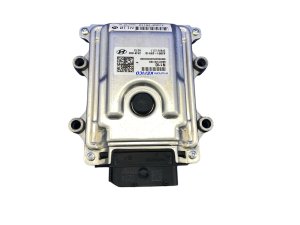
- Chassis Domain Control Module (CDCM) - 96510-R6020: This is the primary subject of this guide. It's a master controller for chassis and safety systems. The warning to check for a 'Z' in the 5th digit of your VIN applies to this US-market module.
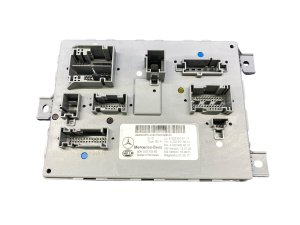
- Body Control Module (BCM) - 95400-R6020 / 95400-R6000: Also called the Smart Key Module, this unit manages interior and exterior functions like lights, windows, and keyless entry (for vehicles without the digital key feature).
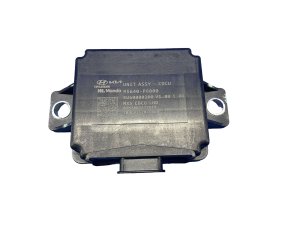
- Driver Assist / Chassis Module - 95640-P6000: This part is also sometimes labeled a chassis module, creating a potential compatibility trap. It appears to be for different trims or markets (some listings specify Korea-built vehicles) and has a much lower price point. Double-check your original part number to avoid buying the wrong component.
- In-Cabin Camera Control Module - 96528-R6100: This module is part of the driver-assist system and processes information from the interior camera.
Symptoms of a Failing Chassis Domain Control Module


A failing CDCM can cause a wide range of confusing and intermittent electrical problems. Because it communicates with so many other systems, its failure often looks like multiple, unrelated issues happening at once.
- Multiple Warning Lights: The most common symptom is the sudden illumination of numerous warning lights on the dashboard, such as ABS, Traction Control, Airbag, and Check Engine, all at the same time.
- Sudden Loss of Power or Features: You may experience a sudden drop in speed while driving, with the vehicle struggling to accelerate. Advanced driver-assist features like adaptive cruise control or lane-keeping assist may become unavailable.
- Dashboard Blackout or System Reboot: The entire digital instrument cluster and infotainment screen may go black and then restart while driving or when stopped. In some cases, the vehicle may not accelerate after such an event until it is turned off and on again.
- Complete No-Start / Dead Battery: A faulty module can fail to shut down properly, causing a parasitic drain that kills the battery overnight or after a few days of sitting. You may find the vehicle completely dead with no power to any system.
- Communication Fault Codes: A professional scan tool may show "U-codes" (e.g., U0100, U0121), which indicate a loss of communication between modules. This is a key indicator that the CDCM may be failing or that there is a network wiring issue.
Known Issues, Recalls, and Technical Service Bulletins (TSBs)

The 2024 Santa Fe is a new generation, and several recalls and service campaigns have already been issued. While not all are directly for the CDCM, they highlight the complexity of the vehicle's electronics. Always check your vehicle's VIN on the NHTSA website for open recalls.
- NHTSA Recall 24V-529 (Hyundai Recall 263): A software error in the Transmission Control Unit (TCU) could allow the vehicle to roll away while in Park. The fix is a software update performed by the dealer.
- NHTSA Recall 24V-561 (Hyundai Recall 265): The main floor wiring harness can be damaged by the second-row seat folding mechanism. This can cause the airbag light to come on or affect airbag deployment in a crash.
- NHTSA Recall 25V-659 (Hyundai Recall 285): An improperly installed cover on the starter motor's positive terminal creates a fire risk in a crash. This affects non-hybrid models.
- Owner Complaints: Owners have reported various electrical issues, including dead batteries and dashboard blackouts, that dealers have had difficulty diagnosing, sometimes tracing the issue to a faulty head unit or other module causing a parasitic drain.
Warning: This module absolutely requires professional programming and configuration to function. It is not a plug-and-play part. Failure to program the module will result in a no-start condition or malfunctioning safety systems.
Buying a Used 2024 Santa Fe Chassis Domain Control Module
Buying a used CDCM can save you a significant amount of money, but it requires careful attention to detail to ensure compatibility and functionality.
- Verify the Part Number: You MUST match the part number exactly. For most US-market vehicles, this will be 96510-R6020. Do not purchase a module with a similar number, like 95640-P6000, as it may be for a different market or trim level.
- Check VIN Compatibility: As an extra check for US market vehicles, verify that the 5th digit of your vehicle's VIN is 'Z'. The 96510-R6020 module is intended for these vehicles.
- Inspect for Damage: Carefully inspect the used module's casing for any cracks or signs of being opened. Check the electrical connector pins for any corrosion, moisture, or physical damage that may have occurred during removal from the donor vehicle.
- Plan for Programming: Before you buy the part, have a plan for who will program it. Call your local Hyundai dealer and ask for a quote to program a customer-supplied used CDCM. Not all dealers are willing to do this. If they are not, you will need to find an independent specialist with the proper equipment.
Programming and Installation Requirements

Physical installation is straightforward for a mechanic, but electronic setup is complex.
- Programming is Mandatory: A used CDCM is electronically locked to the VIN of its original vehicle. It must be "unlocked" and reprogrammed to your vehicle's VIN. This process also configures the module for your car's specific features (trim level, tire size, etc.) and syncs it with the anti-theft system.
- Dealer vs. Independent Shop:
- Hyundai Dealer: This is the most reliable option. They have the proprietary Hyundai GDS (Global Diagnostic System) diagnostic tool and a direct connection to Hyundai's technical servers, which is required for this procedure.
- Independent Shop: Most independent shops cannot program this module. Standard aftermarket J2534 pass-thru tools have very limited, if any, support for programming used Hyundai modules beyond simple ECU/TCM updates. Only a highly specialized shop with specific tools and expertise in unlocking Hyundai modules may be able to perform the job.
- DIY: This is not a DIY-feasible task. It requires expensive, proprietary hardware and software subscriptions.
Pro Tip: When getting a quote for installation, ask specifically for the cost to "program and configure a used chassis domain control module." This is a separate, and often more expensive, labor operation than simply installing the part.
Cost Comparison
Prices can vary, but here is a general cost expectation. Programming labor is the key variable.
| Part Type | Estimated Cost |
|---|---|
| New OEM (96510-R6020) | $450 - $650 (estimated) |
| Used OEM | $175 - $300 |
| Shop Labor (Installation & Programming) | $200 - $400 |
Frequently Asked Questions (FAQ)
Does a used 2024 Santa Fe CDCM need to be programmed?
Yes, absolutely. It is 100% required. The module is electronically tied to the original vehicle's VIN and options. It will not work in your car until it is reprogrammed by a dealer or a qualified specialist.
Can I install the module myself and then drive to the dealer?
This is not recommended. Depending on how the module fails, installing a non-programmed unit may result in a no-start condition, or critical safety systems like brakes and steering may not function correctly. It is much safer to have the vehicle towed to the programming facility.
What is the difference between a CDCM, BCM, and ECU?
Think of them as managers for different parts of the car. The ECU (Engine Control Unit) manages the engine. The BCM (Body Control Module) manages interior/exterior comfort and convenience features like lights and windows. The CDCM (Chassis Domain Control Module) manages the systems that control how the car drives and handles, like steering, brakes, and stability control.
My mechanic says the module is bad. What should I do first?
First, ask for the specific fault codes from the diagnostic scan. Second, physically locate the module in your vehicle and confirm the exact OEM part number printed on its label. Third, call a Hyundai dealership with your VIN and the part number to confirm compatibility and get a quote for programming *before* you purchase a used part.
Technical Specifications
OEM Part Numbers: 96510-R6020 96510R6020 95400-R6020 95400R6020 95640-P6000 96528-R6100 96528R6100
The Chassis Domain Control Module (CDCM) acts as a centralized control unit for the vehicle's CAN (Controller Area Network) bus, integrating steering, braking, and stability control functions.
We Have This Part in Stock




The information in this article is provided for general reference and educational purposes only. Vehicle specifications, procedures, and part compatibility can vary by production date, trim level, and region. Always consult your vehicle's factory service manual and verify part numbers before purchasing or performing repairs. Safety-critical components such as airbags, seat belts, and braking systems should be installed by a qualified professional.
- Hyundai Santa Fe:
- 🛍️ Shop This Part
- Understanding "Vehicle Control Module" on a 2024 Santa Fe
- Symptoms of a Failing Chassis Domain Control Module
- Known Issues, Recalls, and Technical Service Bulletins (TSBs)
- Buying a Used 2024 Santa Fe Chassis Domain Control Module
- Programming and Installation Requirements
- Cost Comparison
- Frequently Asked Questions (FAQ)
- 🎟️ Get 5% Off