

2023-2025 Genesis GV60 Vehicle Control Unit: Failure, Recalls, and the ICCU Link
This guide explains the critical relationship between the Vehicle Control Unit (VCU) and the widespread Integrated Charging Control Unit (ICCU) recall, details mandatory programming, and clarifies symptoms of failure.
- Most VCU-related symptoms on the GV60 are actually caused by a failing Integrated Charging Control Unit (ICCU), which is covered by a major safety recall.
- A replacement Vehicle Control Unit is NOT plug-and-play. It requires mandatory programming by a Genesis dealer or a specialist with a GDS tool to sync with the car's VIN and immobilizer.
- The primary symptom of failure is a "Check Electrical Vehicle System" warning, often followed by a sudden loss of power as the car enters limp mode.
- To ensure compatibility, you must match the OEM part number exactly (e.g., 39751-1XJN5) with the module from your specific vehicle trim.
The Critical Link: VCU Symptoms and the ICCU Recall
For the 2023-2025 Genesis GV60, it is nearly impossible to discuss the Vehicle Control Unit (VCU) without focusing on the Integrated Charging Control Unit (ICCU). A widespread and well-documented issue with the ICCU is the primary cause of most powertrain-related warnings and failures in these vehicles. The ICCU is responsible for charging both the main high-voltage battery and the conventional 12-volt battery that powers the car's accessories and computer systems.
A series of major recalls, including NHTSA campaign numbers 24V204 and 24V868, were issued because the ICCU can become damaged internally, causing it to stop charging the 12V battery. When the 12V battery's voltage drops, the VCU detects this critical fault and displays a "Check Electrical Vehicle System" warning. It then places the vehicle into a "fail-safe" or "limp home" mode, which significantly reduces power and can eventually lead to a complete loss of motive power, increasing the risk of a crash. Therefore, while the VCU is the module reporting the error, the root cause is almost always a failing ICCU.
Symptoms of Failure
The symptoms listed below are most commonly associated with the ICCU failure, which are then reported by the VCU.
- "Check Electrical Vehicle System" Warning: This is the most common indicator, appearing on the instrument cluster when the VCU detects a fault.
- Sudden Loss of Power: The vehicle may abruptly enter a reduced-power "limp mode" while driving. Some drivers report hearing a "pop" sound just before power is lost.
- Inability to Charge: The vehicle may fail to charge on a Level 1 or Level 2 charger, or charging may stop unexpectedly.
- 12V Battery Drain: A dead 12-volt battery is a key symptom, as the failing ICCU no longer recharges it from the main high-voltage pack.
- Associated OBD-II Code: A diagnostic scan will often reveal the code P1A9096 ("DC/DC Converter Input Voltage Sensor Fault"), which specifically points to the ICCU.
Diagnosing the Issue
If your GV60 exhibits the symptoms above, a technician's first step should be to perform a diagnostic scan. The presence of DTC P1A9096 is a strong confirmation that the ICCU is the problem. Under the recall campaign, Genesis dealers will inspect the ICCU and its fuse. If the DTC is present, they will replace the ICCU and fuse; if not, they will perform a software update designed to prevent the failure.
Warning: A used VCU is NOT a plug-and-play part. It must be professionally programmed to your vehicle's specific Vehicle Identification Number (VIN) and configuration. Failure to do so will result in the vehicle not starting or functioning correctly.
Buying a Used Vehicle Control Module
If a VCU failure has been definitively diagnosed, finding a reliable used unit is a cost-effective option. However, there are critical compatibility requirements.
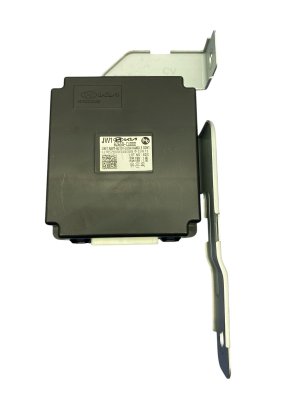
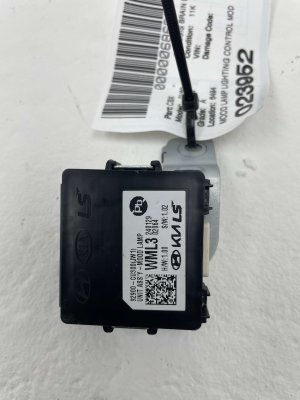
- Match the Part Number Exactly: The only way to ensure compatibility is to match the OEM part number from your original module. The primary part number for this range is 39751-1XJN5. Do not attempt to use a module with a different part number.
- Verify Trim Level Compatibility: The Genesis GV60 was offered in different trims, such as Advanced AWD and Performance AWD. These trims use different, non-interchangeable control units. Matching the part number is the best way to avoid this issue.
- Inspect for Damage: When purchasing a used VCU, check for any signs of physical damage, corrosion on the pins, or cracks in the casing. Only purchase modules that are clean and appear well-kept.
Programming and Installation
Replacing the VCU is a task for a Genesis dealer or a highly specialized independent shop with access to the Genesis Diagnostic System (GDS).
- Programming is Mandatory: The replacement VCU must be programmed to the vehicle. This process links the module to the car's VIN and its specific set of options. It also syncs the module with the vehicle's immobilizer and anti-theft system.
- Dealer or Specialist Required: This programming cannot be performed by a typical mechanic or with standard OBD-II tools. An attempt to install a non-programmed VCU will likely result in a no-start condition.
Cost Breakdown
Pricing can vary by supplier and location. The following are estimates to help you understand the potential costs.
| Part Type | Estimated Cost |
|---|---|
| New OEM (Dealer) | $380 - $540 |
| Used OEM (Recycled) | $150 - $300 |
| Remanufactured | Not commonly available; however, repair services for the related ICCU exist. |
| Shop Labor (Installation & Programming) | $250 - $450 |
Other 2023-2025 Genesis GV60 Recalls & TSBs
Owners should be aware of other notable service campaigns for this vehicle, including:
- Instrument Panel Failure: A software bug could cause the instrument cluster to go blank on startup. This is addressed by a software update (Recall 027G).
- Windshield Trim Detachment: The upper windshield molding could detach while driving (Recall 028G).
- Rear Driveshaft Failure: Some 2023 models were recalled for a rear inner driveshaft that could fracture (Recall 013G).
- Seat Belt Pretensioner Recall: An issue with pyrotechnic pretensioners could cause them to deploy abnormally (Recall 012G).
Frequently Asked Questions (FAQ)
Is the Vehicle Control Unit (VCU) failure part of the big ICCU recall?
Not directly, but the two are closely related. The recall is for the Integrated Charging Control Unit (ICCU). When the ICCU fails, it can no longer charge the 12V battery. The VCU detects the resulting low voltage and puts the car into limp mode, triggering the "Check EV System" light. So, the symptoms you experience are a result of the VCU reacting to the ICCU's failure.
Does a replacement VCU need to be programmed?
Yes, absolutely. A replacement VCU, whether new or used, must be professionally programmed to your vehicle's VIN and specific configuration using the Genesis Diagnostic System (GDS). It is not a plug-and-play part. Without proper programming, the vehicle will not operate correctly and may not start.
Can I drive my GV60 with the "Check Electrical Vehicle System" light on?
No, it is not recommended. This warning often precedes a sudden loss of power as the vehicle enters a protective limp mode. Continuing to drive could leave you stranded in a dangerous situation, such as on a highway. You should pull over safely and have the vehicle towed to a qualified service center.
What is the difference between the VCU and the ICCU?
The VCU (Vehicle Control Unit) is the main computer for the powertrain, making decisions about power delivery and safety. The ICCU (Integrated Charging Control Unit) is a component that manages charging, converting AC power to DC to charge the high-voltage battery and also stepping down high-voltage DC power to recharge the 12V accessory battery. In the GV60, the ICCU is the part that typically fails, and the VCU is the part that reports the problem.
Technical Specifications
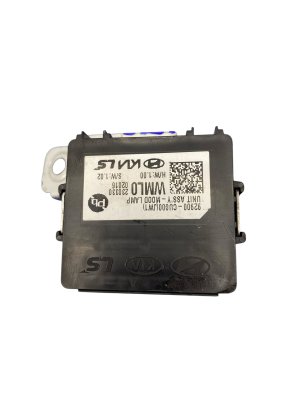
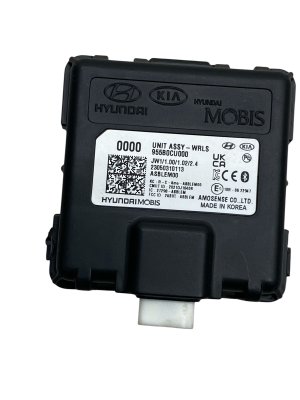
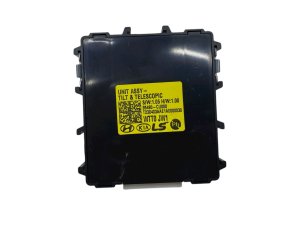
OEM Part Numbers: 39751-1XJN5 39751-1XJN1
Controls and manages the electric powertrain, including the inverter, motors, and battery systems. Integrates with the vehicle's immobilizer and other control modules.
We Have This Part in Stock

The information in this article is provided for general reference and educational purposes only. Vehicle specifications, procedures, and part compatibility can vary by production date, trim level, and region. Always consult your vehicle's factory service manual and verify part numbers before purchasing or performing repairs. Safety-critical components such as airbags, seat belts, and braking systems should be installed by a qualified professional.
- Genesis GV60: