

2012-2017 Toyota Prius C Hybrid Battery: Decoding P0A80 and Buying Used
This guide covers common failure symptoms, diagnostic codes, and crucial checks for purchasing a recycled high-voltage battery for your Prius C.
- This battery is a high-voltage hazard (144V DC) and replacement should only be done by professionals with proper safety equipment.
- The most common failure codes are P0A80 and P3000. Before replacing the battery, check the battery cooling fan filter under the rear seat for clogs.
- When buying used, verify the donor vehicle VIN has 'B3' in the 7th and 8th digits to ensure it's from a Prius C.
- Use the Dr. Prius app with an OBD-II scanner to check the health and cell balance of a used battery before purchase.
Symptoms of a Failing Hybrid Battery

A failing hybrid battery in a Prius C will cause a number of noticeable issues. The car's computer is very sensitive to the battery's performance and will alert you when something is wrong.
- "Check Hybrid System" Warning Light: This is the most common and direct indicator. When the battery's control module detects a problem, it will illuminate this warning on the dashboard.
- Decreased Fuel Economy: If you notice you're visiting the gas station more often, it could be a sign that the battery isn't holding enough charge to assist the engine effectively. The gasoline engine has to run more often to compensate, burning more fuel.
- Rapidly Fluctuating Battery Gauge: The charge level on your dashboard display may jump from nearly full to nearly empty in a very short time, or vice-versa. This indicates the battery can no longer reliably hold or deliver a stable charge.
- Engine Running More Frequently: You may hear the gasoline engine kick on more than usual, especially when stopped or at low speeds where the car would typically run on electric power alone.
- Sluggish Acceleration: A weak hybrid battery may not provide enough power to the electric motor for assistance, making the car feel slow or underpowered.
- Loud or Constantly Running Battery Fan: The hybrid battery has a cooling fan located near the rear seat. If this fan is running constantly or is unusually loud, it may be trying to cool an overheating, struggling battery.
Common Diagnostic Trouble Codes (DTCs)
If you have a "Check Hybrid System" light, an OBD-II scanner can read the specific codes. The most common codes for a failing Prius C hybrid battery are:
- P0A80 - Replace Hybrid Battery Pack: This is a generic code indicating the battery control module has detected a failure in the high-voltage battery assembly. It often means one or more of the internal cell blocks are weak or have failed.
- P3000 - Battery Control System Malfunction: This code is often triggered alongside P0A80 and points to a general fault within the battery management system. Sometimes, this can be caused by issues like corrosion on the battery's internal bus bars or a cooling system problem.
Pro Tip: Before condemning the battery, check the hybrid battery cooling fan filter. It's located under the rear driver's side seat area. This filter can get clogged with dust and debris, restricting airflow and causing the battery to overheat, which can trigger codes P0A80 and P3000. Cleaning or replacing this filter is a simple first step in troubleshooting.
Buying a Used 2012-2017 Prius C Hybrid Battery

A used OEM hybrid battery can be a cost-effective and reliable solution, as original Toyota parts are built to a high standard. However, since a battery is a wear item, careful inspection is critical.
1. Verify Compatibility
This is the most important step. The hybrid battery for the Prius C is unique and does not fit the standard Prius or Prius V models.
- Check the VIN: Ensure the donor vehicle's VIN has 'B3' as the 7th and 8th digits. This confirms the vehicle is a Prius C (Model code NHP10L) and the battery will be the correct physical size and specification.
- Match Part Numbers: Look for OEM part numbers like G9510-52030, G9510-52031, G9510-52032, or G9280-52030. The latest part number is typically the best choice as it may include revisions.
2. Assess the Battery's Health (Before You Buy)
If possible, test the battery before purchasing. This is the best way to avoid buying a battery that is already near the end of its life.
Pro Tip: Use the Dr. Prius / Dr. Hybrid mobile app and a compatible Bluetooth OBD-II scanner (such as a Veepeak or Carista). This app can perform a life expectancy test and show you the voltage of each individual cell block inside the battery pack. Look for blocks with voltages that are more than 0.3V different from the others; a large variance indicates an unbalanced and unhealthy pack.
🎬 See this demo of the Dr. Prius battery test3. Physical Inspection
- Check for Corrosion: Inspect the orange high-voltage connectors and the metal case for any signs of corrosion or water intrusion.
- Look for Damage: The outer metal case should be free of major dents or punctures that could indicate internal damage from an accident.
- Ask About the Donor Car: A battery from a newer model year (e.g., a 2017 vs. a 2012) with lower mileage is always preferable. Age and charge cycles are the primary factors in battery degradation.
Known Issues, Recalls, and TSBs
While generally reliable, there are a few known issues for this hybrid system.
- Clogged Battery Cooling Fan Filter (TSB T-TT-0432-17_Rev): As mentioned, a clogged filter can cause the battery to overheat and reduce its efficiency and lifespan. Toyota issued a technical service bulletin about this, advising technicians to check for debris.
- Inverter Failure Recalls (Affecting other Prius models): While several recalls were issued for inverter failures on the standard Prius and Prius V (which could cause a loss of power), it is less clear if these directly apply to the 2012-2017 Prius C. These recalls involved updating software to prevent thermal stress on transistors in the inverter.
- DC-DC Converter Recall (NHTSA Campaign K0K): Some 2018-2019 Prius C models were recalled because the DC-DC converter could fail, leading to a loss of drive. While this is outside the 2012-2017 range, it's a related system to be aware of. This converter steps down voltage for the 12V system.
Replacement Overview & Difficulty

Warning: This is a high-voltage component that can cause serious injury or death if handled improperly. The system contains approximately 144 volts DC. This procedure should only be performed by qualified technicians with proper training and safety equipment, including Class 0 (1000V rated) insulated gloves.
Replacing the hybrid battery is a complex job. The battery is located under the rear passenger seat. The basic steps involve:
- Disconnecting the 12-volt auxiliary battery in the rear of the car.
- Removing the rear seat cushions.
- Removing the high-voltage service plug (safety plug) to de-energize the system.
- Disconnecting the high-voltage cables and wiring harnesses from the battery pack.
- Unbolting the battery pack from the vehicle floor and removing it. The pack weighs around 66 lbs (30 kg).
- Installation is the reverse of removal. The old battery must be handled as hazardous material.
Due to the extreme danger of high voltage, this is not a recommended DIY job for beginners.
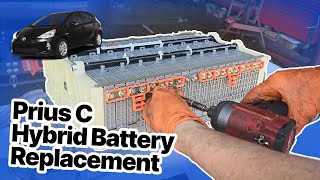
🎬 Watch: Complete Prius C hybrid battery replacement walkthroughCost Comparison
Prices can vary significantly based on condition, warranty, and supplier.
| Part Type | Estimated Price Range | Notes |
|---|---|---|
| New OEM | $1,300 - $2,500 (Part Only) | Can be difficult to source. Dealer-installed price can be $3,500+. |
| Remanufactured Aftermarket | $1,400 - $1,800 | A popular option with warranties often included. |
| Used OEM | $600 - $900 | Price depends heavily on mileage, age, and condition. A good value if properly tested. |
| Shop Labor | $400 - $600 | Typically 3-4 hours of labor. Professional installation is highly recommended. |
Frequently Asked Questions (FAQ)
Can I replace just the bad cells in my Prius C battery?
While technically possible, it is not recommended for most people. The Prius C battery pack consists of 20 individual NiMH modules. Replacing individual modules requires completely disassembling the high-voltage pack, and the new module must be 'balanced' to match the capacity and voltage of the old ones. If not done correctly, the pack will fail again quickly. For long-term reliability, replacing the entire assembly is the best solution.
Does a replacement hybrid battery need to be programmed?
No, a replacement hybrid battery for the 2012-2017 Prius C does not require any special programming. It is a plug-and-play installation, though the trouble codes that were stored in the vehicle's computer will need to be cleared with a scan tool.
How long does a Prius C hybrid battery last?
The lifespan of a hybrid battery depends on many factors, including climate, driving habits, and mileage. Most original batteries last between 100,000 and 200,000 miles, or 8-12 years. Batteries in hotter climates tend to degrade faster than those in moderate climates.
What's the difference between the hybrid battery and the 12V battery?
The Prius C has two batteries. The main high-voltage (HV) hybrid battery (144V) powers the electric motor and is the subject of this article. The 12V auxiliary battery is a small, conventional battery (like in a non-hybrid car) that powers the lights, radio, and computers, and it's what allows the car to 'boot up' and engage the HV system. If your car is completely dead and won't turn on at all, you may have a dead 12V battery, not a failed hybrid battery.
Helpful Videos






Technical Specifications
OEM Part Numbers: G9280-52030 G9510-52030 G9510-52031 G9510-52032 G951052030 G951052031 G951052032
Type: Nickel-Metal Hydride (NiMH) Nominal Voltage: 144V Modules: 20 Weight: Approx. 66 lbs / 30 kg
We Have This Part in Stock


The information in this article is provided for general reference and educational purposes only. Vehicle specifications, procedures, and part compatibility can vary by production date, trim level, and region. Always consult your vehicle's factory service manual and verify part numbers before purchasing or performing repairs. Safety-critical components such as airbags, seat belts, and braking systems should be installed by a qualified professional.
- Toyota Prius C:
- 🎬 Helpful Videos
- 🛍️ Shop This Part
- Symptoms of a Failing Hybrid Battery
- Common Diagnostic Trouble Codes (DTCs)
- Buying a Used 2012-2017 Prius C Hybrid Battery
- 1. Verify Compatibility
- 2. Assess the Battery's Health (Before You Buy)
- 3. Physical Inspection
- Known Issues, Recalls, and TSBs
- Replacement Overview & Difficulty
- Cost Comparison
- Frequently Asked Questions (FAQ)
- 🎟️ Get 5% Off