

2004-2013 Mazda 3 Vapor Canister: Solving EVAP Codes and Refueling Issues
This guide covers common failure symptoms, part number confusion between Federal, California, and SKYACTIV models, and replacement costs for the first and second-generation Mazda 3 vapor canister.
- Compatibility is critical: You MUST verify if your Mazda 3 has Federal or California emissions and, for 2012-2013 models, a SKYACTIV or non-SKYACTIV engine before ordering.
- The most common symptoms of failure are a Check Engine Light with EVAP codes (P0442, P0455), difficulty filling the gas tank, and a fuel smell.
- Replacement is difficult. The canister is located above the rear subframe, which often must be lowered for access, making this a job for a professional mechanic.
- Always check the gas cap first. A loose or faulty cap is a frequent and inexpensive cause of EVAP leak codes.
Symptoms of a Failing Vapor Canister
When a vapor canister fails, it's usually due to physical cracks, internal clogs, or saturation with liquid fuel (often from habitually overfilling the gas tank). The symptoms are distinct and should not be ignored.
Check Engine Light with EVAP Codes
This is the most common symptom. A fault in the EVAP system will trigger the Malfunction Indicator Lamp (MIL), and a code reader will typically show one or more of the following Diagnostic Trouble Codes (DTCs):
- P0442: Evaporative Emission System Leak Detected (small leak)
- P0455: Evaporative Emission System Leak Detected (gross leak)
- P0456: Evaporative Emission System Leak Detected (very small leak)
- P0441: Evaporative Emission System Incorrect Purge Flow
Pro Tip: Before assuming the canister is bad, always check the gas cap. A loose or worn-out gas cap is a very common cause for EVAP codes, especially P0456. Mazda even issued a technical bulletin (01-005/19) highlighting this. Make sure the cap is tightened until it clicks, and inspect its seal for cracks.
Difficulty Refueling
If the canister or its vent path is clogged, air and vapor cannot escape the fuel tank as you pump gas in. This creates back-pressure that causes the gas pump nozzle to repeatedly click off, making it extremely slow and frustrating to fill your tank.
🎬 Watch: How to fix a gas pump that keeps shutting offStrong Fuel Odor
A cracked or saturated canister can no longer contain fuel vapors effectively. This leads to a noticeable raw gasoline smell around the rear of the vehicle, especially after it has been parked in the sun or in a garage. This indicates that flammable fumes are escaping, which can be a safety hazard.
Failed Emissions Test
Since the EVAP system is a primary emissions control device, any fault that triggers a Check Engine Light will cause an automatic failure of a state vehicle inspection.
Compatibility: Federal vs. California & SKYACTIV Engines
Warning: This is the most critical information for anyone buying this part. Mazda used different, non-interchangeable vapor canisters depending on the model year, engine, and emissions system. Installing the wrong one will guarantee a persistent Check Engine Light.
To get the right part, you must know two things about your car:
- Emissions System: Is it a Federal (EPA) or California (PZEV/CARB) emissions vehicle?
- Engine Type (2012-2013 models): Does it have the standard MZR engine or the 2.0L SKYACTIV engine?
The only way to be certain about your emissions system is to check the Vehicle Emission Control Information (VECI) label located on the underside of the hood.
- A Federal Emissions label will state the vehicle conforms to "U.S. EPA" regulations.
- A California Emissions label will mention conforming to "California" or "CARB" regulations.
Here is a general breakdown of the common part numbers for Federal emissions vehicles:
| Vehicle Configuration | Common OEM Part Number(s) |
|---|---|
| 2004-2011 (All Engines) & 2012-2013 (Non-SKYACTIV) - Federal Emissions | LF66-13-970C (supersedes LF66-13-970, LF66-13-970A, LF66-13-970B) |
| 2012-2013 (2.0L SKYACTIV Engine) - Federal Emissions | PE2G-13-970A |
California emissions vehicles use different part numbers and are less common in the recycled parts market. Always verify compatibility with the seller by providing your vehicle's VIN.
Known Issues, Recalls, and TSBs
- No Recalls: Searches of the National Highway Traffic Safety Administration (NHTSA) database show no safety recalls directly targeting the vapor canister for any 2004-2013 Mazda 3.
- TSB 01-002/18: For 2004-2010 models, Mazda issued this Technical Service Bulletin to help technicians diagnose the source of EVAP leaks causing codes P0441, P0442, P0455, or P0456. This doesn't indicate a defect but acknowledges that diagnosing leaks in the system is a common service procedure. 🎬 See this walkthrough on fixing a major Mazda 3 EVAP leak
Buying a Used 2004-2013 Mazda 3 Vapor Canister
A used OEM vapor canister can be a smart, cost-effective solution, especially since new aftermarket options are limited and can have fitment issues. Here’s what to look for:
- Verify Compatibility: This is paramount. Match the part number from your original canister or confirm with the seller using your VIN that the part is correct for your year, engine, and emissions type (Federal/California).
- Physical Inspection: Carefully inspect the plastic housing for any cracks, especially around the mounting tabs and hose ports. Check that all hose nipples are intact and not broken or brittle.
- No Rattling or Debris: Shake the canister gently. A loud rattling sound can indicate that the internal charcoal bed has broken apart, rendering the canister useless. Ensure no charcoal pellets are falling out of the ports.
- Why Used OEM is a Good Choice: The EVAP system relies on perfect seals. A recycled OEM canister is designed for exact fitment of all hoses and electrical connectors, which is crucial for preventing leaks. Aftermarket parts can sometimes have slightly different port angles or connector shapes that can complicate installation and lead to persistent EVAP codes.
Replacement Overview
Replacing the vapor canister on a 2004-2013 Mazda 3 is a difficult job. The canister is located at the rear of the car, mounted above the rear subframe near the fuel tank. Access is very tight, and in many cases, the rear subframe must be partially lowered to remove the old canister and install the new one. This is generally not recommended for a beginner DIY mechanic due to the need for specialized tools and the safety risks of working under the vehicle and with suspension components. The job typically takes a professional 1.5 to 3 hours.
Cost Comparison
Prices can vary, but here are typical cost ranges for a Federal emissions canister:
| Part Type | Estimated Cost |
|---|---|
| New OEM | $185 - $280 |
| New Aftermarket | $230 - $350 |
| Used OEM | $75 - $150 |
| Shop Labor | $250 - $375 |
Legal & Emissions Testing Requirements
A functioning EVAP system is a legal requirement in all states with emissions testing programs. While the vapor canister itself is not subject to the same strict CARB certification and tracking as a catalytic converter, a fault within the EVAP system that illuminates the Check Engine Light will result in an automatic test failure. Driving with a known EVAP leak releases harmful hydrocarbons into the atmosphere, contributing to air pollution.
Frequently Asked Questions (FAQ)
Can I drive with a bad vapor canister?
Yes, but it's not recommended for long. The car will remain drivable and won't leave you stranded, but you will fail any emissions test. You may also experience a strong fuel smell and have significant difficulty when refueling.
What's the difference between the vapor canister, purge valve, and vent solenoid?
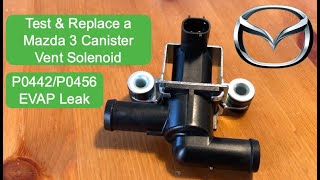
They are three distinct parts of the EVAP system. The Vapor Canister (at the rear of the car) stores fuel vapors. The Purge Valve/Solenoid (usually in the engine bay) controls the flow of vapors from the canister to the engine. The Vent Solenoid/Valve (near the canister) allows fresh air into the canister to help with purging and closes to seal the system for leak testing. All three can cause similar EVAP codes, but they have different functions and locations.
Will replacing the canister fix my hard starting issue?
Possibly, but it's less likely. Hard starting right after refueling is a classic symptom of a purge valve that is stuck open, flooding the engine with fuel vapors. While a saturated canister can contribute, the purge valve is the more common culprit for that specific symptom.
🎬 Watch: How to test a Mazda 3 purge solenoidHow do I know if I have a SKYACTIV engine?
The SKYACTIV-G 2.0L engine was introduced for the 2012 model year in the Mazda 3. It was marketed heavily for its fuel efficiency. If you have a 2012 or 2013 Mazda 3, you can check for "SKYACTIV TECHNOLOGY" badges on the vehicle or confirm via your VIN. The SKYACTIV engine also uses a 6-speed automatic or manual transmission, whereas the standard 2.0L engine used a 5-speed.
Helpful Videos

Technical Specifications
OEM Part Numbers: LF3T-13-970 LF3T-13-970A LF66-13-970 LF66-13-970A LF66-13-970B LF66-13-970C PE2G-13-970A PE2G13970A
Varies by vehicle configuration (Federal vs. California emissions, SKYACTIV vs. non-SKYACTIV engine).
We Have This Part in Stock




The information in this article is provided for general reference and educational purposes only. Vehicle specifications, procedures, and part compatibility can vary by production date, trim level, and region. Always consult your vehicle's factory service manual and verify part numbers before purchasing or performing repairs. Safety-critical components such as airbags, seat belts, and braking systems should be installed by a qualified professional.
- Mazda 3:
- 🎬 Helpful Videos
- 🛍️ Shop This Part
- Symptoms of a Failing Vapor Canister
- Check Engine Light with EVAP Codes
- Difficulty Refueling
- Strong Fuel Odor
- Failed Emissions Test
- Compatibility: Federal vs. California & SKYACTIV Engines
- Known Issues, Recalls, and TSBs
- Buying a Used 2004-2013 Mazda 3 Vapor Canister
- Replacement Overview
- Cost Comparison
- Legal & Emissions Testing Requirements
- Frequently Asked Questions (FAQ)
- 🎟️ Get 5% Off