

2013-2018 Ford C-MAX Vapor Canister: Solving EVAP Codes & Fueling Problems
This guide explains common failure symptoms, deciphers confusing part numbers between Hybrid and Energi models, and details the crucial difference between a simple purge valve fix and a complex canister replacement.
- There are DIFFERENT vapor canisters for the standard Hybrid and the plug-in Energi models; they are not interchangeable.
- EVAP codes (P0456, P1450, etc.) are often caused by a cheap, easy-to-replace canister purge valve on top of the engine, not the expensive, hard-to-replace canister itself.
- Difficulty fueling (gas pump clicking off) is a primary symptom of a clogged vapor canister, often caused by habitually topping off the fuel tank.
- New aftermarket canister assemblies are generally not available, making used OEM parts a significant value for this repair.
Symptoms of a Failing Vapor Canister


A problem with the vapor canister or the broader EVAP system will almost always trigger the Check Engine Light. However, some physical symptoms can also point to a failure.
- Check Engine Light: This is the most common symptom. The onboard computer continuously tests the EVAP system for leaks. If it detects a leak, whether large or small, it will illuminate the Malfunction Indicator Lamp (MIL) and store a diagnostic trouble code.
- Difficulty Fueling: If the gas pump nozzle constantly clicks off before the tank is full, it's a strong sign of a clogged vapor canister or a blocked vent line. The system can't properly vent pressure from the tank as new fuel is added, creating backpressure that shuts off the pump.
- Fuel Smell: A noticeable gasoline odor around the vehicle, especially at the rear, can indicate that fuel vapors are escaping from a cracked canister or a leaking hose instead of being properly stored.
- Poor Engine Performance: While less common, a stuck-open purge valve associated with the EVAP system can create a vacuum leak, leading to a rough idle, hesitation, or reduced fuel economy.
Common OBD-II Diagnostic Codes
If your Check Engine Light is on, a code scanner will likely show one of the following EVAP-related codes. It is critical to note that these codes often point to the much simpler and cheaper Canister Purge Valve, not the canister itself.
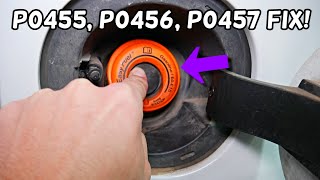
- P0456: Evaporative Emission System Leak Detected (Very Small Leak)
- P0455: Evaporative Emission System Leak Detected (Large Leak)
- P0457: Evaporative Emission System Leak Detected (Fuel Cap Loose/Off)
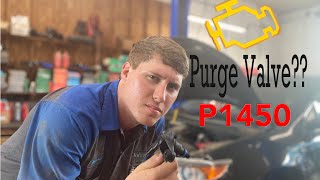
- P1450: Unable to Bleed Up Fuel Tank Vacuum 🎬 Watch this simple diagnosis and repair for code P1450.
- P0496 / P0497: EVAP Flow During a Non-Purge Condition / Low Purge Flow
Pro Tip: Before assuming the expensive vapor canister has failed, always investigate the canister purge valve first. Ford issued Technical Service Bulletin (TSB) 19-2207 for 2013-2017 C-MAX models specifically for EVAP codes caused by a faulty purge valve. This part is inexpensive and much easier to replace.
🎬 Watch: Save money by replacing the purge valve yourself.Known Issues, Recalls, and TSBs

TSB 19-2207: EVAP Codes and Faulty Purge Valve
This bulletin directly addresses an illuminated Check Engine Light with codes P1450, P0456, P0457, P04EE, and/or P04EF on 2013-2017 C-MAX models. Ford identified that the sealing capability of the canister purge valve (CPV) could degrade. The official fix is to replace the canister purge valve and update the Powertrain Control Module (PCM) software. This strongly suggests that many EVAP issues on these vehicles originate from the valve, not the canister.
Recall 18S32 (NHTSA 18V735): Stuck-Open Canister Purge Valve
While this recall was primarily for the Ford Focus, the issue is highly relevant to the C-MAX which uses a similar 2.0L engine and EVAP system components. The recall addresses a canister purge valve that can stick open, creating excessive vacuum in the fuel system. This can lead to deformation of the plastic fuel tank, an inaccurate fuel gauge, and even engine stalling, which increases the risk of a crash. The remedy involves a PCM software update to better detect the problem and replacement of the CPV if it has failed.
CRITICAL: Hybrid vs. Energi Model Compatibility

The single biggest mistake when buying this part is ordering the wrong one for your vehicle's specific model. The 2013-2018 Ford C-MAX was sold in two versions: the standard Hybrid and the plug-in Energi. These two models use different vapor canisters that are not interchangeable.
Warning: You MUST verify whether your C-MAX is a standard Hybrid or a plug-in Energi model before ordering. Installing the wrong canister will result in fitment issues and persistent EVAP system problems.
- Standard C-MAX Hybrid (Non-Plug-in): This model uses part number FV6Z-9D653-K. Ford parts catalogs explicitly state this is for C-MAX models "Without energi models".
- C-MAX Energi (Plug-in Hybrid): This model uses part numbers from the CU5Z-9D653-F family, which has been superseded by newer numbers like GU5Z-9D653-L.
Buying a Used Vapor Canister
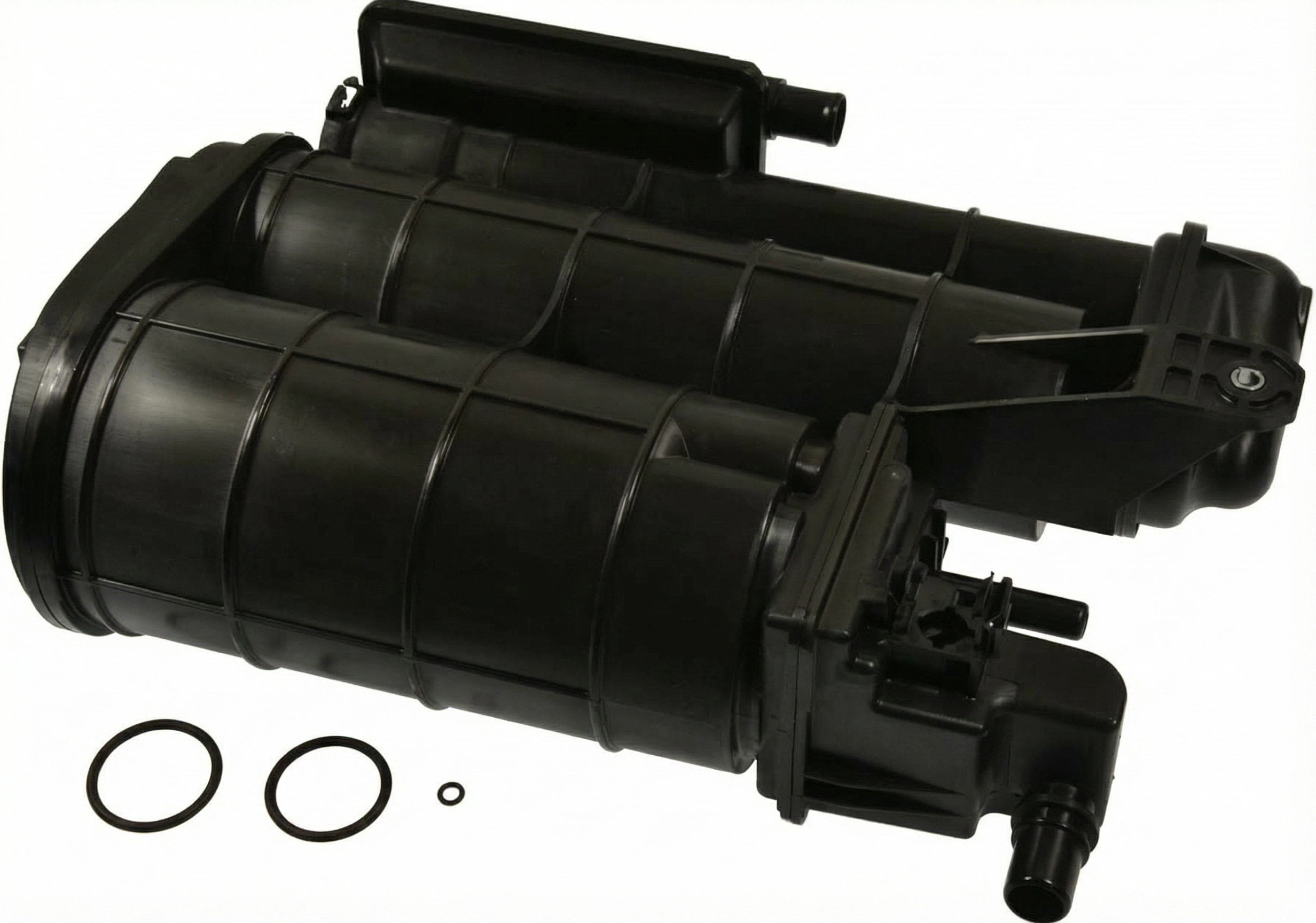
Since new aftermarket options for the complete canister assembly are not readily available, a used OEM part is an excellent way to save money. Here’s what to look for:
- Verify the Part Number: This is the most important step. Get the part number from your original canister or use the information above to ensure you are buying the correct version for your Hybrid or Energi model.
- Physical Inspection: When the part arrives, inspect the plastic housing thoroughly for any cracks, especially around the hose ports and mounting tabs. A cracked canister is useless.
- Check the Hoses and Connectors: Ensure all hose ports are intact and not broken or brittle. The small plastic clips on the connectors are fragile and can break during removal.
- Listen for Contamination: Gently shake the canister. You should not hear loose pellets rattling around, which would indicate the internal charcoal bed has broken apart. It should also not feel waterlogged or slosh, which would mean it has been flooded with liquid fuel, likely from chronic over-filling of the gas tank.
- Why Used OEM is a Good Choice: A used OEM canister is made to Ford's original specifications for fit and material durability. It will connect to the vehicle's lines and mounting points correctly, which is a common problem with cheap aftermarket parts that don't exist for this specific application anyway.
Cost & Replacement Information
There is a massive difference in cost and difficulty between replacing the canister purge valve and replacing the entire vapor canister.
Canister Purge Valve (The Likely Culprit)
- DIY Difficulty: 1 out of 5 (Very Easy)
- Time: 15-20 minutes
- Location: On top of the engine, easily accessible after removing the engine cover.
- Cost: New OEM/Motorcraft part is typically $40-$65.
Vapor Canister Assembly (The Difficult Fix)
- DIY Difficulty: 4 out of 5 (Hard)
- Time: 1.5 - 2.5 hours
- Location: At the rear of the vehicle, tucked between the fuel tank and the rear subframe. Access is very tight.
- Shop Labor Cost: $110 - $161
| Part | New OEM Price | New Aftermarket Price | Used OEM Price |
|---|---|---|---|
| Vapor Canister (Hybrid) | $275 - $450 | Not Available | $50 - $120 |
| Vapor Canister (Energi) | $210 - $350 | Not Available | $60 - $140 |
| Canister Purge Valve | $40 - $65 | $35 - $60 | $15 - $30 |
Legal & Emissions Requirements
The EVAP system, including the vapor canister, is a critical emissions control device. A functioning system is required to pass vehicle inspections in the many states and metropolitan areas that have emissions testing programs. A pending or confirmed EVAP-related trouble code (like P0456) will cause an automatic failure of an OBD-II emissions test, preventing you from renewing your vehicle's registration.
Frequently Asked Questions (FAQ)
Can I just ignore a P0456 EVAP code?
You can continue to drive the vehicle, but it's not recommended. The car will not pass a state emissions test with the Check Engine Light on. While it may not cause immediate damage, you are releasing harmful fuel vapors into the atmosphere, and you may experience a slight decrease in fuel economy.
Why does my C-MAX keep clicking off at the gas pump?
This is a classic symptom of a saturated or clogged vapor canister or a blocked vent line. When you fill the tank, the air and vapor being displaced has nowhere to go. This creates backpressure in the filler neck that triggers the gas pump's automatic shutoff. Repeatedly topping off your tank after the pump first clicks off is a common cause of this problem, as it can force liquid fuel into the charcoal canister which is only designed for vapor.
Is it hard to replace the C-MAX vapor canister myself?
Yes, replacing the canister assembly is a difficult job for a DIY mechanic. The part is located in a very tight space above the rear subframe. However, replacing the canister purge valve, which is a very common cause of EVAP codes, is extremely easy. It is located on top of the engine and can be swapped in minutes with basic tools. Always diagnose the problem carefully before attempting the difficult canister replacement.
How do I know if I have a C-MAX Hybrid or a C-MAX Energi?
The easiest way to tell is to look at the driver's side of the car. The C-MAX Energi is a plug-in hybrid and has a charging port door on the front fender, between the driver's door and the front wheel. The standard C-MAX Hybrid does not have this external charging port.
Helpful Videos



Technical Specifications
OEM Part Numbers: CU5Z-9D653-F DU5A-9D653-AA FV6Z-9D653-D FV6Z-9D653-K GU5Z-9D653-L CX-2770 FV6Z-9D653-J
Standard Hybrid canister: FV6Z-9D653-K. Energi (Plug-in) canister: CU5Z-9D653-F and its supersessions.
We Have This Part in Stock



The information in this article is provided for general reference and educational purposes only. Vehicle specifications, procedures, and part compatibility can vary by production date, trim level, and region. Always consult your vehicle's factory service manual and verify part numbers before purchasing or performing repairs. Safety-critical components such as airbags, seat belts, and braking systems should be installed by a qualified professional.
- Ford C-MAX:
- 🎬 Helpful Videos
- 🛍️ Shop This Part
- Symptoms of a Failing Vapor Canister
- Common OBD-II Diagnostic Codes
- Known Issues, Recalls, and TSBs
- TSB 19-2207: EVAP Codes and Faulty Purge Valve
- Recall 18S32 (NHTSA 18V735): Stuck-Open Canister Purge Valve
- CRITICAL: Hybrid vs. Energi Model Compatibility
- Buying a Used Vapor Canister
- Cost & Replacement Information
- Canister Purge Valve (The Likely Culprit)
- Vapor Canister Assembly (The Difficult Fix)
- Legal & Emissions Requirements
- Frequently Asked Questions (FAQ)
- 🎟️ Get 5% Off