

2001-2002 Ram 2500 & 3500 Vacuum Pump: Guide to Leaks, Brakes & Replacement
This guide covers the common failure points, symptoms, and replacement of the 5.9L Cummins vacuum pump in 2001-2002 Dodge Ram 2500 and 3500 trucks.
- The most common failure is not the pump itself, but the oil seals, causing a major oil leak at the front of the engine.
- A failing pump can cause a loss of power brake assist, resulting in a hard brake pedal and a serious safety hazard.
- Resealing the original pump or a used OEM unit with a new seal kit is the most cost-effective repair.
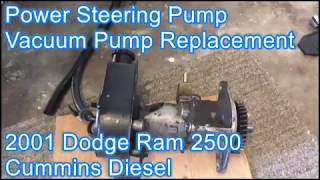
- When replacing, it's best to remove the vacuum pump and power steering pump as a single assembly to avoid damaging the drive coupling.
Symptoms of a Failing Vacuum Pump


A failing vacuum pump on a 2001-2002 Dodge Ram 2500 or 3500 with the 5.9L Cummins engine will present several distinct symptoms. The most common issue is not a mechanical failure of the pump itself, but rather the failure of its seals, leading to significant oil leaks.
1. Engine Oil Leak
This is the most frequent sign of a problem. A significant oil leak will appear at the front driver's side of the engine, often coating the underside of the truck. The primary culprit is the double-lip seal where the power steering pump shaft enters the back of the vacuum pump. When this seal fails, pressurized engine oil leaks out. Other leak points include the main gasket between the pump and the engine's timing case and the O-rings sealing the pump's body.
2. Stiff or Hard Brake Pedal
The vacuum pump provides the necessary assist for the power brakes via the hydro-boost system. If the pump fails internally or there is a significant vacuum leak in the system, the brake pedal will become very difficult to press, requiring much greater effort to stop the truck. This can happen suddenly and poses a serious safety risk.
3. HVAC Vents Default to Defrost
The climate control system uses vacuum to actuate the doors that direct airflow. When vacuum is lost, the system is designed to default to the defrost vents as a failsafe. If you can't switch the airflow to the panel vents or the floor, it's a strong indication of a vacuum system problem, which could originate at the pump.
4. Cruise Control Malfunctions
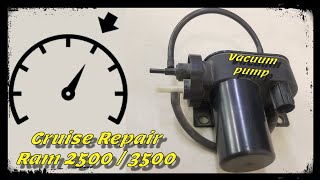
The cruise control system on these trucks also relies on vacuum to operate. If the cruise control disengages on its own, especially while going up a hill, 🎬 Watch this video on fixing cruise control vacuum issues it can be a sign of weak vacuum production from the pump.
Warning: A sudden loss of power brake assist can dramatically increase your stopping distance. If you experience a hard brake pedal, have the vehicle inspected immediately as it is unsafe to drive.
Buying a Used Vacuum Pump
A used OEM vacuum pump can be a reliable and cost-effective alternative to an expensive new unit, especially since the pump's hard parts rarely fail. However, careful inspection is key.
- Inspect the Housing: Check the aluminum housing for any cracks, especially around the mounting flanges where it bolts to the engine and where the power steering pump attaches.
- Check the Drive Gear: Look at the gear on the front of the pump. Ensure all teeth are present and show no signs of chipping or excessive wear. Damage here could indicate a larger problem within the engine's timing gear case.
- Look for Leak Evidence: A used pump will likely be cleaned, but check for any deep staining or grime buildup around the seals, which could indicate a past leak.
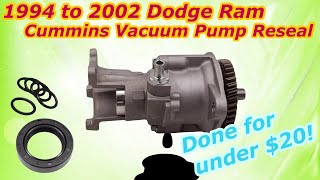
- Plan for a Reseal: The most common failure point is the seals. It is highly recommended to install a new seal kit, such as the Cummins 4089742 kit, before installing 🎬 See how to reseal a Dodge Ram Cummins vacuum pump any used vacuum pump. These kits are inexpensive and prevent a future leak, saving you from having to do the job twice.
- OEM vs. Aftermarket: Used OEM (Mopar/Cummins) pumps are often preferred over new, cheap aftermarket units. The casting quality and tolerances of the original parts are typically superior, leading to better longevity once new seals are installed.
Known Issues, TSBs, and Recalls
For the 2001-2002 model years, there are no specific recalls or Technical Service Bulletins (TSBs) directly targeting the vacuum pump itself. Searches of the NHTSA database did not reveal any actions for these specific years related to this part. However, an earlier recall (NHTSA 98V068) for 1995-1996 models noted that oil contamination from the vacuum pump could deteriorate the brake booster vacuum hose, leading to a loss of brake assist. While not directly applicable, this highlights the long-standing potential for oil from this pump to affect the brake system.
Cost of Replacement
The cost to replace a vacuum pump can vary significantly based on the parts chosen and labor rates.
| Part/Service | Estimated Cost | Notes |
|---|---|---|
| New OEM (Mopar) | $1,980 - $2,155 | This is for a complete new pump assembly. |
| New Aftermarket | $105 - $265 | Prices vary widely by brand and quality. |
| Used OEM | $50 - $150 | Price for a used part from a salvage yard. Resealing is highly recommended. |
| Remanufactured | $320+ | A1 Cardone is a common remanufacturer. |
| Seal Kit Only (Cummins OEM) | $30 - $60 | For DIY resealing of an existing pump. |
| Shop Labor | $250 - $500+ | Typically 2-4 hours of labor. Some shops may quote much higher. |
Pro Tip: Given the high cost of a new OEM pump and the fact that the main failure is usually just the seals, the most cost-effective repair is often to reseal your existing pump or a good used OEM pump. The internal mechanical parts are very durable.
Replacement Overview

Replacing or resealing the vacuum pump is a moderately difficult job that a skilled DIY mechanic can perform in 3-4 hours. The 24-valve engine in the 2001-2002 models provides easier access than earlier 12-valve engines because the injection pump does not block the vacuum pump.
- Disconnect Battery: Always start by disconnecting the negative battery terminals.
- Access the Pump: It may be necessary to remove the driver's side battery and the intake pipe between the intercooler and the intake horn to create enough space.
- Separate Pumps: The power steering pump is bolted to the back of the vacuum pump. It's often easiest to unbolt the entire vacuum/power steering pump assembly from the engine first. Then, you can place the assembly in the empty battery tray to separate the two pumps 🎬 Watch this step-by-step 2001 Dodge Ram vacuum pump repair guide without disconnecting the power steering fluid lines, which saves time and avoids a mess.
- Remove Vacuum Pump: Disconnect the oil supply line at the bottom of the pump and the main vacuum hoses. Remove the two bolts holding the vacuum pump to the timing gear case.
- Reseal or Replace: If resealing, the pump must be disassembled on a workbench to press out the old seals and install the new ones. Pay close attention to the orientation of the seals.
- Reassembly: When reattaching the power steering pump to the vacuum pump, be extremely careful to align the drive dogs (the coupling between them) correctly. Forcing them together can break the vacuum pump's drive components. Ensure any spacers are reinstalled correctly. Use a new gasket between the vacuum pump and the timing case.
Frequently Asked Questions (FAQ)
Can I just replace the power steering pump without removing the vacuum pump?
While technically possible, it is not recommended. It is very difficult to align the drive coupling between the two pumps with the vacuum pump still on the engine. Misalignment can easily damage the new power steering pump or the vacuum pump's internal components. The safest method is to remove the assembly and separate them on a workbench.
Is a massive oil leak always from the vacuum pump?
Not always, but it is a very common source. An oil leak from the vacuum pump seal often coats the whole area, making it look like the oil pan gasket or other seals are leaking. Other potential sources on the 5.9L Cummins include the timing gear case cover seal or the front crankshaft seal. Thoroughly cleaning the engine and then running it to spot the fresh leak is the best way to be certain.
My brakes are hard, but I don't see an oil leak. Could it still be the vacuum pump?
Yes. While less common than a seal leak, the internal vanes of the pump can wear or get stuck from varnish buildup, reducing vacuum output. It could also be a leak in one of the vacuum hoses between the pump, brake booster, and HVAC system, or a failed check valve. Testing the system with a vacuum gauge is the best way to diagnose the issue.
What parts should I replace at the same time?
If you are removing the assembly, it is a good time to consider replacing the power steering pump if it is high mileage or showing any signs of weakness (like whining or stiff steering at idle). At a minimum, you should always use a new vacuum pump-to-engine gasket and a full vacuum pump reseal kit.
Helpful Videos

Technical Specifications
OEM Part Numbers: 05019734AA 5019734AA R5019734AA 4897243AA 4874365 4746706 3937193RX 3972210
Gear-driven pump mounted to the engine timing case. Provides vacuum for brake booster and HVAC controls. Lubricated by engine oil. Power steering pump mounts to the rear of the vacuum pump.
We Have This Part in Stock


The information in this article is provided for general reference and educational purposes only. Vehicle specifications, procedures, and part compatibility can vary by production date, trim level, and region. Always consult your vehicle's factory service manual and verify part numbers before purchasing or performing repairs. Safety-critical components such as airbags, seat belts, and braking systems should be installed by a qualified professional.
- Dodge Ram 2500:
- Dodge Ram 3500:
- 🎬 Helpful Videos
- 🛍️ Shop This Part
- Symptoms of a Failing Vacuum Pump
- 1. Engine Oil Leak
- 2. Stiff or Hard Brake Pedal
- 3. HVAC Vents Default to Defrost
- 4. Cruise Control Malfunctions
- Buying a Used Vacuum Pump
- Known Issues, TSBs, and Recalls
- Cost of Replacement
- Replacement Overview
- Frequently Asked Questions (FAQ)
- 🎟️ Get 5% Off