

2017-2026 Tesla Model 3 & Model Y Rear Upper Control Arm: The Definitive Guide to Squeaks and Failures
This guide covers the common failure of the rear upper aft control arm that causes persistent squeaking and clunking noises in the Tesla Model 3 and Model Y.
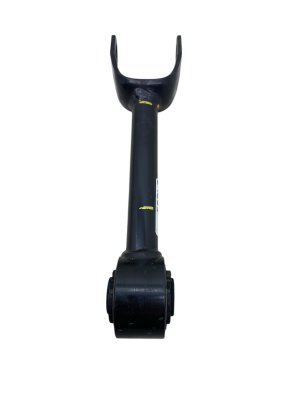
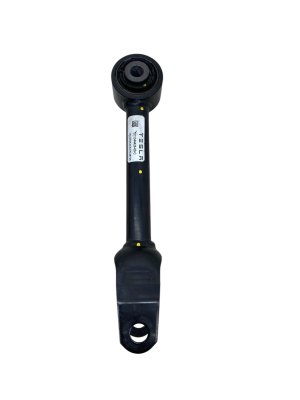
- The most common symptom of failure is a loud squeak or creak from the rear suspension over bumps, caused by the rear upper AFT (rearward) control arm, also known as the camber link.
- There is no official recall, but Tesla Service Centers often perform 'goodwill' repairs, charging only for parts ($180-$250 for a pair) even on out-of-warranty cars.
- A four-wheel alignment is mandatory after replacing this part to prevent severe tire wear and handling problems.
- Parts for the 2017-2023 Model 3 and 2020-2023 Model Y are NOT compatible with the refreshed 2024+ 'Highland' Model 3. Verify your vehicle year before purchasing.
Symptoms of a Failing Rear Upper Control Arm
A failing rear upper control arm on a 2017-2026 Tesla Model 3 or 2020-2026 Tesla Model Y will make its presence known through distinct noises and changes in handling. Because the cabin is so quiet, these suspension noises are often more noticeable than in a gasoline-powered car.
1. Squeaking or Creaking Noises
This is the most notorious symptom. Owners typically report a loud squeaking, creaking, or groaning sound from the rear of the car, often compared to an old door hinge or a wooden ship. The noise is most prominent at lower speeds, especially when going over bumps, speed bumps, or uneven driveways. It can be worse in cold or wet weather as moisture gets into the failing bushing. The failure is often caused by water penetrating the seal of the bushing, which displaces the grease and leads to corrosion and noise.
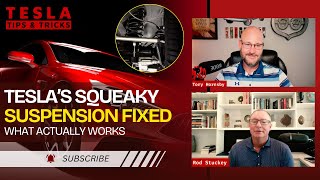
🎬 See: Diagnosing and fixing Tesla's squeaky suspension2. Clunking or Knocking Sounds
As the bushing wears out completely, the metal components can make contact, resulting in a clunking or knocking sound. This is a sign of more advanced wear and indicates the arm should be replaced immediately to prevent further damage or unpredictable handling.
3. Unstable Steering and Uneven Tire Wear
A worn rear upper control arm can no longer hold the wheel at the correct angle. This can lead to a feeling of instability or 'wandering' from the rear of the car, especially at highway speeds. You may also notice accelerated and uneven tire wear, particularly on the inside edge of the rear tires, as the failing arm allows the wheel's camber to shift out of specification.
Warning: The rear suspension has two different upper control arms per side: a forward (fore) link and a rearward (aft) link. This guide covers the REARWARD (AFT) link, which is also called the camber link. This is the part that most commonly fails and causes noise. Verify this is the specific link you need before ordering.
Known Issues, TSBs, and Recalls
While the failure of the rear upper aft control arm is a widely documented problem among Model 3 and Model Y owners, there is no formal recall for this specific part. However, the issue is so common that Tesla is well aware of it. Many owners have reported that service centers will replace the arms as a "goodwill" gesture, often charging only for the parts (around $180-$200 for a pair) and not labor, even if the vehicle is out of its basic warranty.
It is important not to confuse this issue with other Tesla suspension recalls. For example, recall NHTSA 21V-835 was issued for 2019-2021 Model 3 and 2020-2021 Model Y vehicles to address front suspension lateral link fasteners that could loosen. That is a separate issue concerning the front suspension.
Vehicle & Part Compatibility: Model 3, Model Y, and 'Highland' Refresh
This part is shared between the Tesla Model 3 (2017-2023) and Tesla Model Y (2020-2023). However, the refreshed Tesla Model 3, known as the 'Highland' version, was introduced for the 2024 model year and features a redesigned, more comfortable suspension. Parts for the pre-Highland and Highland models are generally not interchangeable. The same is expected for the Model Y when it receives its update (projected for 2025).
Compatibility Warning: Parts listed for 2017-2023 Model 3 and 2020-2023 Model Y will NOT fit the 2024+ 'Highland' Model 3. Always verify your vehicle's production year and the specific OEM part number before purchasing.
Buying a Used Rear Upper Control Arm: What to Check
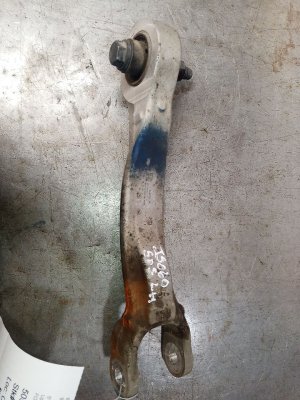
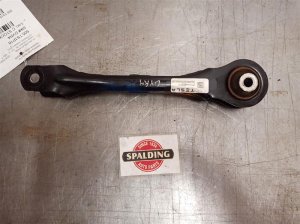
A used OEM control arm can be a cost-effective solution, especially since the failure is in the replaceable bushings, not typically the arm itself. When buying a used part, perform a careful inspection.
- Inspect the Bushings: This is the most critical check. Look for any cracks, tearing, or separation in the rubber. The rubber should be pliable, not dry-rotted or brittle. Squeeze the bushing to check for excessive play.
- Check for Damage: Inspect the metal arm for any signs of bending, cracks, or significant corrosion. A part from a collision vehicle may have hidden damage. Ensure the mounting points are straight and not deformed.
- Verify Part Numbers: Tesla has updated these parts multiple times. The last letter of the part number (e.g., -G, -H) indicates a revision. While later revisions are generally better, ensure the part number you are buying is compatible with your vehicle. The provided OEM part numbers are a good starting point for verification.
- Consider Mileage: Ask the seller for the mileage of the donor vehicle if possible. A lower-mileage part is always preferable, as bushing life is directly related to use.
Replacement Overview & Difficulty
Replacing the rear upper aft control arm is a moderately difficult job that a skilled DIY mechanic can perform. An alignment is required after the job is complete.
- Difficulty: 3/5
- Estimated Time: 1-1.5 hours per side.
- Tools Needed: 21mm sockets and wrenches, torque wrench, jack and jack stands. A ratchet strap can be helpful to manipulate the suspension and align bolt holes.
General Steps:
- Raise and support the rear of the vehicle and remove the wheel.
- Loosen the inner bolt connecting the control arm to the subframe and the outer bolt connecting it to the knuckle. It's often recommended to loosen the subframe side first to release any tension.
- Remove the bolts and the old control arm.
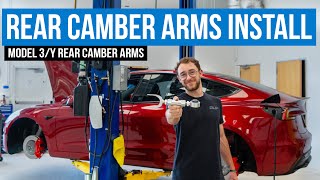
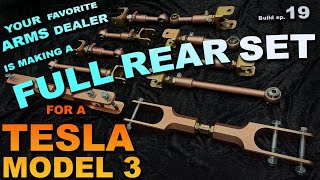
- Install the new control arm. It can be helpful to match the length of the new arm to the old one if it's an adjustable aftermarket part. 🎬 Watch: How to install adjustable aftermarket camber arms
- Install the bolts but do not fully tighten them yet.
- Raise the suspension with a jack to normal ride height before torquing the bolts to specification. This prevents pre-loading and premature failure of the new bushings.
- Torque Specs: The bolt connecting the arm to the knuckle should be torqued to 134 Nm (98.8 lbs-ft). The inner bolt to the subframe has a similar specification. Always verify specs for your specific model year.
- Reinstall the wheel and lower the vehicle.
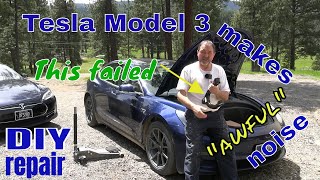
- Perform a four-wheel alignment. This step is mandatory to ensure proper handling and prevent tire wear. 🎬 Watch: Step-by-step DIY rear upper control arm replacement
Cost of Replacement
The cost can vary significantly depending on whether you use the Tesla Service Center, an independent shop, or do it yourself.
| Item | Cost Estimate | Notes |
|---|---|---|
| New OEM Part (Tesla) | $90 - $120 per arm | Price directly from Tesla Service. |
| Used OEM Part | $50 - $80 per arm | A common price from online auto recyclers. |
| New Aftermarket Part | $150 - $300 per pair | Often sold in pairs, with some brands offering upgraded bushings. |
| Shop Labor | $200 - $500+ | Varies widely. Independent shops may charge 2-3 hours of labor. Tesla may offer a 'goodwill' rate with free or reduced labor. |
| Total (Tesla Goodwill) | $180 - $250 | Many owners report paying only for parts for both sides. |
| Total (Independent Shop) | $400 - $800 | Using new OEM or aftermarket parts plus labor and alignment. |
Frequently Asked Questions
What is that squeaking noise from the back of my Tesla?
The most common cause of a squeaking or creaking noise from the rear suspension of a Model 3 or Model Y is the failure of the bushings in the rear upper aft control arm (camber link). Water intrusion causes the joint to rust and lose lubrication.
Is it safe to drive with a squeaky control arm?
Yes, but it should be addressed soon. While the initial squeaking is just an annoyance, it indicates a part is failing. If left untreated, it can lead to clunking sounds, poor handling, and accelerated tire wear. A complete failure of the arm, while rare, could be dangerous.
Do I need an alignment after replacing the rear control arm?
Yes, a four-wheel alignment is absolutely necessary. This control arm is the primary adjustment point for rear camber. Skipping the alignment will result in poor handling and will destroy your rear tires in a short amount of time.
Should I replace the arms in pairs?
Yes, it is highly recommended to replace both the left and right rear upper control arms at the same time. They have been subjected to the same amount of wear and road conditions, so if one has failed, the other is likely not far behind.
Will Tesla fix this for free?
Not officially for free, as there is no recall. However, due to the common nature of this failure, Tesla Service Centers frequently offer a 'goodwill' repair, charging only for the parts and waiving the labor cost, even for cars outside the warranty period. It is always worth getting a quote from Tesla first.
Helpful Videos
Technical Specifications
OEM Part Numbers: 1044423-00-G 1188423-00-A 1044427-00-C 1344427-00-B 1344427-00-C 1044431-00-F 1044431-00-G 1044431-00-H 1188431-00-A
Torque, Knuckle to Arm Bolt: 134 Nm (98.8 lbs-ft). Note: Always tighten suspension bolts with the vehicle at ride height.
We Have This Part in Stock



The information in this article is provided for general reference and educational purposes only. Vehicle specifications, procedures, and part compatibility can vary by production date, trim level, and region. Always consult your vehicle's factory service manual and verify part numbers before purchasing or performing repairs. Safety-critical components such as airbags, seat belts, and braking systems should be installed by a qualified professional.
- Tesla 3:
- Tesla Y:
- 🎬 Helpful Videos
- 🛍️ Shop This Part
- Symptoms of a Failing Rear Upper Control Arm
- 1. Squeaking or Creaking Noises
- 2. Clunking or Knocking Sounds
- 3. Unstable Steering and Uneven Tire Wear
- Known Issues, TSBs, and Recalls
- Vehicle & Part Compatibility: Model 3, Model Y, and 'Highland' Refresh
- Buying a Used Rear Upper Control Arm: What to Check
- Replacement Overview & Difficulty
- Cost of Replacement
- Frequently Asked Questions
- 🎟️ Get 5% Off