

2003-2006 Vibe & Matrix AWD Rear Upper Control Arm: Diagnosing Clunks and Wobbles
Your definitive guide to identifying, inspecting, and replacing the rear upper control arm on All-Wheel Drive models to restore handling and eliminate noise.
- This rear upper control arm fits ONLY the All-Wheel Drive (AWD) models of the 2003-2006 Pontiac Vibe and Toyota Matrix.
- The most common symptoms of failure are clunking noises from the rear over bumps and a feeling of unstable handling or 'wandering'.
- Before replacing the arm for a noise, check for a related recall (NHTSA 03V269000) on loose rear hub bolts, which can cause a similar sound.
- A four-wheel alignment is mandatory after replacement to prevent unsafe handling and rapid tire wear.
Symptoms of a Failing Rear Upper Control Arm


The most common failure point for this control arm is the rubber bushings at either end, which dry rot, crack, and tear over time. When these bushings fail, they allow excessive movement, leading to several distinct symptoms.
- Clunking or Knocking Noises: This is the most frequent complaint. You'll hear a clunk or knock from the rear of the car, especially when driving over bumps, potholes, or uneven pavement. This sound is caused by the metal sleeve inside the worn bushing knocking against the control arm or the mounting bolts.
- Unstable Handling or Wandering: The vehicle may feel loose or unstable from the rear, sometimes described as the rear end 'steering' the car. This is most noticeable during turns or when accelerating out of a corner. You might find yourself making constant small steering corrections to keep the car straight.
- Uneven Tire Wear: A bad upper control arm allows the top of the tire to tilt in or out, ruining the camber angle. This typically causes accelerated wear on the inside or outside edge of the rear tires.
- Vibrations: As the bushings lose their ability to absorb road imperfections, vibrations can be transmitted into the cabin, felt in the seats or floor, particularly at higher speeds.
Important: A completely broken control arm is a critical safety issue that can cause a loss of vehicle control. If you hear a loud grinding noise from the rear wheel area, or if the wheel appears visibly tilted, the vehicle should not be driven.
Known Issues & Recalls for This Generation

While there are no specific recalls for the rear upper control arm itself, there is a relevant safety recall for the 2003-2004 Pontiac Vibe that can be mistaken for a control arm problem.
NHTSA Recall 03V269000: Loose Rear Hub Bolts
General Motors issued a recall because the bolts connecting the rear brake and hub assembly to the axle carrier could be loose. If loose, these bolts can cause an "abnormal noise from the rear axle area," which sounds very similar to a worn control arm bushing. In a worst-case scenario, all four bolts could loosen completely, leading to a separation of the hub assembly and a loss of vehicle control. Before replacing control arms to solve a noise, it is essential to check the torque on these four hub bolts.
Buying a Used Rear Upper Control Arm: What to Inspect
A high-quality, low-mileage used OEM control arm can be a smart, cost-effective alternative to a new part. Because this part is a solid piece of steel, the arm itself rarely fails; the bushings are the weak point. Here’s what to check before you buy:
- Inspect the Bushings: This is the most important check. The rubber should be pliable and free of major cracks, tears, or dry rot. Look for any separation between the rubber and the inner metal sleeve or the outer ring of the bushing. If the rubber is torn or missing chunks, the part is no better than the one you are replacing.
- Check for Bends and Damage: Look down the length of the arm to ensure it is perfectly straight. Any bend, however slight, will compromise your vehicle's alignment. Reject any arm that shows signs of being bent in an accident.
- Assess the Level of Rust: Surface rust is normal for a used suspension part. However, you should avoid any arm with heavy, flaking rust or deep pitting, as this can weaken the structural integrity of the part over time.
- Verify Compatibility: This control arm is ONLY for All-Wheel Drive (AWD) models. It will not fit the more common Front-Wheel Drive (FWD) Vibe or Matrix. The OEM part is interchangeable between the left and right sides.
Pro Tip: Choosing a used OEM arm over a cheap, new aftermarket part often provides better long-term value. The rubber compounds used in OEM bushings are typically more durable than those in budget-friendly aftermarket options, ensuring a longer service life and better performance.
Replacement Overview & Difficulty

Replacing the rear upper control arm is a moderately difficult job that a skilled DIY mechanic can perform. The main challenges are often dealing with rusted bolts and the need for a wheel alignment after the job is complete.
- Difficulty Rating: 3/5
- Estimated Time: 1.5 - 2.5 hours per side.
- Tools Required: Jack and jack stands, socket set (metric), wrenches, breaker bar, pry bar, and a torque wrench. Penetrating oil is highly recommended for loosening rusted bolts.
- Post-Repair Step: A four-wheel alignment is mandatory after replacing a control arm to ensure proper handling and prevent rapid tire wear.
Cost Comparison: New vs. Used
Prices can vary by supplier and location, but this table provides a general estimate for a single rear upper control arm.
| Part Type | Estimated Cost (Part Only) |
|---|---|
| New OEM (GM/Toyota) | $150 - $210 |
| New Aftermarket | $40 - $90 |
| Used OEM | $35 - $75 |
Shop labor costs for installation typically range from $220 to $450 for one side. A mandatory four-wheel alignment after the repair will add another $125 to $250 to the total cost.
OEM Part Numbers & Compatibility
This information is critical for ensuring you purchase the correct part for your vehicle.
Fitment Warning: This part is for 2003-2006 Pontiac Vibe AWD and 2003-2006 Toyota Matrix AWD models ONLY. It is not compatible with FWD models.
- GM Part Number: 88971293
- Toyota Part Numbers: 48710-12250, 48710-32093 (Note: Toyota part numbers may supersede; always verify with the seller)
- Interchangeability: The arm is interchangeable between the rear left (driver side) and rear right (passenger side).
Frequently Asked Questions (FAQ)
Can I replace just the bushings instead of the whole control arm?
While it is sometimes possible to press out old bushings and install new ones, it requires a hydraulic press and specialized tools. For most DIY mechanics and many shops, replacing the entire control arm assembly is faster, easier, and ensures all components are new and properly fitted.
Do I need to replace both the left and right arms at the same time?
It is highly recommended. Suspension components wear at similar rates. If one side has failed, the other is likely not far behind. Replacing them in pairs ensures balanced handling and saves you from doing the same job twice in the near future.
What happens if I don't get an alignment after replacing the control arm?
Your vehicle's steering may pull to one side, handling can feel unstable, and your tires will wear out very quickly and unevenly. An alignment is not an optional step; it is a required part of the repair process.
Is the rear upper control arm the same as a trailing arm?
No. On this vehicle's multi-link suspension, the upper control arm is a distinct part that primarily controls camber. A trailing arm typically runs parallel to the vehicle's frame and controls front-to-back wheel location. Some sellers may mislabel the part, so always compare the photo to your original part and use the OEM part number to confirm.
Helpful Videos
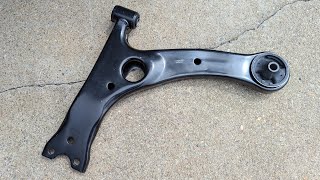
Technical Specifications
OEM Part Numbers: 88971293 48710-12250 48710-32093
Fits AWD models only. Interchangeable between rear left and rear right sides.

The information in this article is provided for general reference and educational purposes only. Vehicle specifications, procedures, and part compatibility can vary by production date, trim level, and region. Always consult your vehicle's factory service manual and verify part numbers before purchasing or performing repairs. Safety-critical components such as airbags, seat belts, and braking systems should be installed by a qualified professional.
- Pontiac Vibe:
- 🎬 Helpful Videos
- Symptoms of a Failing Rear Upper Control Arm
- Known Issues & Recalls for This Generation
- NHTSA Recall 03V269000: Loose Rear Hub Bolts
- Buying a Used Rear Upper Control Arm: What to Inspect
- Replacement Overview & Difficulty
- Cost Comparison: New vs. Used
- OEM Part Numbers & Compatibility
- Frequently Asked Questions (FAQ)
- 🎟️ Get 5% Off