

1995-2000 Lexus LS400 Front Upper Control Arm: Diagnosing Clunks and Steering Wander
This guide covers the common failure symptoms, replacement costs, and what to look for when buying a used front upper control arm for your 1995-2000 Lexus LS400.
- The most common sign of failure is a clunking noise from the front suspension when going over bumps.
- This part is a complete assembly; the ball joint and bushings are not serviced separately. You must replace the entire arm.
- When buying a used OEM arm, the most important thing to inspect is the condition of the rubber ball joint boot. If it's torn, do not buy it.
- A four-wheel alignment is mandatory after replacement to prevent poor handling and rapid tire wear.
Symptoms of a Failing Front Upper Control Arm

When the bushings or the integrated ball joint on the front upper control arm wear out, they introduce excess play into the front suspension. This can lead to a variety of noticeable symptoms.
1. Clunking or Knocking Noises
The most common symptom of a bad upper control arm is a distinct clunking or knocking sound coming from the front of the vehicle. This noise is most apparent when driving over bumps, potholes, or uneven road surfaces. The sound is caused by the worn ball joint or bushings allowing metal-on-metal contact as the suspension moves up and down. You might also hear a popping or creaking sound when turning the steering wheel at low speeds.
2. Steering Wander and Vague Response
Worn control arm components can cause changes in the suspension geometry, specifically the camber and caster angles. This results in a steering wheel that feels loose or vague, and the vehicle may tend to wander or drift to one side, requiring constant small corrections to keep it driving straight. This can feel like the car is being pushed around by crosswinds, even on a calm day.
3. Uneven Tire Wear
A failing upper control arm allows the wheel's alignment to shift dynamically while driving. This often leads to accelerated and uneven tire wear. Typically, you will see excessive wear on the inside or outside edge of the front tires. This is a direct result of the wheel tilting in or out (camber) due to the slop in the worn bushings or ball joint.
4. Vibrations Felt in the Steering Wheel
Excessive play in the control arm can translate into vibrations that you can feel through the steering wheel, especially at higher speeds. This is different from a wheel imbalance vibration (which is usually a constant shimmy) and may feel more like a shudder or wobble that changes with road surface and suspension movement.
Pro Tip: To diagnose a bad upper control arm, safely raise the front of the vehicle so the wheel is off the ground. Place your hands at the top and bottom of the tire (12 and 6 o'clock positions) and try to rock it in and out. If you feel significant play or hear a clunking sound, it's a strong indicator that the upper or lower ball joints are worn. Visually inspect the rubber bushings where the arm mounts to the chassis for cracks, tearing, or deterioration.
Known Issues, TSBs, and Recalls

For the 1995-2000 Lexus LS400, there are no specific recalls issued by the National Highway Traffic Safety Administration (NHTSA) for the front upper control arms. However, suspension wear, particularly on the control arm bushings and ball joints, is a well-documented issue for this vehicle generation as it ages.
- TSB #01202 (NHTSA ID #10000251): Lexus issued a Technical Service Bulletin regarding the proper inspection method for suspension ball joints, indicating this is an area that requires careful attention during service.
Owners frequently report that the front upper control arms are one of the first suspension components to require replacement, often between 90,000 and 150,000 miles, due to clunking noises and steering issues.
Buying a Used Upper Control Arm: What to Look For

A high-quality, low-mileage used OEM control arm can be a smart alternative to expensive new OEM parts or lower-quality aftermarket options. The original Lexus parts are known for their robust construction and durable materials. Here’s what to inspect:
- Ball Joint Boot: The most critical inspection point. The rubber boot around the ball joint must be intact, with no rips, tears, or cracks. A compromised boot allows grease to escape and contaminants like dirt and water to enter, which quickly destroys the joint. Do not buy an arm with a damaged ball joint boot.
- Bushings: Carefully examine the two large rubber bushings where the arm mounts to the frame. Look for deep cracks, dry rot, or any signs that the rubber is separating from the metal sleeve. Minor surface cracking can be acceptable on an older part, but avoid anything that looks torn or severely degraded.
- Ball Joint Play: Grab the ball joint stud and try to move it around in its socket. It should be very stiff and difficult to move by hand. If it feels loose or pops in and out, the joint is worn and the arm should be rejected.
- Physical Condition: Check the arm for any signs of bending, heavy corrosion, or damage from an accident. Ensure the mounting surfaces are clean and flat.
- Part Number Verification: Confirm you are buying the correct part for your vehicle's side (Driver/Left vs. Passenger/Right). They are not interchangeable.
Cost Breakdown for Front Upper Control Arm Replacement
Prices can vary based on location and the chosen parts. The following is an estimated cost breakdown for replacing a single front upper control arm.
| Part/Service | Estimated Cost |
|---|---|
| New OEM (Lexus Dealer) | $300 - $450 |
| New Aftermarket (RockAuto, AutoZone, etc.) | $150 - $250 |
| Used OEM | $45 - $150 |
| Shop Labor | $130 - $200 per side |
| Total Professional Installation (New OEM) | $430 - $650 per side |
| Total Professional Installation (New Aftermarket) | $280 - $450 per side |
Important: A four-wheel alignment is highly recommended after replacing control arms to ensure proper handling and prevent premature tire wear. Expect to pay an additional $100 - $200 for this service.
Replacement Overview and Torque Specs

Replacing the front upper control arm is a feasible DIY job for someone with mechanical experience and the right tools. The process generally involves removing the front wheel, disconnecting the upper ball joint from the steering knuckle, and then unbolting the two fasteners holding the control arm to the chassis.
Key Steps & Tips:
- Safely lift and support the vehicle on jack stands.
- Remove the front wheel.
- Loosen the castle nut on the upper ball joint, but do not remove it completely. Use a ball joint separator tool or a sharp hammer blow to the side of the steering knuckle to pop the ball joint stud loose.
- Support the steering knuckle assembly with a jack or rope to prevent it from hanging by the brake line or lower ball joint.
- Remove the two bolts that secure the control arm bushings to the shock tower. Access can be tight, and you may need to compress the coil spring slightly or loosen the top strut mount nuts to gain clearance for the bolts.
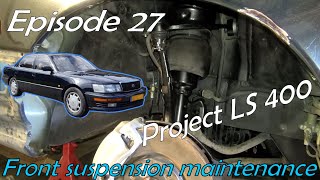
- Installation is the reverse of removal. 🎬 Watch this step-by-step Lexus LS400 front suspension overhaul video
Torque Specifications:
Using a torque wrench is critical for suspension components. While specs can vary slightly, these are commonly cited values for the 1995-2000 LS400.
| Fastener | Torque Value | Source |
|---|---|---|
| Upper Control Arm to Body Bolts | 83 ft-lbs (113 Nm) | |
| Upper Ball Joint to Steering Knuckle Castle Nut | 48 ft-lbs (65 Nm) |
Pro Tip: Unlike some suspension bushings that must be tightened at ride height, the upper control arm bushings on the LS400 can be fully torqued with the suspension hanging, as they are designed to rotate freely. After tightening the castle nut, always install a new cotter pin.
Related Parts to Inspect
When you're replacing an upper control arm, it's a good time to inspect other nearby suspension components, as the labor often overlaps.
- Lower Control Arms & Ball Joints: If the upper arm is worn, the lower one may not be far behind. Check for play.
- Strut Bar / Radius Rod Bushings: These are another very common failure point on the LS400, causing clunking and braking instability.
- Sway Bar Links: Check these for play or damaged boots. Worn links can cause a rattling or clunking noise over smaller, repetitive bumps.
- Outer Tie Rod Ends: Check for play to ensure steering is precise.
Frequently Asked Questions (FAQ)
Can I just replace the ball joint or bushings instead of the whole arm?
No, on the 1995-2000 Lexus LS400, the upper ball joint is an integral part of the control arm and is not sold separately by Lexus. While some aftermarket companies may offer press-in bushings, the common and recommended repair is to replace the entire control arm assembly, which includes new bushings and a new ball joint already installed.
Do I need to get an alignment after replacing the upper control arms?
Yes, an alignment is strongly recommended. Replacing the control arm will affect the vehicle's camber and caster settings. Driving without an alignment can lead to poor handling, steering pull, and rapid, uneven tire wear.
What is the difference between the left (driver) and right (passenger) side arms?
The left and right front upper control arms are mirror images of each other and are not interchangeable. You must order the specific side you need. The passenger side is the Right Hand (RH) arm, and the driver side is the Left Hand (LH) arm.
How long do front upper control arms last on a Lexus LS400?
The lifespan can vary greatly depending on driving conditions, but it is common for the original control arms to show signs of wear and require replacement between 90,000 and 150,000 miles. Vehicles driven on poorly maintained roads or in areas with harsh weather may see shorter lifespans.
Helpful Videos

Technical Specifications
OEM Part Numbers: 48610-50010 48610-50020 48610-59015 (Passenger Side / RH) 48630-50010 48630-50020 48630-59015 48630-59025 (Driver Side / LH)
Torque Specs: - Upper Arm to Body Bolts: 83 ft-lbs (113 Nm) - Ball Joint Castle Nut: 48 ft-lbs (65 Nm)
We Have This Part in Stock



The information in this article is provided for general reference and educational purposes only. Vehicle specifications, procedures, and part compatibility can vary by production date, trim level, and region. Always consult your vehicle's factory service manual and verify part numbers before purchasing or performing repairs. Safety-critical components such as airbags, seat belts, and braking systems should be installed by a qualified professional.
- Lexus LS400:
- 🎬 Helpful Videos
- 🛍️ Shop This Part
- Symptoms of a Failing Front Upper Control Arm
- 1. Clunking or Knocking Noises
- 2. Steering Wander and Vague Response
- 3. Uneven Tire Wear
- 4. Vibrations Felt in the Steering Wheel
- Known Issues, TSBs, and Recalls
- Buying a Used Upper Control Arm: What to Look For
- Cost Breakdown for Front Upper Control Arm Replacement
- Replacement Overview and Torque Specs
- Torque Specifications:
- Related Parts to Inspect
- Frequently Asked Questions (FAQ)
- 🎟️ Get 5% Off