

2014-2016 Mazda 3 Front Turn Signal & Parking Light: A Buyer's and DIY Guide
This guide covers common issues, replacement costs, and what to look for when buying a used front turn signal/parking light assembly for your 2014-2016 Mazda 3.
- This assembly fits both sedan and hatchback models of the 2014-2016 Mazda 3.
- Failure is often due to a burnt-out 7443A bulb, causing hyperflashing, or a failed housing seal leading to condensation.
- When buying used, the most critical inspection is for intact mounting tabs; they are fragile and often broken.
- Replacement can be done by peeling back the fender liner, but removing the bumper cover provides much easier access.
Part Overview and Identification
This guide focuses on the front turn signal and parking light assembly for the 2014, 2015, and 2016 Mazda 3, which fits both sedan and hatchback models. This assembly is mounted in the lower corners of the front bumper cover. It is a distinct part from the main headlight unit. The factory-installed unit uses a single dual-filament incandescent bulb to serve as both the parking light (low filament) and the turn signal (high filament).
Key OEM part numbers to know are:
- Right / Passenger Side: B45A-51-350A
- Left / Driver Side: B45A-51-360A
Symptoms of Failure
Diagnosing a faulty turn signal assembly is usually straightforward. Look for these common signs:
- Rapid Blinking (Hyperflash): If your turn signal indicator on the dashboard blinks much faster than usual, it's typically a sign that a bulb has burned out. The change in electrical resistance causes the flasher relay to cycle more quickly.
- Light Not Working: The most obvious symptom is a turn signal or parking light that doesn't illuminate at all. This can be due to a burnt-out bulb, a loose connection, or a wiring issue.
- Visible Moisture or Condensation: Finding water droplets or fog inside the lens is a common issue. While Mazda notes that minor fogging in corners can be normal and may clear up on its own, significant water accumulation indicates a failed seal. This moisture can short out the bulb and corrode electrical contacts over time.
- Cracked or Damaged Lens: Physical damage from road debris or minor impacts can crack the lens, allowing moisture to enter and compromising the light's effectiveness.
Pro Tip: Before replacing the entire assembly for a non-working light, always check the bulb first. The bulb is a common failure point and is much cheaper and easier to replace than the whole housing.
🎬 Watch: How to replace the front turn signal bulbKnown Issues, TSBs, and Recalls
While there are no specific recalls for this turn signal/parking light assembly on the 2014-2016 Mazda 3, Mazda has issued general Technical Service Bulletins (TSBs) regarding condensation in lighting assemblies.
- TSB on Condensation: Mazda has acknowledged that minor condensation in the corners of light assemblies can be a normal phenomenon due to temperature differences and may not require part replacement. However, if large water droplets form or if water pools inside the housing, the assembly's seal has likely failed and it should be replaced.
No recalls directly target this specific part, though several recalls exist for other lighting and vehicle systems on these model years, such as for LED daytime running lights on other models and rearview cameras.
Buying a Used Turn Signal / Parking Light
Purchasing a used OEM turn signal assembly is a cost-effective way to maintain your vehicle's original look and fit. However, careful inspection is key to getting a quality part.
What to Inspect:
- Mounting Tabs and Points: This is the most critical inspection point. These plastic tabs are brittle and often break during removal or in minor bumper impacts. Ensure all mounting points are intact and free of cracks. A broken tab will result in a loose fit, vibration, and potential gaps.
- Lens Condition: Check the lens for deep scratches, hazing, and any signs of cracks, especially around the edges. Minor surface scuffs can often be polished out, but cracks compromise the seal.
- Seal Integrity: Inspect the gray or black rubber seal where the bulb socket twists into the housing. It should be pliable and free of cracks. A dried-out or missing seal is the primary cause of water entry.
- Internal Reflectors: The chrome or silvered reflector inside the housing should be bright and shiny. A dull, flaking, or discolored reflector will reduce light output.
- Wiring and Connector: While the wiring harness is part of the vehicle, check the connector on the light housing itself for any signs of corrosion, melting, or broken plastic.
Warning: Avoid assemblies with any signs of pooled water or a "water line" inside. This indicates a long-term leak, and the internal reflective surfaces and bulb socket are likely corroded.
Replacement Process Overview
Replacing the turn signal assembly is a feasible DIY project for those with basic mechanical skills. While some guides suggest the entire front bumper must be removed, it is often possible to access the assembly by only partially removing the fender liner and lower splash shield.
- Access the Area: Turn the front wheels inward to get access to the fender liner. Remove the screws and push-clips holding the front portion of the fender liner and the lower engine splash shield. 🎬 See this step-by-step turn signal replacement walkthrough
- Peel Back the Liner: Gently pull the fender liner back to create enough space to reach inside the bumper cover.
- Disconnect and Remove: Reach in and locate the light assembly. First, twist and remove the bulb socket from the housing. Then, disconnect the main electrical connector. The assembly is typically held in place by several screws or clips that need to be removed.
- Installation: Installation is the reverse of removal. Test the light's function before re-securing all the fender liner clips and screws.
For a full replacement of the housing, removing the front bumper cover provides much better access and is the procedure recommended by the Mazda service manual.
🎬 Watch: How to safely remove the front bumper coverBulb Information and Upgrades
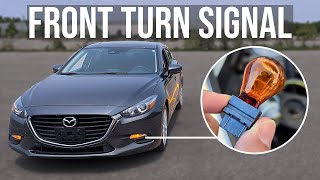
The stock bulb for the front turn signal and parking light is a dual-filament 7443 incandescent bulb (the 'A' in 7443A signifies an amber color). This bulb functions as both the parking light and the brighter turn signal.
- Standard Replacement: A standard 7443A bulb is inexpensive and widely available.
- LED Upgrades: Many owners upgrade to LED bulbs for a more modern, instant on/off appearance. However, this often requires an external resistor or a specific "CAN-bus compatible" LED bulb to prevent "hyperflashing." Some aftermarket companies also offer complete LED assemblies that replace the stock unit entirely, sometimes adding a daytime running light (DRL) feature.
Cost Comparison
| Part Type | Estimated Cost |
|---|---|
| New OEM (Dealer) | $80 - $110 |
| New Aftermarket | $45 - $60 |
| Used OEM | $30 - $50 |
| Shop Labor to Install | $75 - $150 |
Frequently Asked Questions (FAQ)
Is the passenger side and driver side light the same?
No, they are not interchangeable. They are mirror images of each other and have different part numbers. The right (passenger) side is B45A-51-350A and the left (driver) side is B45A-51-360A.
Do I need to remove the whole front bumper to replace this light?
To replace just the bulb, you do not need to remove the bumper. You can access it by removing a few screws on the plastic fender liner and peeling it back. To replace the entire housing assembly, it is much easier if you remove the front bumper, though some mechanics can do it by only partially removing the bumper and liner.
Why is my turn signal blinking really fast?
This is called "hyperflashing" and it's the car's way of telling you a turn signal bulb has burned out. The reduced electrical load on the circuit causes the flasher relay to blink rapidly. Replacing the burnt-out 7443A bulb will fix the problem.
Can I upgrade this light to LED?
Yes. You can replace the stock 7443A incandescent bulb with an LED equivalent. However, you will likely need to install an inline resistor for each LED bulb to prevent hyperflashing, as LEDs draw less power than incandescent bulbs. Alternatively, you can buy complete aftermarket housings that have LEDs built-in.
Helpful Videos
Technical Specifications
OEM Part Numbers: B45A-51-350A (Right/Passenger) B45A-51-360A (Left/Driver)
Bulb Type: 7443A (Amber, Dual-Filament)
We Have This Part in Stock


The information in this article is provided for general reference and educational purposes only. Vehicle specifications, procedures, and part compatibility can vary by production date, trim level, and region. Always consult your vehicle's factory service manual and verify part numbers before purchasing or performing repairs. Safety-critical components such as airbags, seat belts, and braking systems should be installed by a qualified professional.
- Mazda 3:
- 🎬 Helpful Videos
- 🛍️ Shop This Part
- Part Overview and Identification
- Symptoms of Failure
- Known Issues, TSBs, and Recalls
- Buying a Used Turn Signal / Parking Light
- What to Inspect:
- Replacement Process Overview
- Bulb Information and Upgrades
- Cost Comparison
- Frequently Asked Questions (FAQ)
- 🎟️ Get 5% Off