

Ford 3.5L EcoBoost Turbo Guide (2011-2019 F-150, Expedition & More): Leaks, P0299, and Replacement
This guide covers the right-side (passenger side) turbocharger for the 3.5L EcoBoost V6, detailing common failure symptoms, critical compatibility warnings, and what to inspect on a used unit.
- This guide covers the RIGHT (passenger side) turbo for the 3.5L EcoBoost, not the 2.7L or H.O. engines.
- A P0299 underboost code is a primary symptom, but always check for cheaper fixes like boost leaks before condemning the turbo.
- There is a critical compatibility difference: 2011-2012 F-150 turbos have a built-in blow-off valve mount, while 2013+ models do not. They are not interchangeable.
- When buying used, check for zero in-and-out shaft play and inspect the turbine wheels for any signs of damage or housing contact.
Diagnosing a Failing 3.5L EcoBoost Turbocharger


A failing turbo on your Ford F-150, Expedition, Transit, or Lincoln Navigator can cause a range of symptoms from annoying noises to a major loss of power. Understanding these signs can help you pinpoint the problem before it causes more severe engine damage.
Common Symptoms of Turbo Failure
- Significant Loss of Power: The most obvious symptom is a sudden and dramatic decrease in engine power and acceleration. The vehicle may feel sluggish, especially when trying to accelerate or tow.
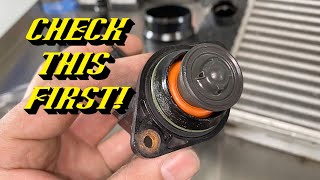
- Check Engine Light with Code P0299: The code P0299 (Turbocharger/Supercharger Underboost) is a very common indicator of a turbo system problem. 🎬 Watch: Quick diagnostic steps for troubleshooting a P0299 underboost code. This means the engine's computer has detected that the turbo is not producing the expected amount of pressure, or 'boost'. This can be caused by a leak in the system, a faulty wastegate, or a damaged turbo.
- Whining or Siren-Like Noise: A high-pitched whining or siren sound from the engine bay that changes with engine RPM is a classic sign of a failing turbo. This noise is often caused by the compressor or turbine wheels spinning at high speed while damaged or scraping against the turbo housing.
- Blue or Gray Exhaust Smoke: Smoke coming from the exhaust, especially during acceleration, often points to failing seals inside the turbocharger. When these seals wear out, engine oil can leak into the intake or exhaust system and get burned, producing visible smoke.
- Loud 'Bang' Followed by Power Loss: In some cases, a catastrophic failure can be preceded by a loud 'bang' or pop, which could be a hose blowing off or the turbo itself failing internally.
Pro Tip: Before condemning the turbocharger for a P0299 code, thoroughly inspect the entire air intake system. A torn diaphragm in the blow-off valve (BOV), loose hose clamps, or cracked plastic tubing can cause a boost leak that triggers the same code and symptoms. These are much cheaper and easier to fix than replacing a turbo.
Known Issues for 3.5L EcoBoost Turbos (2011-2019)

While the BorgWarner turbos used on these engines are generally robust, some common issues have been identified over the years, particularly on the first-generation (2011-2016) F-150s.
Turbo Coolant Line Leaks
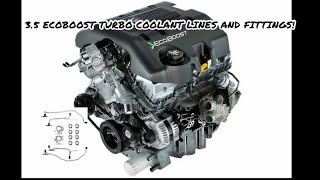
A well-documented problem is leaking coolant from the fittings on the turbocharger's hard lines. These lines circulate engine coolant to help manage the extreme temperatures the turbos operate at. The original 'jiffy-tite' style fittings can degrade over time, causing coolant to leak. 🎬 See how to fix coolant leaks without removing the turbo. If not addressed, a coolant leak can lead to overheating and severe engine damage. When replacing a turbo, it is highly recommended to replace the associated coolant lines and fittings at the same time.
Warped Exhaust Manifolds & Broken Studs
On first-generation 3.5L EcoBoost engines, the exhaust manifolds can warp due to intense heat cycles. This can cause the mounting studs to stretch and break, leading to an exhaust leak between the cylinder head and the manifold. An exhaust leak here will sound like a ticking or puffing noise, especially on a cold start, and can cause a loss of exhaust pressure needed to spin the turbo, contributing to underboost conditions.
Carbon Buildup (First-Generation Engines)
The 2011-2016 F-150 engines use direct injection only, which can lead to carbon deposits building up on the intake valves over time. This isn't a turbo failure, but it can cause similar symptoms like rough idling and power loss by restricting airflow into the engine.
Warning: This guide is for the standard 3.5L EcoBoost engine. It does NOT cover the High Output (H.O.) engine found in the F-150 Raptor or some F-150 Limited models, which uses different turbochargers.
Buying a Used 3.5L EcoBoost Turbocharger: What to Check
A quality used OEM turbocharger from a low-mileage, wrecked vehicle can be a reliable and cost-effective alternative to expensive new parts. However, you must inspect it carefully before buying.
Critical Compatibility Checks
There is a major design difference between turbos for 2011-2012 F-150s and 2013+ models.
- 2011-2012 Models: The blow-off valve (BOV) is mounted directly to the turbocharger compressor housing.
- 2013+ Models: These use a single, electronically controlled BOV mounted on the intercooler. The turbos do not have a mounting location for a BOV.
These parts are NOT interchangeable. Always match the OEM part number from your old turbo to the replacement part. The part numbers listed in this guide are for the right (passenger) side turbo only.
Physical Inspection Checklist
- Check for Shaft Play: This is the most important check. Grab the nut on the end of the compressor wheel (the 'cold' side) and try to move it.
- In-and-Out (Axial) Play: There should be NO noticeable movement in and out. Any axial play indicates a failed thrust bearing and the turbo is junk.
- Side-to-Side (Radial) Play: A very small amount of side-to-side play is normal for a journal bearing turbo, as it floats on a film of oil when the engine is running. However, it should be minimal. The wheel should not touch the sides of the housing when you wiggle it.
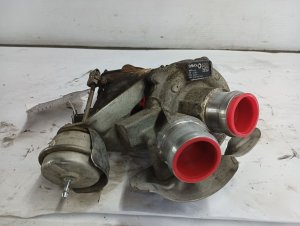
- Inspect the Wheels: Look at both the compressor wheel (silver, aluminum) and the turbine wheel (darker, on the exhaust side). The blades should be straight, sharp, and free of chips, cracks, or signs of rubbing against the housing. Damaged fins mean the turbo has ingested debris or is severely out of balance.
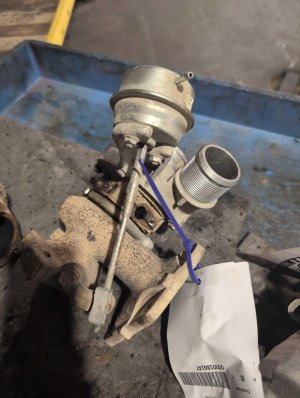
- Look for Housing Cracks: Carefully inspect the cast iron turbine housing (the 'hot' side) for cracks, especially around the wastegate port where heat is most concentrated. A cracked housing will leak exhaust pressure.
- Check for Oil or Coolant: The inside of the compressor and turbine housings should be dry and clean. Any wetness or thick, black gunk is a sign of leaking seals. Avoid any turbo that came from an engine known to have failed catastrophically, as it may be full of metal debris.
- Verify Wastegate Operation: If possible, move the wastegate actuator arm to ensure it moves freely and that the internal flapper door seats firmly.
Cost of Replacing a 3.5L EcoBoost Turbocharger
The cost can vary significantly depending on the parts source and who performs the labor. Replacing these turbos is labor-intensive.
| Part Source / Service | Estimated Cost (Single Turbo) |
|---|---|
| New OEM | $700 - $1,300 |
| New Aftermarket | $350 - $600 |
| Remanufactured | $300 - $500 |
| Used OEM | $200 - $450 |
| Shop Labor | $800 - $1,500+ |
Frequently Asked Questions (FAQ)
Is it better to replace one turbo or both?
Because the labor to access the turbos is significant, many mechanics recommend replacing both at the same time, especially on higher-mileage vehicles. The turbos have been subjected to the same operating conditions, so if one has failed, the other may not be far behind. This prevents having to pay for the same difficult labor twice.
Do I need to replace anything else with the turbo?
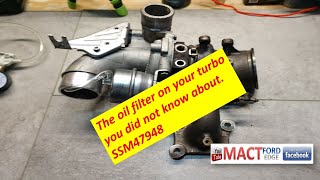
Yes. It is critical to replace the turbo oil feed lines, which have small filters that can get clogged and starve the new turbo of oil. 🎬 Watch: How to replace the critical turbo oil supply filters. You should also replace all gaskets, o-rings, and the coolant lines connected to the turbo. An oil and filter change is mandatory to ensure the new turbo gets clean oil from the moment it starts.
What causes the 3.5L EcoBoost turbos to fail?
The most common cause of failure is related to lubrication. Oil starvation from a clogged feed line, oil contamination from extended oil change intervals, or coolant contamination from a leaking fitting can all destroy the bearings inside the turbo. Other causes include foreign object damage (debris entering the intake) or excessive heat from exhaust leaks.
Does this turbo fit the 2.7L EcoBoost engine?
No. The 2.7L EcoBoost V6 uses different turbochargers with different part numbers. The parts covered in this guide are only for the 3.5L EcoBoost V6 engine in the specified vehicles.
Helpful Videos
Technical Specifications
OEM Part Numbers: BL3E-9G438-VA BL3E9G438UA BL3Z-6K682-D BL3Z6K682C BL3Z6K682E CL3Z-6K682-B CL3Z-6K682-D CL3Z6K682A CL3Z6K682C DL3E6C879AD DL3E6C879AE DL3E6C879AF DL3Z-6K682-B DL3Z-6K682-D DL3Z-6K682-F
Engine Fitment: Ford 3.5L EcoBoost V6 (Standard Output). Position: Right (Passenger Side). Cooling: Engine Oil and Coolant. Wastegate: Internal, typically vacuum or electronically actuated depending on model year.
We Have This Part in Stock


The information in this article is provided for general reference and educational purposes only. Vehicle specifications, procedures, and part compatibility can vary by production date, trim level, and region. Always consult your vehicle's factory service manual and verify part numbers before purchasing or performing repairs. Safety-critical components such as airbags, seat belts, and braking systems should be installed by a qualified professional.
- Ford F-150:
- Ford Expedition:
- Ford Transit-150:
- Ford Transit-250:
- Ford Transit-350:
- Lincoln Navigator:
- 🎬 Helpful Videos
- 🛍️ Shop This Part
- Diagnosing a Failing 3.5L EcoBoost Turbocharger
- Common Symptoms of Turbo Failure
- Known Issues for 3.5L EcoBoost Turbos (2011-2019)
- Turbo Coolant Line Leaks
- Warped Exhaust Manifolds & Broken Studs
- Carbon Buildup (First-Generation Engines)
- Buying a Used 3.5L EcoBoost Turbocharger: What to Check
- Critical Compatibility Checks
- Physical Inspection Checklist
- Cost of Replacing a 3.5L EcoBoost Turbocharger
- Frequently Asked Questions (FAQ)
- 🎟️ Get 5% Off