

2002-2003 Sprinter 2500 & 3500 Turbocharger: Limp Mode, Diagnosis, and Replacement
This guide covers the common failure symptoms, diagnostic procedures, and replacement considerations for the turbocharger in 2002-2003 Dodge Sprinter 2500 and 3500 vans with the 2.7L OM612 engine.
- Loss of power or 'Limp Mode' is often caused by a cracked plastic turbo resonator or a split boost hose, not the turbo itself. Check these first.
- These 2002-2003 models use a specific vacuum-actuated turbo. Later models with electronic actuators are not compatible.
- When buying a used turbo, check for in-and-out shaft play (bad) and ensure the compressor/turbine wheels spin freely without damage.
- Oil quality is critical. Oil contamination from issues like leaking injector seals ('Black Death') can quickly destroy a turbo.
Understanding the Turbocharger on Your 2002-2003 Sprinter

The turbocharger on the 2002-2003 Dodge Sprinter 2500 and 3500 is a Garrett GT2256V model, specifically designed for the 2.7L OM612 5-cylinder diesel engine. A key feature of these specific model years is the use of a vacuum-style wastegate actuator. This is different from later Sprinter models that use an electronic actuator. The actuator controls the turbo's boost output by managing the flow of exhaust gas. This distinction is critical when sourcing a replacement part.
Common Symptoms of a Failing Turbo

A failing turbo can present several distinct symptoms. Recognizing them early can help prevent more catastrophic engine damage.
- Sudden Loss of Power / "Limp Mode": This is the most common symptom reported by Sprinter owners. The vehicle's computer (ECU) detects a problem with boost pressure and puts the engine into a reduced power mode to prevent damage, often limiting speed to around 40 mph. 🎬 Watch this video on resetting Limp Home Mode while driving. This can be caused by the turbo itself or, more frequently, by related issues like boost leaks.
- Whining or Siren-Like Noise: A high-pitched whistle or a sound like a dentist's drill coming from the engine bay during acceleration is a classic sign of a failing turbo. This noise is often caused by damaged fins on the compressor or turbine wheel, or the shaft spinning out of balance.
- Excessive Exhaust Smoke: If you see blue or grey smoke from the tailpipe, it often means that the turbo's internal seals have failed, allowing engine oil to leak into the exhaust system and burn. Black smoke can indicate an incorrect air-to-fuel ratio, which can also be a symptom of a turbo malfunction.
- Increased Oil Consumption: A turbo with failing seals can consume a noticeable amount of engine oil between changes. This oil is either being burned in the exhaust or leaking into the intake system.
- Check Engine Light: A failing turbo will often trigger the check engine light. A common fault code associated with these symptoms is P0299 (Turbocharger/Supercharger "A" Underboost Condition), indicating that the system is not producing the expected amount of boost.
Pro Tip: Before you condemn the turbocharger, thoroughly inspect for boost leaks. The most common causes of limp mode and low boost on these vans are not the turbo itself, but rather failed peripheral parts.
Diagnosing Turbo Problems: It Might Not Be the Turbo

Many turbo-like symptoms on the T1N Sprinter are actually caused by less expensive, easier-to-fix components. Follow these diagnostic steps before deciding to replace the entire turbocharger assembly.
- Check the Turbo Resonator: The plastic turbo resonator, located on the outlet of the turbo's compressor, is a notoriously common failure point on these vans. It often splits along its seams, creating a large boost leak that triggers limp mode. Visually inspect it for cracks or oily residue, which indicates an air leak. Many owners replace the failure-prone plastic resonator with a more durable aluminum aftermarket version.
- Inspect All Boost Hoses: Check all the rubber hoses between the turbo, the intercooler, and the intake manifold. These hoses can become brittle and crack over time, causing boost leaks. A hissing or whooshing sound under acceleration can point to a split hose.
- Test the Vacuum Actuator: The 2002-2003 models use a vacuum-controlled actuator. Check the vacuum lines running to the actuator for cracks or leaks. You can use a handheld vacuum pump to test if the actuator arm moves freely and holds a vacuum. A faulty actuator can cause a lack of boost even if the turbo is healthy.
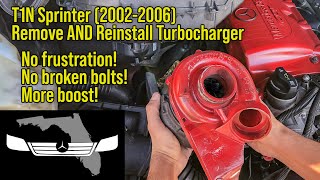
- Check for Turbo Shaft Play: With the engine off and cool, remove the intake hose from the turbo. Grasp the center nut of the compressor wheel and try to wiggle it. A very small amount of side-to-side (radial) play is normal. However, there should be no in-and-out (axial) play. If the shaft can be moved in and out, or if the compressor wheel fins touch the housing, the bearings are shot and the turbo needs to be replaced. 🎬 Watch a step-by-step tutorial on replacing your Sprinter's turbocharger.
Known Issues, Recalls, and Service Bulletins
While there are no recalls specifically for the turbocharger on the 2002-2003 Dodge Sprinter 2500 and 3500, there are related issues to be aware of:
- Intake Manifold Corrosion Recall (NHTSA #09V-418): Some 2002-2003 models were recalled because the intake manifold could corrode due to a chemical reaction with sulfur in diesel fuel. This could lead to an exhaust gas leak and, in some cases, damage to the fuel return line, posing a fire risk.
- "Black Death": This is a common slang term for leaking fuel injector seals on the OM612 engine. When these seals fail, they allow combustion gases to leak out, forming a hard, tar-like substance around the injectors. This can contaminate the engine oil, leading to oil starvation and premature failure of components like the turbocharger.
Buyer's Guide: How to Inspect a Used Turbocharger

A used OEM Garrett turbocharger is often a reliable and cost-effective alternative to cheap, new aftermarket units that can fail catastrophically. Here’s what to check before buying a used turbo for your Sprinter:
- Verify Compatibility: Ensure the turbo is from a 2002-2003 Sprinter with the 2.7L OM612 engine. Critically, confirm it has the vacuum-style wastegate actuator, not the later electronic version. Cross-reference OEM part numbers like Garrett 709838-5005S or Mercedes-Benz A6120960399.
- Inspect the Wheels: Look closely at both the aluminum compressor wheel (intake side) and the darker turbine wheel (exhaust side). The fins should be straight and free of chips, cracks, or signs of impact. Damaged fins indicate the turbo has ingested foreign debris, which may have caused other internal damage.
- Perform the Shaft Play Test: As described in the diagnosis section, check for excessive side-to-side play and any in-and-out play. The shaft should spin freely by hand with no grinding or scraping sounds.
- Check for Oil Leaks: A light coating of dry oil residue can be normal. However, heavy, wet oil inside the compressor housing inlet or turbine housing outlet is a red flag for failing seals.
- Examine the Housings: Inspect the cast iron turbine (exhaust) housing for cracks, which can be caused by extreme heat cycles.
- Check the Actuator: Make sure the vacuum actuator arm isn't seized and moves smoothly throughout its range of motion.
Cost Comparison for Turbocharger Replacement
Prices can vary based on supplier and location. These are estimates to help understand the value of different options.
| Part Type | Estimated Price Range |
|---|---|
| New OEM (Garrett) | $1,100 - $2,700 |
| New Aftermarket | $275 - $800 |
| Remanufactured (Garrett) | $700 - $1,100 |
| Used OEM | $250 - $500 |
| Shop Labor | $400 - $600 |
Warning: Be cautious with cheap, unbranded aftermarket turbos. While the price is tempting, they often use inferior materials and may not be balanced correctly, leading to premature failure that can send metal fragments into your engine.
Frequently Asked Questions (FAQ)
Can I drive my Sprinter with a bad turbo?
It is not recommended. If the van is in "limp mode," it will be dangerously slow for normal traffic. If the turbo has failed internally, continuing to drive could cause the shaft to break, sending metal debris into the engine and intercooler, leading to a much more expensive repair.
What is the most common cause of turbo failure on these Sprinters?
Aside from high mileage, the most common causes are oil-related. This includes oil starvation from low levels or clogged oil lines, or oil contamination from extended change intervals or issues like leaking injector seals ("Black Death"). Boost leaks from parts like the turbo resonator can also cause the turbo to overspeed, leading to premature wear.
Do I need to replace the turbo resonator at the same time?
It is highly recommended. The original plastic resonator is a known failure point that can cause the exact same symptoms as a bad turbo. Replacing it with a durable aftermarket version while the turbo is being serviced is a smart preventative measure.
Is any special programming required after installing a new turbo?
No. For the 2002-2003 models with the vacuum-actuated turbo, this is a direct mechanical replacement. No computer reprogramming or calibration is necessary.
Helpful Videos
Technical Specifications
OEM Part Numbers: 709838-0001 709838-0003 709838-0004 709838-0005 709838-5005S 709838-5006S 6120960399 A6120960399 05104006AA 05104006AB R5104006AB
Fits 2.7L OM612 Diesel Engine. Features a vacuum-style wastegate actuator. Turbo Model: Garrett GT2256V.

The information in this article is provided for general reference and educational purposes only. Vehicle specifications, procedures, and part compatibility can vary by production date, trim level, and region. Always consult your vehicle's factory service manual and verify part numbers before purchasing or performing repairs. Safety-critical components such as airbags, seat belts, and braking systems should be installed by a qualified professional.
- Dodge Sprinter 2500:
- Dodge Sprinter 3500:
- 🎬 Helpful Videos
- Understanding the Turbocharger on Your 2002-2003 Sprinter
- Common Symptoms of a Failing Turbo
- Diagnosing Turbo Problems: It Might Not Be the Turbo
- Known Issues, Recalls, and Service Bulletins
- Buyer's Guide: How to Inspect a Used Turbocharger
- Cost Comparison for Turbocharger Replacement
- Frequently Asked Questions (FAQ)
- 🎟️ Get 5% Off