

2008-2020 Grand Caravan & Town & Country Liftgate Latch Motor: Why It Won't Close and How to Fix It
Your definitive guide to diagnosing and replacing the power liftgate pull-down latch motor on the Chrysler Town & Country, Dodge Grand Caravan, Ram C/V, and Volkswagen Routan.
- Before replacing the latch, ALWAYS inspect for broken wires in the rubber harness between the liftgate and the vehicle body; this is the most common cause of failure.
- This part does NOT require any dealer programming or calibration, making it an ideal DIY replacement.
- A used OEM latch is a reliable and extremely cost-effective alternative to a very expensive new OEM part.
- This latch is ONLY for models with a power liftgate. It is a different part from the latch on manual liftgate vans.
Symptoms of a Failing Liftgate Latch Motor

When the power liftgate latch motor fails, it can be frustrating. The gate might seem to close, but it won't secure properly. Here are the most common signs that your latch motor is the problem:
- Liftgate Closes but Won't Latch: The gate lowers completely but fails to pull itself tight. It may bounce back up slightly, leaving a gap.
- 'Gate Ajar' Warning Light: The dashboard displays a warning that the rear hatch is open, even if it appears closed.
- Gate Reverses After Closing: The liftgate touches the striker, then immediately re-opens. The system's safety feature interprets the failed latch as an obstruction.
- Grinding or Clicking from Inside the Liftgate: When the gate attempts to latch, you may hear grinding or rapid clicking sounds from the latch area, indicating broken internal gears.
- Tailgate Will Not Lock: The electronic locking portion of the actuator may fail, preventing the liftgate from locking with the key fob or door switches, even if it's manually closed.
- Complete Failure: The latch makes no sound and does not attempt to pull the door shut.
Definitive Diagnosis: Is It Really the Latch?


Before you buy a new latch, follow these steps. On these minivans, other issues can mimic a failed latch motor. The most common culprit is not the motor itself, but the wiring that powers it.
Step 1: Inspect for Broken Wires (The #1 Most Common Cause)
The wires that power the latch run from the vehicle's body into the liftgate through a flexible rubber boot. After years of opening and closing, these wires can fatigue and break. This is the most frequent cause of latch failure.
- Open the liftgate.
- Locate the rubber wire harness boot, typically on the top left side, connecting the body to the gate.
- Pull the boot back from both the body and the liftgate to expose the wires inside.
- Carefully inspect each wire for breaks, cracks in the insulation, or frayed copper strands. A broken wire here will cause a complete loss of power to the latch. 🎬 Watch this video to see how to fix common wiring issues.
Pro Tip: If you find a broken wire, this is almost certainly your problem. Repairing the wire with a butt connector and heat shrink is a much cheaper fix than replacing the entire latch assembly.
Step 2: Check the Fuses
The power liftgate system is protected by a fuse, often a 30-amp fuse located in the main fuse box (Totally Integrated Power Module) under the hood. Consult your owner's manual for the exact location and check to see if it's blown.
🎬 Watch this guide to find the exact power liftgate fuse location.Step 3: Check for an 'Out-of-Sync' Latch
Sometimes, the latch can get manually moved to the 'closed' position while the liftgate is open. The system then gets confused and thinks there is an obstruction when it tries to close. You can often reset this manually.
- With the liftgate open, look at the latch mechanism.
- If the hook is in the closed position, use a screwdriver to carefully push the spring-loaded catch and rotate the hook back to the open position. 🎬 See a quick demonstration on how to reset an out-of-sync latch.
- Try operating the power liftgate again.
Step 4: Inspect the Power Liftgate Module (PLGM)
The PLGM is the brain of the system. On the Town & Country and Grand Caravan, it's located in the rear cargo area on the driver's side, behind the panel where the jack is stored. On other FCA vehicles, this module is known to be susceptible to water damage, which causes corrosion on the connectors. Unplug the connectors and check for any green or white crusty buildup. If corrosion is present, the module or its connector may be the issue.
Buying a Used Trunk Lid Pull Down Motor

If you've ruled out wiring, fuses, and sync issues, replacing the latch is the next step. Given the high cost of a new OEM part, a used latch from a reputable recycler is an excellent, cost-effective option.
- Huge Cost Savings: A used OEM latch can often be purchased for a small fraction of the new OEM price, which can be over $600.
- OEM Quality and Fit: A used genuine Mopar part guarantees perfect fitment and the same quality as the original part, unlike some aftermarket alternatives which may have functional differences.
- No Programming Needed: This part is plug-and-play. There is no need for dealer programming or special calibration, making it a perfect DIY-friendly replacement.
- What to Inspect: When buying used, visually inspect the part for any cracks in the plastic housing. Ensure the electrical connector pins are clean and not corroded. If possible, choose a part from a vehicle with lower mileage.
Known Issues, TSBs, and Recalls
While there are no major recalls specifically for the latch motor on these vans, there are related service actions to be aware of:
- NHTSA 12V-191 (Chrysler Recall M17): This recall affected a small number of 2012 Town & Country and Grand Caravan models. The issue was with the right-side pinch sensor, which could require excessive force to stop the gate during closing, increasing injury risk. It did not involve the latch motor itself.
- Broken Wire Harness: While not an official recall, broken wires in the liftgate harness are a widely documented, common failure point that directly affects the latch motor's operation.
Replacement Overview
Replacing the liftgate latch is a manageable job for a DIYer with basic tools. The difficulty is about 2 out of 5.
- Open the Liftgate: If it's stuck closed, you must climb inside the vehicle. Remove the small access panel in the center of the interior liftgate trim and use a screwdriver to move the manual release lever.
- Remove the Interior Trim Panel: Use plastic trim removal tools to carefully pry off the large plastic panel on the inside of the liftgate. Start at the bottom and work your way around.
- Unbolt the Latch: The latch assembly is held in place by three T30 Torx bolts.
- Disconnect and Replace: Disconnect the electrical connector and any release cables attached to the old latch. Install the new latch and reconnect everything.
- Test: Before reinstalling the trim panel, test the power liftgate function to ensure the new latch is working correctly.
Warning: This assembly is only for models equipped with a power liftgate. It is not compatible with manual liftgate vehicles.
Cost of Replacement
| Part Type | Estimated Cost |
|---|---|
| New OEM (Mopar) | $650 - $1000 |
| New Aftermarket | $100 - $200 |
| Used OEM | $50 - $125 |
| Shop Labor | $100 - $200 |
Frequently Asked Questions (FAQ)
Does a replacement liftgate latch motor need to be programmed?
No. This part does not require any programming or calibration by a dealer. It is a direct plug-and-play replacement.
What's the difference between the liftgate motor and the liftgate latch?
The main liftgate motor is a large assembly located in the driver's side rear pillar (D-pillar) that physically swings the gate open and closed. The liftgate latch is the smaller part inside the liftgate itself that performs the final cinching action and locks the gate.
My liftgate closes then opens back up. Is the latch bad?
This is a classic symptom. It could be a bad latch, but first, check for broken wires in the harness between the body and the liftgate. Also, make sure the latch mechanism hasn't been manually closed while the gate was open, which can be fixed by manually resetting it with a screwdriver.
Can I just replace the small motor inside the latch assembly?
No, the latch is sold as a complete, sealed assembly. The internal motor is not available as a separate part. You must replace the entire latch unit.
Are there any OBD-II codes for a bad liftgate latch?
Yes, but they are typically body codes (B-codes) that require a more advanced scan tool to read. Codes like B1889 (Power Liftgate Pinch Sensor 1 Circuit High) or B1948 (Power Liftgate Pinch Sensor 2 Circuit High) can be related to wiring issues affecting the latch. A code like U0230 (Lost Communication with Power Liftgate Module) could point to a bad PLGM or a wiring break.
Helpful Videos
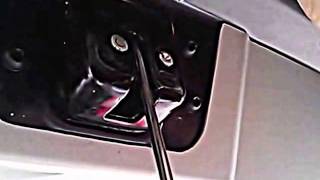

Technical Specifications
OEM Part Numbers: 4894596AA 4894596AB 68195936AA 68195936AB 68195936AC 68195950AA
Assembly includes mechanical latch, cinching motor, and electrical connector. Located inside the liftgate. Controlled by the Power Liftgate Module (PLGM).
We Have This Part in Stock
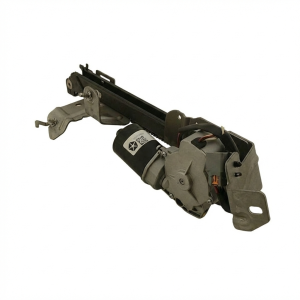
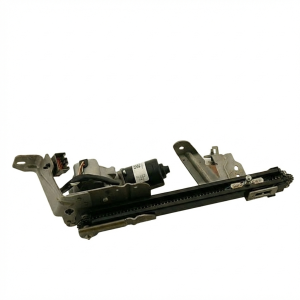


The information in this article is provided for general reference and educational purposes only. Vehicle specifications, procedures, and part compatibility can vary by production date, trim level, and region. Always consult your vehicle's factory service manual and verify part numbers before purchasing or performing repairs. Safety-critical components such as airbags, seat belts, and braking systems should be installed by a qualified professional.
- Chrysler Town & Country:
- Dodge Grand Caravan:
- Ram C/V:
- Volkswagen Routan:
- 🎬 Helpful Videos
- 🛍️ Shop This Part
- Symptoms of a Failing Liftgate Latch Motor
- Definitive Diagnosis: Is It Really the Latch?
- Step 1: Inspect for Broken Wires (The #1 Most Common Cause)
- Step 2: Check the Fuses
- Step 3: Check for an 'Out-of-Sync' Latch
- Step 4: Inspect the Power Liftgate Module (PLGM)
- Buying a Used Trunk Lid Pull Down Motor
- Known Issues, TSBs, and Recalls
- Replacement Overview
- Cost of Replacement
- Frequently Asked Questions (FAQ)
- 🎟️ Get 5% Off