

1993-1995 Quest & Villager Tailgate: Solving Latch, Rust, and Window Issues
Your complete guide to diagnosing common failures, inspecting a used tailgate, and understanding the critical differences for the 1993-1995 Nissan Quest and Mercury Villager.
- The 1993-1995 Nissan Quest and Mercury Villager tailgates are identical and interchangeable, which greatly expands the search for used parts.
- Before buying, you must verify the replacement has the same rear window type (hinged vs. fixed) as your vehicle.
- Rust is the biggest enemy of these tailgates; thoroughly inspect the bottom seam and the area around the window for any signs of corrosion.
- Failures of the latching handle, lift supports, and the wiring harness are the most common problems you will encounter.
An Important Note on the Mercury Villager Twin
The first-generation Nissan Quest (model code V40) was a joint project with Ford, which sold a nearly identical version called the Mercury Villager. For the 1993-1995 model years, the tailgates of the Quest and Villager are physically identical and completely interchangeable. This is excellent news for buyers, as it doubles the potential pool of available used parts from salvage yards and online retailers. When searching for a replacement, always include the Mercury Villager in your search terms.
Common Symptoms of a Failing Tailgate
Because the tailgate is an assembly of many parts, failures can show up in several ways. Here are the most common problems owners experience.
Tailgate Won't Latch or Open
The most frequent issue is a problem with the latching system. The exterior handle is made of plastic 🎬 Watch this step-by-step guide to replacing the handle that can become brittle and break after many years of use. Inside the tailgate, the mechanical latch assembly can get gummed up, bent, or fail, preventing the gate from closing securely or from opening at all. The electronic lock actuator can also fail, which would prevent the power lock buttons from releasing the latch.
Tailgate Falls or is Hard to Lift
The tailgate is held up by two gas-charged lift supports (struts), one on each side. Over time, the seals in these struts wear out, and they lose their pressure. Symptoms include the tailgate feeling very heavy to lift, not staying open on its own, or slamming shut unexpectedly. This is a significant safety hazard. Replacing the lift supports is a common and relatively easy fix.
Rear Window Glass Issues
Models with the hinged, opening rear window have their own set of potential problems. The latch handle for the glass can break, leaving the window unable to be secured. The latch mechanism itself or the hinges can also fail. Water leaks around the rear window seal are also common as the rubber ages and hardens.
Electrical Problems (Wiper, Lights, Defroster)
The electrical wiring for the rear wiper, license plate lights, rear defroster, and center high-mount stop lamp passes from the vehicle's body into the tailgate through a flexible rubber boot. After thousands of opening and closing cycles, the wires inside this boot can fatigue and break. This can cause any or all of these electrical components to stop working intermittently or completely.
Visible Rust and Corrosion
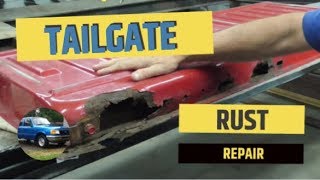
For a vehicle of this age, rust is a primary concern. Rust often starts along the bottom seam of the tailgate where moisture gets trapped. It is also commonly found in the channel around the rear window glass and in the recessed area for the license plate. Surface bubbling under the paint is the first sign of a more serious problem.
Warning: It is unsafe and often illegal to drive with a tailgate that is not securely latched. It can fly open while driving, creating a hazard for other motorists, and can allow dangerous exhaust fumes to enter the cabin.
Buyer's Guide: Inspecting a Used 1993-1995 Quest or Villager Tailgate
Buying a used OEM tailgate is often the only practical option, as new shells are typically discontinued and aftermarket versions are rare. Careful inspection is key to getting a good part.
Critical Compatibility Checks
Before you buy, you must verify two key features match your vehicle:
- Rear Window Type: The most important difference is whether the tailgate is for a model with hinged, opening rear glass or fixed, non-opening glass. These two types are NOT interchangeable. The wiring, latching mechanisms, and the tailgate shell itself are different.
- Privacy Tint: Note whether your vehicle has factory privacy tint (darkened glass) on the rear windows. Try to find a replacement tailgate that has the same type of glass to avoid a mismatched look.
Physical Inspection Checklist
When inspecting a potential replacement, check the following:
- Check for Rust: This is the #1 priority. Use a flashlight to inspect the entire bottom edge and seam. Press gently on the metal; if it feels soft or crunchy, there is significant rust. Also, check the area around the window seal and the license plate pocket.
- Inspect for Body Filler: Look for signs of previous damage repair. Check for wavy or uneven surfaces, paint that doesn't quite match, or a dull sound when you tap on it. A small magnet can help detect areas with thick body filler.
- Examine the Glass: Check the window glass for deep scratches, cracks, or delamination (where the layers of safety glass start to separate, often seen at the edges). Ensure the defroster lines are intact.
- Test the Handle: If present, operate the exterior handle. It should move smoothly without excessive force. Check for cracks in the plastic.
- Check the Wiring Harness: Look at the flexible rubber boot where the wires enter the tailgate. Peel it back slightly if possible and inspect the wires for cracking, brittleness, or previous repairs.
Pro Tip: If possible, buy the complete tailgate assembly, including the latch, handle, and interior trim panel. Sourcing these small parts separately can be difficult and expensive.
Replacement Overview
- Difficulty: 3/5 (Moderate)
- Estimated Time: 1.5 - 2.5 hours
- DIY Feasible: Yes, with a helper.
Replacing the tailgate is a two-person job due to its weight and size. The basic steps involve propping the old tailgate open securely, disconnecting the electrical connectors and washer fluid hose, carefully detaching the lift supports, and then having a helper support the weight while you unbolt the main hinges from the body. Installation is the reverse of removal, requiring careful alignment before tightening the hinge bolts.
Cost Comparison
Prices for a complex body part like a tailgate can vary significantly. Here are some typical cost ranges:
| Part Type | Estimated Cost |
|---|---|
| New OEM | $900+ (Likely discontinued) |
| New Aftermarket | $100 - $300 (Shell only, if available) |
| Used OEM | $150 - $450 (Complete assembly from a salvage yard) |
| Shop Labor | $150 - $300 |
Technical Specifications & Part Numbers
These part numbers are for the bare tailgate shell and may have been superseded. Always verify fitment with the seller using your vehicle's VIN.
- Nissan OEM Part Numbers: 90100-0B230, 90100-0B231
- Mercury OEM Part Number (for interchange): The number F3PZ-1140110-A appears to be incorrect based on Ford's numbering system. A correct number would be closer to F3XY-7840010-A, but it's best to confirm interchangeability by vehicle model and year.
- Lock Actuator Part Number: 90550-0B006
Frequently Asked Questions (FAQ)
Will a tailgate from a Mercury Villager fit my Nissan Quest?
Yes. For model years 1993, 1994, and 1995, the tailgates on the Nissan Quest and Mercury Villager are identical and can be swapped directly.
My tailgate is heavy and won't stay up. Do I need a new tailgate?
No, you most likely just need to replace the two gas lift supports (struts). This is a common, inexpensive, and relatively easy repair that can be done in under 30 minutes with basic tools.
My rear window won't open, but the main tailgate does. What's the problem?
The issue is specific to the rear window's separate opening mechanism. The problem is likely a broken plastic handle, a faulty latch for the glass, or a disconnected control rod inside the tailgate.
Is there a recall on the tailgate latch for these vans?
While there were several recalls for the Quest and Villager, none appear to be specifically for the rear tailgate latch mechanism for the 1993-1995 model years. However, it's always wise to check for any open recalls on your specific vehicle using its VIN on the NHTSA website.
Helpful Videos
Technical Specifications
OEM Part Numbers: 90100-0B230 90100-0B231 901000B230
Interchangeable with 1993-1995 Mercury Villager. Available for two different glass configurations: hinged/opening glass or fixed/non-opening glass.

The information in this article is provided for general reference and educational purposes only. Vehicle specifications, procedures, and part compatibility can vary by production date, trim level, and region. Always consult your vehicle's factory service manual and verify part numbers before purchasing or performing repairs. Safety-critical components such as airbags, seat belts, and braking systems should be installed by a qualified professional.
- Nissan Quest:
- 🎬 Helpful Videos
- An Important Note on the Mercury Villager Twin
- Common Symptoms of a Failing Tailgate
- Tailgate Won't Latch or Open
- Tailgate Falls or is Hard to Lift
- Rear Window Glass Issues
- Electrical Problems (Wiper, Lights, Defroster)
- Visible Rust and Corrosion
- Buyer's Guide: Inspecting a Used 1993-1995 Quest or Villager Tailgate
- Critical Compatibility Checks
- Physical Inspection Checklist
- Replacement Overview
- Cost Comparison
- Technical Specifications & Part Numbers
- Frequently Asked Questions (FAQ)
- 🎟️ Get 5% Off