

1965-1966 Thunderbird Trunk Lid: Solving Rust, Fitment, and Model-Specific Issues
Your definitive guide to finding a solid, rust-free trunk lid for your Hardtop 'Flair Bird' and avoiding the critical mistake of buying a Convertible lid.
- The single most critical fact is that trunk lids from 1965-1966 Thunderbird Hardtops and Convertibles are NOT interchangeable.
- Rust is the most common problem; thoroughly inspect the lower lip and under-trim areas for corrosion or body filler before buying a used lid.
- Replacement is a two-person job due to the lid's weight. Mark the hinge locations before removal to simplify alignment of the new panel.
- Water leaks are often caused by a bad weatherstrip or poor alignment, but can also indicate rust perforation in the trunk channel or the lid itself.
Key Differences: Hardtop vs. Convertible Trunk Lids
Warning: The trunk lid for a 1965-1966 Thunderbird Hardtop is NOT interchangeable with the one from a Convertible model. They are completely different parts with different hinging mechanisms and functions.
The most critical mistake a buyer can make is purchasing the wrong type of trunk lid. Here’s how they differ:
- Hardtop Model: Features a conventional front-hinged trunk lid that swings upward from the rear. It has a key lock cylinder on the outside.
- Convertible Model: The entire rear deck lid is a single piece that is hinged at the back of the car. It lifts open from the front (in a "suicide" fashion) via a complex hydraulic and electrical system to allow the soft top to fold into the trunk space. It does not have an exterior key lock.
Before buying, always confirm the body style of the donor vehicle. The OEM part number C5SZ-6340110-A is specifically for Hardtop models.
Symptoms of a Failing Trunk Lid
Failure of a large body panel like a trunk lid is usually related to physical damage, corrosion, or mechanical issues with its components.
Common Problems
- Rust and Corrosion: This is the most common issue. Rust typically forms on the inner and outer lower lips of the lid where water collects, under chrome trim, and around the lock assembly. If left untreated, it can create holes and compromise the panel's structural integrity.
- Poor Alignment and Gaps: Uneven gaps between the trunk lid and the quarter panels are signs of worn or bent hinges, previous accident damage, or improper installation. This can lead to difficulty closing, wind noise, and water leaks.
- Water Leaks into Trunk: A worn or improperly seated trunk lid weatherstrip is a primary cause of water in the trunk. Leaks can also come from misaligned panels, rust holes, or even dried-out rear window seals that allow water to run down into the trunk channel.
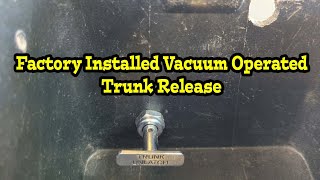
- Latch and Lock Issues: The trunk may fail to latch securely or be difficult to open with the key. This can be caused by a worn latch mechanism, a misaligned striker, or a broken connecting rod inside the lock cylinder assembly. Some cars were equipped with an optional vacuum-powered trunk release, and failure of the vacuum lines or switch can also prevent opening. 🎬 See how the optional factory vacuum trunk release works
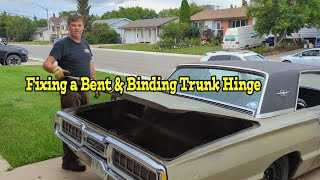
- Bent or Binding Hinges: The torsion rods that help lift the heavy trunk lid can cause the hinges to bind or bend over time, making the lid difficult to open or close smoothly. 🎬 Watch this guide on fixing a bent or binding trunk hinge
Buying a Used 1965-1966 Thunderbird Trunk Lid
A high-quality, rust-free used OEM trunk lid is often a better choice than a modern reproduction due to superior metal quality and fit. Here’s what to inspect before you buy.
Inspection Checklist
- Confirm It's for a Hardtop: First and foremost, verify it came from a Hardtop, not a Convertible. Look for front hinge mounting points and a hole for the key lock.
- Check for Rust Thoroughly: Bring a small magnet. Pay close attention to the bottom edge, both inside and out. Check under any attached trim pieces. Run your magnet along the lower 6 inches of the lid; if it doesn't stick, it indicates the presence of plastic body filler (Bondo) from a previous repair.
- Inspect for Straightness: Look down the length of the lid from all angles to spot waves, ripples, or low spots that indicate past damage. Check the inner bracing to ensure it's not cracked or bent from being twisted in an accident.
- Examine the Edges and Lips: Feel the entire perimeter, especially the channel where the weatherstrip sits. This area should be smooth and solid, not flaky or pitted with rust.
- Check Hinge and Latch Mounts: Ensure the threaded mounting points for the hinges and latch are solid and not stripped or rusted out.
Cost Comparison for a 1965-1966 Thunderbird Trunk Lid
| Part Type | Estimated Cost | Notes |
|---|---|---|
| New OEM (NOS) | $700 - $1,500+ | New Old Stock. Extremely rare and priced for concourse restorations. Availability is very limited. |
| New Aftermarket (Reproduction) | $500 - $800 | Fiberglass or steel reproductions are available. Fit and finish may not match original factory standards and may require more bodywork. |
| Used OEM | $250 - $600 | Price varies greatly based on condition (rust-free vs. needing repair). This is the most common and practical option for most owners. |
| Shop Labor for Installation | $200 - $400 | Estimated 2-3 hours for swapping the lid, transferring hardware, and performing alignment. Painting is an additional cost. |
Installation Guide
Replacing the trunk lid is a manageable DIY job for two people. The main challenges are the weight of the lid and achieving proper panel alignment.
- Difficulty: 3 out of 5
- Estimated Time: 2-3 hours (not including painting)
- Required Tools: Socket set, wrenches, masking tape, a helper.
Step-by-Step Process
- Mark Hinge Positions: Before loosening any bolts, use masking tape or a scribe to outline the position of the hinges on the trunk lid. This will give you a starting point for aligning the new lid.
- Disconnect Wiring: Open the trunk and disconnect any wiring that passes from the car's body into the lid for the taillights or license plate light.
- Support the Lid: Have a helper hold the full weight of the trunk lid. It is heavy and can be damaged or cause injury if it falls.
- Unbolt the Hinges: While the helper supports the lid, remove the bolts connecting the hinges to the trunk lid. Lift the old lid off the car.
- Transfer Hardware: Move the lock cylinder, latch mechanism, emblems, and any trim from the old lid to the new one.
- Mount the New Lid: With your helper, position the new lid and loosely install the hinge bolts.
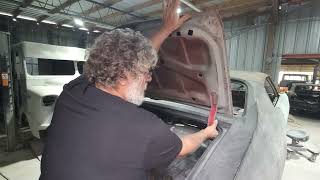
- Align the Lid: Using the marks you made earlier as a guide, adjust the lid until the gaps are even on all sides. Gently close the lid to check alignment with the quarter panels and bumper, making small adjustments as needed. This step requires patience. 🎬 Watch a detailed explanation of trunk lid adjustments and alignment
- Tighten Bolts: Once you are satisfied with the alignment, carefully tighten the hinge bolts, making sure not to shift the lid's position.
- Reconnect Wiring: Reconnect the wiring harness and test the lights.
Pro Tip: When checking alignment, close the lid slowly and watch all edges to ensure it doesn't hit or scrape the surrounding body panels. Placing a folded towel along the rear body panel can help prevent paint chips during adjustment.
Known Issues, Recalls, and TSBs
There are no specific recalls or Technical Service Bulletins (TSBs) from the NHTSA for the trunk lid of the 1965-1966 Ford Thunderbird. All common problems are related to age, wear, and corrosion. The most significant known issue is the complete lack of interchangeability between Hardtop and Convertible models.
Frequently Asked Questions (FAQ)
Will a trunk lid from a 1964 Thunderbird fit my 1965 or 1966?
Yes, the trunk lids for Hardtop models from the 1964, 1965, and 1966 model years are generally interchangeable as they are all part of the same design generation. However, always double-check mounting points and trim holes, as minor running changes could exist.
How can I fix a trunk that won't open?
If the key turns but the lid won't open, the connecting rod between the lock cylinder and the latch has likely disconnected. If the key won't turn, the lock cylinder itself may be seized. In severe cases, gaining access may require removing the back seat to reach the latch bolts from inside or carefully cutting an access hole behind a taillight.
What is the best way to repair minor surface rust on a used trunk lid?
For minor surface rust, you should sand the area down to bare, shiny metal. Treat the metal with a rust converter or acid-etching primer, then apply a quality automotive primer and topcoat to seal it from moisture and prevent the rust from returning.
Is replacing the trunk lid a one-person job?
No, this is a two-person job. The trunk lid is heavy and awkward to handle alone. A helper is essential to prevent personal injury and avoid damaging the lid or the car's paint during removal and installation.
Helpful Videos
![1966 Ford Thunderbird ~ Trunk Floor Repair and Replacement ~ [The Right Way]](https://img.youtube.com/vi/6eyPefXgzkM/mqdefault.jpg)
Technical Specifications
OEM Part Numbers: C5SZ-6340110-A C5SZ6340110A
Material: Steel. Fitment: Hardtop models only. The convertible model uses a completely different rear-hinged decklid.

The information in this article is provided for general reference and educational purposes only. Vehicle specifications, procedures, and part compatibility can vary by production date, trim level, and region. Always consult your vehicle's factory service manual and verify part numbers before purchasing or performing repairs. Safety-critical components such as airbags, seat belts, and braking systems should be installed by a qualified professional.
- 🎬 Helpful Videos
- Key Differences: Hardtop vs. Convertible Trunk Lids
- Symptoms of a Failing Trunk Lid
- Common Problems
- Buying a Used 1965-1966 Thunderbird Trunk Lid
- Inspection Checklist
- Cost Comparison for a 1965-1966 Thunderbird Trunk Lid
- Installation Guide
- Step-by-Step Process
- Known Issues, Recalls, and TSBs
- Frequently Asked Questions (FAQ)
- 🎟️ Get 5% Off