

Fixing Transmission Judder in 2014-2019 Honda Odyssey, Pilot & Ridgeline with 6-Speed Automatics
A detailed guide to diagnosing and fixing the common transmission shudder, and when to replace the secondary valve body in your Odyssey, Pilot, or Ridgeline.
- The common transmission 'judder' is often caused by degraded fluid and can be fixed with a software update and a triple fluid flush using Honda DW-1 ATF.
- This guide applies ONLY to 6-speed automatic models. Higher trims (Touring/Elite) often have a 9-speed or 10-speed transmission that uses different parts.
- Before replacing the valve body, check if your vehicle is covered by Honda's torque converter warranty extension (8 years/150k miles for some Pilot and Ridgeline models).
- When buying a used valve body, get the latest part number (27700-5B7-010) from a low-mileage vehicle to ensure the best quality and longevity.
Is Your Honda Shuddering? Understanding the 6-Speed Transmission Issue

Owners of the 2014-2017 Honda Odyssey, 2016-2022 Honda Pilot, and 2017-2019 Honda Ridgeline equipped with the 6-speed automatic transmission often report a distinct problem: a shudder, judder, or vibration felt during light acceleration. This issue typically occurs between 20 and 60 mph and can feel like driving over a rumble strip. The tachometer might also fluctuate slightly during the event. While many drivers fear a major transmission failure, this problem is well-documented and often has a straightforward, multi-step solution before condemning the entire transmission.
This guide covers the diagnosis and repair for this specific issue, focusing on the role of the transmission fluid, control module software, and the secondary valve body.
Compatibility Warning: This guide and the associated part numbers are ONLY for models with the 6-speed automatic transmission. Higher trim levels of the Pilot (Touring, Elite) and later model Odyssey vans use a 9-speed or 10-speed transmission, which have a different design and are not compatible with this part. A quick way to check is the gear selector: 6-speed models typically have a traditional shift lever, while 9-speed models have a push-button shifter.
Symptoms of a Failing Transmission Valve Body

While deteriorated fluid is a common culprit for the judder, a failing valve body can cause similar symptoms or be the underlying issue if fluid changes don't solve the problem. Here are the most common signs:
- Harsh or Delayed Shifting: You may feel a noticeable clunk or delay when the transmission shifts, especially when it's cold or during downshifts when slowing to a stop.
- Transmission Judder or Shudder: A vibration or shudder during light acceleration that isn't resolved by a fluid flush and software update.
- Gear Slipping: The engine RPMs may flare up between shifts, as if the transmission is momentarily in neutral.
- Incorrect Gear Starts: The vehicle may feel sluggish from a stop, as if it's starting in a higher gear.
- "Transmission System Problem" Warning Light: In some cases, a failure can trigger a warning message on the dashboard.
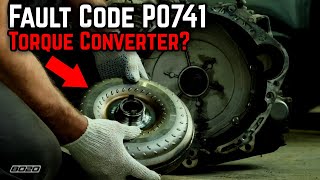
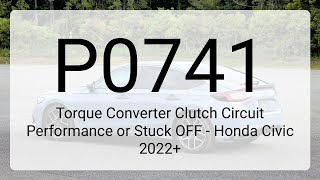
- Diagnostic Trouble Code (DTC) P0741: This code indicates "Torque Converter Clutch Circuit Performance or Stuck Off." While it directly names the torque converter, the issue can be caused by a faulty valve body or solenoid not providing the correct hydraulic pressure 🎬 See this video on common causes for the P0741 code. to operate the clutch.
Known Issues, TSBs, and Warranty Extensions

Honda is aware of the transmission judder issue and has released Technical Service Bulletins (TSBs) and warranty extensions to address it.
Diagnosis Step 1: Fluid and Software (TSB 17-043)
For the 2014-2017 Honda Odyssey, Honda released TSB 17-043, which became the standard procedure for these 6-speed transmissions. The bulletin acknowledges that automatic transmission fluid (ATF) can deteriorate, causing the torque converter lock-up clutch to judder. The official fix involves two steps:
- Software Update: A Honda dealer must update the Powertrain Control Module (PCM) software. This new software changes the hydraulic pressures and control strategy to prevent the judder from occurring.
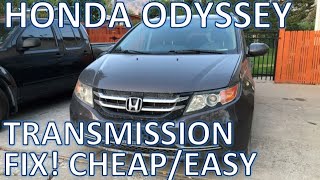
- Triple Drain and Fill: Because simply draining the transmission only removes about a third of the old fluid, a "triple flush" is required. This involves draining the fluid, refilling it, driving the vehicle to circulate the new fluid, and repeating the process two more times. It is critical to use only genuine Honda ATF DW-1 fluid. 🎬 Watch: Easy walkthrough of the transmission judder fluid fix.
In many cases, these two steps will completely resolve the judder. Some owners report the judder disappearing after just the first drain and fill.
Diagnosis Step 2: Torque Converter Warranty Extension
If the fluid and software fix doesn't work, the problem may be the torque converter itself. Honda extended the warranty on the torque converter for certain models due to manufacturing defects. This extension covers:
- 2017-2018 Honda Pilot (6-speed only)
- 2017-2019 Honda Ridgeline
The warranty was extended to 8 years or 150,000 miles from the original purchase date. If your vehicle falls within this range and exhibits judder or the P0741 code, a dealer may replace the torque converter under warranty.
Buying a Used Secondary Valve Body: What to Check

If you've exhausted the TSBs and warranty options, or if your symptoms point directly to harsh shifting rather than just judder, replacing the secondary valve body is the next logical step. Given the high cost of a new OEM part, a quality used valve body is an excellent value. Here’s what to look for:
- Verify the Part Number: The most current part number is 27700-5B7-010. This number supersedes 27700-5B7-000 and 27700-RT4-000. Ensure the part you are buying matches one of these numbers.
- Inspect Electrical Connectors: Check all connectors for bent, broken, or corroded pins. Any damage here can cause intermittent electrical faults.
- Check for Sludge or Debris: Look into the fluid ports on the valve body. They should be clean and free of thick, black sludge or metal particles. This indicates the donor transmission was in good health.
- Source from a Low-Mileage Vehicle: A valve body from a lower-mileage vehicle has experienced less wear and fewer thermal cycles. Ask the seller for the mileage of the donor vehicle if possible.
- Why Used OEM is a Smart Choice: Transmission valve bodies are complex, precision-machined components. The solenoids are calibrated at the factory. Cheap aftermarket valve bodies often use lower-quality solenoids that can fail prematurely or cause shifting issues. A used OEM part from a reputable recycler offers the original factory quality and calibration at a fraction of the price.
Replacement Overview & Difficulty
- Difficulty Rating: 3/5 (Moderate)
- Estimated Time: 2-3 hours
- DIY Feasible: Yes, for experienced DIY mechanics.
Replacing the secondary valve body is manageable for someone comfortable working on transmissions. The part is typically located on the outside of the transmission case, sometimes under a cover. The basic steps involve:
- Safely lifting and supporting the vehicle.
- Draining the transmission fluid.
- Disconnecting the electrical connectors from the valve body solenoids.
- Carefully removing the mounting bolts and lowering the valve body from the transmission.
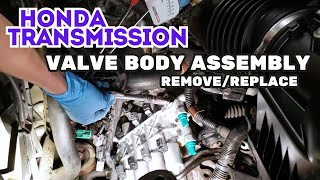
- Installing the new valve body, making sure to torque the bolts to factory specification. 🎬 Watch: Step-by-step guide to replacing the transmission valve body.
- Refilling the transmission with Honda ATF DW-1 fluid. It is highly recommended to perform the full triple drain-and-fill procedure at this time to ensure the entire system has fresh fluid.
Pro Tip: After installation, it's a good practice to perform a transmission idle learn procedure. This allows the vehicle's computer to adapt to the new valve body. While not always strictly necessary, it can help ensure smooth shifting from the start.
Cost Comparison
Replacing the secondary valve body can be expensive, but buying a used part can save you a significant amount of money.
| Part Type | Estimated Cost |
|---|---|
| New OEM | $600 - $900 |
| Used OEM | $100 - $300 |
| Shop Labor | $300 - $600 |
Frequently Asked Questions (FAQ)
How do I know if I have the 6-speed or 9-speed transmission?
The easiest way to tell is by looking at your gear selector. Vehicles with the 6-speed automatic have a traditional shift lever on the center console. Vehicles with the 9-speed automatic have a push-button gear selector system.
Can I just replace one of the solenoids instead of the whole valve body?
While it is sometimes possible to replace an individual solenoid, they are often sold as part of the complete valve body assembly. Diagnosing a single failed solenoid can also be difficult without specialized equipment. For most DIY and professional repairs, replacing the entire valve body assembly is more reliable and efficient.
What happens if I use a different type of transmission fluid?
Using anything other than genuine Honda ATF DW-1 is strongly discouraged. Honda transmissions are very sensitive to fluid viscosity and friction properties. Using a generic or "universal" fluid can lead to poor shift quality, shuddering, and even long-term damage to the transmission clutches and seals.
Is a recall active for this transmission problem?
No, there are no active recalls for the 6-speed transmission valve body or for the judder issue itself. The problem is addressed through Technical Service Bulletins (TSBs) and a specific torque converter warranty extension on certain models.
Helpful Videos

Technical Specifications
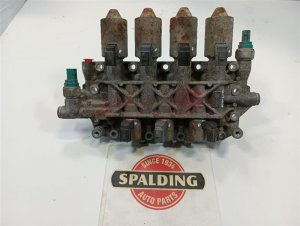
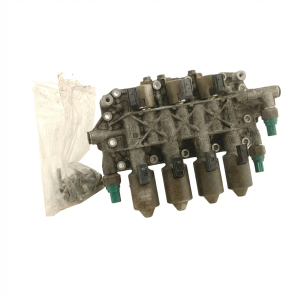
OEM Part Numbers: 27700-5B7-010 27700-5B7-000 27700-RT4-000
Secondary Valve Body for Honda 6-Speed Automatic Transmission (PYRA family).
We Have This Part in Stock

The information in this article is provided for general reference and educational purposes only. Vehicle specifications, procedures, and part compatibility can vary by production date, trim level, and region. Always consult your vehicle's factory service manual and verify part numbers before purchasing or performing repairs. Safety-critical components such as airbags, seat belts, and braking systems should be installed by a qualified professional.
- Honda Odyssey:
- Honda Pilot:
- Honda Ridgeline:
- 🎬 Helpful Videos
- 🛍️ Shop This Part
- Is Your Honda Shuddering? Understanding the 6-Speed Transmission Issue
- Symptoms of a Failing Transmission Valve Body
- Known Issues, TSBs, and Warranty Extensions
- Diagnosis Step 1: Fluid and Software (TSB 17-043)
- Diagnosis Step 2: Torque Converter Warranty Extension
- Buying a Used Secondary Valve Body: What to Check
- Replacement Overview & Difficulty
- Cost Comparison
- Frequently Asked Questions (FAQ)
- 🎟️ Get 5% Off