

2010-2011 Toyota Prius Transmission Control Module: Programming & Inverter Confusion
Diagnose hybrid system warnings, understand mandatory programming, and learn to distinguish a bad TCM from a failing inverter before you buy.
- Programming is mandatory. A replacement TCM must be programmed to the vehicle's VIN by a dealer or qualified specialist to function.
- Symptoms often mimic a failing hybrid inverter. Check for inverter-related recalls (P0A94, P0A7A codes) before replacing the TCM.
- Compatibility is strict. The module only fits 2010 Prius and 2011 models built through December 2010. Always match the OEM part number.
- A bad TCM can prevent the car from starting or entering 'Ready' mode, making it undrivable.
Critical Warning: Is It Your TCM or the Inverter?

Before suspecting a failed Transmission Control Module (TCM), it is essential to rule out a more common issue: the hybrid inverter. The symptoms of a failing inverter and a failing TCM are nearly identical, including multiple warning lights, the "Check Hybrid System" message, and the vehicle entering a low-power "limp mode" or stalling completely.
Toyota issued a major safety recall and a subsequent warranty enhancement program for the Intelligent Power Module (IPM) located inside the inverter on 2010-2014 Prius models. This was to correct a condition where transistors could overheat and fail. Diagnostic Trouble Codes (DTCs) like P0A94, P0A7A, and P3004 are strongly associated with this inverter failure.
Pro Tip: Before purchasing a TCM, contact a Toyota dealer with your Vehicle Identification Number (VIN). Ask them to check for open recalls or warranty extensions related to the hybrid inverter, specifically Safety Recalls E0E and F0R, and the associated warranty extension program. This could result in a free repair and may be the actual source of your problem.
Symptoms of a Failing Transmission Control Module


If you have ruled out an inverter issue, a failing TCM can manifest in several ways. Because it is a central computer for the hybrid powertrain, symptoms are often severe.
- Vehicle Will Not Enter "Ready" Mode: This is a primary symptom. You may press the power button, the dashboard lights up, but the "Ready" indicator never appears, and the vehicle cannot be driven. This can happen because the TCM is not communicating properly with the other control units during the startup sequence.
- Check Hybrid System Warning: A generic but common indicator that a fault has been detected within the hybrid powertrain, which includes the TCM.
- Multiple Dashboard Warning Lights: The Master Warning Light (red triangle), Check Engine Light, and Hybrid System Warning Light may all illuminate simultaneously.
- Vehicle Enters Limp Mode: The car may have severely reduced power, limiting speed to allow you to pull over safely. This happens when the system detects a critical fault and tries to prevent further damage.
- Vehicle Stalls While Driving: In rare cases, a complete failure of the module can cause the hybrid system to shut down, resulting in a stall.
Programming and Installation Requirements (MANDATORY)

Warning: This Transmission Control Module is NOT a plug-and-play part. It absolutely must be programmed to your vehicle's specific VIN to function.
Failure to program a replacement TCM will result in a no-start condition where the car will not go into "Ready" mode. The module is part of the vehicle's immobilizer and communication network, and it must be properly introduced to the other computers in the car.
- Required Tools: Programming requires Toyota's official Techstream diagnostic software or a professional-grade scan tool with J2534 pass-through capabilities. A stable power supply or battery maintainer must be connected to the vehicle during the flashing process to prevent voltage drops that could permanently damage the module.
- Who Can Program It?
- Toyota Dealerships: They have the guaranteed ability to program the module.
- Independent Hybrid Specialists: Many independent shops that specialize in hybrid vehicles have invested in the necessary equipment and subscriptions to perform this programming.
- Mobile Programming Services: Some specialized mobile technicians offer module programming services.
- Who CANNOT Program It? Your typical corner garage or a locksmith without advanced diagnostic tools will not be able to program this module.
Buying a Used Transmission Control Module
A used OEM module is a cost-effective and reliable option, provided you follow these critical steps. Given that the part requires programming, a used original part is often a better choice than a new, unproven aftermarket unit.
- Match the Part Number EXACTLY: The most common part numbers are 89535-75010 and 89535-75030. These numbers may supersede each other, but you must verify compatibility. Do not install a module with a different part number without confirming it is a direct replacement.
- Heed the Production Date Cutoff: This module fits 2010 Prius models and 2011 Prius models that were manufactured through December 2010 only. Vehicles built from January 2011 onward use a different part. Check your vehicle's driver-side door jamb sticker for the production date.
- Inspect for Damage: When you receive the part, inspect the case for any cracks or signs of being opened. Most importantly, check the connector pins to ensure they are straight, clean, and free of any corrosion.
- Factor in Programming Costs: Remember that the price of the used part is not your final cost. You must budget for towing (if the car is not drivable) and the labor cost for programming at a qualified shop.
Cost Breakdown
The cost to resolve a TCM issue can vary widely depending on the parts source and labor for programming.
| Item | Estimated Cost | Notes |
|---|---|---|
| New OEM Module | $600 - $1,200 | Price from a Toyota dealership. |
| Remanufactured Module | $210 - $470 | Price from major parts retailers. May come pre-programmed to your VIN. |
| Used OEM Module | $30 - $100 | Common price range from online marketplaces and salvage yards. |
| Shop Labor (Physical Swap) | $100 - $175 | The module is located behind the passenger-side dash and is relatively easy to access. |
| Shop Labor (Programming) | $125 - $250 | Typically 1-1.5 hours of labor at a dealer or specialist shop. |
Frequently Asked Questions (FAQ)
Does the 2010-2011 Prius TCM have to be programmed?
Yes, absolutely. It is not a plug-and-play part. A replacement module, whether new, used, or remanufactured, must be programmed to your car's VIN using specialized software like Toyota Techstream. If you do not program it, the car will not start or enter 'Ready' mode.
What's the difference between the Transmission Control Module and the Hybrid Inverter?
The TCM (or Power Management Control ECU) is the computer that controls the hybrid transaxle. The Inverter is a high-voltage device that converts DC power from the hybrid battery to AC power for the electric motors, and vice-versa for charging. They are separate components, but their failure symptoms are very similar. A major recall was issued for the inverter, making it a more common failure point that should be investigated first.
Can I drive my Prius with a bad Transmission Control Module?
It is not recommended, and may not be possible. A failing TCM can cause the vehicle to stall, enter a very low-power limp mode, or prevent it from starting at all. Attempting to drive could leave you stranded. It is unsafe to operate a vehicle with a known critical powertrain computer fault.
Can I replace the TCM myself?
You can perform the physical swap yourself to save on labor costs. The module is located behind the glove box on the passenger side. However, after you install the replacement module, the vehicle will be immobilized until it is programmed. You will need to have the vehicle towed to a dealership or a qualified independent shop for the final, mandatory programming step.
Technical Specifications
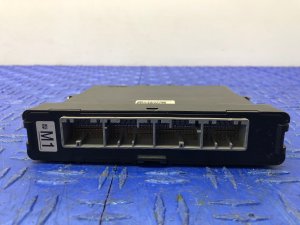
OEM Part Numbers: 89535-75010 89535-75030
Location: Behind glove box, passenger side of dashboard. Also known as Power Management Control ECU.
We Have This Part in Stock




The information in this article is provided for general reference and educational purposes only. Vehicle specifications, procedures, and part compatibility can vary by production date, trim level, and region. Always consult your vehicle's factory service manual and verify part numbers before purchasing or performing repairs. Safety-critical components such as airbags, seat belts, and braking systems should be installed by a qualified professional.
- Toyota Prius: