

2019-2025 Mitsubishi Eclipse Cross TCM: Decoding Shudder, Surges, and Programming
This guide covers the mandatory programming, known issues, and replacement costs for the Transmission Control Module in the 2019-2025 Mitsubishi Eclipse Cross.
- A replacement TCM absolutely requires programming and calibration at a Mitsubishi dealership using their proprietary M.U.T.-III SE tool; it is not a DIY-friendly job.
- When buying a used module, you must match the OEM part number 8631B862 and budget for the significant cost of dealer programming.
- Symptoms like shuddering and surging are addressed in TSB-20-23-001REV and can be caused by mechanical issues within the CVT, not just a bad TCM.
- Common fault codes include P0700, P0613, and a specific set from the TSB: P0776, P0730, P0741, P084A, P0969, and P2719.
Programming and Calibration: A Dealer Visit is Required

Warning: A replacement Transmission Control Module (TCM) for a 2019-2025 Mitsubishi Eclipse Cross MUST be programmed to the vehicle after installation. The vehicle will likely not start or shift correctly until this procedure is completed. This is not an optional step.
Replacing the TCM is not a simple plug-and-play repair. The new or used module must be electronically paired with your specific vehicle's VIN and its transmission components. According to Mitsubishi's technical documents, this process requires the proprietary dealer-level diagnostic tool, the M.U.T.-III SE. Most independent repair shops and locksmiths will not have this specific software.
The full procedure involves several steps performed by the technician:
- TCM Programming: The base software is flashed onto the module.
- MAC Key Writing: An electronic key is written to sync the module with the vehicle's security system.
- Writing Calibration Data: Specific data for the individual characteristics of your transmission's valve body and solenoids is loaded onto the TCM. For new parts, this data sometimes comes on a CD included with the part. For a used module, a dealer must source this data.
- Learning Procedures: The technician will then perform clutch point learning and G-sensor calibration to ensure smooth operation.
Because of these complex, software-driven requirements, you must factor in the cost of a dealership visit for programming when considering a replacement.
Symptoms of a Failing Transmission Control Module


A faulty TCM can cause a variety of symptoms, ranging from annoying to critical. You may experience:
- "Transmission Service Required" Message: This warning may appear on the instrument cluster.
- Harsh or Erratic Shifting: The vehicle may jolt or bang into gear.
- Shuddering or Surging: A shaking or surging feeling during acceleration, which may be caused by incorrect hydraulic pressure commands from the TCM.
- Getting Stuck in Gear (Limp Mode): The transmission may lock itself into a single gear to prevent further damage, severely limiting vehicle speed.
- Delayed Shifting or Poor Acceleration: The engine may rev high without the vehicle speeding up accordingly, a sign the transmission isn't shifting correctly.
- Unexpected Shifting to Neutral: The transmission might disengage randomly while driving.
- Check Engine Light: A failing TCM will often trigger the Check Engine Light.
- Decreased Fuel Economy: Inefficient shifting forces the engine to work harder, consuming more fuel.
Associated OBD-II Trouble Codes
A scan tool may reveal several trouble codes related to a bad TCM. While a generic P0700 (Transmission Control System Malfunction) or P0613 (TCM Processor) are common, Mitsubishi has identified specific codes associated with transmission shudder and performance issues in Technical Service Bulletin TSB-20-23-001REV:
- P0730: Incorrect Gear Ratio
- P0741: Torque Converter Clutch Circuit Performance or Stuck Off
- P0776: Pressure Control Solenoid 'B' Performance or Stuck Off
- P084A: Transmission Fluid Pressure Sensor/Switch 'G' Circuit
- P0969: Pressure Control Solenoid 'C' Control Circuit Range/Performance
- P2719: Pressure Control Solenoid 'D' Control Circuit Range/Performance
Other codes like P1795 (Throttle Position Input circuit to TCM) may also point to a TCM-related fault.
Known Issues, TSBs, and Recalls

As of mid-2026, there are no active recalls specifically for the Transmission Control Module on the 2019-2025 Mitsubishi Eclipse Cross. However, there is a key Technical Service Bulletin (TSB) that addresses common transmission complaints.
TSB-20-23-001REV: This bulletin was issued for 2018-2020 Eclipse Cross models (and may apply to later years) equipped with the CVT-8 transmission that exhibit a shudder or surge condition. It notes that these symptoms can be caused by a "poor reaction of the hydraulic pressure circuit." Over time, this can cause the CVT belt to slip and create abrasive powder that contaminates the system, leading to the DTCs listed above. This is important because it means the symptoms may not be the TCM's fault alone; they could indicate a deeper mechanical issue within the transmission that requires inspection by a qualified technician.
Buying a Used Transmission Control Module
Purchasing a used OEM TCM can be a cost-effective solution, but it requires careful consideration due to the mandatory programming.
- Verify the Part Number: It is absolutely critical to match the OEM part number. For the 2019-2025 Eclipse Cross, the primary part number is 8631B862. Installing a module with a different part number will not work.
- The Programming Hurdle: The main challenge with a used TCM is the required programming. The low price of a used module (often under $100) is attractive, but you must add the cost of dealer labor to flash and calibrate it to your vehicle. Always call your local Mitsubishi dealer *before* buying the part to confirm they are willing to program a customer-supplied used module and to get a quote for the service.
- Physical Inspection: When you receive the used module, inspect it for any signs of damage. Check for corrosion on the pins, cracks in the plastic connectors, or damage to the case. Do not install a part that shows signs of water or physical damage.
- Why Used OEM is a Good Choice: For electronic modules, a used OEM part is often more reliable than a new, unproven aftermarket alternative. The hardware is built to the manufacturer's original standards. As long as you account for the programming, a used OEM TCM is a viable repair path.
Pro Tip: Before condemning the TCM, ensure the battery is fully charged and the terminals are clean. Low voltage can cause a wide range of electronic issues, including communication errors that can mimic a faulty TCM.
Cost Comparison
| Part Type | Estimated Cost |
|---|---|
| New OEM | $965 - $1,320 |
| New Aftermarket | Not Widely Available |
| Used OEM | $50 - $150 |
| Remanufactured | $200 - $400 (Varies) |
| Shop Labor (Installation & Programming) | $300 - $550 |
Note: Labor costs are estimates and will vary by location and shop. The most significant labor cost is the dealer-required programming, which can be 1-2 hours at dealer labor rates.
Frequently Asked Questions (FAQ)
Can I install a used TCM myself and then drive to the dealer for programming?
This is not recommended. After installing an unprogrammed TCM, the vehicle may not start, may not shift out of Park, or may be stuck in limp mode. It is safer to have the vehicle towed to the dealership for both installation and programming, or to install it in their parking lot.
Does the TCM need to match my car's VIN?
The physical module itself is not tied to a specific VIN from the factory, but it must be programmed *to* your car's VIN to function. The critical factor when purchasing is matching the OEM part number (8631B862).
Is a TCM failure common on the 2019-2025 Eclipse Cross?
While not a universal problem, Mitsubishi has issued at least one Technical Service Bulletin (TSB-20-23-001REV) related to transmission shudder and surge issues that can be linked to control system problems. This indicates that transmission performance issues are a known complaint, though they may stem from mechanical parts or the TCM.
Can a locksmith or independent shop program this TCM?
It is highly unlikely. The programming requires Mitsubishi's proprietary M.U.T.-III SE software and access to their service network for calibration files. Most independent shops and locksmiths do not have this specialized, manufacturer-specific equipment.
Technical Specifications
OEM Part Numbers: 8631B862
This module controls the Jatco JF016E (CVT8) transmission.
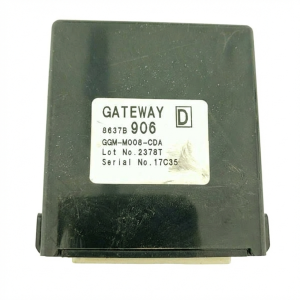
We Have This Part in Stock



The information in this article is provided for general reference and educational purposes only. Vehicle specifications, procedures, and part compatibility can vary by production date, trim level, and region. Always consult your vehicle's factory service manual and verify part numbers before purchasing or performing repairs. Safety-critical components such as airbags, seat belts, and braking systems should be installed by a qualified professional.
- Mitsubishi Eclipse Cross: