

2016-2018 Miata Automatic Transmission Module: The Recall, Programming, and Soft Top vs. RF Fitment
This guide covers the critical software recall, mandatory programming requirements, and specific compatibility warnings for the 2016-2018 Mazda MX-5 Miata Transmission Control Module.
- A critical safety recall (NHTSA 19V-072) exists for a software flaw causing sudden downshifts; ensure this free dealer-performed update is done.
- This module is NOT plug-and-play. Any replacement, new or used, requires professional programming to your car's VIN.
- For 2017-2018 models, the TCM is different between Soft Top and Retractable Fastback (RF) models. They are not interchangeable.
- The module is located inside the car at the driver's side kick panel, making physical replacement easy but programming is still required.
Urgent Safety Recall: Sudden Downshifting

Recall Alert: Mazda issued a major safety recall for approximately 14,370 automatic transmission Miatas from model years 2016-2019. The recall is identified as NHTSA Campaign 19V-072 and Mazda's recall number 3019A.
The issue stems from faulty software logic in the Transmission Control Module (TCM). Electrical 'noise' from the gear selector signal can be misinterpreted by the TCM, causing the transmission to suddenly and unexpectedly downshift while driving. This can cause abrupt deceleration, potentially leading to a loss of vehicle control and increasing the risk of a crash. The fix is a simple software update (reprogramming) of the TCM, which is performed by a Mazda dealer free of charge. Before attempting any repair, check if this recall has been completed on your vehicle by entering your VIN on the NHTSA website or contacting a Mazda dealer.
Symptoms of a Failing TCM

Aside from the specific recall issue, a failing TCM can cause a variety of other problems. Recognizing these signs can help you determine if the module is the source of your issues.
Common Failure Symptoms:
- Erratic or Harsh Shifting: The transmission may slam into gear, hesitate between shifts, or shift at the wrong times.
- Stuck in Gear (Limp Mode): The transmission may refuse to shift, often getting stuck in 2nd or 3rd gear to allow you to 'limp' to a repair shop.
- Check Engine Light or AT Light: The most common indicator is an illuminated Check Engine Light or a dedicated Automatic Transmission (AT) warning light on the dashboard.
- Loss of Power: The vehicle may feel sluggish or fail to accelerate properly because it's in the wrong gear.
- Poor Fuel Economy: Inefficient shifting caused by a bad TCM can lead to a noticeable decrease in gas mileage.
Associated OBD-II Trouble Codes:
A diagnostic scan may reveal specific codes related to TCM failure. While these codes can also point to other issues like faulty wiring or solenoids, they are commonly associated with a bad TCM:
- P0753 - Shift Solenoid 'A' Electrical: This code indicates an electrical fault in the circuit for shift solenoid 'A'. While it can be a bad solenoid, it can also be caused by the TCM itself, which controls the solenoid.
- P0977 - Shift Solenoid 'B' Circuit High: Similar to P0753, this points to an electrical issue in the 'B' solenoid circuit, which could originate in the TCM.
- U0100 / U0101 - Lost Communication with ECM/TCM: These codes indicate a communication breakdown between the main engine computer and the transmission module, often pointing to a complete failure of the TCM.
Programming and Replacement Requirements

Replacing the TCM in a 2016-2018 Miata is not a simple plug-and-play job. Programming is mandatory for the module to work with your specific vehicle.
Pro Tip: The TCM is located inside the cabin, behind the driver's side (LH) kick panel. This protects it from engine heat, a common failure point for TCMs mounted directly on the transmission in other vehicles.
Programming Options:
- Mazda Dealer: A Mazda dealership can install and program a new or used TCM using their proprietary Mazda Integrated Diagnostic System (IDS). This is the most reliable, albeit often most expensive, method.
- Independent Shop: Some independent repair shops that specialize in Mazda vehicles may have the necessary tools, like an Autel or Launch scanner with the correct software, to program a replacement TCM. Always confirm they have this capability before booking the service.
- Remanufactured/Repair Services: Companies like XeMODeX or Flagship One offer services where you can send your original module for repair, or buy a remanufactured unit that is pre-programmed to your car's Vehicle Identification Number (VIN). This can be a cost-effective option that avoids the need for a separate programming visit.
Buying a Used Transmission Control Module

A used OEM module can be a great value, but there are critical details you must verify to avoid buying an expensive paperweight.
Compatibility Warning: Soft Top vs. RF Models
For 2017-2018 models, the TCM is specific to the vehicle's top type. A module from a soft-top model will NOT work in a Retractable Fastback (RF) model, and vice-versa. This is the most common compatibility mistake. Always verify the donor vehicle's configuration.
Inspection and Verification Checklist:
- Match the Part Number: The surest way to ensure compatibility is to match the OEM part number exactly. The part number is printed on the module's label. Common part numbers include PEFB-18-9E1B, PEFB-18-9E1C, PEFB-18-9E1D, and PEFB-18-9E1E.
- Verify the Donor Vehicle: Confirm the year, model (MX-5 Miata), transmission type (Automatic), and for 2017-18, the top type (Soft Top).
- Physical Inspection: Check the module for any signs of physical damage, especially water intrusion. The kick panel location can be vulnerable to leaks. Look for corrosion on the casing or pins. Ensure all connector sockets are clean and no pins are bent or broken.
- Factor in Programming Costs: Remember that a used module is not plug-and-play. It must be programmed to your vehicle's VIN after installation. Factor the cost of a dealer or specialist visit into the total price.
Cost Breakdown
The total cost can vary significantly based on the path you choose. Here are some estimated costs to help you budget for the repair.
| Part Type | Estimated Part Cost |
|---|---|
| New OEM | $700 - $1100 |
| Used OEM | $150 - $400 |
| Remanufactured / Repair Service | $450 - $600 |
| Shop Labor (Installation & Programming) | $200 - $400 |
Frequently Asked Questions (FAQ)
Do I have to get my replacement TCM programmed?
Yes, programming is absolutely required. A new, used, or remanufactured TCM must be programmed to your vehicle's VIN to communicate with the other control modules. The only exception is a 'plug-and-play' remanufactured unit that has been pre-programmed to your VIN before being shipped to you.
Can I install the module myself and drive to the dealer for programming?
This is not recommended. After installing an unprogrammed module, the vehicle may not start, or the transmission may be stuck in one gear (limp mode), making it unsafe or impossible to drive. It is best to have the vehicle towed to the programming location or use a mobile service.
Why does the module for a 2017 Soft Top not fit a 2017 RF model?
While the exact engineering reason isn't publicly documented, it is likely due to differences in vehicle weight, aerodynamics, and potentially different software logic needed to integrate with the RF model's complex roof control system. The part numbers are different, and they are not interchangeable.
Is the sudden downshift problem a bad TCM or just the recall?
If your car is a 2016-2019 automatic Miata and the symptom is a sudden, unexpected downshift, the problem is almost certainly the software issue covered by recall 3019A. This does not mean the module has physically failed, only that its software needs to be updated by a dealer. If you have other symptoms like being stuck in gear or no communication codes, the module itself may have failed.
Technical Specifications
OEM Part Numbers: PEFB-18-9E1B PEFB-18-9E1C PEFB-18-9E1D PEFB-18-9E1E PEFB189E1B PEFB189E1C PEFB189E1D
Location: LH (Driver's Side) Kick Panel. Fits automatic transmission models only.
We Have This Part in Stock


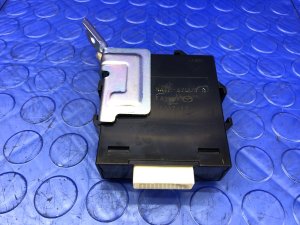

The information in this article is provided for general reference and educational purposes only. Vehicle specifications, procedures, and part compatibility can vary by production date, trim level, and region. Always consult your vehicle's factory service manual and verify part numbers before purchasing or performing repairs. Safety-critical components such as airbags, seat belts, and braking systems should be installed by a qualified professional.
- Mazda MX-5 Miata:
- 🛍️ Shop This Part
- Urgent Safety Recall: Sudden Downshifting
- Symptoms of a Failing TCM
- Common Failure Symptoms:
- Associated OBD-II Trouble Codes:
- Programming and Replacement Requirements
- Programming Options:
- Buying a Used Transmission Control Module
- Inspection and Verification Checklist:
- Cost Breakdown
- Frequently Asked Questions (FAQ)
- 🎟️ Get 5% Off