

2007-2009 Mazda CX-7 Transmission Control Module: Solving Harsh Shifting and AT Lights
This guide explains the common failure of the Transmission Control Module (TCM) in the 2007-2009 Mazda CX-7, its symptoms, and your replacement options.
- The primary cause of failure is cracked solder joints from heat and vibration due to the TCM's location on top of the transmission.
- A replacement TCM must be programmed to your vehicle's VIN. Buying a remanufactured unit that is pre-programmed is often the easiest solution.
- This part is for Front-Wheel Drive (FWD) models only and is not compatible with All-Wheel Drive (AWD) CX-7s.
- Common symptoms include harsh shifting, getting stuck in 3rd gear (limp mode), and the 'AT' light illuminating, often with U0100/U0101 or P07xx fault codes.
Known Issues and Common Failure Cause
The Transmission Control Module (TCM) in the 2007-2009 Mazda CX-7 is known for a high failure rate due to a specific design flaw. The module is mounted directly on top of the transmission housing. This location exposes it to constant, significant heat and vibration from the engine and transmission. Over thousands of heating and cooling cycles, this environment causes the internal solder connections on the module's circuit board to crack and fail. This is not a random defect; it is a common failure pattern for this part and similar TCMs used in other Mazda models of the era. Once these tiny electrical connections break, the TCM can no longer properly communicate with the transmission's solenoids and sensors, leading to a variety of shifting problems.
Symptoms of a Failing Transmission Control Module
When the TCM begins to fail, you will likely experience one or more distinct symptoms. Often, the "AT" (Automatic Transmission) and Check Engine lights will illuminate on your dashboard.
- Harsh or Erratic Shifting: The most common symptom is sudden, jerky shifts, both up and down. You may feel a hard kick or jolt when the transmission shifts gears, especially when coming to a stop or accelerating.
- Stuck in Gear (Limp Mode): The transmission may get stuck in a single gear, typically 3rd gear, as a protective 'fail-safe' measure. This limits your speed and is a clear sign of a serious control issue.
- Delayed Engagement: When shifting from Park to Drive or Reverse, there may be a long delay before the gear engages, often accompanied by a harsh clunk.
- Communication Error Codes: A diagnostic scan will often show codes indicating a loss of communication with the TCM, such as U0100 or U0101.
- Solenoid Circuit Malfunction Codes: Even if the solenoids themselves are good, a failing TCM can trigger codes for solenoid electrical faults, such as P0753 (Shift Solenoid 'A'), P0758 (Shift Solenoid 'B'), and P0763 (Shift Solenoid 'C').
Compatibility Warning: This Transmission Control Module is specific to 2007-2009 Mazda CX-7 models with the 2.3L Turbo engine and Front-Wheel Drive (FWD). It is not compatible with All-Wheel Drive (AWD) models, which use a different transmission and control module. Always verify the part number from your original module before purchasing a replacement.
Diagnosing the TCM
Because TCM failure can mimic other transmission problems, it's important to rule out simpler issues first. Check the transmission fluid level and condition. Low or burnt fluid can cause shifting problems. However, if the symptoms are paired with communication or solenoid electrical fault codes (U-codes or P07xx electrical codes), the TCM is the most likely culprit. A mechanic can perform a diagnostic scan to confirm these codes. It is rare for all shift solenoids to fail electrically at once, so having multiple solenoid codes points strongly to the module that controls them.
Buying a Used or Remanufactured Transmission Control Module
When your TCM fails, you have several options. Given the known flaws of the original part, a standard used module carries the same risk of failure. A remanufactured module is often the best choice.
- Why Remanufactured is Often Better: Reputable remanufacturers don't just test the part; they fix the original design flaw. They re-flow the circuit board with higher-grade solder that can withstand the heat and vibration. This makes the repaired module more durable than the original. Many also offer warranties.
- Plug-and-Play Programming: A major hurdle with electronic modules is programming. Many remanufacturers and some eBay sellers offer a 'plug-and-play' service. You provide your vehicle's VIN when ordering, and they pre-program the replacement module. This allows you to install it without needing an expensive trip to the dealer for programming.
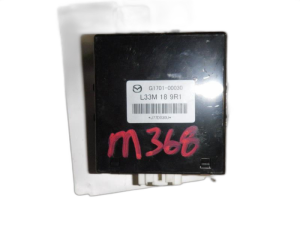
- Verifying Part Numbers: It is absolutely critical to match the part number from your old TCM to the new one. The part number is printed on the module's label. While part numbers can be superseded, starting with an exact match is the safest way to ensure compatibility. The last letter of the part number often indicates a revision (e.g., AW30189E1C may be replaced by AW30189E1D, etc.).
- Inspecting a Used Part: If you do buy a used module, inspect the connectors for any bent or corroded pins. Avoid any units with physical damage or signs of water intrusion. Given the low cost of used units ($75-$150), it can be a budget-friendly option, but you will still need to factor in the cost of programming.
Programming and Installation
Pro Tip: Some mechanics suggest relocating the new or repaired TCM off the transmission and onto the firewall or battery box. By mounting it in a cooler location away from engine vibrations, you can further protect it from the heat that causes the original failure. This may require extending the wiring harness but can be a permanent solution.
Programming Requirements
A replacement TCM must be programmed to your vehicle's VIN. An unprogrammed module will not communicate correctly with the other computers in your car, and the transmission will not function properly. You have three main options for programming:
- Buy a Pre-Programmed Unit: The easiest option. Many online sellers of remanufactured TCMs will program the unit to your VIN before shipping it.
- Dealer Programming: Any Mazda dealership can program a new or used TCM to your vehicle.
- Independent Shop Programming: Many independent repair shops now have the necessary J2534 pass-through tools and software subscriptions to program modules for various makes, including Mazda.
Installation Walkthrough
The TCM is located under the battery and battery tray, bolted to the top of the transmission. The replacement process is straightforward for a DIYer with basic tools.
- Disconnect the Battery: Always disconnect the negative battery terminal first.
- Remove the Battery and Tray: Remove the battery hold-down, then the battery itself. The plastic battery tray is typically held in by several 10mm bolts. Remove these and lift the tray out.
- Access the TCM: With the battery tray removed, the TCM will be visible on top of the transmission.
- Disconnect and Remove: Unplug the large electrical connector from the TCM. Remove the bolts (typically three 10mm bolts) securing the module to its bracket and the transmission.
- Install the New Module: Bolt the new TCM in place, reconnect the electrical connector, and reinstall the battery tray and battery.
Cost Breakdown
The cost to replace a Mazda CX-7 TCM can vary significantly based on the part source and labor.
| Item | Estimated Cost | Notes |
|---|---|---|
| New OEM Part | $800 - $1,100 | Purchased from a Mazda dealership. May require programming at extra cost. |
| Remanufactured Part | $300 - $450 | A common and reliable option. Often includes a warranty and pre-programming service. |
| Used OEM Part | $75 - $150 | Most affordable part cost, but carries risk of future failure and requires separate programming. |
| Shop Labor (Install & Program) | $150 - $400 | Includes 1-2 hours of labor for physical replacement and 1 hour for programming if needed. |
Frequently Asked Questions (FAQ)
Does the TCM need to be programmed to my car's VIN?
Yes, absolutely. The TCM is a computer that must be matched to your vehicle's specific configuration and VIN to function. An unprogrammed module will not work.
Can I install a used TCM from another CX-7?
Yes, but it must be the correct part number for your FWD vehicle and will need to be reprogrammed by a dealer or qualified shop. Buying a used module without programming it will not fix your issue.
Is there a recall for the 2007-2009 CX-7 transmission?
No, there are no NHTSA safety recalls for the transmission or the Transmission Control Module on these vehicles. The known issues were addressed by Mazda through Technical Service Bulletins (TSBs) and individual repairs, not a recall campaign.
Could my problem just be a bad shift solenoid?
While a single solenoid can fail, it is uncommon. When you see multiple solenoid electrical fault codes (like P0753, P0758, etc.) or communication codes (U0100, U0101), the problem is almost always the TCM that controls them, not the individual solenoids.
Technical Specifications
OEM Part Numbers: AW30189E1C AW30189E1D AW30189E1E AW30189E1F AW30189E1G AW30189E1H AW30189E1J AW30189E1N AW31189E1C AW31189E1D AW31189E1E AW31189E1J
Controls the Aisin F21 6-speed automatic transmission for FWD models.
We Have This Part in Stock




The information in this article is provided for general reference and educational purposes only. Vehicle specifications, procedures, and part compatibility can vary by production date, trim level, and region. Always consult your vehicle's factory service manual and verify part numbers before purchasing or performing repairs. Safety-critical components such as airbags, seat belts, and braking systems should be installed by a qualified professional.
- Mazda CX-7:
- 🛍️ Shop This Part
- Known Issues and Common Failure Cause
- Symptoms of a Failing Transmission Control Module
- Diagnosing the TCM
- Buying a Used or Remanufactured Transmission Control Module
- Programming and Installation
- Programming Requirements
- Installation Walkthrough
- Cost Breakdown
- Frequently Asked Questions (FAQ)
- 🎟️ Get 5% Off