

2005-2006 Jeep Liberty 2.8L Diesel TCM: Solving Shifting Problems and Programming Puzzles
This guide decodes common failure symptoms, OBD-II codes, and the critical programming steps required when replacing the transmission control module in your CRD Liberty.
- This TCM is ONLY for the 2005-2006 Jeep Liberty with the 2.8L CRD Diesel engine. It will not work in gasoline models.
- A replacement TCM (new or used) MUST be programmed to your vehicle's VIN to function correctly. This requires a dealer or a well-equipped independent shop.
- Common failure symptoms include getting stuck in gear (limp mode), harsh shifting, and a shudder at highway speeds, often accompanied by OBD-II code P0700.
- Symptoms similar to TCM failure can also be caused by a bad solenoid pack, a failing torque converter, or even a loose internal transmission filter.
Critical Compatibility Warning: 2.8L CRD Diesel Only
Engine Specific: This Transmission Control Module (TCM) fits ONLY the 2005-2006 Jeep Liberty models equipped with the 2.8L Common Rail Diesel (CRD) engine and the 545RFE automatic transmission. It is NOT compatible with gasoline engine models (3.7L V6). The TCM for the gasoline engine is a different part, and in some cases, is integrated into the Powertrain Control Module (PCM). Attempting to use this module in a gasoline-powered Liberty will not work.
Symptoms of a Failing TCM
A failing TCM can cause a range of transmission problems, from annoying glitches to issues that can leave you stranded. Often, the first sign is a lit Check Engine Light on your dashboard.
- Harsh or Delayed Shifting: You may feel a noticeable clunk or long pause when the transmission shifts gears, both up and down.
- Getting Stuck in Gear: The transmission may refuse to shift out of a particular gear, often getting stuck in 2nd or 3rd gear. This is a protective "limp-in" or "fail-safe" mode designed to prevent further damage.
- Transmission Shudder: A vibration or shudder, especially at highway speeds between 55 and 60 mph, has been reported by many owners. This can sometimes be related to the torque converter, but is often linked to TCM software or failure.
- Loss of Power / Incorrect Gear Selection: The TCM may select the wrong gear for the driving condition, causing poor acceleration or high engine RPMs at cruising speed.
- Engine Stalling: In some cases, a faulty TCM can cause the engine to stall when shifting or coming to a stop.
- Intermittent Problems: Symptoms may appear randomly, especially when the vehicle is cold or after it has fully warmed up. Some owners report that turning the vehicle off and restarting it can temporarily resolve the issue.
Common Diagnostic Trouble Codes (DTCs)
A scanner tool is the best way to confirm a TCM-related issue. The most common code is P0700, which is a general code simply stating that the TCM has detected a fault and has requested the Check Engine Light be turned on. To find the real problem, you need a scanner that can read the specific codes stored within the TCM itself.
| Code | Description | Common Cause |
|---|---|---|
| P0700 | Transmission Control System (MIL Request) | A generic code in the PCM indicating a specific fault is stored in the TCM. |
| P0605 | Internal Control Module ROM Error | This code points directly to an internal failure of the TCM itself. |
| P0882 | TCM Power Input Signal Low | Indicates a problem with the power supply to the module, which could be wiring or an internal fault. |
| P0732, P0733, P0734 | Incorrect Gear Ratio (in 2nd, 3rd, 4th) | The TCM detects that the transmission is slipping or not in the commanded gear. |
| P1790 | Fault Immediately After Shift | A generic fault indicating a problem occurred right as a shift was being completed. |
Is It Really the TCM? Other Possible Causes
Many symptoms of a bad TCM can also be caused by other, more mechanical transmission issues. Before replacing the TCM, it's wise to investigate these possibilities:
- Solenoid Pack: A faulty transmission solenoid pack can cause nearly identical shifting problems and is a common failure item.
- Torque Converter: A failing torque converter was common enough that Jeep issued a customer satisfaction campaign (F37) to replace them and reprogram the TCM.
- Internal Transmission Filter: The 545RFE transmission has an internal spin-on cooler return filter. These have been known to come loose and fall into the pan, causing a loss of fluid pressure and a no-drive or slipping condition. This can trigger multiple gear ratio and pressure codes.
- Low or Dirty Fluid: Always check the transmission fluid level and condition first. Low or burnt fluid can cause a host of performance issues.
Buying a Used Transmission Control Module
Given the high cost of a new module from a dealer, a used OEM unit is a practical choice for many owners. Here’s what you need to know to buy with confidence.
- Verify the Part Number: The part number on your original module MUST be for a 2.8L Diesel Liberty. The primary part number is 56044737, followed by a two-letter suffix (e.g., AB, AC, AF, AG, AJ). While the suffixes indicate revisions, modules from 2005-2006 CRD models are generally interchangeable. It is often best to get the newest revision (latest letters) you can find.
- Inspect the Connectors: Check the pins in the electrical connectors for any signs of corrosion, bending, or damage. A module with corroded pins should be avoided.
- Plan for Programming: A used TCM will not be a simple plug-and-play repair. It is programmed to the donor vehicle's VIN and options. You MUST have it programmed for your specific vehicle after installation. Factor this cost and hassle into your purchase decision.
- Buy From a Reputable Source: Purchase from a seller that offers a warranty and guarantees the part is tested and functional. This protects you from receiving a module that is already faulty.
Programming and Installation Requirements
Programming is Mandatory: A replacement TCM, whether new or used, must be electronically programmed to your vehicle’s Vehicle Identification Number (VIN). Without proper programming, the module will not communicate correctly with the engine computer and other systems, leading to shifting problems or a no-start condition.
Programming Options:
- Jeep Dealership: The most straightforward, but often most expensive, option. A dealer has the proprietary wiTECH diagnostic tool required to flash the module with the correct factory software for your VIN.
- Independent Repair Shop: Many independent shops that specialize in transmission or electrical work have professional-grade scan tools (like an Autel or Snap-on scanner with a J2534 pass-thru device) capable of programming Chrysler modules.
- Mail-In Programming Service: Some companies sell used or remanufactured TCMs that are pre-programmed to your VIN before they are shipped to you. This can make the physical installation a true plug-and-play process, avoiding a separate trip for programming.
Pro Tip: After the TCM is flashed with your VIN, a "Quick Learn" procedure should also be performed. This allows the TCM to measure and adapt to the specific hydraulic characteristics of your transmission's clutches, ensuring the smoothest possible shifts. This is typically done with the same scan tool used for programming.
Cost Breakdown for TCM Replacement
| Item | Estimated Cost | Notes |
|---|---|---|
| New OEM Module (Dealer) | $900 - $1,100+ | Part only. Price can be high and availability may be limited. |
| Used OEM Module | $150 - $250 | Widely available from online sellers and salvage yards. |
| Remanufactured Module | $250 - $450 | Often comes pre-programmed to your VIN and includes a warranty. |
| Shop Labor (Installation) | $60 - $120 | Physical replacement is relatively simple (approx. 0.5-1.0 hours). |
| Shop Labor (Programming) | $100 - $250 | Cost for a standalone flash/relearn procedure at a dealer or independent shop. |
Frequently Asked Questions (FAQ)
Where is the TCM located on the 2005-2006 Jeep Liberty CRD?
Unlike the gasoline models where the function may be in the PCM, the 2.8L CRD has a separate TCM. It is a silver rectangular metal box with large electrical connectors. It is typically located in the engine bay on the driver's side, near the firewall and behind the battery.
Can I drive with a bad TCM?
It is not recommended. Depending on the failure, the vehicle may be stuck in limp mode with poor acceleration, shift erratically and unpredictably, or stall in traffic. These conditions can be unsafe, and continuing to drive may cause mechanical damage to the transmission.
Do I have to match the part number suffix (AB, AC, AG, etc.) exactly?
No, not necessarily. The different two-letter suffixes represent software and hardware revisions. As long as the main part number (56044737) is correct and the module is from a 2005-2006 Liberty CRD, any suffix version should work once it is properly programmed to your vehicle's VIN. Getting a later revision (further down the alphabet) is generally a good idea.
What is the F37 Recall/TSB?
This was a "customer satisfaction campaign" (similar to a recall) issued by Jeep for the 2005-2006 Liberty CRD. It involved replacing a potentially faulty torque converter and reprogramming both the Engine Control Module (ECM) and Transmission Control Module (TCM) with updated software to improve transmission performance and durability.
Technical Specifications
OEM Part Numbers: 56044737AB 56044737AC 56044737AD 56044737AE 56044737AF 56044737AG 56044737AH 56044737AI 56044737AJ R6044737AJ RL044737AJ
Fits 545RFE automatic transmission. Separate module, not integrated into the PCM.
We Have This Part in Stock
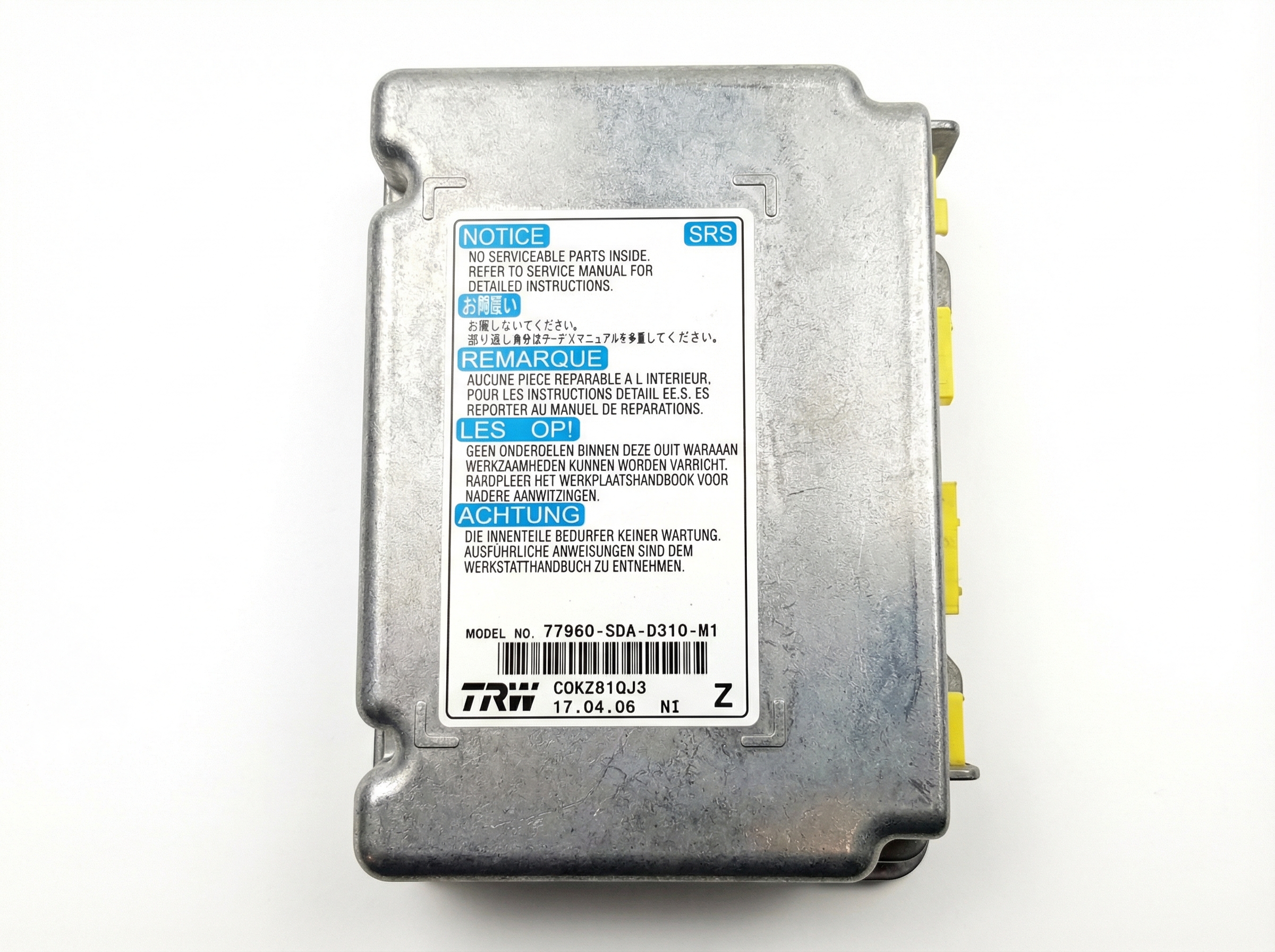

The information in this article is provided for general reference and educational purposes only. Vehicle specifications, procedures, and part compatibility can vary by production date, trim level, and region. Always consult your vehicle's factory service manual and verify part numbers before purchasing or performing repairs. Safety-critical components such as airbags, seat belts, and braking systems should be installed by a qualified professional.
- Jeep Liberty:
- 🛍️ Shop This Part
- Critical Compatibility Warning: 2.8L CRD Diesel Only
- Symptoms of a Failing TCM
- Common Diagnostic Trouble Codes (DTCs)
- Is It Really the TCM? Other Possible Causes
- Buying a Used Transmission Control Module
- Programming and Installation Requirements
- Programming Options:
- Cost Breakdown for TCM Replacement
- Frequently Asked Questions (FAQ)
- 🎟️ Get 5% Off