

2024-2025 Santa Fe Transmission Control Module: Recall, Programming, and DCT vs. Hybrid Differences
This guide covers the critical TCU software recall for 2.5T DCT models, programming requirements for all modules, and how to identify the correct part for your powertrain.
- A critical safety recall (NHTSA 263) affects the 2.5T DCT model's TCM, which can cause a rollaway risk; the 1.6L Hybrid is not affected.
- This part is NOT plug-and-play. A replacement TCM must be professionally programmed to the vehicle using a Hyundai-specific diagnostic tool (GDS).
- There are two completely different transmissions (and TCMs); you must match the part to your vehicle's specific powertrain (2.5T Gas vs. 1.6T Hybrid).
- Driving with a faulty TCM is unsafe due to unpredictable shifting, stalling, and potential rollaway risk. The vehicle should be towed for repair.
Crucial Distinction: 2.5T DCT vs. 1.6L Hybrid

Before diagnosing any issue, you must know which powertrain your 2024-2025 Santa Fe has, as the transmissions and their control modules are entirely different.
- 2.5L Turbo (Gasoline Only): Equipped with an 8-speed Dual-Clutch Transmission (DCT). This transmission is the subject of a major safety recall.
- 1.6L Turbo Hybrid: Equipped with a traditional 6-speed torque-converter automatic transmission. This transmission is not affected by the DCT-specific recall and has shown to be more reliable in early owner reports.
Safety Recall Alert: NHTSA Recall 263 for 2.5T DCT Models
Hyundai issued a major safety recall (NHTSA Campaign Number: 24V450, Hyundai Recall 263) for certain 2024 Santa Fe models equipped with the 8-speed DCT. A software error in the Transmission Control Unit (TCU) can cause damage to the transmission's internal components, including the parking pawl. This creates a severe risk of the vehicle rolling away when it is in Park, which could lead to a crash or injury. As of July 2024, Hyundai had identified 45 incidents in the U.S. related to this condition.
- Affected Vehicles: Officially, 2024 Santa Fe models with the 2.5T engine and 8-speed DCT built between April 23, 2024, and July 2, 2024. However, owners of vehicles produced outside this window have also reported similar issues.
- The Fix: Hyundai dealers will perform a mandatory TCU software update free of charge. They will also inspect the transmission for physical damage and replace the entire transmission if necessary, also at no cost.
- Action: All owners of 2.5T models should contact a Hyundai dealer to see if their vehicle is part of this recall. Federal law requires all open recalls to be completed before a vehicle can be sold.
Symptoms of a Failing Transmission Control Module

TCM failure can manifest in several ways. Some symptoms are specific to the DCT recall, while others are general signs of a faulty module.
Symptoms Specific to the 2.5T DCT Recall
- Vehicle Rolls While in Park: The most critical and dangerous symptom.
- Loud Noise or Violent Jerk When Parked: This can be the sound of the parking pawl mechanism being damaged.
- Inability to Shift: The vehicle may get stuck in a gear or refuse to shift into Park or Drive.
- Wheels Locking Up: In some cases, the transmission damage can cause the wheels to lock, preventing the vehicle from moving.
General Failure Symptoms (Both Models)
- Erratic or Delayed Shifting: The transmission may shift at the wrong times, hesitate, or feel like it's slipping between gears.
- Harsh Shifting: Gear engagements may feel rough, clunky, or jerky, especially when accelerating from a stop.
- Stuck in Gear (Limp Mode): The TCM may lock the transmission into a single gear (often 2nd or 3rd) to prevent further damage, severely limiting vehicle speed.
- Check Engine Light: A failing TCM will often trigger the Check Engine Light. Common associated trouble codes include the P0700-P0799 range, such as P0700 (Transmission Control System Malfunction) or codes for incorrect gear ratios (P0731-P0736).
- Poor Fuel Economy: Inefficient shifting caused by a bad module can lead to a noticeable decrease in gas mileage.
Buying a Used 2024-2025 Santa Fe Transmission Control Module

Because these vehicles are so new, finding a used TCM can be difficult, but not impossible. If you need to replace one, extreme care must be taken to ensure compatibility.
1. Match the Powertrain First
This is non-negotiable. A TCM from a 2.5T DCT model will absolutely not work with a 1.6L Hybrid model, and vice-versa. Ensure the donor vehicle has the exact same engine and transmission as yours.
2. Verify the OEM Part Number
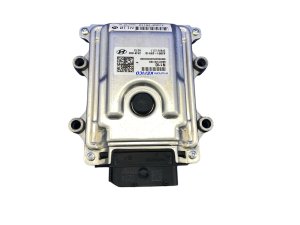
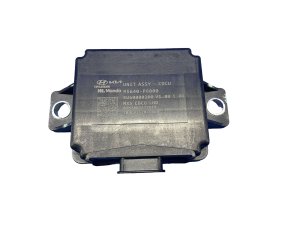
The only way to guarantee compatibility is to match the OEM part number from your original module to the used replacement. Do not rely on visual appearance alone. The part number is printed on a label on the module's housing.
- 2.5L Turbo DCT Model: A likely part number is 954A1-2N830. This module is reportedly located in the left-hand (driver's) side of the engine bay. Another related part is the Shift-By-Wire (SBW) controller, 42951-2N110. Always confirm the number on your specific unit.
- 1.6L Turbo Hybrid Model: A specific part number is not widely published. You MUST remove your original module to identify its part number before purchasing a replacement.
3. Physical Inspection
When buying a used module, inspect it for:
- Connector Pins: Look for any signs of corrosion, bending, or damage on the electrical connector pins.
- Case Damage: Check for cracks, deep scratches, or any indication that the module's case has been opened or tampered with.
- Water Intrusion: Look for any chalky residue or discoloration that could indicate past water damage.
Pro Tip: For a critical electronic component this new, a used OEM module is a much safer bet than a new aftermarket one (if any even exist). OEM modules are built to the manufacturer's exact specifications for durability and software compatibility.
Programming and Installation Requirements
This is not a plug-and-play part. Installing a replacement TCM requires a mandatory programming and learning procedure that cannot be done at home.
The process involves:
- Physical Installation: The old module is removed and the replacement is installed.
- Resetting Adaptive Values: A technician must use a Hyundai Global Diagnostic System (GDS) or an equivalent high-end diagnostic tool to connect to the vehicle. Using the tool, they will perform a function called "Resetting Auto T/A Values" to erase the old transmission data stored in the module.
- Relearn Procedure: After the reset, the vehicle must be driven in a specific way (e.g., accelerating slowly through all gears, stopping, and shifting between N, D, and R) to allow the new TCM to learn the specific characteristics of your transmission.
Warning: A dealer or a highly-equipped independent shop specializing in Hyundai vehicles is required for this job. Attempting to install the module without proper programming will result in the vehicle not shifting correctly, or not moving at all.
Cost Comparison
Prices for this new model are still stabilizing, but here are some estimates based on similar Hyundai models and available data.
| Part Source | Estimated Cost |
|---|---|
| New OEM | $300 - $1,300+ |
| New Aftermarket | Not yet widely available |
| Used OEM | $150 - $400+ |
| Remanufactured | $150 - $300 |
| Shop Labor (Installation & Programming) | $150 - $400 |
Frequently Asked Questions (FAQ)
Can I drive my Santa Fe with a bad TCM?
No. Due to the risk of sudden shifting issues, stalling, or the rollaway danger in 2.5T models, it is unsafe to drive a vehicle with a suspected bad TCM. The vehicle should be towed to a repair facility.
Can I install a used TCM myself and then drive it to the dealer for programming?
This is not recommended. Without programming, the vehicle may not shift out of Park, or it may be stuck in limp mode with unpredictable behavior. It is safer to have the vehicle towed to the shop that will perform the programming.
Will a bad TCM prevent my car from starting?
Usually, a bad TCM will not prevent the engine from starting. However, it will likely prevent the transmission from engaging properly, so the car won't move. It will also almost certainly illuminate the Check Engine Light.
Is the TCM covered under the powertrain warranty?
Yes, the Transmission Control Module is a core component of the powertrain and should be covered under Hyundai's 10-year/100,000-mile powertrain warranty for the original owner. Repairs related to Recall 263 are covered for all owners regardless of warranty status.
Technical Specifications
OEM Part Numbers: 954A1-2N830 (For 2.5L Turbo DCT models) 42951-2N110 (Related Shift-By-Wire controller for 2.5L models)
Location: Typically found in the engine bay on the driver's side. Requires programming with Hyundai GDS. Controls either an 8-speed dual-clutch transmission or a 6-speed automatic transmission.
We Have This Part in Stock




The information in this article is provided for general reference and educational purposes only. Vehicle specifications, procedures, and part compatibility can vary by production date, trim level, and region. Always consult your vehicle's factory service manual and verify part numbers before purchasing or performing repairs. Safety-critical components such as airbags, seat belts, and braking systems should be installed by a qualified professional.
- Hyundai Santa Fe:
- 🛍️ Shop This Part
- Crucial Distinction: 2.5T DCT vs. 1.6L Hybrid
- Symptoms of a Failing Transmission Control Module
- Symptoms Specific to the 2.5T DCT Recall
- General Failure Symptoms (Both Models)
- Buying a Used 2024-2025 Santa Fe Transmission Control Module
- 1. Match the Powertrain First
- 2. Verify the OEM Part Number
- 3. Physical Inspection
- Programming and Installation Requirements
- Cost Comparison
- Frequently Asked Questions (FAQ)
- 🎟️ Get 5% Off