

2019-2020 Ford F-150 Transmission Control Module & 10R80 Shifting Problems
An in-depth guide to diagnosing and fixing the common harsh and erratic shifting issues in the 10-speed automatic transmission, focusing on the role of the TCM, valve body, and required programming.
- Programming is mandatory for a replacement TCM; it is not a plug-and-play part and requires dealer-level tools.
- Many shifting problems are caused by software issues fixed with a PCM update or mechanical failures in the valve body, not just the TCM itself.
- The TCM is located inside the transmission oil pan, making replacement a labor-intensive job that should be performed by a professional.
- Numerous TSBs and recalls exist for the 10R80 transmission; check with a dealer using your VIN before paying for repairs.
Is it the TCM, PCM, or the Valve Body?
When troubleshooting transmission issues on a 2019-2020 Ford F-150, it's important to understand that the problem isn't always a single, simple part. The terms TCM, PCM, and valve body are often used together because their functions are deeply connected.
- Powertrain Control Module (PCM): This is the truck's main computer. In these F-150s, it handles both engine and transmission logic. Often, transmission problems are fixed by updating the software (a 'reflash') on the PCM.
- Transmission Control Module (TCM): While the PCM holds the main software, a physical module is still part of the transmission's internal mechatronics assembly. This module communicates with the PCM. Though a separate part number exists (like JL3Z-12B565-DNP), it cannot be programmed independently; it gets its programming through the PCM.
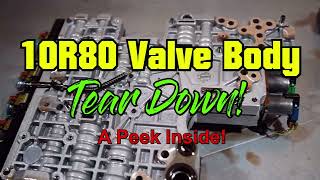
- Valve Body (Main Control): This is a complex hydraulic component located inside the transmission oil pan. It contains the solenoids and valves that direct fluid to engage gears. The TCM is mounted to this assembly. Many shifting problems are caused by mechanical or hydraulic flaws within the valve body itself, requiring the entire unit to be replaced or overhauled. 🎬 Watch a complete teardown of the 10R80 valve body
Pro Tip: Think of the PCM as the boss giving orders, the TCM as the manager relaying those orders, and the valve body as the crew physically doing the work. A problem can exist at any level, but a software update for the boss (PCM) is often the first step before replacing hardware.
Known Issues, Recalls, and Technical Service Bulletins (TSBs)
The 10R80 transmission in these trucks is known for several issues, which Ford has addressed through recalls and TSBs.
Widespread Harsh & Erratic Shifting
The most common complaint is harsh, jerky shifting, clunking noises, and hesitation between gears. This has been the subject of class-action lawsuits. The causes are a mix of software logic and hardware flaws. Ford has issued multiple TSBs to address this:
- TSB 22-2139: This bulletin supersedes previous versions and addresses harsh or delayed shifts. The fix can range from overhauling the main control valve body to simply performing an adaptive learning drive cycle after a software update.
- TSB 21-2145: Specifically calls for a software calibration update to address harsh shifting.
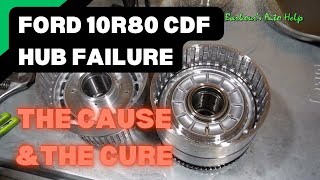
- CDF Drum Failure: A serious mechanical flaw involves a bushing on the 'F' clutch/CDF drum slipping out of place, causing a major internal hydraulic leak. This leads to severe shifting problems and eventually requires a complete transmission overhaul or replacement. TSB 25-2018 provides a specific diagnostic procedure to test for this leak. 🎬 Watch this brief overview of the 10R80 CDF drum failure
Recall 20V-395 (Ford 20S37): Rollaway Risk
Some 2020 F-150s were recalled because a problem with a valve body separator plate could damage the transmission's parking mechanism. This could prevent the truck from actually being in Park, even when the shifter indicates it is, creating a rollaway risk. The fix involves a PCM software update and, if necessary, replacement of damaged components.
Recall 20S18: Incorrect Gear Indication
Certain 2020 F-150s were recalled for a shift cable locking clip that may not be properly installed. This could cause the gear selected by the driver to not match the actual gear the transmission is in, also leading to potential unintended vehicle movement.
TSB 20-2083: Whine or Whistle Noise
Early 2020 models (built between October and December 2019) may exhibit a high-pitched whine or whistle at low speeds. This is due to an output shaft bearing not receiving enough lubrication and is a complex mechanical repair.
Symptoms of a Failing Transmission Control Module
A failing TCM or related component will cause noticeable problems. Look for the following signs:
Warning: Many of these symptoms can also be caused by low or burnt transmission fluid, or purely mechanical failures. A full diagnosis is essential before replacing the TCM.
- Harsh, Erratic, or Delayed Shifts: The most common symptom. This can feel like the truck is slamming into gear, hesitating, or jerking, especially on the 1-3 and 3-5 upshifts.
- Stuck in One Gear (Limp Mode): The transmission may default to a single gear (like 3rd) to prevent further damage, severely limiting speed and power.
- Sudden Downshifting: The transmission might unexpectedly downshift several gears at once, causing the truck to slow abruptly.
- Failure to Engage Drive or Reverse: You may experience a long delay after shifting into D or R before the transmission engages.
- Check Engine Light or Wrench Light: A fault in the transmission controls will almost always illuminate a warning light on the dash.
Common OBD-II Trouble Codes
A scanner may reveal numerous codes. TSB 22-2139 alone lists over two dozen potential codes related to shift solenoid and gear ratio errors. Some of the most frequently cited include:
- P0700: General Transmission Control System Malfunction.
- P0731, P0732, P0733, P0734, P0735: Incorrect Gear Ratio for gears 1-5.
- P0751, P0756, P0761, etc.: Shift Solenoid 'A', 'B', 'C' Performance/Stuck Off.
- U0101: Lost Communication with TCM.
Buying a Used 2019-2020 F-150 TCM
Buying a used OEM module can be a smart way to save money, but there are critical factors to consider for this specific part.
Programming is NOT Optional
This is the most important takeaway. You cannot simply swap this module and drive away. A used TCM must be programmed to your truck's specific VIN and configuration. Without this step, the truck may not start, shift correctly, or may display numerous error messages. You must factor in the cost of programming by a dealership or qualified independent shop.
Verify Part Numbers Carefully
Ensure the part number on the used module matches the one you are replacing. While several numbers may be compatible, starting with an exact match is the safest bet. The most common service part number is JL3Z-12B565-DNP. Always provide your vehicle's VIN to the seller to help confirm fitment.
Physical Inspection
When you receive the part, inspect it for:
- Connector Pins: Check for any bent, corroded, or broken pins in the electrical connector.
- Cracks or Damage: Look for any cracks in the plastic housing or signs of physical impact.
- Signs of Water/Fluid Intrusion: Although it's inside the transmission, damage during removal or storage could expose it to contaminants.
Replacement & Programming Overview
Replacing this module is a job for an experienced technician due to its location and the required programming.
- Location: The TCM is part of the valve body assembly, located inside the automatic transmission oil pan.
- Removal: The technician must drain the transmission fluid, remove the oil pan, and then carefully unbolt and lower the entire valve body assembly to access the module.
- Installation: The new or used module is installed onto the valve body, and the assembly is reinstalled with new gaskets and seals. The pan is reattached and the transmission is filled with the correct type and amount of fluid.
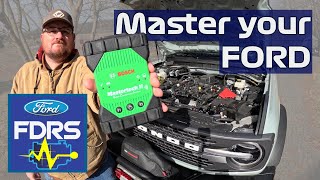
- Programming: This is the final, mandatory step. A technician uses Ford's diagnostic software (IDS or FDRS) with a J2534 pass-through device to connect to the vehicle. 🎬 Watch how to program Ford modules at home using FDRS They will perform a 'Programmable Module Installation' (PMI) which flashes the module with the correct software for the vehicle's VIN.
- Adaptive Learning Drive Cycle: After programming, the technician must perform a specific drive cycle. This involves a series of gentle accelerations, stops, and gear engagements to allow the newly programmed module to learn the transmission's specific characteristics. The shifting may feel firm or unusual for several days as this learning process completes.
Cost Comparison
The cost can vary dramatically based on what is being replaced (module only, valve body, or full transmission).
| Part/Service | Estimated Cost | Notes |
|---|---|---|
| New OEM TCM (Part Only) | $200 - $310 | Part number JL3Z-12B565-DNP. |
| Used OEM TCM (Part Only) | $100 - $200 | Price varies by seller and condition. |
| Remanufactured Valve Body w/TCM | $400 - $800 | A common repair method that replaces the entire control unit. |
| Shop Labor (TCM/Valve Body R&R + Programming) | $400 - $700 | Labor to drop the pan, swap parts, and program. Can be 4-6 hours. |
| New OEM Transmission (Dealer) | $8,000 - $10,000+ | Worst-case scenario for a catastrophic internal failure. |
Frequently Asked Questions (FAQ)
Can I just reset my F-150's TCM myself to fix shifting problems?
You can perform a 'reset' by disconnecting the battery or using certain key/pedal procedures, which clears the adaptive learning tables. This can temporarily help if the transmission has learned bad habits, but it is NOT the same as programming. It will not fix a faulty module or underlying software bug, and it will not program a replacement module.
Is the TCM inside or outside the transmission on a 2019-2020 F-150?
It is located inside the transmission. It is attached to the main control valve body, which requires removing the transmission oil pan to access.
Can an independent mechanic program a Ford TCM?
Yes, a well-equipped independent shop can program a Ford TCM. They need a J2534-compliant pass-through tool and an active, paid subscription to Ford's diagnostic software (FDRS). However, not all shops invest in this, so you must confirm they have the specific capability for late-model Ford programming before booking the job.
Why does my transmission shift weirdly after the battery was disconnected?
Disconnecting the battery resets the 'adaptive transmission shift strategy.' The computer erases its learned data about your driving style and the transmission's characteristics. The firm or unusual shifts you feel afterward are part of the relearning process, which should smooth out after several days of normal driving.
OEM Part Numbers
The following OEM part numbers have been identified for the 2019-2020 Ford F-150 Transmission Control Module. Always verify compatibility with your vehicle's VIN before ordering.
- JL3A-12B565-MB
- JL3A-12B565-PB
- JL3Z-12B565-DNP (Common Service Part)
- SVJL3A-12B565-MB
Helpful Videos
Technical Specifications
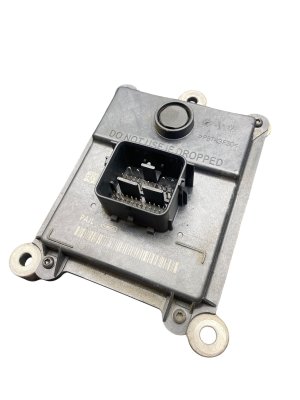
OEM Part Numbers: JL3A12B565MB JL3A12B565PB JL3Z12B565DNP SVJL3A12B565MB
Controls the 10R80 10-speed automatic transmission. Integrated into the main control valve body (mechatronic unit). Programmed via the Powertrain Control Module (PCM) using Ford's IDS/FDRS software.
We Have This Part in Stock




The information in this article is provided for general reference and educational purposes only. Vehicle specifications, procedures, and part compatibility can vary by production date, trim level, and region. Always consult your vehicle's factory service manual and verify part numbers before purchasing or performing repairs. Safety-critical components such as airbags, seat belts, and braking systems should be installed by a qualified professional.
- Ford F-150:
- 🎬 Helpful Videos
- 🛍️ Shop This Part
- Is it the TCM, PCM, or the Valve Body?
- Known Issues, Recalls, and Technical Service Bulletins (TSBs)
- Widespread Harsh & Erratic Shifting
- Recall 20V-395 (Ford 20S37): Rollaway Risk
- Recall 20S18: Incorrect Gear Indication
- TSB 20-2083: Whine or Whistle Noise
- Symptoms of a Failing Transmission Control Module
- Common OBD-II Trouble Codes
- Buying a Used 2019-2020 F-150 TCM
- Programming is NOT Optional
- Verify Part Numbers Carefully
- Physical Inspection
- Replacement & Programming Overview
- Cost Comparison
- Frequently Asked Questions (FAQ)
- OEM Part Numbers
- 🎟️ Get 5% Off