

2018-2019 Ford F-150 Transmission Control Module: Solving 10-Speed Shifting Problems
This guide covers the common and often misunderstood transmission issues in the 2018-2019 F-150, focusing on the Transmission Control Module (TCM) and its critical role in the 10R80 transmission.
- The TCM is not a separate part; it's integrated into the valve body inside the transmission pan, making replacement a major job.
- A replacement valve body/TCM assembly absolutely MUST be programmed to the truck with its specific solenoid strategy number.
- Many shifting problems can be fixed with a software update from a Ford dealer per TSB 21-2315, which should be the first step before any hardware replacement.
- Harsh shifting, delayed engagement, and jerking are the most common symptoms of a software or hardware issue with the 10R80 transmission.
Important: TCM Location and Terminology

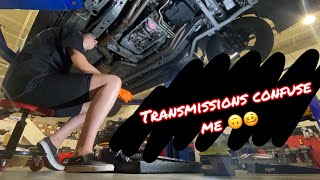
Critical Note: For the 2018-2019 Ford F-150 with the 10R80 10-speed transmission, the Transmission Control Module (TCM) is NOT a separate, externally-mounted box. It is an electronic and hydraulic unit integrated directly into the transmission's main valve body, located inside the transmission oil pan. This entire assembly is often referred to as a mechatronic unit or lead frame. This means replacing the TCM is a major repair that involves draining the transmission fluid, removing the pan, and replacing the entire valve body assembly 🎬 Watch: Step-by-step 10R80 transmission valve body replacement guide, not just unplugging an external module.
Symptoms of a Failing 2018-2019 F-150 TCM or Valve Body

Transmission problems in these trucks are widespread and well-documented. While a software issue is often the culprit, a hardware failure within the valve body or TCM can produce similar symptoms. Owners commonly report:
- Harsh, Erratic, or Delayed Shifts: This is the most common complaint. It can feel like the truck is clunking or banging into gear, especially on the 1-3, 3-5, or downshifts.
- Jerking or Lunging: The truck may jerk forward during shifts, creating a whiplash effect.
- Delayed Engagement: A noticeable 2-3 second delay when shifting from Park into Drive or Reverse.
- Getting Stuck in Gear or Limp Mode: The transmission may refuse to shift, staying in a single gear to protect itself from further damage.
- Illuminated Warning Lights: A "wrench" light or Check Engine Light on the dashboard is a common indicator of a transmission-related fault.
Common OBD-II Diagnostic Trouble Codes (DTCs)
A professional scan tool may reveal specific codes related to transmission faults. While many codes exist, some common ones associated with these issues include:
- P07xx Codes: This range indicates general transmission faults. Specific codes like P0751, P0756, P0761, etc., point to issues with specific shift solenoids.
- U0101: Lost Communication with TCM.
Known Issues, TSBs, and Recalls

The 10R80 transmission has been the subject of numerous complaints, several Technical Service Bulletins (TSBs), and at least one major class-action lawsuit.
Technical Service Bulletin (TSB) 21-2315
This is a key document for owners experiencing shifting problems. It addresses harsh engagement, harsh shifts, or delayed shifts. The first step is often a software update, where a dealer reprograms the Powertrain Control Module (PCM) and TCM with the latest calibration and resets the transmission's adaptive learning tables. For many owners, this software fix significantly improves or resolves the issue. If the software update does not work, the TSB may call for overhauling or replacing the main control valve body.
Mechanical Failures (CDF Clutch Cylinder)
If software updates don't solve the problem, a mechanical issue within the transmission is likely. A known design flaw involves the CDF clutch cylinder sleeve, which can move and cause hydraulic leaks, leading to poor shifting. The fix for this is a complete transmission teardown to replace the faulty cylinder with an updated part, which is an extensive and costly repair.
Programming: The Most Critical Step for a Replacement TCM

Warning: A replacement Transmission Control Module and Valve Body Assembly MUST be programmed to the vehicle. It is not a "plug-and-play" part.
When a new or used valve body/TCM assembly is installed, it must be electronically configured to the specific truck. This involves:
- Solenoid Body Strategy: Every valve body has a unique characterization sheet and number. This data must be entered into the vehicle's main computer (PCM) so it knows the exact hydraulic properties of the new unit. Failure to perform this step will result in poor shifting and can ruin the new transmission components.
- VIN Programming: The module is often programmed with the vehicle's VIN.
- Adaptive Learning Reset: After programming, a specific on-road procedure, called an adaptive learning drive cycle, must be performed to allow the TCM to learn the clutch engagement points and shift characteristics.
This programming requires specialized tools like the Ford Integrated Diagnostic System (IDS) or a high-end professional scan tool with J2534 pass-thru capabilities. 🎬 See how to program a replacement 10R80 transmission While a Ford dealership is always equipped to do this, many independent repair shops that specialize in transmissions or have the correct equipment can also perform the programming. The average DIY mechanic will not have the tools to complete this essential step.
Buying a Used 2018-2019 F-150 Transmission Control Module (Valve Body)
Since the TCM is part of the valve body, you will be purchasing the entire assembly. This is a viable repair option, but requires careful consideration.
- Why Used OEM is a Good Option: A used OEM valve body is the same hardware that came in the truck. As long as it is a functioning unit, it can be programmed to your vehicle and work perfectly. The key is the programming, not the module itself being "new."
- Verify Compatibility: Ensure the OEM part number (like JL3Z12B565CNP) matches what is required for your vehicle. While there may be some interchangeability, matching the part number is the safest bet.
- Physical Inspection: When you receive the part, inspect it for any physical damage. Check the electrical connector pins for corrosion or damage. Ensure all the solenoids are physically intact.
- Crucial: Get the Solenoid ID: The used valve body should have a tag or sticker with its solenoid body strategy number. This number is absolutely essential for the programming process. Do not buy a unit if this information is missing.
- Red Flags: Be wary of any seller claiming the part is "plug and play" or does not require programming. This is incorrect and will lead to problems.
Replacement Cost Breakdown
Replacing the valve body/TCM is a labor-intensive job. Prices can vary significantly based on location and the shop performing the work.
| Part/Service | Estimated Cost |
|---|---|
| New OEM Valve Body Assembly | $750 - $1,400+ (part only) |
| Used OEM Valve Body Assembly | $250 - $600 |
| Shop Labor (including fluid) | $400 - $800+ |
| Total Estimated Cost (Used Part) | $650 - $1,400+ |
| Total Estimated Cost (New Part) | $1,150 - $2,200+ |
Note: These are estimates. A full transmission replacement, if required, can cost upwards of $7,000 to $9,000.
Frequently Asked Questions (FAQ)
Does a replacement TCM for a 2018-2019 F-150 need to be programmed?
Yes, absolutely. The TCM is integrated into the valve body, and the entire assembly must be programmed to the vehicle using its unique solenoid strategy number. An adaptive learning drive cycle must also be performed. Failure to do so will result in severe shifting problems.
Can I just update the software instead of replacing the part?
In many cases, yes. Ford's TSB 21-2315 recommends a software update as the first step. If your truck is only experiencing harsh shifting without any hard fault codes, a trip to the dealer for a reflash may solve the problem for a fraction of the cost of replacement.
Is the TCM inside or outside the transmission?
For the 10-speed 10R80 transmission in the 2018-2019 F-150, the TCM is located *inside* the transmission oil pan as part of the main valve body assembly. This makes it a complex part to replace.
What's the difference between the TCM and the PCM?
The Powertrain Control Module (PCM) is the main computer for the engine and often oversees the entire vehicle's powertrain. The Transmission Control Module (TCM) is a dedicated computer that specifically manages the transmission's functions. In modern Fords, they work together, with the PCM giving commands and the TCM executing the shifts.
Helpful Videos

Technical Specifications
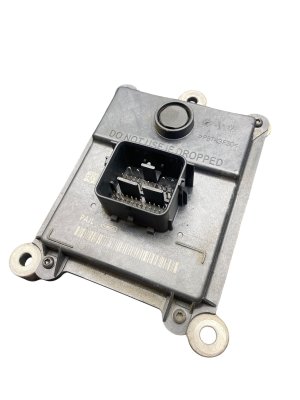
OEM Part Numbers: JL3A12B565MA JL3Z12B565CNP JL3Z-7A100-C
Integrated into the 10R80 transmission valve body. Requires programming with a unique solenoid body strategy number upon installation.
We Have This Part in Stock





The information in this article is provided for general reference and educational purposes only. Vehicle specifications, procedures, and part compatibility can vary by production date, trim level, and region. Always consult your vehicle's factory service manual and verify part numbers before purchasing or performing repairs. Safety-critical components such as airbags, seat belts, and braking systems should be installed by a qualified professional.
- Ford F-150:
- 🎬 Helpful Videos
- 🛍️ Shop This Part
- Important: TCM Location and Terminology
- Symptoms of a Failing 2018-2019 F-150 TCM or Valve Body
- Common OBD-II Diagnostic Trouble Codes (DTCs)
- Known Issues, TSBs, and Recalls
- Technical Service Bulletin (TSB) 21-2315
- Mechanical Failures (CDF Clutch Cylinder)
- Programming: The Most Critical Step for a Replacement TCM
- Buying a Used 2018-2019 F-150 Transmission Control Module (Valve Body)
- Replacement Cost Breakdown
- Frequently Asked Questions (FAQ)
- 🎟️ Get 5% Off