

2013-2018 Toyota RAV4 2.5L U760E Transmission: Problems, Identification, and Used Replacement
Learn how to identify the Aisin U760E transaxle, diagnose common torque converter and valve body failures, and know when replacing with a used OEM unit is your best option.
- The most common failure is a torque converter shudder between 25-50 mph; any replacement should include an updated or remanufactured torque converter to prevent recurrence.
- This U760E transmission is strictly for Front-Wheel Drive (FWD) RAV4s and is NOT interchangeable with the U760F from AWD models or U760E units from other Toyotas like the Camry.
- Replacement is an expert-level job requiring a scan tool to reset the PCM's adaptive memory and register the new unit's compensation code to prevent harsh shifting and damage.
- Proper fluid level checks are critical and must be done when the fluid temperature is between 95°F-113°F; use only Toyota Genuine ATF WS fluid to avoid damage.
- Before installing a replacement, the transmission cooler and lines must be thoroughly flushed to remove debris from the old unit, which could otherwise cause immediate failure.
Is This the Right Transmission for Your RAV4?


The 2013–2018 Toyota RAV4 with the 2.5L 4-cylinder engine uses a 6-speed automatic transaxle from a family known as the Aisin U760E. A transaxle is a combination of a transmission and a differential in a single unit, designed for front-wheel drive vehicles. This specific assembly is strictly for Front-Wheel Drive (FWD) models.
Before purchasing a replacement, you must confirm that your vehicle requires this exact unit. Here’s how to verify:
| Verification Method | Details |
|---|---|
| Check the VIN | The 5th character of your Vehicle Identification Number (VIN) should be 'F'. This signifies the 2.5L 2AR-FE engine that was paired with this transmission. |
| Inspect the Door Jamb Sticker | Open the driver's door and find the white and black information label. Look for the "A/TM" line, which stands for Axle/Transmission. It should read U760E. |
| Confirm Drivetrain | Look under the rear of your RAV4. If you see a large metal pumpkin-shaped component (the rear differential) with shafts (axles) going to the rear wheels, you have All-Wheel Drive (AWD) and this transmission will NOT fit. FWD models will not have these parts. |
| Check Part Numbers | Locate the ID sticker or metal stamp on the original transmission case. Compatible part numbers include 30500-0R010, 30500-0R030, or 30500-42340. |
Warning: All-Wheel Drive (AWD) RAV4s use a different transmission called the U760F. The U760E and U760F are not interchangeable. Attempting to install a U760E in an AWD vehicle will fail due to differences in the case and output for the transfer case.
Warning: While other Toyota models like the Camry, Highlander, Sienna, Venza, and Scion tC also use versions of the U760E, they are not interchangeable with the RAV4 unit due to differences in mounting points, wiring, and internal gear ratios.
Common Failure Symptoms
A failing U760E transmission can present several distinct symptoms. Recognizing them can help you determine if the transmission is the source of your vehicle's issues.
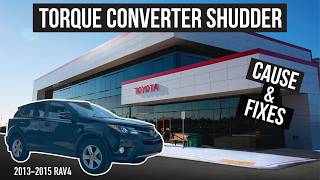
- Shuddering at Low Speeds: The most common complaint is a vibration or shudder that feels like driving over rumble strips. This typically occurs under light acceleration between 25 and 50 mph. This is a classic symptom of a failing torque converter. 🎬 Watch: Toyota torque converter shudder causes and fixes
- Harsh or Delayed Shifts: You may experience a noticeable jerk or clunk when the transmission shifts gears, especially from Park into Drive or during initial acceleration. At higher mileage, this can be caused by wear inside the valve body—the hydraulic control center of the transmission.
- Slipping or Flaring: During acceleration, the engine may rev up unexpectedly without a corresponding increase in speed. This "flare" between shifts indicates that internal clutches are worn and failing to engage properly.
- Whining or Grinding Noises: Any unusual noises, such as whining that changes with engine speed or grinding during shifts, point to serious internal mechanical wear.
Diagnostic Flowchart
Known Issues, TSBs, and Recalls

This transmission family has several well-documented issues that Toyota has addressed through Technical Service Bulletins (TSBs), which are repair instructions for dealerships.
Torque Converter Flex Lock-up Shudder
Document(s): T-SB-0312-17 (supersedes T-SB-0023-15 and T-SB-0034-14)
Affected Years: TSBs specifically name 2012-2014 models, but the issue is known to persist in models up to 2018.
Problem: A brief, intermittent shudder occurs under light throttle between 25-50 mph. This is caused by the torque converter clutch applying and releasing improperly. Over time, this can contaminate the fluid with clutch material and lead to further damage.
Remedy: The official fix involves replacing the torque converter with an updated part and reprogramming the vehicle's main computer (ECM/PCM) with new software. For some 2013-2015 models, Toyota offered a Warranty Enhancement Program (ZH1) that extended coverage for this specific repair.
Valve Body Wear and Harsh Shifts
Problem: On higher-mileage vehicles, the bores within the aluminum valve body (specifically the B2 and B3 clutch control valve bores) can wear out. This causes hydraulic pressure loss to the clutches, resulting in delayed engagement, harsh shifts, or flares.
Remedy: A transmission specialist can sometimes repair the valve body by reaming the worn bores and installing oversized sleeves and valves. In other cases, the entire valve body must be replaced.
Incorrect Fluid Level Check Procedure
Document(s): T-SB-0036-13
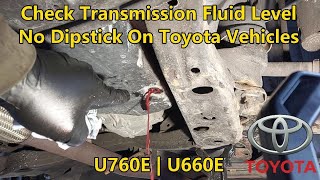
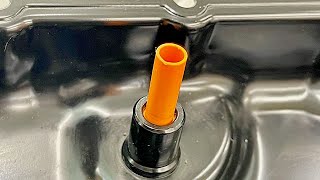
Problem: This transmission does not have a traditional dipstick. The fluid level must be checked via an overflow plug on the transmission pan, and it is highly sensitive to temperature. An incorrect fluid level—either too high or too low—can cause shifting problems, overheating, and premature failure.
Warning: The fluid level must be checked only when the transmission fluid temperature is strictly between 95°F and 113°F (35°C to 45°C), as measured by a compatible scan tool. This requires a 6mm hexagon socket and a fluid transfer pump.
What Fails at Every Mileage Band
Pro Tip: The mileage bands below describe the typical condition of USED REPLACEMENT units of that mileage. The checklists are things you must do WHILE INSTALLING the purchased transmission, not maintenance advice for your current broken engine.
Under 60,000 Miles
Even low-mileage units are susceptible to the notorious torque converter shudder. This is the most prevalent issue, often appearing between 25-50 mph under light throttle. Harsh or delayed shifting, particularly between first and second gear, can also be linked to software calibration issues rather than mechanical failure.
- ✓Do during install (required): Verify TSB Compliance. If installing a used unit in a 2013-2015 vehicle, ensure the torque converter has been replaced under the warranty program (ZH1) or install a new/remanufactured torque converter with upgraded friction linings as a preventative measure.
- ✓Do during install (required): Replace External Seals. Always replace the front pump seal (torque converter hub seal) and both left and right axle shaft seals.
- ✓Do during install (required): Install New Filter and Gasket. Use a new transmission filter (OEM Part # 35330-0R010) and a 19-bolt pan gasket (OEM Part # 35168-73010).
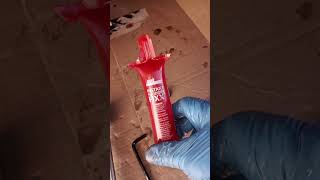
- ✓Do during install (required): Flush Cooler and Lines. Thoroughly flush the transmission cooler and lines with an aerosol flush (like Lubegard Kooler Kleen) to remove any debris from the previous unit.
60,000 - 100,000 Miles
If not addressed earlier, the torque converter shudder continues to be the primary complaint. Shift quality can degrade, with owners noting harsh downshifts or a delay when shifting from Park into Drive or Reverse. This is an early sign of valve body wear. Diagnostic trouble codes, such as P2714 (Pressure Control Solenoid D Performance), may appear, indicating a problem with an internal solenoid due to fluid contamination.
- ✓Do during install (required): Mandatory Torque Converter Replacement. Do not reuse a high-mileage torque converter. Install a quality remanufactured unit with upgraded linings to prevent future shudder issues.
- ✓Do during install (required): Full Fluid and Filter Service. Perform a complete fluid exchange with Toyota Genuine ATF WS, and replace the filter and pan gasket.
- ✓Do during install (required): Replace All External Seals. Install new axle seals and a front pump seal.
- ✓Do during install (required): Flush Cooler and Lines. This is critical to prevent contamination of the replacement unit.
100,000 - 150,000+ Miles
Valve body wear becomes a significant concern at higher mileage. Wear in the valve and sleeve bores leads to hydraulic pressure loss, causing delayed reverse engagement, harsh shifts, and shift flares. The accumulation of issues like a failing torque converter, worn valve body, and degraded fluid can lead to complete clutch pack failure. Shift solenoids can also fail mechanically due to contaminants.
- ✓Do during install (required): Assume Torque Converter is Faulty. Replace with a remanufactured unit.
- ✓Do during install (recommended): Strongly Consider Remanufactured Valve Body. Given the high likelihood of bore wear, installing a used transmission with a vacuum-tested and restored valve body is a safer investment.
- ✓Do during install (required): Complete Service. Replace all seals, filter, pan gasket, and perform a comprehensive cooler flush.
- ✓Do during install (required): Fluid Exchange. Use only Toyota Genuine ATF WS fluid.
Expected Service Life & Maintenance
The U760E transmission in the 2013-2018 RAV4 is generally capable of lasting between 200,000 and 300,000 miles. However, this lifespan is highly dependent on addressing the common torque converter issue and adhering to a proactive maintenance schedule. Regular transmission fluid changes are the single most critical factor. While Toyota marketed the fluid as "lifetime," most technicians strongly recommend fluid and filter changes every 60,000 to 100,000 miles, or every 30,000-60,000 miles under severe conditions.
Real Owner Experiences
| Source | Mileage | What Happened | Cost |
|---|---|---|---|
| RAV4Life | 30,000-70,000 | Owners report a noticeable shudder and vibration during acceleration, feeling like driving over rumble strips. | Covered under warranty or warranty extension program if applicable. |
| CarKiller Forums | 25,000 | An owner took their car in for the shudder issue. The dealer only performed the software update and did not replace the torque converter, leading to continued problems. | N/A (Dealer visit) |
| Reddit r/Toyota | 68,000 | 2015 RAV4 LE needs new transmission. Seeking a second opinion, considering a used/reman unit for potentially half the cost. | Pending (Dealer quoted $8,500) |
| Reddit r/rav4club | 75,000 | 2014 model with torque converter issues. Contacted Toyota corporate with no success, was seeking opinions on whether to repair or replace. | Pending (Quoted $3,500 for TC, $6,500 for full trans) |
| CarKiller Forums / YouTube | 95,850 | A 2012 Camry with the U760E developed a severe shudder diagnosed as needing a new torque converter or a remanufactured transmission. | $2,300 - $7,200 |
| Pine Hollow Auto Diagnostics (YouTube) | 125,000 | A 2015 Camry with a U760E presented with a P2714 code and minor shift complaints. A fluid change did not resolve the issue, indicating a likely internal solenoid or valve body problem. | Diagnostic cost, leading to recommendation for more significant repair. |
| Various Forums | 125,000+ | General reports of transmissions becoming unreliable past 125,000 miles, with symptoms ranging from erratic shifting to complete failure. | $800-$5,500 |
| Reddit r/rav4club | 175,000 | 2015 RAV4 LE needs new transmission. Decided to sell the car as-is. | $0 (sold car for ~$2,500 after $8,000 quote) |
| Samarins.com | High Mileage | Delayed or harsh engagement into reverse is noted at higher mileage, caused by a worn-out valve and sleeve in the valve body. | Not specified, but noted as 'reasonable' for valve body repair. |
| CarKiller.com Forum | Out of warranty | 2012 Camry (same U760E) planned to get the transmission rebuilt at an independent shop after high dealer quotes. | ~$4,000 (planned) |
Replacement Cost Estimates
The cost to replace a U760E transmission varies based on the type of replacement unit you choose. Shop labor for the swap typically takes 6.0 to 9.0 hours, with labor costs ranging from $750 to $1,600, depending on local rates and whether the front subframe needs to be partially dropped.
| Part Type | Estimated Cost (Part Only) | Description |
|---|---|---|
| Used OEM | $2,200 - $4,100 | A salvaged unit from a donor vehicle. Price depends on mileage and warranty. |
| Remanufactured | $1,980 - $7,116 | A professionally rebuilt unit with updates to correct original factory flaws. Often comes with a longer warranty. |
| New OEM | $7,000 - $8,500+ | A brand new unit from a Toyota dealer. This is the most expensive option. |
Repair or Replace?
Deciding whether to repair your current transmission or replace it entirely depends on the specific failure mode.
- When Repair Makes Sense: If your issue is strictly torque converter shudder and there is no widespread metal contamination in the fluid, replacing just the torque converter typically costs $1,200 to $3,500. Similarly, if you have harsh shifts caused by a faulty valve body, a remanufactured valve body can be installed for $800 to $1,200.
- When Replacement is Smarter: If the transmission has suffered catastrophic internal mechanical failure (broken gears, widespread clutch damage, heavy metal debris in the pan), replacement is necessary. Also, if the cost of multiple smaller repairs approaches the cost of a quality used or remanufactured unit, replacement becomes more economical. Dealership quotes for new transmissions can exceed $8,500, making a used or remanufactured unit a much more financially viable option.
Questions to Ask Your Installer
- Have you confirmed the replacement unit is a U760E for FWD and not a U760F for AWD?
- Will you be performing the mandatory PCM adaptive memory reset and transaxle compensation code registration with a Toyota-compatible scan tool?
- What is your procedure for fully seating the torque converter to prevent pump damage?
- Do you perform a pressurized flush of the transmission cooler and lines before installing the new unit?
- Are you using Toyota Genuine ATF WS fluid, and following the temperature-specific fluid level check procedure?
- Does the price include new axle seals and a front pump seal?
Key Installation and Programming Steps

Installing a used U760E is an Advanced/Expert job requiring special tools like an engine support bar and a transmission jack. Several critical steps must be followed to prevent immediate damage to the replacement unit.
Critical Mechanical Steps
Warning: Before installation, you must flush the transmission cooler (located inside the radiator) and the lines with a specialized aerosol flush. Debris from the old, failed transmission can get trapped in the cooler and will be sent directly into your replacement unit, causing it to fail.
- Support the Engine: The front subframe often needs to be lowered for clearance. An engine support bar must be used from above to hold the engine/transaxle assembly in place while the subframe is loose.
- Transfer Parts: You will likely need to transfer the wiring harness and external sensors from your original transmission to the replacement unit.
Warning: The torque converter must be fully seated into the transmission's front pump before installation. You must push and rotate it until you feel it click into place three separate times, reaching a recessed depth of at least 13.4 mm (about 0.53 inches). If it is not fully seated, bolting the transmission to the engine will break the internal oil pump gear, destroying the transmission instantly.
Required Programming
This is not a simple plug-and-play installation. The vehicle's computer must be programmed for the replacement transmission.
- Reset Memory (Adaptive Relearn): The Powertrain Control Module (PCM) stores shift data from the old, failing transmission. These learned values must be cleared using a bi-directional OBD2 scan tool with live data capability (like Toyota Techstream). Skipping this step will cause harsh shifting and may damage the new unit.
- Compensation Code Registration: The replacement transmission may have a unique 60-digit "transaxle compensation code" on a QR label. This code fine-tunes hydraulic pressures for that specific unit. If present, this code must be programmed into the PCM with a scan tool to ensure smooth operation.
Freight & Delivery Reality

When ordering a used U760E transmission, it will not arrive in a standard cardboard box via regular mail. This assembly weighs approximately 179 lbs and measures roughly 24" x 22" x 20" before crating. Because of its size and weight, it must ship as LTL (Less-Than-Truckload) freight on a wooden pallet.
Freight delivery requires a delivery truck equipped with a liftgate to lower the pallet to the ground. It is an industry best practice to have a pre-purchase verification interview with the supplier to confirm your VIN and drivetrain. When the transmission arrives, you must thoroughly inspect the unit for any shipping damage (such as cracked bellhousings or crushed pans) before signing the delivery receipt.
Frequently Asked Questions
What is the difference between the U760E and U760F?
The U760E is for Front-Wheel Drive (FWD) vehicles. The U760F is for All-Wheel Drive (AWD) vehicles and has an output for a transfer case to send power to the rear wheels. They are not interchangeable.
Can I use a U760E from a Toyota Camry in my RAV4?
No. While they share the same family name, the transmissions used in the Camry, Highlander, and other models have different case mounting points, wiring harnesses, and internal programming that make them incompatible with the RAV4.
Does this transmission have a separate computer (TCM)?
No, the transmission control logic is integrated directly into the vehicle's main Engine Control Module (ECM), also known as the Powertrain Control Module (PCM). There is no separate, bolt-on Transmission Control Module (TCM).
What kind of transmission fluid does the U760E take?
Warning: You must use only Toyota Genuine ATF WS (World Standard) fluid. Using generic or multi-vehicle fluids can cause immediate shifting problems and premature failure.
How many labor hours does it take to replace this transmission?
Professional shop labor estimates range from 6.0 to 9.0 hours. This is an advanced job that often requires dropping the front subframe and using an engine support bar.
How much does this transmission weigh for shipping?
A used U760E assembly weighs approximately 179 lbs before being crated. It is too heavy and bulky for parcel shipping and must be shipped via LTL freight on a pallet.
Helpful Videos

Technical Specifications
OEM Part Numbers: 30500-0R010 30500-0R030 30500-42340
Model: Aisin U760E; Type: 6-speed automatic transaxle; Drivetrain: Front-Wheel Drive (FWD); Engine Compatibility: 2.5L 2AR-FE; Fluid Type: Toyota Genuine ATF WS; Weight: Approx. 179 lbs; Dimensions: Approx. 24" x 22" x 20"; Expected Service Life: 200,000 - 300,000 miles
We Have This Part in Stock


The information in this article is provided for general reference and educational purposes only. Vehicle specifications, procedures, and part compatibility can vary by production date, trim level, and region. Always consult your vehicle's factory service manual and verify part numbers before purchasing or performing repairs. Safety-critical components such as airbags, seat belts, and braking systems should be installed by a qualified professional.
- Toyota RAV4:
- 🎬 Helpful Videos
- 🛍️ Shop This Part
- Is This the Right Transmission for Your RAV4?
- Common Failure Symptoms
- Diagnostic Flowchart
- Known Issues, TSBs, and Recalls
- Torque Converter Flex Lock-up Shudder
- Valve Body Wear and Harsh Shifts
- Incorrect Fluid Level Check Procedure
- What Fails at Every Mileage Band
- Under 60,000 Miles
- 60,000 - 100,000 Miles
- 100,000 - 150,000+ Miles
- Expected Service Life & Maintenance
- Real Owner Experiences
- Replacement Cost Estimates
- Repair or Replace?
- Questions to Ask Your Installer
- Key Installation and Programming Steps
- Critical Mechanical Steps
- Required Programming
- Freight & Delivery Reality
- Frequently Asked Questions
- 🎟️ Get 5% Off