

2018-2021 Subaru WRX TR690 CVT: Problems, Identification, and Used Replacement
Identify common failure symptoms, understand repair costs, and learn what to look for when buying a used replacement unit.
- The TR690 CVT requires specific orange/red Subaru High-Torque CVT Fluid (HT-CVTF); using any other fluid will cause severe damage.
- After installing a replacement unit, a TCM Adaptive Relearn procedure using a Subaru-specific scan tool is mandatory to prevent poor performance and damage.
- The integrated front differential uses 75W-90 gear oil and is a separate chamber from the CVT; do not mix fluids or accidentally drain the wrong one.
- Verify the transmission code (e.g., TR690GB6BA) on the B-pillar ID plate to ensure you are purchasing the correct high-torque variant for a 2.0L Turbo WRX.
- When a transmission fails, the external cooler and lines must be flushed to remove metal debris before connecting the replacement unit.
Part Identification: Confirming the Correct TR690 CVT

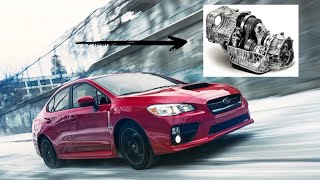
The 2018-2021 Subaru WRX with an automatic transmission uses a specific high-torque version of the Subaru Lineartronic Continuously Variable Transmission (CVT), known as the TR690. This transmission is engineered for the 2.0L turbocharged direct-injection engine and Symmetrical All-Wheel Drive (AWD) system. It is not interchangeable with CVTs from other Subaru models.
To confirm your WRX has this exact transmission, check the manufacturer's ID plate located on the driver's side B-pillar (the frame where the door latches). The plate will list a transmission code that starts with "TR690," such as TR690GB6BA. The unique transmission serial number is typically stamped on the case itself or found on a barcode sticker on the top or side of the housing.
Before purchasing a replacement, verify the 8th digit of your vehicle's VIN to confirm it has the 2.0L Turbocharged FA20F/FA20DIT engine. You must also confirm the vehicle is equipped with Symmetrical All-Wheel Drive (AWD).
Warning: Not all Subaru CVTs are the same. The TR690 unit from a 2.0L Turbo WRX will not fit other models like the Forester, Impreza, or Outback. Those vehicles use different transmissions (like the TR580) or different TR690 variants with incompatible bellhousings, torque converters, wiring harnesses, and electronic controls.
Common Failure Symptoms
A failing TR690 CVT in a WRX can show several distinct symptoms. Recognizing these can help determine if the transmission is the source of the problem.
| Symptom | Description |
|---|---|
| Hesitation or Stalling | The vehicle may hesitate or the engine may stall when coming to a stop or during low-speed maneuvers. |
| Shuddering or Juddering | A noticeable vibration or shudder may occur during acceleration, braking, or turning. This was the subject of a warranty extension. |
| Whining or Droning Noises | A persistent whining or droning sound that changes with vehicle speed often points to failing internal bearings. This requires immediate inspection to prevent complete failure. |
| Diagnostic Trouble Codes (DTCs) | The check engine light may illuminate, storing codes related to the transmission. Common codes include P0700 (Transmission Control System Malfunction), P2763, and P2764 (Torque Converter Clutch Pressure Control Solenoid Circuit High/Low). | 🎬 Watch: Step-by-step TR690 valve body replacement guide
Diagnostic Flowchart

Known Issues & Technical Service Bulletins (TSBs)
Subaru has issued several TSBs to address known issues with this transmission family. These documents provide dealers with updated diagnostic and repair procedures.
| TSB Number | Subject | Details |
|---|---|---|
| 16-115-18 & 16-117-18 | CVT Warranty Extension | In response to concerns about hesitation and shuddering, Subaru extended the CVT warranty for many vehicles, including 2016-2018 models, to 10 years or 100,000 miles. This covers repairs and potential replacement. |
| 16-151-24R | Powertrain Judder While Braking or Turning | Addresses judder, shudder, and hesitation. The prescribed fix often involves replacing the torque converter, flushing the fluid, and updating the Transmission Control Module (TCM) software. |
| 16-131-20R | CVT Solenoid Diagnostic Trouble Codes | Provides updated diagnostic steps for solenoid-related DTCs on 2015-2020 WRX models. A confirmed solenoid failure often requires replacing the entire valve body assembly. |
| 16-103-16R | Transmission Fluid Seepage | Addresses minor fluid leaks or seepage from the oil pump cover or torque converter housing area. The fix involves inspecting the source and replacing the necessary seals. |
What Fails at Every Mileage Band
Pro Tip: The mileage bands below describe what to expect from used replacement units of that mileage. The checklists provided are things to do WHILE INSTALLING the purchased unit, not maintenance for your current transmission.
Under 60,000 Miles
Most failures at this low mileage are not catastrophic but relate to drivability issues covered by the original powertrain warranty or the extended CVT warranty (10yr/100k miles for 2016-2018 models). Hesitation, shuddering, and stalling are common complaints, often addressed by TSBs involving software updates or valve body/torque converter replacement. Fluid seepage from the oil pump cover (TSB 16-103-16R) is also a known issue.
- ✓Do during install (required): Mandatory Fluid Service. Even on a low-mileage unit, perform a drain and fill with genuine Subaru High-Torque CVTF (Orange/Red). Do not trust the existing fluid.
- ✓Do during install (recommended): Replace External Filter. Inspect Torque Converter to ensure it is clean and fully seated (three distinct clicks).
- ✓Cheap insurance while the engine is out: Replace Axle and Input Shaft Seals. These seals are inexpensive and easy to access while the transmission is out.
60,000 - 100,000 Miles
This is a critical mileage range where failures become more common, especially if the fluid has never been changed. Valve body and torque converter failures are the most frequently reported significant issues, leading to shuddering, hesitation, and diagnostic trouble codes. Whining or droning noises may indicate failing internal bearings, a precursor to more severe failure.
- ✓Do during install (required): Critical Fluid and Filter Service. A full drain and fill with Subaru HT-CVTF and a new external filter is non-negotiable.
- ✓Do during install (recommended): Consider Valve Body Solenoids. If the budget allows, replacing the valve body is a significant preventative step against the most common failure point.
- ✓Cheap insurance while the engine is out: Replace Torque Converter. Replace All External Seals (front input seal, both front axle seals, and the rear output shaft seal).
100,000 - 150,000+ Miles
The risk of complete failure is significantly higher in this mileage band. Many technicians consider this the realistic lifespan without proactive, regular maintenance. Valve body failure remains a common issue, and internal bearing failure is much more likely. At this mileage, issues are often a result of accumulated wear from degraded fluid that was not changed frequently enough.
- ✓Do during install (required): Complete Fluid and Filter Overhaul. Perform multiple drain-and-fills to replace as much of the old fluid as possible. Replace the internal strainer and external filter.
- ✓Do during install (recommended): Upgrade the Transmission Cooler. Installing a larger aftermarket transmission cooler (like Mishimoto) can help manage heat. Assume a Full Rebuild is Needed Soon; budget for a potential replacement.
- ✓Cheap insurance while the engine is out: Mandatory Replacement of Wear Items. It is highly advisable to replace the torque converter, front pump/input seal, and all axle/output seals during the swap.
Real Owner Experiences
| Source | Mileage | What Happened | Cost |
|---|---|---|---|
| 25,000 | A 2018 Crosstrek (uses a similar CVT family) required a new CVT, which was covered under warranty. A recall was issued a few months later. | $0 (Warranty) | |
| 35,000 | A user with an Outback Wilderness (TR690 variant) was personally replacing the CVT. | Not specified | |
| 76,000 | A 2021 Crosstrek CVT started slipping. The owner had the fluid serviced at 60,000 miles but was outside the extended warranty. | Not specified | |
| 79,710 | Replaced valve body for P2757 code on a 2015 Forester. Quoted $2500.00. | $1437.05 | |
| YouTube Comment/Forum Report | 83,000 | A 2021 Ascent (which also uses the TR690) experienced a complete CVT failure, which was the second major CVT issue on that same vehicle. | Not specified, likely warranty |
| 95,000 | A 2015 WRX owner reports the CVT is working perfectly with routine maintenance. | N/A | |
| 100,300 | A 2017 Legacy began making noise just before 100k miles. Subaru of America denied assistance because the 'lifetime' fluid had never been serviced. | Full replacement cost ($7,000 to $10,000+) | |
| 107,000 | 2015 Impreza needed full CVT replacement. Subaru of America offered $5000 toward the cost. Quoted $10000.00. | $5000.00 | |
| 112,000 | A 2015 Forester required a valve body replacement after never having the CVT fluid changed. | ~$2,000 | |
| 116,000 | 2015 Outback owner quoted for full replacement due to a humming noise. A used unit was quoted at $6,000. | N/A | |
| 120,000 | A 2016 Forester required a valve body replacement. | Not specified | |
| 123,000 | 2019 Ascent full CVT replacement quoted by the dealership for CVT slippage. Quoted $13000.00. | N/A | |
| 131,000 | Owner of a modified WRX reports no issues, but changes transmission and differential fluid every 20,000 miles. | N/A | |
| 205,000 | A Forester XT with a TR690 had a solenoid issue but the transmission itself is reported as having no problems. Fluid was changed once at 120k miles. | Not specified | |
| N/A | 2019 WRX transmission was leaking fluid. Subaru of America covered $3000 and the dealership covered $500. Quoted $3600.00. | $100.00 |
Repair or Replace?

Deciding whether to repair your existing TR690 or replace it entirely depends on the specific failure mode. Some issues are localized and cost-effective to fix, while others require a full replacement.
| Repair Type | Estimated Cost |
|---|---|
| Valve Body / Solenoid Failure | $1,200 - $2,500 |
| Torque Converter Replacement | $600 - $1,500 |
| Fluid Leak Repair (Seals/Gaskets) | $300 - $800 |
When Replacement is Smarter: If there is evidence of catastrophic internal failure, such as a whining or droning noise indicating bearing failure, or significant metal debris found in the transmission fluid, replacement is the best route. The cost and complexity of a full rebuild often exceed the price of a quality replacement unit. Used units typically run $725 to $2,500, while remanufactured units range from $3,500 to $5,000.
Questions to Ask Your Installer
- Have you worked on a Subaru TR690 CVT before?
- Will you be performing the mandatory TCM Adaptive Relearn procedure after installation?
- How will you be flushing the external transmission cooler and lines to prevent debris transfer?
- Can you confirm you are using Subaru High-Torque CVT Fluid (HT-CVTF, Orange/Red)?
- Do you check the fluid level at the specified temperature range (35-45°C)?
- Will you also be checking and filling the separate front differential chamber with 75W-90 gear oil?
- Does your quote include replacing the front axle seals and the torque converter seal?
- What warranty do you offer on your labor and on the replacement unit?
Replacement Cost Estimates
The cost to replace a TR690 CVT in a Subaru WRX varies significantly based on the type of replacement unit and local labor rates. The job typically requires 6-9 hours of shop time.
| Part Type | Estimated Cost (USD) | Notes |
|---|---|---|
| New (OEM) | $7,000 - $9,000+ | Brand new unit from Subaru. Often the most expensive option. |
| Remanufactured (OEM) | $3,500 - $5,000 | Rebuilt by an authorized facility with new and inspected components. Often comes with a warranty. |
| Used (OEM) | $725 - $2,500 | A salvaged unit from a donor vehicle. Price varies with mileage and condition. |
| Installation Labor | $900 - $2,000 | Labor costs depend on the shop's hourly rate and location. |
What's Included in a Used Assembly
When purchasing a used transmission, it's important to know what parts are typically included based on industry standards.
- What's Usually Included: The transmission case, all internally lubricated parts, the extension/tail housing, the valve body, the transmission oil pan, and the torque converter.
- What's Never Included: The external Transmission Control Module (TCM), wiring harnesses, external sensors, shifter assembly, shift linkage/cables, engine flexplate/flywheel, and external transmission cooler lines.
Pro Tip: The Transmission Control Module (TCM) for this WRX is an external component. It is not part of the used transmission assembly and must be retained from your original vehicle.
Freight & Delivery Reality

A used TR690 CVT is a heavy, bulky component. It ships as LTL (Less-Than-Truckload) freight on a pallet—it is NOT a standard parcel delivery. The assembly weighs approximately 245 lbs and measures roughly 40" x 28" x 28" before crating.
Warning: If you are having the transmission delivered to a residential address, you must request liftgate service, as the delivery truck will not have a loading dock to back into.
Always inspect the transmission thoroughly while it is still on the pallet before signing the delivery receipt. Look for any damage to the housing, oil pan, or sensors that may have occurred during transit.
Pro Tip: As an industry best practice, conduct a pre-purchase verification interview with the seller. Confirm the donor vehicle was a 2.0L Turbo WRX with AWD, and ask them to verify the transmission code on the B-pillar plate (e.g., TR690GB6BA).
Installation & Programming: Critical Steps

Installing a replacement CVT is an advanced job that requires special tools and procedures. Skipping steps can lead to immediate failure of the replacement unit. The DIY difficulty is rated as Advanced/Expert.
Special Tools Required
- Engine support bar/hoist
- Transmission jack
- Bi-directional OBD2 scan tool with Subaru-specific software
- Fluid transfer pump
- Torx T70 bit
Mandatory Programming: TCM Relearn
After installation, a TCM Adaptive Relearn (or "AT Learning Mode") is required. The TCM stores data from the old transmission, which must be cleared. The relearn process calibrates the TCM to the specific mechanical tolerances of the replacement unit's internal clutches and pulleys. Skipping this step will cause harsh shifting, slipping, error codes, and potential damage. This procedure requires a bi-directional scan tool with Subaru-specific software.
Required Parts & Fluids
Always use new fluids and certain seals when installing a replacement transmission.
- CVT Fluid: Use only Subaru High-Torque CVT Fluid (HT-CVTF), which is orange or red. The part number is K0421Y0700. Using standard green or blue Subaru CVT fluid or a generic multi-vehicle fluid will cause severe damage.
- Front Differential Fluid: The front differential is in the same housing but is a separate chamber that requires 75W-90 gear oil. Do not mix these fluids.
- Seals and Gaskets: Always replace the front torque converter seal (pump/input shaft seal), front axle seals, and use a new transmission pan gasket or RTV sealant.
- Filters: Install a new internal fluid strainer/filter.
- Cooler Flush: The external transmission cooler and lines must be professionally flushed with a professional-grade transmission cooler line flush solvent to remove any metal debris from the previous transmission failure.
Installation Gotchas & Buyer Mistakes
Warning: The torque converter must be fully seated (typically three distinct clicks/drops) before bolting the bellhousing. Failure to seat it fully will crush and destroy the internal oil pump upon installation.
- The Two Drain Plugs Trap: The engine oil drain plug and the CVT drain plug are close together. Do not accidentally drain the CVT fluid during an oil change, or vice versa.
- Critical Fluid Fill Temperature: The transmission has no dipstick. The fluid level must be checked via the check plug only when the fluid temperature is strictly within the target range (35-45°C or 30-40°C depending on the manual). Checking outside this range causes incorrect fill levels.
- Front Differential Isolation: Accidentally draining the front differential and filling the CVT chamber leaves the differential dry, destroying the front gears on the first drive.
- Do Not Use a Flush Machine: High-pressure flush machines can force debris into the valve body. Perform a drain and fill on the transmission, and flush the external cooler lines separately while disconnected.
Warning: The transmission fluid level must be checked at a specific temperature. Checking the level when the fluid is too hot or too cold will result in an incorrect fluid level and can cause damage.
Frequently Asked Questions (FAQ)
Can I use any CVT fluid in my 2018-2021 WRX?
No. You must use the specified Subaru High-Torque CVT Fluid (HT-CVTF, part #K0421Y0700). It is orange/red. Using the wrong fluid, including other types of Subaru CVT fluid, will lead to slipping and catastrophic failure.
Do I need to program the transmission after installing a used one?
Yes. A procedure called "AT Learning Mode" or TCM adaptive relearn is mandatory. It clears the old learned values and calibrates the control module to the replacement transmission. Failure to perform this step will result in poor performance and can damage the new unit.
What is the difference between the CVT and front differential fluid?
The TR690 transmission case houses two separate fluid chambers. The main CVT section uses special HT-CVT fluid. The integrated front differential has its own chamber that is lubricated with standard 75W-90 gear oil. It is critical not to drain one by mistake or mix the two fluids.
Why do the transmission cooler lines need to be flushed?
When a transmission fails, it often releases metal shavings and other debris into the fluid. This debris gets trapped in the external transmission fluid cooler. If you don't flush the cooler and its lines before connecting the replacement transmission, that debris will immediately circulate into the new unit and destroy its valve body and other sensitive components.
What tools are required to replace the TR690 CVT?
Replacing this transmission requires an engine support bar or hoist, a transmission jack, a fluid transfer pump, a Torx T70 bit, and a bi-directional OBD2 scan tool with Subaru-specific software to perform the mandatory TCM relearn.
How long does it take a shop to replace this transmission?
The standard shop labor estimate for replacing the TR690 CVT in a WRX is 6 to 9 hours. Depending on the shop's hourly rate, labor costs typically range from $900 to $2,000.
Helpful Videos

Technical Specifications
Transmission Code: TR690; Engine Compatibility: 2.0L Turbocharged FA20F/FA20DIT; Drivetrain: Symmetrical All-Wheel Drive (AWD); Weight: ~245 lbs; Shipping Dimensions: ~40" x 28" x 28"; Required CVT Fluid: Subaru High-Torque CVTF (Orange/Red, K0421Y0700); Front Differential Fluid: 75W-90 Gear Oil
We Have This Part in Stock


The information in this article is provided for general reference and educational purposes only. Vehicle specifications, procedures, and part compatibility can vary by production date, trim level, and region. Always consult your vehicle's factory service manual and verify part numbers before purchasing or performing repairs. Safety-critical components such as airbags, seat belts, and braking systems should be installed by a qualified professional.
- Subaru WRX:
- 🎬 Helpful Videos
- 🛍️ Shop This Part
- Part Identification: Confirming the Correct TR690 CVT
- Common Failure Symptoms
- Diagnostic Flowchart
- Known Issues & Technical Service Bulletins (TSBs)
- What Fails at Every Mileage Band
- Under 60,000 Miles
- 60,000 - 100,000 Miles
- 100,000 - 150,000+ Miles
- Real Owner Experiences
- Repair or Replace?
- Questions to Ask Your Installer
- Replacement Cost Estimates
- What's Included in a Used Assembly
- Freight & Delivery Reality
- Installation & Programming: Critical Steps
- Special Tools Required
- Mandatory Programming: TCM Relearn
- Required Parts & Fluids
- Installation Gotchas & Buyer Mistakes
- Frequently Asked Questions (FAQ)
- 🎟️ Get 5% Off