

2017-2023 Subaru Impreza TR580 CVT: Problems, Identification, and Used Replacement
Identify the TR580 Lineartronic CVT, understand valve body and chain slip failures, and learn when to swap in a used OEM transmission.
- A mandatory TCM Adaptive Relearn procedure is required after installation to prevent severe damage; this requires a bi-directional scan tool.
- Verify the transmission model is TR580GDJAB and that it comes from a 2017-2023 Impreza, as units from other Subaru models are incompatible.
- The transmission and front differential are separate chambers requiring different fluids (Subaru CVTF-II and 75W-90 gear oil, respectively); mixing them will cause catastrophic failure.
- Valve body failure is a common issue causing shuddering (TSB 16-156-25R); consider preventative replacement with a new OEM unit when installing a used transmission.
Is My Transmission Failing? Common Symptoms

The Continuously Variable Transmission (CVT) in the 2017-2023 Subaru Impreza, known as the TR580 Lineartronic, is designed for fuel efficiency and smooth driving. However, certain symptoms can indicate it's time for a diagnosis or replacement. Common signs of failure include shuddering or jerking when accelerating from a stop, hesitation, a high-pitched whining sound, or vibrations while driving. Some of these issues, like shuddering, can be linked to a faulty valve body, while whining or hesitation may point to internal chain slip.
Part Identification: Confirming You Have the TR580

Before buying a replacement, you must confirm your Impreza is equipped with the TR580 CVT. This transmission was used in all 2017-2023 Impreza models with the 2.0L naturally aspirated engine and automatic transmission. The specific part number for this assembly is often listed as 31000AJ950.
Vehicle ID Plate
The easiest way to verify your transmission model is by checking the ID plate located in the driver's side door jamb. Look for the "TRANSMISSION" or "TRANS/AXLE" code, which should read TR580GDJAB or a similar variant.
Transmission Housing Tag
A metal plate or sticker with the transmission model number is also located on the top of the transmission's bellhousing, which is the area where the engine and transmission connect. It is typically a white barcode sticker found directly above the starter motor.
Warning: Not all TR580 transmissions are the same. Units from other Subaru models like the Crosstrek, Forester, Outback, or Legacy will not fit your Impreza. They have different bellhousing bolt patterns, final drive gear ratios, torque converter dimensions, and mounting points that make them incompatible. Do not interchange.
Diagnostic Flowchart
Known Problems, Recalls, and Technical Service Bulletins (TSBs)

Several documented issues affect this transmission. Knowing these can help you diagnose problems or ensure a used unit is in good condition.
| Issue / TSB / Recall | Description |
|---|---|
| CVT Select Lever Cable Nut (NHTSA Recall 21V264000) |
Affects some 2021 models. The selector cable nut can loosen, causing a mismatch between the selected and engaged gear. The fix is to tighten the nut to factory specifications. |
| CVT Valve Body Failure (TSB 16-156-25R / 16-156-25) |
Premature wear on the internal valve sleeve causes a noticeable shudder and can trigger DTCs like P2757 or P2762. The fix is to replace the valve body with an updated part. |
| CVT Chain Slip Diagnosis (TSB 16-132-20R) |
This TSB provides a diagnostic procedure for technicians to confirm if a high-pitched whine, hesitation, or vibration is caused by internal chain slip before replacing the entire assembly. |
| Fluid Service Plug Stripping (TSB 16-109-17R) |
Original short-threaded plugs could strip the aluminum case threads on vehicles produced before March 1, 2015. An updated, longer-threaded plug (Part No. 807018070) was released. |
| Oil Pan Design Change (TSB 16-90-13R / TSB 16-125-19) |
Subaru released updated oil pan assembly designs to address minor leaks and sealing issues. |
| Delayed Engagement (TSB 16-90-13R) |
This bulletin outlines diagnostic steps for a harsh or delayed shift when moving from Neutral to Drive or Reverse. |
Replacement Cost
The cost to replace a transmission varies based on the type of replacement unit and local labor rates. Shop labor for this job typically ranges from 6.0 to 10.0 hours.
| Part Type | Estimated Part Cost (USD) |
|---|---|
| New OEM | $7,500 - $9,500 |
| Remanufactured OEM | $1,400 - $4,500 |
| Used OEM | $235 - $2,750 |
| Labor | $900 - $1,800 |
What Fails at Every Mileage Band
Pro Tip: The mileage bands below describe used replacement units of that mileage. The checklists are things to do WHILE INSTALLING the purchased unit, not maintenance for your current transmission.
Under 60,000 Miles
While less common, some premature failures occur in this range, often due to manufacturing defects rather than wear. A recall was issued for some 2021 models for a CVT select lever cable nut that could loosen (NHTSA Recall ID 21V264000). Early signs of valve body issues, such as shuddering or hesitation, can appear, though widespread failure is more common at higher mileage.
- ✓Do during install (required): Ensure all Technical Service Bulletin (TSB) software updates for the TCM have been performed.
- ✓Do during install (recommended): A preventative CVT fluid and filter service is highly recommended, as the service history is often unknown.
- ✓Cheap insurance while the engine is out: Replace external seals like axle seals and the torque converter O-ring.
60,000 - 100,000 Miles
This is the mileage range where failures become more common, often just outside the standard 5-year/60,000-mile powertrain warranty. Symptoms of fluid breakdown, such as shuddering, hesitation, and whining, often begin in this range if the fluid has never been changed. Valve body solenoid failures can start to occur, leading to error codes and drivability issues.
- ✓Do during install (required): A complete CVT fluid and filter service is mandatory.
- ✓Do during install (recommended): Strongly consider replacing the valve body with an updated factory unit if the budget allows, as it is a primary failure point. Aftermarket or rebuilt valve bodies are not recommended.
- ✓Cheap insurance while the engine is out: Replace all external seals, including axle seals, input shaft seal, and torque converter O-ring.
100,000 - 150,000 Miles
This is the most common range for valve body solenoid failures, which can cause shuddering, hesitation, and various trouble codes (e.g., P2763/64). Complete transmission failure becomes a significant risk, especially if fluid service has been neglected. Internal wear items like the CVT chain and pulley bearings can fail, often signaled by high-pitched whining or grinding noises.
- ✓Do during install (required): Perform a complete fluid and filter service for both the CVT and the separate front differential chamber.
- ✓Do during install (recommended): Assume the valve body is a wear item. Replacing the valve body with a new OEM part during the installation is the single most important preventative measure.
- ✓Cheap insurance while the engine is out: Replace all accessible seals (axle, input shaft, etc.) and the torque converter O-ring.
Over 150,000 Miles
While many units fail before this point, those that have been well-maintained can continue to operate. Failures in this range are typically due to accumulated wear on primary components like the chain, pulleys, and bearings. Valve body failure remains a common issue even at high mileage.
- ✓Do during install (required): A complete fluid and filter service for both the CVT and front differential is non-negotiable. A thorough flush of the external transmission cooler and lines is critical to remove any debris from the previous unit's failure.
- ✓Do during install (recommended): Budget for a preventative valve body replacement as a near-certain necessity.
- ✓Cheap insurance while the engine is out: Replace all external seals and gaskets.
Real Owner Experiences
| Source | Mileage | What Happened | Cost |
|---|---|---|---|
| 60,000 | A 2019 Impreza experienced a catastrophic CVT failure. The repair, quoted at $8,900, was covered by a mechanical breakdown insurance policy the owner had purchased. | $8,900 (covered by insurance) | |
| 42,000 | A 2021 Forester required a complete transmission replacement. The owner had not changed the CVT fluid prior to the failure. | Not specified (likely warranty) | |
| 57,000 | A 2019 Crosstrek with a TR580 experienced an early failure determined to be a manufacturer defect and was replaced under the 5-year/60k-mile warranty. | Covered by warranty | |
| 86,000 | A 2013 Impreza with under 90,000 miles was quoted $7,000 for a full transmission replacement after experiencing dashboard warning lights and shifting hiccups. The failure was likely related to the valve body. | $7,000 (quoted) | |
| YouTube Commenter | 83,000 | A 2021 Ascent experienced its second major CVT issue, indicating that even replacement units can fail prematurely. | Not specified (likely warranty) |
| 112,000 | A 2015 Forester required a valve body replacement at a cost of ~$2,000. The owner had not previously serviced the CVT fluid. | ~$2,000 | |
| 113,000 | A 2013 Impreza required a valve body replacement. | Not specified | |
| 110,000 | Owner of an Impreza had to pay for a reseal of the CVT pan due to a slight leak. | Not specified | |
| Car Talk Forum | 101,000+ | Owners express concern about failures occurring just after the 100,000-mile extended warranty expires, leaving them responsible for the full replacement cost. | $8,000+ (owner liability) |
| 153,000 | A 2016 Forester required a valve body replacement. The owner serviced the CVT fluid and replaced the valve body with OEM parts for $1,100 in parts and fluid. | $1,100 (DIY/parts only) | |
| 188,000 | A 2014 Impreza is reported to have no transmission problems, despite having never had a transmission service and being driven hard. This is an outlier but shows high mileage is possible. | $0 | |
| 107,000 | 2015 Impreza quoted $10,000 ($9,000 for CVT, $1,000 for labor) from dealer. Subaru of America (SOA) offered to cover $5,000 of the replacement cost at the dealership. | $5,000 | |
| 97,000 | 2015 Forester invoice showed ~$10,000 ($8,000 for transmission, $2,000 for labor). Replaced the transmission under warranty. | $0 (Covered by warranty) | |
| 150,000 | 2017 Outback quoted $9,700 from the dealer for a new transmission. Seeking advice, considering an independent shop for a used transmission replacement, which was estimated to be around $1,500 for the part and $1,000 for labor. | Not specified | |
| YouTube | Not specified | Quoted $2,900 - $3,000 from dealer for valve body replacement. Owner performed a DIY valve body replacement. | ~$300 for a remanufactured valve body and gaskets. |
| The Subaru Forums | 125,000 | 2013 Impreza quoted over $10,000 for engine and transmission repair from the dealer. Vehicle was appraised at only $500 for trade-in. | Not specified |
Repair or Replace?

Deciding whether to repair your current TR580 or replace it entirely depends on the exact point of failure.
When Repair Makes Sense
If the issue is isolated to the CVT Control Valve Body or a specific solenoid (causing shudder, hesitation, and DTCs), repairing the transmission is the smartest move. A typical repair cost ranges from $300 for a DIY fix to $2,600 at a shop. Remanufactured valve bodies can be purchased for $225 to $800. This is significantly cheaper than a full replacement, provided there is no mechanical damage to the rest of the transmission.
When Replacement is Smarter
Replacement is necessary when there is major internal mechanical failure, such as CVT chain slip, bearing failure, or pulley damage. Most shops cannot or will not rebuild these CVT units, making a full replacement the only viable option. If the vehicle is out of warranty, a total replacement at a dealership can be prohibitively expensive, often quoted between $8,000 and $10,000. In these cases, sourcing a low-mileage used transmission for $235 to $2,750 and having an independent shop perform the labor ($900 to $1,800) is the most economical path.
Questions to Ask Your Installer
- Have you worked on Subaru TR580 CVTs before?
- Are you comfortable performing the mandatory TCM Adaptive Relearn procedure after installation?
- Will you be flushing the external transmission cooler and lines completely before installing the replacement unit?
- Do you have a scan tool capable of monitoring the transmission fluid temperature to perform the fluid level check within the required 95°F-113°F window?
- Does your quote include the correct fluids (Subaru CVTF-II and 75W-90 gear oil for the front differential), new axle seals, and a torque converter O-ring?
- What warranty do you offer on your labor and on the transmission unit itself?
Essential Information for Installation
Proper installation is critical for the long-term health of a replacement CVT. Several key steps cannot be skipped. The job requires specialized tools, including an engine support bar or hoist, a heavy-duty transmission jack, a fluid transfer pump, and an OBD2 Scan Tool with bi-directional capabilities (like Subaru Select Monitor SSM4, Autel, Launch, or OTOFIX).
Warning: The Transmission Control Module (TCM) must undergo an "AT Learning Mode" or adaptive relearn procedure immediately after installation. This calibrates the module to the specific tolerances and hydraulic pressures of the replacement unit. Skipping this step will cause severe shifting problems, slipping, and permanent transmission damage.
Warning: The TR580 is a transaxle with two completely separate chambers that use different fluids. The CVT Chamber uses Genuine Subaru CVTF-II (Green) fluid, while the Front Differential Chamber uses standard 75W-90 GL-5 gear oil. Accidentally draining the front diff and overfilling the CVT (or vice versa) will instantly destroy both chambers in a matter of miles.
Pro Tip: Always flush the external transmission cooler and lines before installing a replacement unit using an aerosol cooler-line flush (e.g., Lubegard Kooler Kleen). Debris from the previously failed transmission can get trapped in the cooler and will contaminate the new unit, causing it to fail immediately.
Torque Converter Seating
Ensure the torque converter is fully seated onto the input shaft and oil pump splines. It must click inward three distinct times. Forcing the bellhousing bolts tight on an unseated converter will crack the internal oil pump gear.
Required Parts and Fluids for Installation
- CVT Fluid: 8.0 to 13.0 quarts for a dry fill of Genuine Subaru CVTF-II (Part #SOA427V1660 or SOA748V0200). Do not use universal or aftermarket CVT fluids.
- Front Differential Fluid: 1.2 to 1.4 quarts of 75W-90 GL-5 gear oil.
- Seals and Gaskets: Always replace the axle seals, torque converter hub O-ring, input shaft seal, and transmission pan gasket.
- Hardware: Use new drain plug crush washers (Part #803916010).
Freight & Delivery Reality

When ordering a used TR580 transmission, it will not arrive in a standard cardboard box. Verified shipping data shows this assembly weighs approximately 268 lbs and measures roughly 48" x 24" x 24" before crating. It ships as LTL (Less Than Truckload) freight on a wooden pallet.
Because of its size and weight, residential deliveries require a truck equipped with a liftgate to lower the pallet to the ground. Always inspect the transmission before signing the delivery receipt. Check for cracked bellhousings, damaged oil pans, or broken sensors that may have occurred during transit.
Pro Tip: As an industry best practice, conduct a pre-purchase verification interview with the seller. Confirm the transmission code TR580GDJAB on the B-pillar ID plate or bellhousing tag, verify the donor vehicle had a 2.0L naturally aspirated 4-cylinder engine, and confirm it is an AWD model with an automatic CVT.
Frequently Asked Questions
What comes with a used transmission assembly?
A used transmission assembly typically includes the transmission case, all internally lubricated parts, the integrated front differential assembly, the oil pan, the extension/tail housing, and the torque converter. It does not usually include external sensors, switches, the main wiring harness, the Transmission Control Module (TCM), the shifter, external linkage, control cables, the engine flexplate, or external fluid cooler lines. You should plan to reuse these parts from your original transmission.
How is the CVT fluid level checked correctly?
The fluid level must be checked when the transmission fluid is strictly between 95°F and 113°F (35°C to 45°C). This temperature must be verified with a scan tool. With the engine idling and the vehicle level, the fluid should be at the bottom of the side fill/check hole.
Can I use a cheaper universal CVT fluid?
No. The TR580 requires Genuine Subaru CVTF-II. Using aftermarket "universal" fluids causes chain slippage and ruins the transmission.
Can I use a transmission from a Subaru Crosstrek or Forester in my Impreza?
No. Even though they use the TR580 family, they have different bellhousing bolt patterns, torque converter dimensions, final drive gear ratios, and mounting points. Do not interchange.
What happens if I skip the TCM Adaptive Relearn?
Assuming the transmission is plug-and-play and skipping the TCM relearn (AT Learning Mode) will cause erratic shifting, premature clutch wear, slipping, and permanent transmission damage. The TCM must be calibrated to the specific tolerances and hydraulic pressures of the replacement unit using a bi-directional scan tool.
Helpful Videos

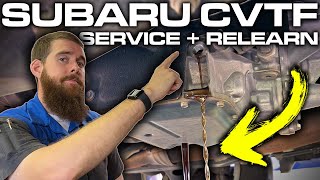
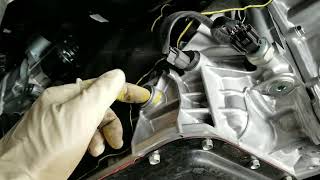


Technical Specifications
OEM Part Numbers: 31000AJ950
Transmission Code: TR580GDJAB; Application: 2017-2023 Subaru Impreza; Engine: 2.0L naturally aspirated; Drivetrain: AWD; CVT Fluid Type: Genuine Subaru CVTF-II (Green); Front Differential Fluid Type: 75W-90 GL-5 Gear Oil; Weight: ~268 lbs; Shipping Dimensions: ~48" x 24" x 24"
We Have This Part in Stock


The information in this article is provided for general reference and educational purposes only. Vehicle specifications, procedures, and part compatibility can vary by production date, trim level, and region. Always consult your vehicle's factory service manual and verify part numbers before purchasing or performing repairs. Safety-critical components such as airbags, seat belts, and braking systems should be installed by a qualified professional.
- Subaru Impreza:
- 🎬 Helpful Videos
- 🛍️ Shop This Part
- Is My Transmission Failing? Common Symptoms
- Part Identification: Confirming You Have the TR580
- Vehicle ID Plate
- Transmission Housing Tag
- Diagnostic Flowchart
- Known Problems, Recalls, and Technical Service Bulletins (TSBs)
- Replacement Cost
- What Fails at Every Mileage Band
- Under 60,000 Miles
- 60,000 - 100,000 Miles
- 100,000 - 150,000 Miles
- Over 150,000 Miles
- Real Owner Experiences
- Repair or Replace?
- When Repair Makes Sense
- When Replacement is Smarter
- Questions to Ask Your Installer
- Essential Information for Installation
- Torque Converter Seating
- Required Parts and Fluids for Installation
- Freight & Delivery Reality
- Frequently Asked Questions
- 🎟️ Get 5% Off