

2002-2005 Porsche 911 Carrera 4/4S Transmission: Problems, Identification, and Used Replacement
Identifying the A96.35 AWD transaxle, diagnosing conductor plate failures, and knowing when to swap in a used OEM unit.
- Before buying, verify you have the AWD-specific A96.35 transmission by checking the option code sticker or the stamped code on the case, as it is not interchangeable with other 911 models.
- Diagnose limp mode and shifting issues with a Porsche-specific scan tool; the cause is often a repairable conductor plate (P0715 code) or a leaking 13-pin connector, not a total mechanical failure.
- When installing a used transmission, it is mandatory to flush the cooler lines and replace the ATF, filter, pan gasket, 13-pin connector sleeve, and torque converter seal to prevent immediate damage.
- After installation, use a scan tool to reset the transmission's adaptive learning values to ensure smooth shifting with the replacement unit.
- Do not reuse the old torque converter, as it contains contaminated fluid and debris that will destroy the replacement transmission.
Identifying the Correct Transmission for Your 911

The automatic transmission in the 2002-2005 Porsche 911 Carrera 4 and Carrera 4S is a Mercedes-Benz 5G-Tronic, also known by its Porsche option code A96.35 and Mercedes designation 722.6 (or W5A580). This is a five-speed automatic transaxle—a single unit that combines the transmission and front differential for the All-Wheel Drive (AWD) system.
Vehicle Fitment
This specific transmission assembly is for the following models only:
- 2002-2005 Porsche 911 Carrera 4 (AWD)
- 2002-2005 Porsche 911 Carrera 4S (AWD)
How to Confirm Your Vehicle's Transmission
Before purchasing a replacement, you must verify that your car is equipped with this exact unit. There are two primary ways to do this:
- Check the Vehicle Option Code: Look for a white paper sticker under the front hood (frunk) or in your original maintenance booklet. This sticker lists all the option codes for your car. You should see the code A96.35 listed.
- Check the Stamped Code on the Case: On the transmission itself, there is a raised metal boss on the left (driver's) side, just above the oil pan rail. A code is stamped here that should begin with A9635.
Warning: Not all 996-generation 911 transmissions are the same. This unit is NOT interchangeable with transmissions from other 911 models. Ordering the wrong one is a common and costly mistake.
| Model | Reason for Incompatibility |
|---|---|
| Rear-Wheel Drive (RWD) Carrera 2 | Uses a different transmission (A96.10). |
| 911 Turbo | Uses a stronger transmission (A96.50). |
| 1999-2001 996.1 AWD models | Used a different transmission made by ZF (A96.30 / 5HP19). |
| Mercedes or Chrysler vehicles | Different bellhousings, tailhousings, and internal calibrations. |
Common Failure Symptoms
When this transmission begins to fail, you may experience a range of symptoms. However, not all of these symptoms require a full transmission replacement.
- "Limp Mode": The transmission gets stuck in a single gear (usually 2nd or 4th) to protect itself from further damage.
- Harsh or Erratic Shifting: You may feel banging, slipping, or hesitation between gears.
- Delayed Gear Engagement: A noticeable pause when shifting from Park into Drive or Reverse.
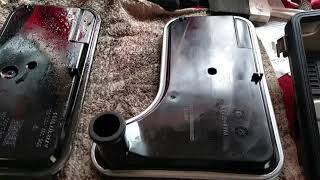
- Fluid Leaks: Reddish automatic transmission fluid (ATF) pooling under the car, often near the center. 🎬 Watch: Step-by-step Tiptronic fluid change guide
- Warning Lights: A "Tiptronic Emergency Run" message or Check Engine Light may appear on the dash.
Diagnosing the Root Cause
Many common issues with this transmission mimic a complete failure but are much cheaper to fix. The conductor plate and 13-pin electrical connector are frequent culprits. Before condemning the entire unit, it is critical to have the fault codes read by a qualified technician using a Porsche-specific scan tool like a PIWIS or Durametric.
Pro Tip: Fault codes related to speed sensors (like P0715) or solenoid errors often point to a faulty conductor plate, not a catastrophic mechanical failure. This is a much less expensive repair.
Diagnostic Flowchart

Known Issues, Bulletins, and Recalls

This Mercedes-sourced transmission is generally robust, but it has several well-documented weak points. There are no open NHTSA safety recalls for the transmission in these vehicles.
| Issue / TSB | Description |
|---|---|
| Conductor Plate Failure | The most common issue. The electronic circuit board inside the transmission fails, leading to limp mode and speed sensor fault codes. Replacing it often resolves these issues. |
| 13-Pin Electrical Connector Leak | External connector O-rings degrade, causing fluid to leak and wick up the wiring harness into the Transmission Control Module (TCM), causing severe electrical problems. |
| Tiptronic Transmission Noises (TSB 6/02 - 3701) | Addresses torque converter lock-up issues causing noises or vibrations. The remedy involves resetting adaptation values or updating the TCU (part number 996.618.180.07 or newer). |
| Drive Plate Tightening Torque (TSB 3/02) | Affects 2002-2005 models. An updated torque specification for flexplate-to-torque-converter bolts was issued to prevent rattling or damage. |
| Tiptronic Will Not Up Shift (TSB 0201) | For 2002-2005 models, this addresses sensor reading or adaptation value issues that can prevent correct shifting. |
| Front Nose Cone / Pump Cover Gasket Leak | The gasket on the transmission's front cover can develop a severe leak, often mistaken for a rear main seal leak. Requires Mercedes-Benz 722.6 parts. |
What Fails at Every Mileage Band
Pro Tip: The mileage bands below describe the typical condition of USED REPLACEMENT units at that mileage. The checklists provided are things you must do WHILE INSTALLING the purchased transmission, not maintenance for your current vehicle.
Under 60,000 Miles
While uncommon at this mileage, the two most cited electronic issues can appear at any time: the 13-pin electrical connector can leak fluid into the wiring harness, and the internal conductor plate can fail, causing the transmission to enter limp-home mode. A TSB (6/02 - 3701) was issued for Tiptronic transmission noises and torque converter lock-up issues, which could be remedied by a software update to the control unit.
- ✓Do during install (required): Replace the ATF, filter, and pan gasket.
- ✓Do during install (required): Replace the 13-pin electrical connector sleeve and O-rings. This is a very inexpensive part and the number one cause of fluid wicking into the harness, which can destroy the TCM.
- ✓Do during install (required): Replace the torque converter seal (front pump seal).
- ✓Do during install (required): Flush the transmission fluid cooler lines to remove any potential debris from the old unit.
- ✓Do during install (recommended): Inspect and consider replacing the transmission mount, as a failed mount can cause other issues.
60,000 - 100,000 Miles
This is the most common mileage window for the conductor plate to fail, often indicated by speed sensor fault codes and the transmission going into limp mode. The 13-pin connector sleeve leak is also very common in this range if it has not been previously addressed. Slipping in specific gears may indicate internal wear, with one owner reporting slipping in 4th gear at 65k miles that required a rebuild. Case leaks between the main housing and the AWD transfer case section can occur due to loose case bolts.
- ✓Do during install (required): All items from the Under 60K band.
- ✓Do during install (recommended): Install a new conductor plate. Since the valve body must be dropped to replace this part, doing it while the transmission is out of the car is significantly easier.
- ✓Do during install (recommended): Inspect and consider replacing the 'guibo' flex-coupler for the front driveshaft.
- ✓Do during install (recommended): Inspect CV axles for torn boots or excessive play.
- ✓Cheap insurance while the engine is out: If the engine is also being removed, this is the prime opportunity to address the rear main seal (RMS) and IMS bearing on the engine, as well as the Air-Oil Separator (AOS).
100,000 - 150,000 Miles
Internal mechanical wear becomes more of a consideration. If fluid changes have been neglected, clutch packs can begin to slip, leading to hesitation or harsh shifts. Conductor plate and connector leaks remain a common failure point if not previously replaced. One owner reported a shifting issue at 120k miles where the transmission would not shift into 5th gear automatically but could be shifted manually, pointing to a potential electronic issue rather than mechanical failure.
- ✓Do during install (required): All items from the previous bands (conductor plate, connector, seals, filter, fluid).
- ✓Do during install (recommended): At this mileage, if the unit's history is unknown, a full rebuild or replacement with a lower-mileage or rebuilt unit is a serious consideration over simply installing a used unit as-is.
- ✓Do during install (recommended): Thoroughly inspect all ancillary components like the flexplate, transmission mounts, and driveshaft couplers for wear.
Over 150,000 Miles
General internal wear is the primary concern. While the core mechanicals are robust, clutch packs and seals are finite-life items. A rebuild is often more likely than a simple repair at this stage if significant slipping or shifting problems occur. Even at very high mileage, failures are often electronic. One owner of a 996 Turbo reported going into limp mode on a racetrack at 180k miles, suspecting a conductor plate failure.
- ✓Do during install (required): Assume a rebuild is necessary for a used unit in this mileage band unless there is impeccable, documented service history. A simple 'swap' is very high risk.
- ✓Do during install (required): All items from the previous bands apply.
- ✓Do during install (recommended): Budget for a replacement torque converter, as its internal lock-up clutch will have significant wear.
Real Owner Experiences
| Source | Mileage | What Happened | Cost |
|---|---|---|---|
| NHTSA Complaint / Mercedes Medic | 32,000-50,000 | Owners reported electronic failures (conductor plate) at relatively low mileages. | N/A |
| Rennlist Forums | 65,000 | Owner reported slipping in 4th gear. A fluid service did not fix the issue, and a transmission shop quoted a rebuild. | $450 for the unsuccessful fluid service; quoted ~$6,000 for a rebuild. |
| 67,000 | Owner inquired about changing fluid that was last replaced 4 years and 9,000 miles prior, indicating a proactive maintenance mindset. | N/A | |
| Pelican Parts Forums | 120,000 | Transmission would intermittently fail to upshift from 4th to 5th gear in automatic mode. No fault codes were present. Could be shifted manually. | N/A (owner was self-diagnosing) |
| MBClub UK Forums | 120,000 | Owner noted it still drove like new but was advised by their mechanic to shorten fluid service intervals to 20-25k miles to maintain health. | N/A (preventative maintenance) |
| Rennlist Forums | 180,000 | A 996 Turbo with a 722.6 transmission went into limp mode on track, suspected to be a conductor plate (speed sensor) failure. | $150 for the MB part (vs $700+ for Porsche-branded). |
| Bring a Trailer / Quora | 590,000+ | A 2002 Porsche 911 Turbo with a Tiptronic transmission was documented with nearly 600,000 miles on what was believed to be the original, unopened transmission. | N/A |
| Rennlist Forums | Unknown | 2002 C2 owner was considering a used unit versus a rebuild after noticing slipping in 4th gear. | ~$6,000 for a full rebuild quote. |
| Rennlist Forums | 100,000 | As part of a larger service after purchase, the owner had the Tiptronic fluid and filter changed at a dealer. | $7,000 (for a large list of services including the transmission). |
| Rennlist Forums | Unknown | Owner opted for an independent shop to perform a Tiptronic service (fluid, filter, gasket). | ~$400 for indy service (dealer quoted $830). |
Repair or Replace?
Deciding whether to repair your existing transmission or replace it with a used unit comes down to the specific failure mode and the cost of labor.
When Repair Makes Sense
- Conductor Plate Failure ($600 - $1,500): When the transmission is in limp mode or throwing speed sensor codes (e.g., P0715) but is otherwise mechanically sound. The part itself is relatively inexpensive (~$150 for the OEM Mercedes part, while the identical Porsche part is $700+) and can be replaced by dropping the valve body without removing the transmission.
- 13-Pin Electrical Connector Plug Leak ($100 - $300): This should be repaired immediately upon detection of a fluid leak at the connector to prevent fluid from wicking up the harness and destroying the expensive TCM. The part is very cheap (~$15-$25) and labor is minimal.
- Valve Body Issues ($1,500 - $3,000+): For specific shifting issues diagnosed to be internal to the valve body. A new valve body from Mercedes can be around $900.
When Replacement is Smarter
Replacement with a used or remanufactured unit is more economical when there is evidence of major mechanical failure, such as burnt clutch packs (indicated by dark, burnt-smelling fluid with debris), catastrophic gear failure, or damage to the transmission case. If a shop quotes a full rebuild at over $6,000, a quality used unit becomes a highly viable option.
| Part / Service | Estimated Cost Range (USD) |
|---|---|
| Used OEM Assembly | $675 - $2,000 |
| Remanufactured Assembly | $4,700 - $12,700 |
| New OEM Assembly (Dealer) | ~$26,500+ |
| Installation Labor (8-12 hours) | $1,350 - $2,500 |
Questions to Ask Your Installer
- Will you be flushing the transmission cooler and lines completely before installing the replacement unit?
- Are you replacing the 13-pin connector sleeve and torque converter seal as part of the job?
- How do you verify the torque converter is fully seated before mating the transmission to the engine?
- What specific ATF will you be using, and does it meet MB 236.10, 236.12, or 236.14 specifications?
- How will you perform the fluid level check (e.g., at what temperature, with the engine running)?
- Do you have a Porsche-specific scan tool (like PIWIS or Durametric) to check for codes and reset adaptations after installation?
- Have you confirmed this is the correct A96.35 AWD unit and not a RWD or Turbo model transmission?
Installation: Critical Steps & Common Mistakes

Proper installation is essential for the longevity of a replacement transmission. This is considered an expert-level job requiring special tools, including an engine/transmission support jack or table, a Porsche-specific scan tool, a Mercedes-Benz 722.6 transmission dipstick tool, an infrared thermometer, and a fluid pump.
Required Parts & Fluids for Installation
Always install the following new parts with a replacement transmission:
- Transmission Fluid: Must meet MB 236.10, 236.12, or 236.14 specifications (e.g., Pentosin ATF 1, Fuchs Titan 3353, Shell 3403-M115, Shell ATF 134, Porsche PN 999.917.547.00).
- Filter & Pan Gasket Kit: Specific to the Mercedes 722.6.
- 13-Pin Connector Sleeve: This is a mandatory replacement to prevent future leaks.
- Torque Converter Seal (Front Pump Seal).
- Front Differential Gear Oil: SAE 75W-90 GL-5 (approx. 0.8 to 1.2 liters).
- Axle Seals / Output Flange Seals.
Key Installation Steps
- Flush the Cooler: The external transmission fluid cooler and lines must be flushed to remove metal debris and contaminated fluid from the previous failed unit. Skipping this step will cause immediate damage to the replacement transmission.
- Seat the Torque Converter: The torque converter must be carefully installed onto the transmission's input shaft. You should feel it drop into place in three distinct steps or "clicks." Failure to fully seat it will destroy the internal oil pump when the engine and transmission are bolted together.
- Install the 13-Pin Connector: The new connector sleeve must be installed carefully. Do not overtighten the small 7mm center bolt, as it can easily strip the brass insert inside the new conductor plate. The torque spec is only 2.5 Nm (22 in-lbs).
- Perform the Fluid Fill Procedure: The fluid level must be checked at a specific temperature (usually 45°C to 80°C, depending on the procedure) with the engine running and the transmission in Park. This requires a special dipstick tool, as there is no factory-installed dipstick.
- AWD Viscous Coupler Alignment: Ensure the front output shaft to the front differential is properly aligned and the viscous coupler is handled carefully.
Programming & Calibration
While the Transmission Control Module (TCM) does not need to be reprogrammed if you are reusing the original one, it is highly recommended to use a Porsche-specific scan tool to reset all shift adaptation values (TCM Adaptive Relearn). This forces the computer to relearn the shift points and clutch pressures for the replacement unit, ensuring smooth operation.
Freight & Delivery Reality

If you are ordering a used A96.35 transmission online, it will not arrive in a standard cardboard box. This is a heavy, bulky assembly.
- Weight and Dimensions: The transmission assembly weighs approximately 202 lbs and measures roughly 41" x 26" x 25" before crating.
- Shipping Method: It ships as LTL (Less-Than-Truckload) freight on a pallet.
- Delivery Requirements: You will need a delivery location capable of handling freight. If delivering to a residential address or a shop without a loading dock or forklift, you must request a liftgate service.
- Inspection: Always inspect the transmission thoroughly before signing the delivery receipt. Check for any damage to the case, oil pan, or tailhousing that may have occurred during transit.
Frequently Asked Questions (FAQ)
Is this the same transmission as in a Mercedes E-Class?
It belongs to the same 722.6 family, but it is not a direct swap. The Porsche version has a unique case, bellhousing, and tailhousing to accommodate the rear-engine, all-wheel-drive layout. The internal software calibration is also specific to Porsche.
Can I reuse my old torque converter?
No. The torque converter holds contaminated fluid and metallic debris from the failed transmission. Reusing it will immediately circulate that debris through your replacement unit, causing it to fail quickly. A used transmission should always include its matching torque converter.
Do I need to program the replacement transmission?
No, you do not need to program the transmission itself if you reuse your car's original control module (TCM). However, you absolutely must use a scan tool to clear old fault codes and, most importantly, reset the transmission's adaptive learning values. This ensures the best possible shift quality.
What happens if I use the wrong transmission fluid?
Using generic or incorrect ATF can cause poor shifting, overheating, and premature clutch failure. You must use a fluid that explicitly meets the Mercedes-Benz 236.10, 236.12, or 236.14 specification.
What is included with a used transmission assembly?
A standard used assembly includes the transmission case, all internally lubricated parts, the extension/tail housing (including the AWD viscous coupler), the oil pan, the torque converter, and the internal conductor plate speed sensors. It does NOT include external sensors, the external wiring harness, the TCU/TCM, shifter assembly, flexplate, or external fluid cooler lines.
Helpful Videos
Technical Specifications
OEM Part Numbers: A96.35 A9635 722.6 W5A580 996.618.180.07
Type: Five-speed automatic transaxle; Manufacturer: Mercedes-Benz; Model Name: 5G-Tronic; Drivetrain: All-Wheel Drive (AWD); Weight: Approx. 202 lbs; Dimensions: Approx. 41" x 26" x 25"; ATF Specification: MB 236.10, 236.12, or 236.14; Front Differential Oil: SAE 75W-90 GL-5
We Have This Part in Stock


The information in this article is provided for general reference and educational purposes only. Vehicle specifications, procedures, and part compatibility can vary by production date, trim level, and region. Always consult your vehicle's factory service manual and verify part numbers before purchasing or performing repairs. Safety-critical components such as airbags, seat belts, and braking systems should be installed by a qualified professional.
- Porsche 911:
- 🎬 Helpful Videos
- 🛍️ Shop This Part
- Identifying the Correct Transmission for Your 911
- Vehicle Fitment
- How to Confirm Your Vehicle's Transmission
- Common Failure Symptoms
- Diagnosing the Root Cause
- Diagnostic Flowchart
- Known Issues, Bulletins, and Recalls
- What Fails at Every Mileage Band
- Under 60,000 Miles
- 60,000 - 100,000 Miles
- 100,000 - 150,000 Miles
- Over 150,000 Miles
- Real Owner Experiences
- Repair or Replace?
- When Repair Makes Sense
- When Replacement is Smarter
- Questions to Ask Your Installer
- Installation: Critical Steps & Common Mistakes
- Required Parts & Fluids for Installation
- Key Installation Steps
- Programming & Calibration
- Freight & Delivery Reality
- Frequently Asked Questions (FAQ)
- 🎟️ Get 5% Off