

2012 Nissan Pathfinder 4.0L RE5R05A Transmission: Problems, Identification, and Used Replacement
Learn how to identify the correct Jatco RE5R05A variant for your 4x4, spot the signs of SMOD or solenoid failure, and know when a used OEM replacement is your smartest move.
- The most critical failure is coolant contamination (SMOD); always replace the radiator when replacing the transmission to prevent immediate failure of the new unit.
- Verify compatibility by checking the VIN (8th digit 'A', 10th digit 'C') and ensuring the vehicle is a 4x4 model with an 'AUTO' setting on the dash switch.
- Failures of the internal valve body and solenoids are common and may trigger codes P1757 or P1754; sometimes this can be repaired by replacing the control valve assembly without replacing the entire transmission.
- After installation, a professional scan tool must be used to perform an adaptive learning relearn procedure to ensure proper shift quality.
- Use only Genuine Nissan Matic S ATF or the acceptable alternative, Matic J, to avoid internal damage.
Is This the Right Transmission for Your 2012 Pathfinder?


The automatic transmission for the 2012 Nissan Pathfinder with the 4.0L V6 engine is a specific variant of the Jatco RE5R05A 5-speed automatic. To ensure you are ordering the correct part, you must verify three key details on your vehicle, as other versions of this transmission family are not compatible.
| Verification Step | Requirement | How to Check |
|---|---|---|
| Engine Confirmation | Must have the 4.0L V6 engine. | The 8th digit of your Vehicle Identification Number (VIN) must be 'A'. |
| Drivetrain Confirmation | Must be a 4x4 model with an "AUTO" position on the dashboard selector switch. | Units from 2WD models or 4x4 models without the "AUTO" setting have different tailhousings and will not fit. |
| Model Year Confirmation | Must be a 2012 model year. | The 10th digit of the VIN should be a 'C'. |
Pro Tip: You can physically identify the transmission by locating a metal tag or sticker on the right (passenger) side of the case, just above the oil pan. Look for part numbers such as 310209CA4C, 310C09CA4C, or the code 9CA4C (sometimes listed as JR507E) to confirm a match.
While other Nissan and Infiniti trucks and SUVs use the RE5R05A transmission, they are not interchangeable with this specific unit. Differences in bellhousing patterns, internal electronics, and output shafts make them incompatible.
Common Failure Symptoms
When the RE5R05A transmission begins to fail, you may experience one or more of the following symptoms:
- Delayed or Harsh Shifting: The vehicle may hesitate before engaging Drive or Reverse, or shifts between gears may feel abrupt and jerky.
- Slipping or Shuddering: You might feel the transmission slip out of gear, or a shuddering vibration while accelerating as clutches struggle to engage.
- Unusual Noises: Whining, humming, or clunking sounds from the transmission area can indicate internal wear or fluid problems.
- Check Engine Light: The malfunction indicator lamp may illuminate, often storing transmission-specific fault codes.
- Fluid Leaks: Puddles of red or brown transmission fluid under the vehicle are a clear sign of a problem.
- Pink or Milky Fluid: Finding a pink, milky substance in the radiator or on the transmission dipstick is a tell-tale sign of coolant contamination. 🎬 Watch: How to perform the SMOD bypass
Diagnostic Flowchart

Major Known Issues and Technical Service Bulletins (TSBs)
Coolant Contamination ("Strawberry Milkshake of Death")
The most notorious issue affecting this transmission family is coolant leaking into the transmission fluid through a failed internal cooler inside the radiator. This creates a contaminated, pinkish fluid often called the "Strawberry Milkshake of Death" (SMOD), which quickly destroys the transmission's internal clutches and electronics. While most prevalent in 2005-2010 models, caution is still warranted for the 2011-2012 model years.
Warning: If you are replacing the transmission due to SMOD, you MUST also replace the radiator and thoroughly flush the external cooler lines. Installing a replacement transmission without replacing the contaminated radiator will cause the new unit to fail almost immediately.
Solenoid and Valve Body Failures
This transmission can suffer from failures within its control valve assembly, which includes the solenoids and the Transmission Control Module (TCM). These issues often trigger diagnostic trouble codes like P1757 or P1754 and result in harsh shifting or the transmission entering a "failsafe" mode, where it gets stuck in a single gear. Nissan issued Technical Service Bulletins NTB10-003a (AT09-016a) and ITB10-006a, which provide a diagnostic flowchart for these codes, often leading to the replacement of the entire control valve assembly.
Related Engine Control Module (ECM) Update
If your vehicle's Check Engine Light is on with code P0101 (Mass Air Flow Sensor) but there are no other drivability issues, it may require a software update. Nissan released TSB NTB12-051j, which applies to the 2011-2012 Pathfinder 4.0L and calls for reprogramming the Engine Control Module (ECM) to correct this false code. This is not a transmission fault, but it is a relevant software update for the vehicle.
Replacement Cost Estimates
The cost to replace a 2012 Pathfinder transmission depends on the type of replacement unit you choose. Labor costs typically range from $900 to $1,500, based on an estimated 6 to 10 hours of shop time.
| Part Type | Estimated Cost (Part Only) | Notes |
|---|---|---|
| New OEM | Exceeds Reman Costs Significantly | Not commonly available through aftermarket channels; requires contacting a Nissan dealership directly. |
| Remanufactured OEM | $2,700 - $4,300 | A professionally rebuilt unit with corrections for common factory flaws. |
| Used OEM | $600 - $1,500 | A salvaged unit from a donor vehicle; price varies with mileage and condition. |
| Shop Labor | $900 - $1,500 | Installation cost can vary by shop rate and location. |
What's Included in a Used Assembly?
When purchasing a used transmission assembly, it's important to know what parts are typically included. Based on industry standards, here is what you should expect:
| What It Includes | What It Typically Excludes |
|---|---|
| The transmission case, all internally lubricated parts, the valve body with its internal solenoids and TCM, the torque converter, the transmission oil pan, and the extension/tail housing. | External sensors, wiring harnesses beyond the integral case connector, the shifter, shift linkage, shift cables, the flexplate/flywheel, and external transmission cooler lines. These parts are meant to be transferred from your original transmission or replaced new. |
What Fails at Every Mileage Band
Pro Tip: The mileage bands below describe used replacement units of that mileage. The checklists are things to do WHILE INSTALLING the purchased engine or transmission, not maintenance for your current vehicle.
Under 60,000 Miles
Significant mechanical failures are uncommon in this mileage range and are more likely attributable to manufacturing defects than wear. Solenoid or valve body electronic faults can occur at any mileage but are not prevalent here.
- ✓Do during install (required): Replace the radiator to prevent any future possibility of coolant contamination (SMOD), even though the 2012 model year is less prone to this issue.
- ✓Do during install (required): Replace the internal transmission filter screen (OEM part number 31728-97X00) and oil pan gasket.
- ✓Do during install (required): Replace the front pump seal (torque converter input seal) and tail housing output seal.
- ✓Do during install (required): Perform a complete transmission cooler flush using a professional-grade cleaning solution like Lubegard Kooler Kleen.
- ✓Do during install (required): Use new, torque-to-yield torque converter bolts.
60,000 - 100,000 Miles
Solenoid and valve body/TCM assembly failures begin to appear, causing harsh or erratic shifting, and diagnostic trouble codes (P1757, P1754). While the primary SMOD issue affected earlier models, radiator failure is still possible and becomes a greater risk in this range, leading to catastrophic transmission failure. Torque converter shudder or issues with lock-up can also begin to manifest.
- ✓Do during install (required): Replace the radiator with a new, quality unit. Do not reuse the old one under any circumstances.
- ✓Do during install (required): Replace the internal transmission filter and pan gasket.
- ✓Do during install (required): Replace the front pump seal, tail housing seal, and any other accessible external seals.
- ✓Do during install (required): Perform an aggressive cooler line flush.
- ✓Do during install (required): Use new torque converter bolts.
- ✓Do during install (recommended): Consider installing a remanufactured valve body/TCM assembly as a preventative measure if the budget allows, especially if the vehicle's history is unknown.
100,000 - 150,000 Miles
There is an increased prevalence of valve body and solenoid failures. Wear on internal components like clutch packs and sealing rings can lead to slipping or delayed shifts, particularly when hot. Torque converter failures (shudder, seal leaks, no lockup) become more common. Catastrophic SMOD (coolant contamination) can still occur.
- ✓Do during install (required): Replace the radiator, all external seals, internal filter, and pan gasket.
- ✓Do during install (required): A used transmission in this mileage range should be paired with a new or remanufactured torque converter.
- ✓Do during install (recommended): Proactively replace the entire valve body/TCM assembly with a remanufactured unit to address the high likelihood of solenoid and circuit wear.
- ✓Do during install (recommended): Inspect and replace the brake band if possible during a rebuild.
Over 150,000 Miles
This is considered high mileage, and the transmission is near the end of its expected service life without a rebuild. Failures of all types are common, including worn-out clutch packs, brake band issues, pump wear, and complete valve body failure. SMOD remains a risk for any unit still using an original radiator.
- ✓Do during install (required): A used transmission with this mileage is a significant risk and should be considered a core for rebuilding rather than a direct-install unit.
- ✓Do during install (required): If installing, a complete overhaul is recommended, including new friction clutches, steel plates, seals, a remanufactured valve body, and a new torque converter.
- ✓Do during install (required): At a minimum, follow all mandatory steps for the 100-150k mileage band, but acknowledge the high risk of internal mechanical failure.
Real Owner Experiences
| Source | Mileage | What Happened | Cost |
|---|---|---|---|
| General forum consensus | Under 60,000 | Owners generally report smooth operation. Issues that do arise are often covered under warranty and are not indicative of a widespread wear-related problem. | N/A |
| Reddit r/350z | 83,000 | Owner of a 2007 350z (which uses the same transmission family) reported issues with solenoids going out and a U1000 code causing the transmission to stop responding and overheat. | Varies; can range from a few hundred dollars for a single solenoid to over $1,000 for a remanufactured valve body assembly. |
| Reddit r/nissanpathfinder | 90,000 | Owner of a 2008 model asking about preventative measures to avoid SMOD, indicating this is the mileage where concern becomes significant. | Preventative radiator replacement is estimated around $600 for parts and labor. |
| Reddit r/XTerra | 110,000 | Owner's vehicle would not start due to a blown fuse related to the Transmission Control Module (TCM). The mechanic recommended a full transmission replacement. | $5,000 to $6,500 quoted. |
| CarKiller Forum | 140,000 | A user reported their neighbor's '08 Pathfinder had to have the transmission replaced twice by this mileage. | Likely $3,000-$5,000 per replacement including labor. |
| Reddit r/nissanpathfinder | 144,000 | An '09 Pathfinder experienced SMOD. Despite replacing the radiator and multiple flushes, shifting issues returned, indicating permanent damage to the transmission. | $4,500 paid for initial flushes/radiator, plus thousands more for eventual transmission replacement. |
| CarKiller Forum | 147,000 | Owner reports a shake at idle and in park, suspecting a torque converter issue. | Not specified, but torque converter replacement is a transmission-out job, costing over $1,000. |
| Reddit r/nissanpathfinder | 202,000 | Owner of a 2005 model with high mileage found signs of coolant contamination (SMOD) and was debating if a repair was worth it versus the transmission being at the end of its life. | Full replacement is the likely remedy, costing thousands. |
| PathfinderTalk.com forum | 204,000 | Owner experienced rumbling noise, dealer diagnosed SMOD and quoted for a new transmission and radiator. The vehicle was past the extended warranty period for the issue. | C$7,200 quoted. |
| Reddit r/nissanpathfinder | Over 200,000 | A user asks if it's safe to assume SMOD won't happen after 200,000 miles, indicating that failures can and do happen even at very high mileage. | N/A |
Repair or Replace?
Deciding whether to repair your current transmission or replace it entirely depends heavily on the type of failure you are experiencing.
When Repair Makes Sense
- Solenoid Circuit Failures (P1757 / P1754): This repair is viable when the transmission's internal mechanical parts (clutches, gears, torque converter) are in good condition and the failure is isolated to the electronic and hydraulic controls. A remanufactured valve body with an integrated TCM can be purchased for $250 to $800, with labor adding several hundred dollars (total typical repair cost: $500 - $1,500). This is significantly cheaper than a full replacement.
- Proactive Radiator Replacement (SMOD Prevention): If your vehicle still has the original radiator, replacing it proactively is the single most important repair to prevent catastrophic SMOD failure. A new radiator costs around $300, with labor adding another $300 to $500 (total typical repair cost: $500 - $800).
When Replacement is Smarter
Replacement is the mandatory and most sensible option after the "Strawberry Milkshake of Death" (SMOD) has occurred. Once coolant has circulated through the transmission, it contaminates clutch materials and damages electronic components beyond reliable repair. Attempts to save a contaminated transmission with fluid flushes often fail, leading to more expense later. Additionally, if a diagnosis reveals multiple failed internal hard parts (e.g., burnt clutches, damaged gearsets), the cost of a full rebuild will likely meet or exceed the price of a warrantied, remanufactured unit.
Questions to Ask Your Installer
- Given the history of SMOD, will you be replacing the radiator and performing a hot flush of the cooler lines as part of the job? Is this included in the quote?
- What is the source of the replacement transmission (used, remanufactured)?
- What is the mileage on the used unit and what is its history?
- What is the warranty on the replacement transmission itself (parts) and on your installation labor?
- Does the warranty for the replacement transmission require that the radiator be replaced at the same time?
- Will you be using Genuine Nissan Matic S ATF or a certified equivalent?
- Will you perform the TCM adaptive relearn procedure with a professional scan tool after installation to ensure proper shifting?
- Can you confirm the replacement unit is from a 2012 Pathfinder with a 4.0L engine and a 4x4 system that has the 'AUTO' mode on the switch?
Freight and Delivery Reality

If you are ordering a used RE5R05A transmission online, be prepared for how it will arrive. This is a heavy, bulky industrial component, not a standard parcel.
- Weight and Dimensions: The bare transmission assembly weighs approximately 204 lbs and measures roughly 41" x 26" x 25" before being crated or palletized.
- Shipping Method: It will ship via Less-Than-Truckload (LTL) freight on a wooden pallet. It will arrive on a large semi-truck.
- Delivery Requirements: Because of the weight, you or your shop will need a forklift or a truck equipped with a liftgate to lower the pallet to the ground safely.
- Inspection: Always inspect the transmission for physical damage (like cracked bellhousings or broken electrical connectors) before signing the driver's delivery receipt.
Installation Gotchas and Buyer Mistakes

Installing this transmission requires advanced DIY skills or a professional mechanic. Avoid these common pitfalls:
Warning: Ensure the torque converter is fully seated into the transmission front pump. You must feel three distinct clicks or drops before bolting it to the engine. Failing to do this will crack the front pump gear upon startup.
- Bellhousing Dowel Alignment: Ensure alignment dowel pins on the engine block are clean and properly aligned. Never use the bellhousing bolts to force the transmission and engine together.
- Fluid Level Check Procedure: Check the fluid level using the dipstick while the engine is idling at normal operating temperature (122°F to 176°F) on level ground.
- Under-filling: A common mistake is under-filling the transmission by only adding standard drain-and-fill quantities instead of the full dry capacity required for a replacement unit.
- Reusing TTY Bolts: Never reuse stretched torque-to-yield torque converter bolts. Always buy new ones.
Warning: Failing to reset the adaptive learning parameters before driving can lead to harsh shifting or the transmission entering limp mode. This requires a professional scan tool.
Frequently Asked Questions
Is the Transmission Control Module (TCM) internal or external?
The TCM for the RE5R05A transmission in this vehicle is located inside the transmission oil pan, mounted directly to the valve body. It is serviced as part of the complete control valve assembly.
Does this transmission need to be programmed?
While this transmission does not require VIN-specific programming, a professional scan tool (like Nissan CONSULT-III Plus) is highly recommended to clear old codes and perform an "adaptive learning relearn" procedure. Failing to do this can result in poor shift quality after installation.
What transmission fluid should I use?
The required fluid is Genuine Nissan Matic S ATF. Matic J is an acceptable alternative if Matic S is not available, as Matic S is the approved replacement for Matic J applications. Do not use universal or other types of fluid, as this can cause severe internal damage.
What is SMOD and how do I prevent it?
SMOD stands for "Strawberry Milkshake of Death." It happens when the internal transmission cooler inside the vehicle's radiator ruptures, mixing engine coolant with transmission fluid. The resulting pink, milky fluid destroys the transmission. Prevent it by proactively replacing the radiator with a new unit.
How do I verify I am buying the right transmission for my 2012 Pathfinder?
Check your VIN: the 8th digit must be 'A' (4.0L V6) and the 10th digit must be 'C' (2012 model year). Additionally, confirm your dashboard 4WD selector knob has an "AUTO" position. Finally, look for the metal tag on the transmission case matching part numbers 310209CA4C, 310C09CA4C, or 9CA4C.
Helpful Videos
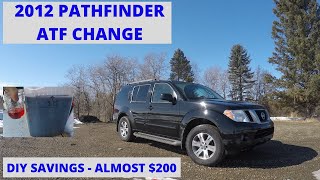
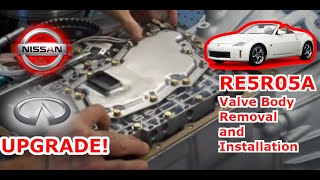
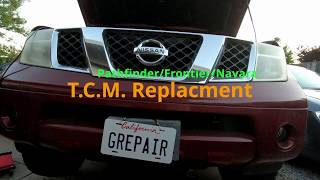
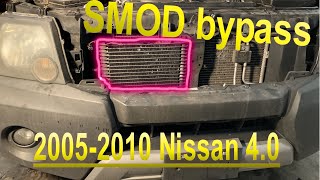
Technical Specifications
OEM Part Numbers: 310209CA4C 310C09CA4C 9CA4C
Model Name: Jatco RE5R05A; Alternate Code: JR507E; Type: 5-speed automatic; Engine Compatibility: 4.0L V6 (VIN 8th digit 'A'); Drivetrain: 4x4 with 'AUTO' mode; Model Year: 2012 (VIN 10th digit 'C'); Weight: Approx. 204 lbs; Fluid Type: Genuine Nissan Matic S ATF (or Matic J)
We Have This Part in Stock


The information in this article is provided for general reference and educational purposes only. Vehicle specifications, procedures, and part compatibility can vary by production date, trim level, and region. Always consult your vehicle's factory service manual and verify part numbers before purchasing or performing repairs. Safety-critical components such as airbags, seat belts, and braking systems should be installed by a qualified professional.
- Nissan Pathfinder:
- 🎬 Helpful Videos
- 🛍️ Shop This Part
- Is This the Right Transmission for Your 2012 Pathfinder?
- Common Failure Symptoms
- Diagnostic Flowchart
- Major Known Issues and Technical Service Bulletins (TSBs)
- Coolant Contamination ("Strawberry Milkshake of Death")
- Solenoid and Valve Body Failures
- Related Engine Control Module (ECM) Update
- Replacement Cost Estimates
- What's Included in a Used Assembly?
- What Fails at Every Mileage Band
- Under 60,000 Miles
- 60,000 - 100,000 Miles
- 100,000 - 150,000 Miles
- Over 150,000 Miles
- Real Owner Experiences
- Repair or Replace?
- When Repair Makes Sense
- When Replacement is Smarter
- Questions to Ask Your Installer
- Freight and Delivery Reality
- Installation Gotchas and Buyer Mistakes
- Frequently Asked Questions
- 🎟️ Get 5% Off