

2014-2016 Mercedes-Benz E250 7G-Tronic Transmission: Problems, Identification, and Used Replacement
Identify the 722.965 unit, learn what kills the conductor plate and transfer case, and know exactly what to check before buying a used OEM assembly.
- A used replacement transmission is NOT plug-and-play; the internal control module (conductor plate) is VIN-locked and requires either swapping your original module or professional electronic programming (SCN coding).
- You must verify the exact part number (A2122706209) and transmission code (722.965), as this diesel 4MATIC unit is not interchangeable with transmissions from gasoline E350 models.
- The most common failure is the electronic conductor plate, which often triggers limp mode and can be repaired for $300-$600, a much more economical option than replacing the entire transmission.
- Servicing this transmission requires specific MB 236.15 (Blue) fluid and new, one-time-use aluminum pan bolts to prevent leaks and damage.
- On 4MATIC models, listen for whining or growling noises, which indicate severe transfer case bearing wear, a common and costly mechanical failure.
Part Identification: Is This the Right Transmission for Your E250?


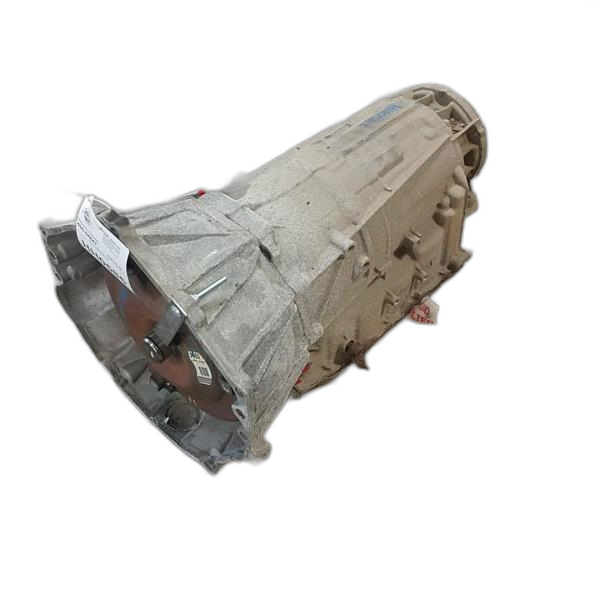
The automatic transmission in the 2014-2016 Mercedes-Benz E250 is a specific variant of the 7-speed 7G-Tronic Plus family, which is known by the gearbox code 722.9. These E250 models use a 2.1L 4-cylinder diesel engine (engine code OM651). The transmission assembly for the All-Wheel Drive (4MATIC) version is identified by the specific transmission code 722.965 and the Mercedes-Benz part number A2122706209.
| Specification | Identifier |
|---|---|
| Transmission Family | 7G-Tronic Plus |
| Gearbox Code | 722.9 |
| Specific Transmission Code | 722.965 |
| Mercedes-Benz Part Number | A2122706209 |
| Engine Compatibility | 2.1L 4-cylinder diesel (OM651) |
| Drivetrain | All-Wheel Drive (4MATIC) |
Warning: A common and costly mistake is confusing this diesel transmission with a similar unit from a gasoline-powered E350. The E350 uses a different transmission code (e.g., 722.960, part number A2122705309) designed for a 3.5L gas engine (M276). Due to differences in the bellhousing (the part that bolts to the engine), torque converter, and internal gear ratios, they are not interchangeable. Always confirm the part number and transmission code before purchase.
How to Confirm Your Vehicle's Transmission
To ensure you are ordering the correct part, verify the following information from your vehicle during a pre-purchase verification interview:
- Engine Type: Confirm you have the 2.1L 4-cylinder diesel engine (OM651) and not the 3.5L V6 gasoline engine (M276).
- Drivetrain: This specific unit is for All-Wheel Drive (4MATIC) models. Buying an AWD version for a RWD vehicle (or vice-versa) is a common buyer mistake.
- Transmission Code & Part Number: The transmission model (722.965) and a 14-digit serial number are stamped on the driver's side of the transmission housing, just above the oil pan rail near the middle of the case. The full manufacturer part number (A2122706209) is often printed on a barcode label on the housing.
What's Included in a Used Assembly?
A used transmission assembly from a recycler typically includes the main components needed for a swap. This includes the transmission case, all internal lubricated parts, the integrated 4MATIC transfer case (which is built into the rear of the housing and shares the same fluid), the transmission oil pan, the torque converter, and the internal valve body with its electronic mechatronic conductor plate (Transmission Control Module / TCM).
It does not typically include external sensors and wiring harnesses beyond what is integral to the unit, the shifter assembly, linkage or gear selector cables, the engine flexplate/flywheel, external transmission cooler lines, or the transmission cooler itself.
Common Failure Symptoms and Diagnosis

Many issues with the 7G-Tronic Plus transmission are electronic, not mechanical. Recognizing the symptoms can help you diagnose the problem accurately before replacing the entire unit.
Transmission-Related Symptoms
- Limp Mode: The vehicle gets stuck in one gear (often 2nd or 3rd) and will not shift.
- Harsh or Delayed Shifting: You may feel a sudden, jarring shift or a noticeable hesitation between gear changes.
- Slipping Gears: The engine revs higher, but the car doesn't accelerate accordingly, as if the gear isn't fully engaged.
- Unusual Noises: Loud whining or growling noises can point to wear in the integrated transfer case bearings on 4MATIC models. Grinding or clunking sounds may signal other internal damage.
- Visible Fluid Leaks: Red or brown fluid puddles under the car indicate a leak from a seal or gasket, which can lead to overheating and damage. Common leak points include the transmission pan gasket and electrical connector sleeve O-rings.
Confirming the Transmission is the Cause
The most common failure point is the electronic conductor plate inside the transmission. A professional diagnosis with a Mercedes-specific scan tool is essential. If the tool reads certain diagnostic trouble codes (DTCs), it strongly indicates a faulty conductor plate.
Common fault codes pointing to conductor plate failure include:
| DTCs | Description |
|---|---|
| 0717, 0718 | The signal from the turbine speed sensor (Y3/8n1) is not available or is defective. |
| 2767, 2768 | The signal from the internal speed sensor (Y3/8n2) is not available or is defective. |
Another internal speed sensor (Y3/8n3) can also fail, requiring the same repair.
Diagnostic Flowchart
Known Problems, Recalls, and Technical Service Bulletins (TSBs)
The 722.9 transmission family has several well-documented issues. No major safety recalls have been issued for this specific transmission in the 2014-2016 E250, but several TSBs address performance and reliability.
Conductor Plate / Speed Sensor Failure (Severe)
This is the most frequent and severe issue across all years (though pre-2008 units are more prone). The electronic speed sensors, which are part of the conductor plate (TCM), fail from heat and vibration. This prevents the transmission from knowing how fast its internal parts are spinning, leading to limp mode and error codes. The remedy is to replace the internal speed sensors or the entire conductor plate/TCM assembly.
Integrated Transfer Case Bearing Wear (Severe)
Exclusive to 4MATIC (AWD) models, the bearings in the integrated transfer case can wear out, causing a loud, persistent whining or growling noise that changes with vehicle speed. This is often due to a restrictive internal lubrication design. If not addressed, it can lead to catastrophic failure. You must monitor for noises and ensure proper fluid lubrication.
TSB LI27.00-P-051451 & LI27.00-P-059110 - Shift Quality Complaints (Moderate)
TSB LI27.00-P-051451 addresses various complaints of poor shift quality. It provides a diagnostic procedure for technicians to follow, which may involve cleaning fine metallic debris from the valve screens of the conductor plate, or updating the software calibration. Another TSB, LI27.00-P-059110, specifically notes uncomfortable cold upshifts on E-Class diesel models and references this procedure.
Solenoid O-Ring Deterioration (Moderate)
Rubber O-rings on the tips of the shift solenoids can deteriorate, causing internal fluid pressure leaks. This results in slipping or harsh gear engagements. The remedy is to replace the O-rings.
Torque Converter Shudder (Moderate)
A vibration or shudder felt during light acceleration can be caused by problems with the torque converter's lock-up clutch.
What Fails at Every Mileage Band
Pro Tip: The mileage bands below describe used replacement units of that mileage. The checklists are things to do WHILE INSTALLING the purchased engine, not maintenance for the reader's current engine.
Under 60,000 Miles
While less common at this mileage, early failures of the conductor plate/TCM can occur, presenting as harsh shifting, delayed engagement, or the vehicle entering limp mode. Shift quality complaints and harsh downshifts, sometimes intermittent, can be early signs of valve body or software calibration issues. For 4MATIC models, noise from the integrated transfer case can indicate premature bearing wear due to a design that can be prone to oil starvation. Fluid leaks from the transmission pan gasket or electrical connector sleeve are also possible.
- ✓Do during install (required): Verify the transmission fluid is the correct MB 236.15 (Blue) specification and that the level is correct.
- ✓Do during install (recommended): Perform a reset of the transmission's shift adaptations with a compatible scan tool to allow it to learn the new vehicle's driving style.
- ✓Cheap insurance while the engine is out: Even at low mileage, it is wise to replace the one-time-use aluminum pan bolts, filter, pan gasket, and electrical connector O-rings.
60,000 - 100,000 Miles
This is the most common mileage range for conductor plate (TCM) failure, leading to speed sensor fault codes and limp mode. Integrated transfer case bearing failure on 4MATIC models becomes more prevalent, causing a whining or grinding noise that requires extensive repair. Valve body and solenoid issues can cause harsh or erratic shifting, and torque converter shudder or lock-up clutch problems may appear, causing vibrations.
- ✓Do during install (required): Mandatory fluid and filter service with MB 236.15 (Blue) fluid. The recommended service interval is around every 60,000-70,000 miles.
- ✓Do during install (recommended): For 4MATIC units, carefully inspect the transfer case fluid for debris. Some suggest slightly elevating the front of the car during the fill process to ensure adequate fluid reaches the transfer case.
- ✓Cheap insurance while the engine is out: Preventative replacement of the conductor plate speed sensors or having the entire conductor plate rebuilt/serviced, plus replacing all consumable seals (pan gasket, electrical connector sleeve, torque converter seal).
100,000 - 150,000 Miles
If not previously replaced, the conductor plate is at very high risk of failure. Wear on internal components like clutch packs, solenoid O-rings, and valve body bores can lead to slipping, harsh shifts, or pressure loss. Transfer case bearing wear on 4MATIC models remains a significant risk. Engine and transmission mounts may be worn, exacerbating the feeling of jerky shifts.
- ✓Do during install (required): Assume all 'lifetime' components are at the end of their service life. A full fluid and filter service is critical.
- ✓Do during install (recommended): Strongly recommend rebuilding or replacing the conductor plate/TCM as a preventative measure while the transmission is out of the vehicle.
- ✓Cheap insurance while the engine is out: Replace all solenoid O-rings, the electrical connector sleeve, other accessible rubber seals, and the transmission mount.
Over 150,000 Miles
At this mileage, mechanical wear is the primary concern. Clutch packs may be worn, leading to slipping. Failures are often the result of deferred maintenance. A transmission that has gone this long without regular fluid services is at high risk of failure. Multiple components may fail in succession; a conductor plate failure could be followed by a mechanical issue due to contaminated fluid.
- ✓Do during install (required): A simple drain-and-fill might not be sufficient. Consider a professional flush if the fluid is extremely degraded, but be aware this can sometimes dislodge debris and cause new problems on a high-mileage, worn unit.
- ✓Do during install (recommended): If purchasing a unit with this mileage, factor in the cost of a potential rebuild in the near future.
- ✓Cheap insurance while the engine is out: Installing a used transmission without also replacing the conductor plate, torque converter, and all seals is a significant gamble.
Real Owner Experiences
| Source | Mileage | What Happened | Cost |
|---|---|---|---|
| MBClub.co.uk Forums | Not specified, but 2 months after purchase | A 2014 E250 CDI began holding 1st and 2nd gear for too long, followed by lumpy, thumping downshifts after a dealer 'relearn' procedure. The issues were intermittent. | N/A (Under dealer warranty) |
| Mercedes-Benz Owners' Forums | 37,000 | A low-mileage E350 CDI with the same 7G-Tronic transmission exhibited jerky shifting when coming to a stop and during kick-down acceleration, despite recent fluid service. | N/A |
| MBWorld.org Forums | Under 75,000 | A W204 C300 (which uses a similar 4MATIC 722.9) experienced a transfer case bearing failure. A mechanic noted this can be due to poor oil feed design. | N/A |
| MBWorld.org Forums | 80,000 | A conductor plate was rebuilt due to failure. It failed again another 80,000 miles later (at 160k total). | Dealer quote for replacement was $2,600; an independent shop quoted $1,500 for a rebuild. |
| r/mercedes_benz Reddit | 80,000 | A 2010 E350 4MATIC required a new transfer case due to bearing failure. Because the transfer case is internal to the transmission, the dealer quoted a full transmission replacement. | $8,000 (Dealer quote) |
| MBClub.co.uk Forums | 70,000 | A C63 with a 722.9 MCT transmission began slipping in all gears. The conductor plate was tested and found to have no faults, leading to suspicion of the internal wet clutch pack. | N/A (DIY repair in progress) |
| TopClassActions.com | 70,000 | A 2006 C280 went into limp mode, cited as a common problem with the 722.9 transmission. | N/A |
| Mercedes-Benz Owners' Forums | 128,000 | Owner of a 2007 W211 with a 7G-Tronic reported no problems, attributing longevity to changing the oil at specified intervals. | N/A |
| r/W212mercedes Reddit | 142,000 | A newly purchased E350 had a noticeable jerk from 3rd to 4th gear. A transmission and differential service, followed by a TCU reset, resolved the issue, resulting in smooth shifting. | N/A (Cost of fluid service) |
| MBWorld.org Forums | 110,000 | Owner noticed harder shifts. An independent shop performed a fluid and filter change, which returned the shifting to normal. | $300 |
| r/W212mercedes Reddit | 159,310 | An E350 with a suspected original fluid was experiencing severe jerking on downshifts and sluggish shifts. Commenters noted it was a 'miracle' it was still functioning and that damage may already be done. | N/A |
| MBWorld.org Forums | 173,000 | An E350 4MATIC had harsh downshifts and a vibration suspected to be from the torque converter. The fluid was black like diesel oil. A fluid change surprisingly resolved the harsh shifting and vibration. | N/A (Cost of fluid service) |
| MBWorld.org Forums | 200,000 | After a conductor plate rebuild at 80k miles and another failure at 160k, the owner was quoted for a full valve body replacement at 200k miles. | $2,600 (Dealer quote) |
| MBWorld.org Forums | Not Stated | Dealer replaced the conductor plate. | $1170.00 |
| MBWorld.org Forums | Not Stated | Dealer replacement of valve body and conductor plate due to 0717 code. | $2033 ($1313 parts + $720 labor) |
| PeachParts Mercedes-Benz Forum | Not Stated | Dealer replacement of conductor plate, which requires SCN coding. | $2,500 to $3,500 |
Repair or Replace?
Deciding whether to repair your existing transmission or replace it with a used unit depends on the exact failure mode.
- Conductor Plate / TCM Failure: If the fault codes are specific to speed sensors (e.g., 0717, 0718, 2767, 2768), repairing the original conductor plate is almost always the most economical option. A mail-in repair service typically costs $300 - $600. This avoids the need for expensive SCN coding/virginization required with a replacement unit.
- Fluid Leaks: For external leaks (pan gasket, connector sleeve) where the transmission is otherwise functioning correctly, repair makes sense. The parts are inexpensive, and the typical repair cost is $200 - $500.
- Harsh Shifting / Shudder: If the issue is caused by dirty fluid, failing solenoids, or deteriorated O-rings, a comprehensive transmission service with a pan drop, filter change, and possible solenoid replacement can resolve these issues for $400 - $1,200 without needing a full unit.
When Replacement is Smarter: Replacement becomes necessary when there is catastrophic internal mechanical damage, such as a cracked front pump from improper torque converter installation, severe gearset or bearing failure, or a damaged transmission case. If the cost of diagnosing and repairing multiple complex issues approaches the cost of a quality used or remanufactured unit, replacement is a more reliable long-term solution. Used units typically run $800 - $2,500, while remanufactured units range from $2,200 - $3,500.
Replacement Cost Estimates
The cost to replace a 722.965 transmission varies based on the type of part used. Labor costs are also significant due to the complexity of the job.
| Item | Estimated Cost (USD) |
|---|---|
| New OEM | $3,000 - $6,500+ (Part only) |
| Remanufactured OEM | $3,400 - $4,500 (Part only) |
| Used OEM | $1,500 - $2,500 (Part only) |
| Installation Labor | $900 - $2,000 (6 to 12 hours) |
Installation and Programming: Critical Steps

DIY Difficulty and Special Tools
Replacing this transmission is an Advanced / Expert level job. It requires a vehicle lift, specialized tools, and deep mechanical knowledge. Special tools required include:
- OBD-II diagnostic scanner with Mercedes-Benz SCN coding capabilities (Xentry, Autel MaxiSYS, or equivalent)
- Mercedes-Benz Transmission Fill Adapter (CTA-7415, Assenmacher ATF129, or equivalent)
- Fluid transfer pump
- External Torx (E-Torx) sockets (E10, E12, E14) and standard Torx bits
- Accurate low inch-pound torque wrench
- Infrared thermometer or scan tool to monitor fluid temperature
Warning: Mandatory Electronic Programming Required. This transmission is NOT plug-and-play. The conductor plate (TCM) inside is a Theft Relevant Part (TRP) that is electronically locked to the donor car's Vehicle Identification Number (VIN). Installing a used transmission without addressing this will result in the car not starting or shifting. You have two options:
1. Swap Original Parts: If your original conductor plate is still functional, you must carefully transfer it and the valve body into the replacement transmission.
2. Virginize & Code: Have a specialized service electronically "virginize" (reset) the donor TCM. After installation, a shop with a dealer-level tool must perform online SCN (Software Calibration Number) coding to marry the new part to your car.
Installation "Gotchas" and Best Practices
- Torque Converter Seating: The torque converter must be carefully rotated until it drops into place in three distinct steps (must feel three distinct clicks/drops to ensure full engagement). Tightening bellhousing bolts on an unseated converter will crack the front pump and destroy the transmission.
- Fluid Type: This 7G-Tronic Plus transmission requires a specific low-friction fluid, Mercedes-Benz specification 236.15 (Blue fluid). Using the older red MB 236.14 ATF will cause damage.
- One-Time-Use Bolts: The 6 aluminum transmission pan bolts are torque-to-yield stretch bolts and are strictly one-time-use. Reusing them will cause them to snap or leak.
- Cooler Line Flush: It is mandatory to professionally flush the external transmission cooler and lines to clear out debris from the previous failure to prevent immediate contamination of the replacement unit.
- Integrated Transfer Case: Because it shares fluid with the main transmission, ensure fluid has fully circulated into the transfer case section before the final level check.
Pro Tip: The transmission fluid level must be checked from the bottom drain plug while fluid temperature is exactly between 45°C (113°F) and 48°C (118°F) with the engine running and vehicle level. This requires a special adapter and pump.
Questions to Ask Your Installer
- Do you have a Mercedes-Benz specific diagnostic tool (like Xentry/DAS) to perform SCN coding if a new or virginized conductor plate is used?
- Are you familiar with the mandatory SCN coding/virginization process for these 'Theft Relevant' transmission control modules?
- Will you be using the correct MB 236.15 (Blue) ATF and a new filter kit (with the correct green overflow pipe)?
- Will you be replacing the one-time-use aluminum pan bolts and the electrical connector sleeve O-rings?
- How do you confirm the torque converter is fully seated (the 'three-click' method) before bolting the transmission to the engine?
- Is a complete flush of the external transmission cooler and lines included in your process to prevent contamination?
- How will you verify the correct fluid level at the precise temperature of 45-48°C?
- If I source a used transmission, can you swap my original conductor plate/valve body into it to avoid the need for programming?
Freight & Delivery Reality

When ordering a used 722.965 transmission assembly, understand that it ships as LTL (Less Than Truckload) freight on a pallet—NOT as a standard parcel. Verified shipping data shows this assembly weighs approximately 220 lbs and measures roughly 32" x 20" x 20" before crating.
Warning: Because of its size and weight, delivery requires a liftgate or a forklift. It is critical that you inspect the transmission before signing the delivery receipt. Check for a cracked bellhousing, a crushed transmission oil pan, or broken electrical connectors, as these can easily happen during transit if the pallet is mishandled.
Frequently Asked Questions (FAQ)
Can I use a transmission from a gas-powered E350 in my diesel E250?
No. The transmissions have different part numbers, bellhousings, and internal gear ratios to match their specific engines and are not interchangeable. Ordering for a Ford E350 due to database cataloging errors is also a common mistake to avoid.
Do I have to program a used replacement transmission?
Yes, programming is mandatory. The transmission's control module (conductor plate) is a security part locked to the original car. It must be either swapped with your old one (if functional) or electronically reset and coded to your vehicle by a specialist.
What fluid does the 2014-2016 E250 4MATIC transmission use?
It requires the newer blue-colored fluid meeting Mercedes-Benz specification 236.15. Do not use older red ATF.
Can I reuse the transmission pan bolts?
No. They are one-time-use aluminum stretch bolts and must be replaced with a new set of 6 to prevent leaks and ensure proper torque.
How long does the 7G-Tronic Plus transmission last?
The service life is heavily dependent on maintenance. With regular fluid and filter changes every 60,000-70,000 miles, many units can exceed 200,000 miles. However, neglecting service can lead to major failures well before 100,000 miles. Some owners recommend servicing it as early as every 40,000 miles as cheap insurance.
What is the most common failure on the 722.9 transmission?
The most frequent issue is the failure of the electronic speed sensors on the conductor plate (TCM). This triggers diagnostic trouble codes like 0717, 0718, 2767, or 2768, and forces the vehicle into limp mode.
Helpful Videos
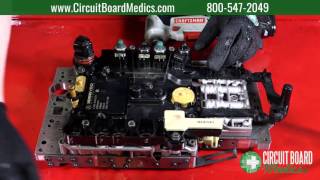
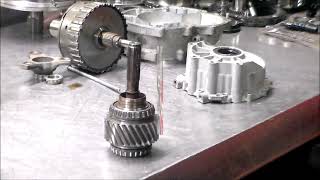
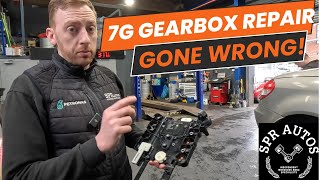
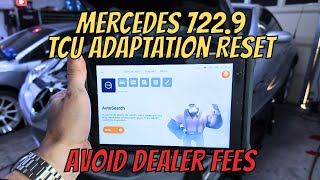
Technical Specifications
OEM Part Numbers: A2122706209
Model Family: 7G-Tronic Plus; Gearbox Code: 722.9; Specific Code: 722.965; Application: 2014-2016 Mercedes-Benz E250; Engine Compatibility: 2.1L 4-cylinder diesel (OM651); Drivetrain: All-Wheel Drive (4MATIC); Required Fluid: MB 236.15 (Blue); Weight: ~220 lbs
We Have This Part in Stock

The information in this article is provided for general reference and educational purposes only. Vehicle specifications, procedures, and part compatibility can vary by production date, trim level, and region. Always consult your vehicle's factory service manual and verify part numbers before purchasing or performing repairs. Safety-critical components such as airbags, seat belts, and braking systems should be installed by a qualified professional.
- Mercedes-Benz E250:
- 🎬 Helpful Videos
- 🛍️ Shop This Part
- Part Identification: Is This the Right Transmission for Your E250?
- How to Confirm Your Vehicle's Transmission
- What's Included in a Used Assembly?
- Common Failure Symptoms and Diagnosis
- Transmission-Related Symptoms
- Confirming the Transmission is the Cause
- Diagnostic Flowchart
- Known Problems, Recalls, and Technical Service Bulletins (TSBs)
- What Fails at Every Mileage Band
- Under 60,000 Miles
- 60,000 - 100,000 Miles
- 100,000 - 150,000 Miles
- Over 150,000 Miles
- Real Owner Experiences
- Repair or Replace?
- Replacement Cost Estimates
- Installation and Programming: Critical Steps
- DIY Difficulty and Special Tools
- Installation "Gotchas" and Best Practices
- Questions to Ask Your Installer
- Freight & Delivery Reality
- Frequently Asked Questions (FAQ)
- 🎟️ Get 5% Off