

2015-2016 Kia Soul 1.6L A6GF1 Transmission: Problems, Identification, and Used Replacement
Identify the correct 'NA' code A6GF1 transaxle, diagnose common solenoid and sensor failures, and learn exactly what to look for when buying a used replacement unit.
- Before purchasing, you must verify the transmission has an "NA" identification code and is from a 2015-2016 Kia Soul 1.6L, as other A6GF1 versions are incompatible.
- During installation, it is mandatory to flush the transmission cooler lines, use only Hyundai/Kia SP-IV fluid, and replace all external seals to prevent immediate failure of the replacement unit.
- After installation, a professional bidirectional scan tool is required to perform the "Resetting Auto T/A Values" and TCM relearn procedures; skipping this step will cause catastrophic damage.
- Before committing to a full replacement, investigate common repairable issues like faulty shift solenoids (TSB TRA 051) or a failed TFT sensor (TSB 14-AT-010), especially if the fluid is clean.
- When installing a used unit with over 60,000 miles, it is highly recommended to proactively replace the internal wiring harness (with TFT sensor) and all solenoids.
Identifying the Correct Transmission
The 2015-2016 Kia Soul with the 1.6L gasoline engine uses a specific version of the A6GF1 six-speed automatic transaxle. This is a conventional front-wheel-drive automatic transmission that uses a torque converter. It is crucial to ensure you are sourcing the correct unit, as versions from other Kia or Hyundai models will not work due to different calibrations, mounts, and gear ratios.
How to Confirm Fitment on Your Vehicle
Before purchasing a replacement, verify the following on your own vehicle:
- VIN Check: Confirm the 8th digit of your Vehicle Identification Number (VIN) is a "2", which designates the 1.6L gasoline engine for this model range.
- Production Date: Check the sticker on the driver's side door jamb. This specific transmission fits 2015 models built from September 1, 2014, onward, and all 2016 models.
- Identification Code: Locate the code etched on the top of the transmission case. It should begin with the letters "NA". This is a key identifier for this specific variant.
Warning: Do not use an A6GF1 transmission from another vehicle like a Kia Forte, Rio, or Hyundai Elantra. While the family name is the same, they have different internal gear ratios, torque converters, and electronic programming. Using the wrong version will result in immediate shifting problems and likely damage the unit.
Common Failure Symptoms

A failing A6GF1 transmission can present several symptoms. While some issues can be resolved with minor repairs, others indicate the need for a complete replacement. Look out for:
- Harsh, delayed, or erratic shifting.
- The vehicle entering "limp mode," where it gets stuck in a single gear (often 2nd or 3rd).
- A lit Check Engine Light with specific transmission-related Diagnostic Trouble Codes (DTCs).
- A noticeable burnt smell from the transmission fluid, indicating overheating.
- Shuddering or vibrations, especially during acceleration.
- The engine seems to rev up, but the car doesn't accelerate properly, a sign of slipping.
Diagnostic Flowchart
Known Issues, TSBs, and Recalls

This transmission has several well-documented issues that can often be repaired without replacing the entire unit. Always diagnose these potential faults before committing to a full replacement.
Shift Solenoid Electrical Faults
Symptoms: Harsh shifting and a Check Engine Light with codes P0743, P0748, P0753, P0758, P0763, P0768, P0773, P1778, or P2709.
Details: Technical Service Bulletin TRA 051 (Rev 1) addresses these issues, which are caused by faulty individual shift solenoids. The bulletin advises technicians to replace only the specific failed solenoid rather than the entire transmission assembly. This repair can be performed with the transmission still in the vehicle.
Torque Converter Clutch (TCC) Solenoid Failure
Symptoms: A Check Engine Light with code P0741 (Torque Converter Clutch Circuit Performance or Stuck Off). This can also cause a decrease in fuel economy and engine RPMs that don't drop at cruising speeds.
Details: This code is triggered when the vehicle's computer detects that the torque converter is not locking up as it should, leading to a rotational speed difference of over 200 RPM between the torque converter and the transmission's input shaft. The cause is often a faulty TCC solenoid, also known as the damper clutch (DC) solenoid. TSB TRA 051 also provides information for replacing this specific solenoid to resolve the P0741 code.
Transmission Fluid Temperature Sensor Failure
Symptoms: A Check Engine Light with codes P0711, P0712, or P0713. This can lead to harsh shifts as the transmission control module defaults to a fixed temperature value (176°F) to calculate shift pressures.
Details: TSB 14-AT-010 was issued for this problem. The cause is a faulty transmission fluid temperature (TFT) sensor. The recommended fix is to replace the internal wiring harness, which has an updated, integrated one-piece sensor. This repair can be done without removing the transmission by accessing the valve body through the front plastic side cover.
Pro Tip: There are no major safety recalls for this specific transmission assembly in the 2015-2016 Soul. The known problems are covered by Technical Service Bulletins (TSBs), which are repair recommendations for technicians, not mandatory recalls.
What Fails at Every Mileage Band
Pro Tip: The mileage bands below describe what typically fails on USED replacement units at these mileages. The checklists provided are critical steps to perform WHILE INSTALLING the purchased transmission, not general maintenance advice for your current vehicle.
Under 60,000 Miles
Even at lower mileages, the A6GF1 can experience specific component failures. Valve body bore wear has been observed in units with as few as 40,000 miles, causing shift quality complaints. Transmission Fluid Temperature Sensor (TFT) failure (code P0711) often occurs around 50,000 miles, especially if the fluid has not been serviced. Torque Converter Clutch (TCC) solenoid circuit issues (P0741) can also appear, leading to poor lock-up and overheating. The internal wiring harness is considered a high-failure component.
- ✓Do during install (required): Replace all external seals (axle seals, torque converter/front pump seal).
- ✓Do during install (recommended): Install a new internal wiring harness, which includes the updated Transmission Fluid Temperature (TFT) sensor, as this is a common failure point. Consider replacing the shift solenoids and the TCC solenoid, as they are known issues and accessible during the installation process.
- ✓Cheap insurance while the engine is out: Have the valve body inspected for bore wear and serviced or replaced if necessary.
60,000 to 100,000 Miles
Failures in this range are often linked to deferred maintenance, specifically the lack of fluid changes recommended between 30,000 and 60,000 miles. Slipping, harsh shifting, and shuddering become more common as fluid degrades and valve body/solenoid issues worsen. Note that complete engine failure on some 2016 1.6L models can occur around 70,000-80,000 miles and may present as a total powertrain failure, leading to misdiagnosis.
- ✓Do during install (required): Replace all external seals (axle seals, torque converter/front pump seal).
- ✓Do during install (recommended): Install a new internal wiring harness with the integrated TFT sensor. Replace all shift solenoids and the TCC solenoid as a preventative measure.
- ✓Cheap insurance while the engine is out: Service or replace the valve body, as wear is likely present at this mileage.
100,000 to 150,000 Miles
There is an increased likelihood of complete transmission failure if fluid service has been neglected. Symptoms like jerking, shaking, slipping, and strange noises become more severe, indicating advanced internal wear. Engine issues on the 1.6L model, including excessive oil consumption leading to catalytic converter failure, can also cause complete vehicle failure around 100,000 miles.
- ✓Do during install (required): At this mileage, installing a used transmission without a full rebuild is a major risk. Assume all wear items need replacement. Replace all external and internal seals. Replace the internal wiring harness/TFT sensor and all solenoids. The valve body should be replaced or professionally rebuilt. The torque converter should be replaced with a new or remanufactured unit, not reused.
150,000+ Miles
While many owners report reaching high mileage with proper care, failures at this stage are more likely to be catastrophic and require complete replacement. Total loss of power, where the transmission fails to engage in any gear, has been reported.
- ✓Do during install (required): A used transmission with over 150,000 miles should be considered a core for rebuilding, not a direct install candidate. A complete professional rebuild is the only recommended path. This includes replacing all soft parts (seals, gaskets, clutches), the wiring harness, all solenoids, the torque converter, and addressing any hard part wear like the valve body and oil pump.
Real Owner Experiences
Here is what real owners and technicians have reported regarding failures and repair costs for this powertrain:
| Source | Mileage | What Happened | Cost |
|---|---|---|---|
| Gears Magazine | ~40,000 | Article notes that A6-series valve bodies can show significant wear in as few as 40,000 miles, leading to varying shift quality complaints. [43] | Not specified, but suggests valve body repair or replacement can be an appropriate fix if the fluid is clean. [43] |
| Sun Transmissions | ~50,000 | A guide on code P0711 notes that it usually occurs after about 50,000 miles (80,000 km), causing harsh shifts, limp mode, and potential premature wear. [1] | Repair involves replacing the temperature sensor, which can be done without removing the transmission. [1] |
| Reddit r/KiaSoulClub | 80,000 | A user with a 2016 manual transmission model reported their purchase at 80k miles. Another user commented that the 1.6L GDI engine in that car is part of a class-action suit for catastrophic failure and that these engines are guaranteed to fail at unpredictable mileages (some at 10k, some at 100k). [41] | Not applicable (new purchase), but the comment implies potential for a no-cost engine replacement under an extended warranty (15yr/150k miles). [41] |
| CarComplaints.com via In The Garage | 70,000-80,000 | Reports of engine failure on 2016 models where the vehicle lost power and stopped. While an engine issue, it presents as a total powertrain failure. [27] | $3,800+ for engine repairs. [27] |
| Reddit r/KiaSoulClub | 135,000 | Owner of a 2016 Soul reported severe oil consumption (adding oil every two weeks) and a check engine light for the catalytic converter, a common pathway to engine failure on these models. [49] | Quoted $2,000-$4,000 for catalytic converter repair. [49] |
| Reddit r/KiaSoulClub | 140,000 | Owner of a 2015 model reported their engine 'kicked the bucket' after experiencing constant check engine lights and severe oil consumption for the prior 60,000 miles. [42] | Engine replacement (cost not specified). [42] |
| Reddit r/KiaSoulClub | 162,000 | A 2015 Soul with a recently replaced engine lost all transmission power at a stop light. The shifter would move, but the vehicle would not engage in Drive or Reverse. [35] | Owner was trying to avoid a full transmission replacement, but this failure mode typically requires it. [35] |
| Reddit r/KiaSoulClub | 222,000 | An owner with a high-mileage Soul notes that mechanics tell them the GDI engine is on 'borrowed time,' with a typical failure point around 150,000 miles. While this is an engine comment, it highlights the overall powertrain risk at this mileage. [37] | Not applicable. |
| 119,000 | Replaced transmission at a dealership on a 2016 Soul +. | Just under $2,500 for the transmission portion of the repair. [18] |
Repair or Replace?
Deciding whether to repair your existing transmission or replace it entirely depends heavily on the symptoms and the condition of the fluid.
When Repair Makes Sense
- Shift Solenoid Electrical Faults: If diagnostic trouble codes point to specific solenoid circuits and the transmission fluid is clean (not burnt or full of metal), a targeted solenoid replacement is much more economical. Individual solenoids cost $15-$100 each, with remanufactured kits of 8 available for around $130. Labor involves dropping the transmission pan (front cover) and ranges from 1-3 hours. Total typical repair cost is $250 - $800.
- TFT Sensor Failure (P0711): If the only code present is P0711 and symptoms are limited to erratic shifting or limp mode without evidence of mechanical failure, replacing the sensor/internal harness is the correct repair. Typical shop costs range from $150 - $350, though some quotes can reach $600 - $1,000 due to the labor required to access the internal harness.
- TCC Solenoid Failure (P0741): If the P0741 code is isolated and TCC slip RPM is high on a scan tool, but there are no other signs of widespread transmission wear, replacing the solenoid can resolve the issue. The part is $50-$100, but labor is high as it requires removing the valve body. Typical cost is $500 - $1,300+. If the torque converter itself is damaged, the cost can approach $2,500.
When Replacement is Smarter
Replacement is the better option when there are multiple trouble codes, the transmission fluid is burnt and contains metallic debris, or the vehicle has high mileage and has experienced severe symptoms like gear slippage or grinding. In these cases, a single repair is unlikely to solve the problem long-term, and a used or remanufactured unit is a more reliable investment.
Questions to Ask Your Installer
If you are having a shop install a replacement unit, ask these questions to ensure a successful job:
- Have you confirmed the replacement unit is an "NA" code A6GF1 specifically from a 2015-2016 Kia Soul 1.6L?
- Will you be flushing the transmission cooler and lines completely before installing the replacement unit?
- Do you have a bidirectional scan tool to perform the mandatory "Resetting Auto T/A Values" and "TCM Learning" procedures after installation?
- Will you take a photo of the QR code sticker on the replacement transmission case before installing it, in case it's needed for programming?
- What brand and specification of transmission fluid will you be using? (Must be SP-IV)
- Does the quoted price include replacing the axle seals and torque converter seal?
Estimated Replacement Costs
The cost to replace an A6GF1 transmission can vary significantly based on the type of replacement unit you choose. Labor costs are in addition to the part cost.
| Part or Service | Estimated Cost (USD) |
|---|---|
| New OEM Unit | $3,500 - $5,000+ |
| Remanufactured Unit | $2,000 - $3,000 |
| Used OEM Unit | $235 - $900 |
| Estimated Labor (5.5 to 7.0 hours) | $700 - $1,100 |
Note: Prices are estimates and can vary by supplier, location, and vehicle condition.
Freight and Delivery Reality

If you are ordering a used transmission online, it will not arrive in a standard cardboard box via regular mail. A complete A6GF1 transmission assembly weighs approximately 176 lbs and measures roughly 24" x 20" x 18" before crating. Because of this size and weight, it must ship as Less-Than-Truckload (LTL) freight on a wooden pallet.
When arranging delivery, you will likely need to request "liftgate service" if you are having it delivered to a residential address or a shop without a loading dock. The driver will use a hydraulic lift to lower the pallet to the ground. Always inspect the transmission for physical damage before signing the delivery receipt. If the casing is cracked or sensors are smashed from transit, note it on the paperwork before the driver leaves.
As an industry best practice, reputable recyclers will conduct a pre-purchase verification interview with you to confirm your VIN and ensure you are ordering the exact "NA" code unit required for your 1.6L Soul.
Installation and Programming Essentials

Proper installation and programming are critical for the long-term health of a replacement A6GF1 transmission. The estimated shop labor time for this job is 5.5 to 7.0 hours.
Key Installation Steps & Gotchas
- Flush Cooler Lines: Before installing the replacement unit, you must use a dedicated aerosol cooler-line flush to clean the transmission cooler and lines. Reusing old lines without flushing can send metal shavings and debris from the old, failed transmission directly into the new one, causing immediate damage.
- Seat the Torque Converter: Ensure the torque converter is fully seated into the transmission's front pump. You should feel it drop into place three distinct times. Failure to do this before bolting the transmission to the engine will crack the oil pump gear, destroying the transmission.
- Photograph the QR Code: The transmission case has a barcode/QR sticker containing specific oil-pressure calibration values. Take a clear photo of this sticker before installation. It is extremely difficult to see once the transmission is in the vehicle and is needed for TCM programming.
- Use New Seals: Always install a new torque converter hub seal (front pump seal) and new left and right axle shaft seals before installation. If the plastic front valve body cover is removed, a new gasket is required.
- Subframe Removal: This job requires lowering or completely removing the front subframe/cradle while supporting the engine from above.
Warning: Use only Hyundai/Kia SP-IV (SP4) spec automatic transmission fluid. Using any other type of fluid, such as SP-III or a universal ATF, will cause immediate slipping, harsh shifting, and will void the warranty on a used or remanufactured part.
Programming and Calibration
After installation, the transmission requires a specific computer procedure to work correctly.
- Adaptive Value Reset: A bidirectional scan tool is required to perform the "Resetting Auto T/A Values" procedure. This clears the learned shift adaptations from the old transmission.
- TCM Relearn: After the reset, a specific drive cycle must be performed to allow the Transmission Control Module (TCM) to learn the hydraulic characteristics of the new unit.
- Calibration Entry: For some models, the scan tool must be used to enter the specific oil-pressure calibration values from the QR code sticker you photographed earlier.
Warning: Skipping the adaptive reset and relearn procedure is a common mistake that leads to catastrophic failure. Driving without resetting TCM adaptive values causes incorrect line pressures, violent shifts, and rapid clutch destruction.
Driveline and Engine Pairing Cautions
The 2015-2016 Kia Soul was only built with Front-Wheel Drive (FWD). The A6GF1 transmission is a dedicated FWD transaxle. You do not need to worry about matching 2WD or All-Wheel Drive (AWD) transfer case mounts. However, do not confuse this unit with the heavier-duty A6MF1 transmission found in AWD Kia and Hyundai SUVs. They look similar but will not fit your Soul.
The bellhousing is the wide, cone-shaped front section of the transmission that bolts directly to the engine. On the A6GF1, the bellhousing is cast as one solid piece with the main transmission case. You cannot unbolt it and swap it with your old one.
Because the bellhousing is permanent, you must buy a transmission cast specifically for the 1.6L engine. Keep these constraints in mind:
- 2.0L Engine Mismatch: The 2.0L engine used in higher-trim Kia Souls has a completely different bolt pattern. A transmission from a 2.0L Soul will not bolt to your 1.6L engine. The starter motor hole and mounting pins will not line up.
- Starter Motor Angle: Even within the 1.6L engine family, Hyundai and Kia used different starter mounting angles on different cars (like the Hyundai Accent or Kia Rio). This is why you must stick to the "NA" identification code specific to the 2015-2016 Soul.
Frequently Asked Questions
Can I perform this replacement myself?
This is considered an advanced or expert-level DIY job. It requires specialized tools like an engine support bar, a transmission jack, and a subframe support/jack, as the front subframe must be lowered or removed. The mandatory computer programming also requires a professional-grade OBD2 bidirectional scan tool.
Does this transmission have a dipstick?
No, the A6GF1 does not have a fluid dipstick. The fluid level must be checked via an overflow plug on the front plastic valve body cover. This must be done with the vehicle level, the engine running, and the transmission fluid at a specific temperature (122°F-140°F / 50°C-60ˆC).
What is included with a used transmission assembly?
A used unit typically includes the main transmission case, all internally lubricated parts, the extension/tail housings, the transmission pan (plastic front cover), and the torque converter. It does not include external sensors, the wiring harness, the Transmission Control Module (TCM), shifter, linkage, cables, flexplate/flywheel, or transmission cooler lines.
What maintenance extends the life of this transmission?
The single most critical maintenance item is performing transmission fluid drain-and-fills with Hyundai/Kia SP-IV specification fluid. Despite some manuals suggesting "lifetime" fluid, real-world use necessitates fluid changes every 30,000 to 60,000 miles to prevent overheating and reduce wear on the valve body and solenoids.
What is the expected lifespan of the A6GF1?
With proper maintenance and regular fluid changes, the expected service life of the A6GF1 transmission is generally between 150,000 and 200,000 miles, with some units reaching up to 250,000 km (about 155,000 miles). Neglected units, however, can fail much earlier, sometimes before 100,000 miles.
Helpful Videos





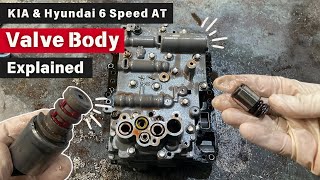
Technical Specifications
Model: A6GF1; Type: 6-Speed Automatic Transaxle; Drive Type: Front-Wheel-Drive; Identification Code: Begins with "NA"; Required Fluid: Hyundai/Kia SP-IV (SP4); Weight: Approx. 176 lbs; Dimensions: Approx. 24" x 20" x 18"
We Have This Part in Stock


The information in this article is provided for general reference and educational purposes only. Vehicle specifications, procedures, and part compatibility can vary by production date, trim level, and region. Always consult your vehicle's factory service manual and verify part numbers before purchasing or performing repairs. Safety-critical components such as airbags, seat belts, and braking systems should be installed by a qualified professional.
- Kia Soul:
- 🎬 Helpful Videos
- 🛍️ Shop This Part
- Identifying the Correct Transmission
- How to Confirm Fitment on Your Vehicle
- Common Failure Symptoms
- Diagnostic Flowchart
- Known Issues, TSBs, and Recalls
- Shift Solenoid Electrical Faults
- Torque Converter Clutch (TCC) Solenoid Failure
- Transmission Fluid Temperature Sensor Failure
- What Fails at Every Mileage Band
- Under 60,000 Miles
- 60,000 to 100,000 Miles
- 100,000 to 150,000 Miles
- 150,000+ Miles
- Real Owner Experiences
- Repair or Replace?
- When Repair Makes Sense
- When Replacement is Smarter
- Questions to Ask Your Installer
- Estimated Replacement Costs
- Freight and Delivery Reality
- Installation and Programming Essentials
- Key Installation Steps & Gotchas
- Programming and Calibration
- Driveline and Engine Pairing Cautions
- Frequently Asked Questions
- 🎟️ Get 5% Off