

2014-2015 Kia Optima 2.4L A6MF1 Transmission: Problems, Identification, and Used Replacement
Identify what kills the A6MF1 transaxle, diagnose common shifting issues, and learn exactly what to look for when buying a used OEM replacement unit.
- Before buying, verify your Optima is US-built (VIN starts with '5') and has the 2.4L engine (8th VIN digit is '7'); transmissions from Korean-built cars or other models are incompatible.
- After installation, a mandatory TCM Adaptive Relearn procedure using a professional scan tool is required to prevent harsh shifting and immediate damage to the replacement unit.
- Use only Hyundai/Kia SP-IV specification transmission fluid. Using generic or incorrect fluid will cause shifting problems and internal damage.
- Ensure the torque converter is fully seated into the oil pump ('3 clicks') before bolting the transmission to the engine to avoid instantly destroying the new unit.
- Always replace the torque converter seal and both axle seals during installation, and thoroughly flush the external transmission cooler and lines to remove old debris.
Identification: Is This the Right Transmission for Your Optima?


The 2014-2015 Kia Optima with the 2.4L GDI engine uses a 6-speed, front-wheel-drive automatic transmission from the Hyundai/Kia A6 family, often identified as the A6MF1 or A6MF2. This specific unit is a transaxle, meaning the transmission and differential are combined into a single assembly. Getting the correct version is critical, as several similar-looking units will not fit or function correctly.
Critical Fitment Checks
Before purchasing a replacement, verify the following on your vehicle:
- Check Your VIN: The first character of your Vehicle Identification Number (VIN) must be a '5' (often seen as 5XX). This indicates the vehicle was built in the United States. Korean-built models (VIN starting with 'KNA') use a different transmission variant with incompatible wiring harnesses, brackets, and calibration.
- Confirm Engine Code: The 8th character of your VIN must be a '7'. This confirms your car has the 2.4L naturally aspirated, direct-injection engine that this transmission is paired with.
- Drivetrain: This transmission is for Front-Wheel Drive (FWD) models only.
Warning: A transmission from a Korean-built Optima (VIN starting with 'KNA') or other vehicles like the Hyundai Sonata, Kia Sorento, or Sportage will not work. While they may look similar and belong to the A6 family, they have different mounting brackets, final drive gear ratios, oil pans, and electrical connections that make them incompatible.
Locating the Transmission ID Code
For a final confirmation, you can find an identification code on the transmission itself. Look for a barcode sticker or a tag riveted to the top of the transmission case, or a code etched directly into the aluminum case. The code for this specific transmission family should begin with EA or FA.
Common Symptoms and Failure Diagnosis
When the A6MF1 transmission begins to fail, you may notice one or more of the following symptoms:
- Harsh, jerky, or delayed shifting between gears.
- The vehicle enters "limp mode," where it gets stuck in a single gear (often 3rd gear) and will not shift.
- A lit Check Engine Light, often with transmission-specific Diagnostic Trouble Codes (DTCs).
- The gear indicator on the dashboard doesn't match the gear selected.
- Inability to start the engine, or it only starts in Neutral instead of Park.
- Hesitation and power loss. Note: Around 103,000 miles, a failing Throttle Position Switch (TPS) can mimic transmission failure symptoms.
A professional diagnosis using a scan tool is necessary to confirm the failure. A mechanic can read the specific DTCs stored in the Transmission Control Module (TCM) to determine if the issue is an external sensor, a wiring problem, or an internal mechanical failure requiring replacement of the unit.
Diagnostic Flowchart
Known Problems, Recalls, and Technical Service Bulletins (TSBs)

Several known issues affect this transmission. Verifying these can help pinpoint a problem before you decide to replace the entire unit.
Transmission Fluid Temperature Sensor Failure (TSB 13-AT-012-2)
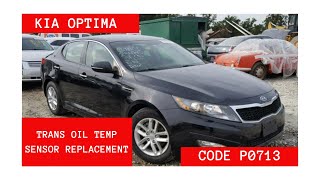
This issue triggers DTCs P0711, P0712, P0713, or P0714. The Powertrain Control Module (PCM) receives an incorrect temperature reading, causing harsh shifting, firm shifts, and potential limp mode. On A6MF1 units built after March 2013, this sensor is integrated directly into the internal wiring harness, which is located inside the transmission oil pan. The fix involves replacing this internal harness and sensor assembly.
Inhibitor Switch / Range Sensor Failure (TSB SA317B/C)
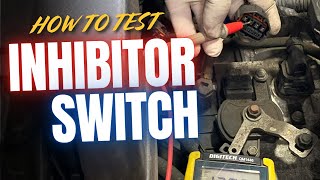
A faulty inhibitor switch (also called a range sensor) can cause a variety of problems, including a no-start condition, erratic shifting, and the Check Engine Light with DTC P0705. This sensor tells the car's computer which gear is selected (Park, Reverse, Neutral, Drive). When it fails, the computer is "confused," which can prevent the engine from starting or cause the transmission to shift incorrectly. The TSB outlines the procedure for replacing the switch.
Internal Wear and Leaks
- Underdrive Brake Clutch Inner Lip Seal Wear: A known factory defect involving a rough surface finish inside the underdrive brake drum can cause a key internal seal to wear out, leading to severe shifting problems. This requires a full internal rebuild or replacement to properly address.
- Valve Body and Solenoid Regulator Valve Bore Wear: Over time, the bores within the valve body where the pressure-regulating solenoids operate can wear out. This causes a drop in hydraulic line pressure, resulting in slipping and shifting issues.
- Front Pump Seal Leaks: A pump bolt can sometimes obstruct a fluid drain passage, causing pressure to build up and force fluid past the front torque converter seal. This results in a transmission fluid leak from the front of the unit.
- Software Updates for Shift Quality: Between 2001-2017, software updates for the TCM have been released to correct hard downshifts, upshifts, or shift delays.
Repair or Replace?
Deciding whether to repair your current transmission or replace it with a used OEM unit depends on the specific failure.
| Failure Type | Typical Repair Cost (Shop) | Notes on Repair |
|---|---|---|
| Transmission Fluid Temperature Sensor (DTC P0711) | $150 - $1,000 | Repair makes sense if this is the only issue. Cost varies widely by labor rates. |
| Valve Body / Solenoids | $800 - $2,500 | Viable if no other mechanical damage exists. Overhaul kits cost $200 - $300 for parts. |
| Front Pump Seal Leaks | $61 - $90 (for inspection) | Repair is logical for minor external leaks. Cost is much higher if transmission removal is needed. |
| Inhibitor Switch (DTC P0705) | $150 - $300 | This is an external component; repair is recommended if it's the only problem. |
When Replacement is Smarter: If internal mechanical failure has occurred (worn clutches, damaged gear sets, cracked oil pump), or if multiple issues are present, the cumulative cost of partial repairs will quickly exceed the cost of a used unit. Used replacement units typically run $500 - $1,000 for the part alone.
Replacement Cost Comparison
The cost to replace a 2014-2015 Optima transmission varies based on the type of part used and local labor rates. Shop labor estimates range from 6.0 to 10.0 hours, costing roughly $600 to $1,600.
| Part Type | Estimated Cost (Part Only) | Notes |
|---|---|---|
| New OEM | $3,500+ | Brand new from a Kia dealer. The most expensive option, but comes with a factory warranty. |
| Remanufactured | $1,800 - $4,200 | Professionally rebuilt with updated components to correct factory flaws. Often comes with a warranty. |
| Used OEM | $500 - $1,300 | A salvaged unit from a donor vehicle. Prices vary widely based on mileage and condition. |
What Fails at Every Mileage Band
Pro Tip: The mileage bands below describe the typical condition of USED REPLACEMENT units you might buy. The checklists provided are critical steps you must take WHILE INSTALLING the purchased transmission to ensure it survives, not maintenance advice for your broken transmission.
Under 60K Miles
Even low-mileage units can suffer from early failure of the internal wiring harness (causing DTCs), front pump seal leaks due to the drain passage design flaw, and harsh shifting that requires a TCM software update. While rare, complete transmission failure can happen.
- ✓Do during install (required): Replace the front torque converter seal (OEM Part # 46131-3B000 or equivalent) and both left and right CV axle/differential seals. Flush the external transmission cooler and lines thoroughly with an aerosol cooler flush like Lubegard Kooler Kleen.
- ✓Do during install (recommended): Inspect the date code on the used transmission; units built after March 2013 have an integrated fluid temperature sensor. Inspect the harness connector for damage. Ensure the TCM has the latest software update from Kia.
60K - 100K Miles
At this stage, outdated TCM software often starts acting up around 67,000 miles. You will frequently see slipping, flaring between shifts, and delayed engagement due to fluid degradation. Fluid temperature sensor failures (P0711-P0714) and inhibitor switch failures (P0705) are common.
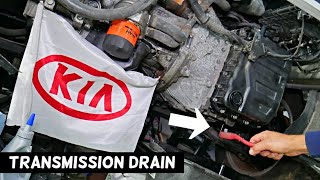
- ✓Do during install (required): Perform a full transmission fluid exchange with new, specified Hyundai/Kia SP-IV fluid. Do not use generic multi-vehicle ATF.
- ✓Do during install (recommended): Replace the transmission filter (if serviceable) and the transmission pan gasket.
- ✓Cheap insurance while the engine is out: Replace the internal wiring harness as a preventative measure, as it is a known high-failure component.
100K - 150K Miles
This is the highest-risk mileage band. Internal wear of the Underdrive Brake Clutch Inner Lip Seal and Valve Body bores leads to severe pressure drops. Torque converter seal failures are also common, sometimes caused by misaligned installations during previous engine replacements.
- ✓Do during install (required): Before installation, remove the transmission oil pan for inspection. Check for excessive metallic debris or clutch material in the pan and on the magnets. A fine grey paste is normal, but large metal chunks indicate imminent failure.
- ✓Do during install (recommended): Installing a used unit at this mileage without a complete fluid exchange and filter change guarantees future problems.
Real Owner Experiences
| Source | Mileage | What Happened | Cost |
|---|---|---|---|
| Reddit r/kia | 58,000 | A 2017 Kia Soul (with a similar powertrain family) experienced a complete transmission failure with little to no warning. The vehicle had trouble shifting gears the day before it failed entirely. | Quoted $8,000+ for a new transmission from the dealer (not including labor), though it was eventually covered under the 10-year/100k-mile powertrain warranty for the original owner. |
| Reddit r/MechanicAdvice | Common in 60k-100k range | A 2015 Optima 2.0T experienced random hard shifting, particularly between 2nd and 3rd gear. It would sometimes jerk on deceleration and buck on takeoff. Turning the car off and on again temporarily resolved the issue. A fluid drain and fill did not fix it. | N/A (troubleshooting) |
| Reddit r/AskMechanics | 109,000 | Owner of a 2015 Optima with original, never-changed transmission fluid was debating whether to perform a service. While the transmission was currently shifting smoothly, the owner was concerned about potential issues due to the high mileage on the original fluid, highlighting a common point of failure for neglected units. | N/A (preventative inquiry) |
| Reddit r/MechanicAdvice | Post-engine replacement | A month after a warranty engine replacement on a 2014 Optima, the transmission began leaking fluid everywhere. The dealer diagnosed a broken torque converter seal and charged $3,000 for a new transmission, suggesting a possible installation error during the engine swap. | $3,000 |
| Unknown | 2014 Kia Optima quoted $2500 for transmission replacement. Replaced with a used transmission from a salvage yard with ~4,000 miles. | $1050 ($450 for part + $600 for labor) | |
| Cars.com | Unknown | 2014 Kia Optima SXT replaced transmission shifter, transmission tray, and battery tray due to damage from a leaking battery. Described as a major transmission problem. | Not specified |
Freight & Delivery Reality for Used Transmissions

When ordering a used A6MF1 transmission, understand that it will not arrive in a cardboard box via standard parcel delivery. Based on verified shipping data, this assembly weighs approximately 213 lbs and measures roughly 32" x 28" x 24" before crating. It ships as Less-Than-Truckload (LTL) freight on a wooden pallet.
You must ensure the delivery location can accommodate a freight truck. If delivering to a residential address or a shop without a loading dock, a liftgate service is required to lower the pallet to the ground. Always inspect the transmission for physical damage (like cracked plastic side covers or broken sensors) before signing the driver's delivery receipt. Furthermore, conducting a pre-purchase verification interview with the seller to confirm the VIN origin (US vs. Korea) and exact engine match is an industry best practice.
Installation: Critical Steps and Common Mistakes

Proper installation is essential for the longevity of a replacement transmission. This is an Advanced to Expert level job requiring special tools like an engine support bar, a transmission jack, and a professional-grade bidirectional scan tool.
Required Parts & Fluids
When installing a replacement unit, you should always use new consumables:
- Transmission Fluid: Use only Hyundai/Kia ATF SP-IV (or SP4M-1, or equivalent fluid explicitly meeting this specification). Using generic multi-vehicle fluid can cause damage.
- Seals: Replace the torque converter seal and both CV axle seals to prevent leaks.
- Cooler Flush: The external transmission cooler and lines must be flushed with an aerosol cleaner to remove any debris from the previous transmission's failure.
Key Installation Procedures
Warning: The torque converter MUST be fully seated into the transmission's oil pump before the transmission is bolted to the engine. You should feel it drop into place three distinct times (clicking/dropping 3 times). If you force it, you will crack the oil pump gear, destroying the transmission instantly.
Warning: This transmission has no dipstick. The fluid level must be checked via an overflow plug on the plastic side cover. The vehicle must be level, the engine idling in Park, and the transmission fluid temperature must be exactly between 122°F and 140°F (50°C - 60°C). An incorrect fluid level will cause shifting problems and damage.
Pro Tip: After installation, a TCM Adaptive Relearn (Resetting Auto Transaxle Adaptive Values) procedure is mandatory. This process, done with a professional scan tool (like Kia GDS, Autel, or Snap-on), resets the transmission's computer and allows it to learn the engagement points of the new clutches. Skipping this step will cause severe, harsh shifting and can quickly burn out the new transmission.
Top Buyer & Installer Mistakes to Avoid
- Ordering the Wrong Build Origin: Buying a transmission for a US-built Optima (VIN '5') and trying to install it in a Korean-built car (VIN 'KNA'), or vice-versa.
- Skipping the Adaptive Reset: Driving the car without performing the TCM relearn procedure, causing the computer to apply old high-pressure adaptations to the new unit.
- Using the Wrong Fluid: Filling the transmission with a generic ATF instead of the required SP-IV fluid.
- Incorrect Torque Converter Installation: Bolting the converter to the engine's flexplate *before* it is fully seated in the transmission. It must be seated first, then bolted to the flexplate through the starter pocket access hole.
- Missing Dowel Pins: Failing to ensure the two alignment dowel pins are present in the engine block. Misalignment causes rapid wear of the front pump seal and torque converter bushing.
- Overtightening the Plastic Cover: The valve body side cover is plastic. Do not overtighten the bolts (torque spec is 7 to 9 lb-ft) to prevent warping and leaks.
- Forgetting Ground Straps: Failing to ensure all grounding straps between the engine, transmission, and chassis are clean and securely reconnected.
Frequently Asked Questions (FAQ)
Do I need to program the replacement transmission?
Yes. A procedure called "Resetting Auto Transaxle Adaptive Values" (TCM Adaptive Relearn) is required. This teaches the Transmission Control Module (TCM) the specific clutch engagement points of the replacement unit. A professional-grade bidirectional scan tool (like Kia GDS, Autel, or Snap-on) is needed to perform this correctly. ECU or PCM remarriage is not required.
Can I use a transmission from a Hyundai Sonata or Kia Sorento?
No. While they may use a similar A6-family transmission, units from other models have different final drive gear ratios, mounting brackets, oil pans, and electrical connectors that make them incompatible with the 2014-2015 Optima 2.4L.
What transmission fluid do I have to use?
You must use a fluid that explicitly meets the Hyundai/Kia SP-IV (or SP4M-1) specification. Do not use universal or multi-vehicle fluids unless they explicitly state they are a replacement for SP-IV. Regular fluid changes every 30,000 to 60,000 miles (or 50,000 to 60,000 miles) can extend the service life up to 200,000 miles, though typical lifespan is 125,000 to 150,000 miles.
How do I check the transmission fluid level?
There is no dipstick. The level is checked using a fill/overflow plug on the plastic side cover of the transmission case. The engine must be idling in Park, the vehicle must be perfectly level, and the fluid must be at a specific operating temperature (122°F - 140°F / 50°C - 60°C). This is best performed by a qualified mechanic.
What is included when I buy a used transmission assembly?
A standard used assembly includes the transmission case, internally lubricated parts, torque converter, transmission oil pan, internal wiring harness, valve body, and internal sensors. It does NOT include external sensors, the Transmission Control Module (TCM), shifter linkage/cables, flexplate/flywheel, starter motor, or external cooler lines.
What questions should I ask my installer before the job?
Always ask: Have you verified this is the correct US-built transmission for my VIN? Will you perform the mandatory TCM Adaptive Relearn procedure with a scan tool? Do you inspect and ensure the torque converter is fully seated ('3 clicks')? Are you replacing the torque converter seal and both axle seals? Will you flush the transmission cooler and lines? Can you confirm the engine block alignment dowel pins are in place? What type of ATF SP-IV fluid will you use, and how will you verify the correct fluid level using the temperature procedure?
Helpful Videos


Technical Specifications
OEM Part Numbers: 46131-3B000
Transmission Type: 6-Speed Automatic Transaxle; Family: Hyundai/Kia A6; Model Codes: A6MF1, A6MF2; Drivetrain: Front-Wheel Drive (FWD); Engine Compatibility: 2.4L GDI (VIN 8th digit '7'); Vehicle Build Origin: United States (VIN 1st digit '5'); ID Codes: Start with EA or FA; Required Fluid: Hyundai/Kia ATF SP-IV (or SP4M-1); Fluid Check Temperature: 122°F - 140°F (50°C - 60°C); Weight (approx): 213 lbs; Dimensions (approx): 32" x 28" x 24"
We Have This Part in Stock


The information in this article is provided for general reference and educational purposes only. Vehicle specifications, procedures, and part compatibility can vary by production date, trim level, and region. Always consult your vehicle's factory service manual and verify part numbers before purchasing or performing repairs. Safety-critical components such as airbags, seat belts, and braking systems should be installed by a qualified professional.
- Kia Optima:
- 🎬 Helpful Videos
- 🛍️ Shop This Part
- Identification: Is This the Right Transmission for Your Optima?
- Critical Fitment Checks
- Locating the Transmission ID Code
- Common Symptoms and Failure Diagnosis
- Diagnostic Flowchart
- Known Problems, Recalls, and Technical Service Bulletins (TSBs)
- Transmission Fluid Temperature Sensor Failure (TSB 13-AT-012-2)
- Inhibitor Switch / Range Sensor Failure (TSB SA317B/C)
- Internal Wear and Leaks
- Repair or Replace?
- Replacement Cost Comparison
- What Fails at Every Mileage Band
- Under 60K Miles
- 60K - 100K Miles
- 100K - 150K Miles
- Real Owner Experiences
- Freight & Delivery Reality for Used Transmissions
- Installation: Critical Steps and Common Mistakes
- Required Parts & Fluids
- Key Installation Procedures
- Top Buyer & Installer Mistakes to Avoid
- Frequently Asked Questions (FAQ)
- 🎟️ Get 5% Off