

2017-2018 Jeep Cherokee 2.4L 948TE Transmission: Problems, Identification, and Used Replacement
Identify the exact 9-speed 4x4 transaxle for your Cherokee, understand common PTU and shifting failures, and learn when to replace it with a verified used OEM unit.
- Verify the exact part number (68311485AA) and vehicle configuration (2.4L, 4x4 Active Drive II, 3.73 ratio) before purchase, as interchangeability is extremely limited.
- A mandatory 'Quick Learn' procedure using a dealer-level scan tool is required after installation to calibrate the new unit and prevent severe shifting problems.
- The transmission fluid cooler and lines must be professionally flushed before installing a replacement unit to remove contaminants that will cause immediate failure.
- Always use the specified Mopar 8 & 9 Speed ATF or ZF Lifeguard 9 fluid; using incorrect fluid like ATF+4 will cause severe internal damage.
- Check your VIN for open recalls, particularly NHTSA 25V011000 (PTU failure) and 18V-494 (half-shaft failure), as these can cause a sudden loss of power.
Identifying the Correct 2017-2018 Cherokee Transmission

The transmission used in the 2017-2018 Jeep Cherokee with the 2.4L engine is the Chrysler 948TE, also known by its ZF designation, 9HP48. It is a 9-speed automatic transaxle, which means the transmission and differential are combined into a single unit designed for transverse (sideways) engine mounting.
This specific assembly was designed for a very particular vehicle configuration. Buying a used transmission requires careful verification to avoid purchasing an incompatible part.
Confirming Your Vehicle's Transmission
To ensure you have this exact transmission, your vehicle must meet all the following criteria:
| Attribute | Specification |
|---|---|
| Vehicle | 2017-2018 Jeep Cherokee |
| Engine | 2.4L I4 MultiAir (non-turbocharged, non-direct injection) |
| Drivetrain | 4x4 with a 2-speed Power Transfer Unit (PTU). This system is marketed as "Active Drive II" and is identified by having a "4WD Low" setting on the Selec-Terrain dial inside the vehicle. |
| Final Drive Ratio | 3.73 |
Pro Tip: You can physically identify the unit by locating the transmission identification tag, which is a sticker stamped on top of the case, near the shifter cable bracket. Confirm the part number is 68311485AA.
Interchangeability: What Does NOT Fit?
Many other Chrysler, Jeep, and Fiat vehicles use the 948TE transmission family, but they are NOT interchangeable with this specific unit. Do not attempt to install a transmission from a different model, as it will not work.
Warning: Transmissions from the Chrysler Pacifica, Jeep Compass, Jeep Renegade, Fiat 500X, or Ram ProMaster City will not fit or function in this Cherokee. Differences in mounting brackets, wiring harness pinouts, and internal computer calibrations make them incompatible.
Additionally, even within the 2017-2018 Cherokee line, other versions are not compatible. A transmission from a Front-Wheel Drive (FWD) model or a 4x4 model with the single-speed PTU ("Active Drive I") will not work in a vehicle requiring the 2-speed PTU specified here.
Common Failure Symptoms
When the 948TE transmission begins to fail, you may experience one or more of the following symptoms:
- Harsh, jerky, or erratic shifting, especially between lower gears.
- Delayed engagement when shifting from Park into Drive or Reverse.
- Sudden loss of motive power while driving.
- "Service Transmission" or "Service 4WD" warning light on the dashboard.
- Vehicle rolling or failing to hold when the shifter is in Park.
- Grinding or whining noises from the front of the vehicle.
- Transmission fluid overheating warnings.
Diagnostic Flowchart

Known Problems, Recalls, and Service Bulletins

Several documented issues affect this transmission and associated drivetrain components. Always check with a dealership or on the NHTSA website with your Vehicle Identification Number (VIN) to see which recalls or TSBs apply to your specific vehicle.
Loss of Power or Park Function (PTU Failure)
- Affected Vehicles: 2017-2019 Jeep Cherokee with 2-speed PTU.
- Symptom: Sudden loss of power or the vehicle rolling away while in Park. A "Service 4WD" message may appear.
- Cause: An input shaft snap ring in the Power Transfer Unit (PTU) may not have been properly seated during manufacturing. This can damage the splines connecting to the transmission's output shaft, leading to a disconnection of power.
- Official Remedy: NHTSA Recall 25V011000 (FCA #01C). The fix involves a software update to detect the problem. If failure is detected, the PTU will be replaced.
Right Front Half-Shaft Failure
- Affected Vehicles: Some 2018 Jeep Cherokee models.
- Symptom: Loss of power or rollaway in Park.
- Cause: The right front half-shaft bearing cage may have been improperly heat-treated, allowing it to break.
- Official Remedy: NHTSA Recall 18V-494 (FCA #U78). Dealers will replace the right front half-shaft assembly free of charge.
Harsh or Erratic Shifting
- Affected Vehicles: 948TE transmissions.
- Symptom: Poor shift quality, including harsh upshifts, rough downshifts, or delayed engagements.
- Cause: The Transmission Control Module (TCM) software calibration was not optimized.
- Official Remedy: TSB 21-013-16 Rev. B advises updating the TCM software to the latest version and performing a "Quick Learn" procedure with a scan tool.
Torque Converter Clutch (TCC) Performance Issues
- Affected Vehicles: 948TE transmissions.
- Symptom: Check Engine Light with DTC P1DB7-00 (Torque Converter Clutch Performance).
- Cause: Premature wear of the reaction shaft bushing due to an assembly misalignment.
- Official Remedy: TSB 21-040-25 provides diagnostic information. If measurements are out of spec, a reaction shaft service kit is required.
Main Shaft Pressure Valve Bolt Loosening
- Affected Vehicles: 948TE transmissions.
- Symptom: Sudden drop in internal oil pressure, gear slipping, or complete failure.
- Cause: The bolt securing the main shaft pressure valve loosens over time.
- Official Remedy: Rebuild or repair the internal valve assembly.
What Fails at Every Mileage Band
Pro Tip: The mileage bands below describe what typically fails on used replacement units of that age. The checklists provided are critical steps to perform while installing the purchased transmission, not general maintenance for your current broken unit.
Under 60,000 Miles
Known Failures:
- Software Glitches: The most prevalent issues are software-related, causing harsh or delayed shifts, hesitation, and occasionally dropping into neutral. These were more common in earlier models but still reported in 2017-2018 vehicles that missed software updates.
- Recalled PTU and Half-Shaft Failures: The verified recalls (NHTSA 25V011000 for the PTU and 18V-494 for the half-shaft) can occur at any mileage, including under 60k, leading to a sudden loss of power or the inability to stay in Park.
- Solenoid and Valve Body Issues: While more common at higher mileage, early failures of the solenoid pack or valve body can occur, leading to poor shift quality and fault codes.
Installation Checklist:
- ✓Do during install (required): Mandatory TCM Software Update: Ensure the transmission's control module is flashed with the absolute latest calibration available from the dealer.
- ✓Do during install (required): Mandatory Transmission Cooler Flush: Debris from the previous transmission failure will contaminate the new unit and cause immediate damage. This is a standard requirement for all used transmission warranties.
- ✓Cheap insurance while the engine is out: Replace Axle Seals and Torque Converter Seal: These are inexpensive seals that are simple to replace when the transmission is out but require significant labor to access later.
- ✓Do during install (recommended): Inspect Half-Shafts and PTU Splines: Given the known recalls, carefully inspect the half-shaft bearings and the splines on the PTU input shaft for any signs of wear or damage.
60,000 - 100,000 Miles
Known Failures:
- Valve Body and Solenoid Failure: This is the mileage range where mechanical issues with the valve body, such as bore wear or failing solenoids, become more common if fluid has not been changed. Symptoms include harsh shifting, gear hunting, and specific fault codes.
- PTU Actuator Failure: The Power Transfer Unit (PTU) actuator can fail due to oil leaking into the shift motor or metal debris accumulating on the position sensor. This often triggers a "Service 4WD" light.
- Torque Converter Issues: Problems with the torque converter can lead to shuddering at light throttle or hesitation.
Installation Checklist:
- ✓Do during install (required): All items from the 'Under 60K' band.
- ✓Do during install (recommended): Transmission Fluid and Filter Service: If purchasing a unit in this mileage band, assume the fluid service has not been done. Although the internal filter is non-serviceable without a teardown, performing a fluid drain and fill with the correct Mopar 8 & 9 Speed ATF or ZF Lifeguard 9 is critical.
- ✓Cheap insurance while the engine is out: Inspect Transmission Mounts: Check for wear, cracking, or collapse and replace as needed while access is easy.
100,000 - 150,000 Miles
Known Failures:
- Internal Mechanical Wear: The risk of internal component failure (clutches, bearings, input shaft) increases, especially if maintenance has been neglected. The input shaft, in particular, can have its teeth sheared off if oil pressure drops.
- Complete Valve Body Failure: At this mileage, valve bodies are a common point of failure, often requiring replacement to resolve persistent shifting issues.
- Torque Converter Failure: Complete failure of the torque converter becomes more likely, potentially contaminating the entire system with debris.
Installation Checklist:
- ✓Do during install (required): All items from the previous bands.
- ✓Cheap insurance while the engine is out: Proactive Valve Body Replacement: If installing a used transmission with over 100k miles, replacing the valve body during the swap can be "cheap insurance" against the most common high-mileage failure point.
- ✓Do during install (recommended): Inspect all external seals, gaskets, and mounts. At this mileage, rubber and plastic components are more prone to being brittle or worn.
Over 150,000 Miles
Known Failures:
- General End-of-Life: The transmission is approaching or has exceeded its expected service life of roughly 124,000 miles (200,000 km). Failures can be widespread, from the torque converter and valve body to internal clutches and bearings.
- Input Shaft Failure: The known weak point of the input shaft being damaged by drops in oil pressure becomes a more significant risk.
Installation Checklist:
- ✓Do during install (required): All items from previous bands.
- ✓Do during install (recommended): Strongly consider a lower-mileage or remanufactured unit. Installing a used transmission with over 150k miles carries a high risk of near-term failure. If proceeding, a full fluid flush, new external seals, and potentially a new valve body and torque converter should be considered mandatory.
Real Owner Experiences
| Source | Mileage | What Happened | Cost |
|---|---|---|---|
| Reddit r/Jeep | 68,000 | Considering repair. The failure was due to a P1DB7-00 Torque Converter Clutch performance issue. | Quoted $8,000 (dealership), $6,800 (independent shop) |
| Reddit r/GrandCherokee | 80,000 | Dealer recommended replacing both the transmission and transfer case due to debris. | Quoted $12,900 |
| Reddit r/Jeep | Unknown | Opted for a used transmission with a 36k mile warranty after high rebuild quotes. | Paid $4,400 (Quotes were $7,200 / $5,500 for rebuild) |
| Jeep Cherokee Forums | Various, under 60k | Owners report harsh 1-2 and 2-3 shifts, lurching, and hesitation. Addressed by dealers performing a TCM software flash and a Quick Learn procedure. | $100 - $250 for a software flash |
| CarComplaints.com | Low, unspecified | Sudden shifts to neutral were traced back to a terminal crimping issue on the sensor cluster harness (ZF recall). | Covered by recall |
| Endurance Warranty Blog | ~60,000 miles | This is the recommended service interval for the transmission fluid and filter to maintain long-term performance. | N/A (Maintenance) |
| Various Repair Shops/Forums | 60,000-100,000 | Failures in this range are often diagnosed as needing a software update plus a new valve body/solenoid pack, or a full replacement if internal damage is present. PTU failures also appear. | $200 - $1,800 for valve body; $4,000+ for replacement |
| Online Mechanic Video | 100,000+ | A technician notes that at this age and mileage, transmission failures become more common across all brands, and the 948TE is no exception. | N/A |
| Repair Estimate Data | Over 100,000 | For units with high mileage or confirmed internal damage, a remanufactured replacement is often more economical than attempting a rebuild due to complexity. | $4,000 - $7,000 for a remanufactured unit installed |
| Workshop Reports | 250,000 km (~155,000 miles) | A South African workshop notes that vehicles with updated software and regular maintenance can exceed this mileage without major internal work. | N/A |
Repair or Replace?
Deciding whether to repair your existing 948TE or replace it entirely depends heavily on the specific failure mode and the mileage of the unit.
When Repair Makes Sense
- Erratic or harsh shift quality (TSB 21-013-16 Rev. B): This should always be the first step for any shift quality complaint. A simple TCM software update at the dealer often resolves the issue without mechanical intervention. Typical cost: $100 - $250.
- Torque Converter Clutch (TCC) performance issues (DTC P1DB7-00 / TSB 21-040-25): If the issue is isolated to the valve body or solenoids and there is no widespread contamination in the fluid, replacing the valve body can be a cost-effective repair. Typical cost: $900 - $1,800.
- External leaks from seals or gaskets: If the transmission is otherwise functioning perfectly, addressing external leaks is simple, routine maintenance. Typical cost: $60 - $250.
When Replacement is Smarter
Replacement is necessary when internal mechanical failure has occurred, such as with the input shaft snap ring (Recall 25V011000) or main shaft pressure valve. These failures generate significant metal debris that contaminates the entire system, including the non-serviceable internal filter, torque converter, and cooler. At this point, a complete replacement with a used or remanufactured unit is economically safer than a rebuild, which may not successfully remove all contaminants. This is especially true on higher-mileage units (over 100,000 miles).
Questions to Ask Your Installer
If you are having a replacement unit installed, ensure your mechanic is prepared by asking these questions:
- Have you confirmed this is the correct part number (68311485AA) for a 2.4L 4x4 with a 2-speed transfer case and 3.73 ratio?
- Will you be performing a complete, three-pass flush of the transmission cooler and lines with a professional chemical flush machine before installing the replacement unit?
- How do you verify the torque converter is fully seated (the "three clicks") before mating the transmission to the engine?
- Do you have a dealer-level scan tool (like wiTECH) to perform the mandatory TCM Quick Learn procedure after installation?
- Will you be applying high-temp spline grease to the PTU input shaft to prevent future spline rust and damage?
- What specific brand and type of fluid will you be using? (It must be Mopar 8 & 9 Speed ATF or ZF Lifeguard 9).
- Does your quote include replacing the axle seals and torque converter front pump seal?
- How will you ensure the subframe is perfectly realigned after it's dropped for the installation?
Replacement Cost Estimates
| Part or Service | Estimated Cost (USD) |
|---|---|
| New OEM (Mopar Part #68311485AA) | $6,800 - $8,200 (part only, plus a refundable core charge of ~$2,000). |
| Remanufactured OEM | $2,500 - $4,500 (part only) / $4,000 - $7,000 (installed). |
| Used OEM | $675 - $2,500 (part only). |
| Installation Labor | $900 - $1,800 (7 to 9 hours). |
Freight, Delivery, and Pre-Purchase Verification

Because this transmission assembly weighs approximately 189 lbs and measures roughly 14" x 24" x 17" before crating, it cannot be shipped via standard parcel services like FedEx or UPS Ground. It must ship as LTL (Less Than Truckload) freight on a pallet.
- Delivery Requirements: Freight carriers require a commercial loading dock or a truck equipped with a liftgate to lower the pallet to the ground. Residential deliveries often incur extra fees.
- Inspect Before Signing: Always inspect the transmission for physical damage (such as cracked bellhousings or broken sensor connectors) before signing the driver's delivery receipt. Once you sign, you accept the condition of the freight.
- Pre-Purchase Verification: Before ordering, verify your vehicle is a 2017-2018 Jeep Cherokee 2.4L with the 4x4 2-speed transfer case (Active Drive II) and a 3.73 ratio. Check the transmission tag for part number 68311485AA to guarantee fitment.
Installation & Programming: Critical Steps

Proper installation and programming are essential for a used transmission to function correctly. Failure to follow these procedures will likely result in immediate shifting problems or damage to the replacement unit. The estimated shop labor time is 7 to 9 hours, and DIY installation is rated as Advanced to Expert.
Required Programming: The "Quick Learn"
After installation, a Transmission Quick Learn procedure is mandatory. This process uses a dealer-level scan tool (like wiTECH) to erase the old transmission's adaptive memory and calibrate the new unit's solenoids. Skipping this step will cause harsh shifting, slipping, or force the vehicle into limp mode.
Installation Gotchas & Common Mistakes
- Torque Converter Seating: Before bolting the transmission to the engine, ensure the torque converter is fully seated into the front pump. You should feel it engage in three distinct steps or "clicks." Forcing it will crack the pump, destroying the transmission.
- Flush the Cooler: The transmission fluid cooler and lines must be professionally flushed to remove metal debris from the previous failed unit. Circulating old debris into the replacement transmission will cause immediate failure and void most warranties.
- Use the Correct Fluid: This transmission requires a specific fluid. Use only genuine Mopar 8 & 9 Speed ATF or an approved equivalent like ZF Lifeguard 9.
- PTU Spline Lubrication: To prevent future rust and spline damage, apply a high-temperature anti-seize or spline grease to the transmission output shaft splines where they engage with the Power Transfer Unit (PTU).
- Fluid Level Check Procedure: The vehicle must be level on a lift, the left front wheel removed to access the fill plug, and fluid level checked using Mopar Tool 10323A with the engine idling in Park. The fluid temperature must be strictly between 122°F and 140°F (50°C to 60°C).
- Subframe Alignment: Dropping the front subframe is required for removal. Mark the alignment or use alignment pins to keep the steering and suspension centered upon reinstallation.
Warning: Do NOT use standard ATF+4 or any generic "universal" automatic transmission fluid. Using the wrong fluid will cause severe damage.
Frequently Asked Questions (FAQ)
Can I replace the transmission filter myself?
No. The main fluid filter for the 948TE is internal and not serviceable. It cannot be accessed or replaced without completely disassembling the transmission case, which is only done during a full rebuild.
What is a "transaxle"?
A transaxle is a single mechanical unit that combines the functions of a transmission, differential, and final drive gears. They are typically used in front-wheel drive and all-wheel drive vehicles with transverse (sideways-mounted) engines.
Does a used 948TE transmission need to be reprogrammed?
Yes. A "Quick Learn" adaptive reset procedure is mandatory after installing a used unit. This requires a compatible, high-level scan tool (like wiTECH) and should be performed by a qualified technician to ensure proper shift quality.
What type of transmission fluid does the 948TE require?
You must use genuine Mopar 8 & 9 Speed ATF or ZF Lifeguard 9. Do not use standard ATF+4 or universal fluids, as they will cause severe internal damage.
How do I check the fluid level on this transmission?
There is no traditional dipstick under the hood. The vehicle must be level on a lift, the left front wheel removed, and the engine idling in Park. The fluid temperature must be strictly between 122°F and 140°F (50°C to 60°C), and the level is checked using a special dipstick (Mopar Tool 10323A) inserted into the fill port.
Does this transmission assembly include the transfer case?
No. The Power Transfer Unit (PTU), which acts as the transfer case in this 4x4 system, is a separate component that bolts to the transmission. A used transmission assembly will not include the PTU.
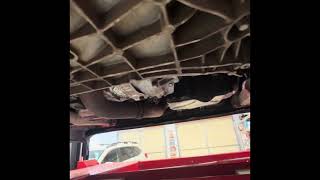
Helpful Videos

Technical Specifications
OEM Part Numbers: 68311485AA
Type: 9-speed automatic transaxle; Manufacturer Designation: Chrysler 948TE; ZF Designation: 9HP48; Engine Application: 2.4L I4 MultiAir; Drivetrain Application: 4x4 with 2-speed PTU (Active Drive II); Required Final Drive Ratio: 3.73; Required Fluid: Mopar 8 & 9 Speed ATF or ZF Lifeguard 9; Weight: ~189 lbs; Dimensions: ~14" x 24" x 17"
We Have This Part in Stock



The information in this article is provided for general reference and educational purposes only. Vehicle specifications, procedures, and part compatibility can vary by production date, trim level, and region. Always consult your vehicle's factory service manual and verify part numbers before purchasing or performing repairs. Safety-critical components such as airbags, seat belts, and braking systems should be installed by a qualified professional.
- Jeep Cherokee:
- 🎬 Helpful Videos
- 🛍️ Shop This Part
- Identifying the Correct 2017-2018 Cherokee Transmission
- Confirming Your Vehicle's Transmission
- Interchangeability: What Does NOT Fit?
- Common Failure Symptoms
- Diagnostic Flowchart
- Known Problems, Recalls, and Service Bulletins
- Loss of Power or Park Function (PTU Failure)
- Right Front Half-Shaft Failure
- Harsh or Erratic Shifting
- Torque Converter Clutch (TCC) Performance Issues
- Main Shaft Pressure Valve Bolt Loosening
- What Fails at Every Mileage Band
- Under 60,000 Miles
- 60,000 - 100,000 Miles
- 100,000 - 150,000 Miles
- Over 150,000 Miles
- Real Owner Experiences
- Repair or Replace?
- When Repair Makes Sense
- When Replacement is Smarter
- Questions to Ask Your Installer
- Replacement Cost Estimates
- Freight, Delivery, and Pre-Purchase Verification
- Installation & Programming: Critical Steps
- Required Programming: The "Quick Learn"
- Installation Gotchas & Common Mistakes
- Frequently Asked Questions (FAQ)
- 🎟️ Get 5% Off