

2021 Honda Civic 2.0L M-CVT: Problems, Identification, and Used Replacement
Identify the JDJC transmission, learn what causes belt failure and shuddering, and know exactly what to look for when buying a used OEM replacement unit.
- You must use only Genuine Honda HCF-2 fluid and adhere to a strict 30,000-mile service interval to prevent premature failure.
- Before purchasing a replacement, you must verify the transmission code is JDJC, the engine is the 2.0L K20C2, and the 6th digit of your VIN is a 2 or 4.
- A mandatory 'CVT Start Clutch Calibration' procedure using a professional, Honda-capable scan tool is required after installation to prevent severe drivability issues.
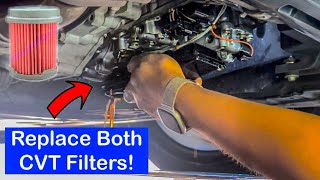
- When replacing the transmission, it is critical to also replace both the internal strainer and the external cartridge filter, and to thoroughly flush the transmission cooler and lines.
- Shuddering at low speeds is the most common symptom and should first be addressed with a fluid change before considering a costly replacement.
Vehicle Fitment and Part Identification

This article covers the continuously variable transmission (CVT) supplied with the 2.0-liter, naturally aspirated K20C2 engine in the 2021 Honda Civic. This specific transmission is part of the Honda M-CVT family and is identified by the code JDJC.
How to Confirm Your Vehicle's Transmission
Before purchasing a replacement, you must verify that your vehicle is equipped with this exact transmission. Using the wrong unit can lead to incorrect fitment, electronic incompatibilities, and complete failure.
- Check Your VIN: The 6th digit of your Vehicle Identification Number (VIN) must be a 2 or a 4.
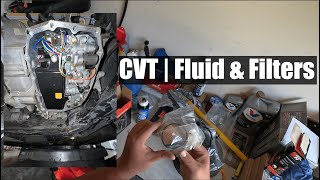
- Confirm Your Engine: This transmission only bolts to the 2.0L K20C2 four-cylinder engine. 🎬 See this step-by-step 2.0L CVT fluid and filter change guide It does not fit the 1.5L Turbo engine.
- Find the Transmission Code: Locate the white barcode sticker on the transmission case. It will have the code JDJC printed on it.
Pro Tip: The transmission code sticker is usually found on the side of the case, visible from the driver's side wheel well or from underneath the air intake box assembly.
What Will Not Fit
It is a common and costly mistake to order a transmission from a different Civic model. Be aware of the following incompatibilities:
| Model / Engine | Transmission Codes | Reason for Incompatibility |
|---|---|---|
| 1.5L Turbo Civic Models | BCGA or MCKA | Different case designs and internal gear ratios. |
| Honda HR-V Models (1.8L) | G2AA or G2CA | Not compatible. |
Common Symptoms of a Failing Transmission

A failing M-CVT can present several distinct symptoms. If you experience any of the following, the transmission may be the cause.
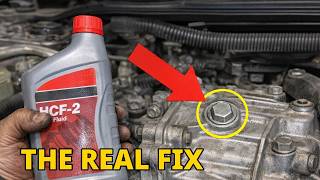
- Shuddering or Surging: A noticeable vibration, shudder, or jerking motion during light acceleration at low speeds (typically 20-40 mph) is the most common complaint. 🎬 Watch: How to fix low-speed CVT shudder with a fluid service This is often related to the torque converter or contaminated fluid.
- Hesitation from a Stop: A delay in engagement when you press the accelerator from a standstill, making the car feel like it's slipping for a moment.
- Whining or Humming Noises: A persistent whining or humming sound that changes with engine speed can indicate internal wear on the belt or pulleys.
- Warning Lights: An illuminated Check Engine Light or a flashing "D" (Drive) indicator on the dashboard often signals a transmission-related fault code.
- Limp Mode: The vehicle may enter a reduced-power state, known as "limp mode," to prevent further damage when a serious fault is detected.
Diagnostic Flowchart
Known Problems, Recalls, and Technical Service Bulletins (TSBs)
The M-CVT family used in the 10th generation Civic (2016-2021) has several well-documented issues.
Transmission Shudder and Drivability Issues
The most prevalent issue is a shudder or vibration during light acceleration. This is often caused by degraded transmission fluid or issues with the torque converter. Honda has addressed this problem for certain models and years through software updates for the Transmission Control Module (TCM) and by issuing updated fluid formulations. While no specific recall exists for the 2021 model year for this issue, Honda has released multiple Technical Service Bulletins (TSBs) and warranty extensions for this transmission family. Owners should contact a Honda dealer with their VIN to see if any specific service campaigns apply.
CVT Belt or Pulley Failure
In severe cases, the internal steel belt that connects the two variable pulleys can slip or break. This is a catastrophic failure that requires a full transmission replacement. The primary cause is typically a breakdown of the CVT fluid, leading to overheating and wear. Strict adherence to the 30,000-mile fluid service interval is the best prevention. Software glitches in some earlier 10th generation models could also cause the drive pulley shaft to break.
Internal Sensor and Electrical Faults
This transmission can suffer from failures of internal components like the CVT fluid temperature sensor (triggering Diagnostic Trouble Codes P0712, P0713, P0714) or issues with the power supply to solenoids (triggering codes P0700 or P0706). These problems can cause the vehicle to enter limp mode and may be misdiagnosed as a major mechanical failure when the fix is more targeted.
Warning: As of mid-2026, there are no open safety recalls specifically for the transmission on the 2021 Honda Civic 2.0L model. However, always check the NHTSA database with your car's VIN for the most current information.
Replacement Cost Guide
The cost to replace a 2021 Civic 2.0L transmission varies based on the type of replacement unit and local labor rates. All prices are estimates in USD.
| Part Type / Service | Estimated Cost (USD) | Notes |
|---|---|---|
| Used OEM (Recycled) | $750 - $1,500 | A functional, tested unit from a salvage vehicle. Price varies with mileage and warranty. |
| Remanufactured OEM | $2,100 - $4,300 | A unit rebuilt to factory specifications with new wear items. Often includes a longer warranty. |
| New OEM | $4,500 - $6,000+ | A brand-new unit from a Honda dealer. |
| Shop Labor | $900 - $1,600 | Estimated 6.0 to 9.0 hours of professional labor to remove and replace the assembly. |
Key Installation and Programming Procedures

Replacing this transmission is an advanced-level job. Several steps are critical for success and to avoid damaging the new unit.
Required Parts and Fluids
To do the job correctly, you will need more than just the transmission itself. Plan on purchasing the following:
- Fluid: Genuine Honda HCF-2 CVT Fluid (approximately 4.5 quarts).
- Filters: This transmission has two filters that MUST be replaced: an internal strainer (Part # 25420-5LJ-003) and an external warmer/cartridge filter (Part # 25450-P4V-013).
- Gaskets & Seals: New axle seals, a torque converter seal, an oil pan gasket (Part # 21814-RJ2-003), warmer filter O-rings (Part # 25565-5LJ-A01 and 25564-5LJ-A01), and new crush washers for the drain plug (90471-PX4-000) and check plug (94109-20000) are required.
- Cooler Flush: The transmission cooler and lines must be professionally flushed to remove metal debris from the previous failure.
Warning: Do NOT use any fluid other than Genuine Honda HCF-2. Universal or multi-vehicle CVT fluids will cause slippage, shuddering, and rapid failure.
Critical Installation Steps
- Torque Converter Seating: Before installation, ensure the torque converter is fully seated into the transmission's oil pump. Failure to do so will crack the pump or case when the bellhousing bolts are tightened. Use the torque converter provided with the replacement transmission; do not reuse the old one.
- Subframe Alignment: The front subframe must be removed for access. Mark its position before removal to ensure it is realigned correctly during reinstallation, preventing steering and alignment issues.
- Fluid Level Check: This transmission has no dipstick. The fluid level is checked via an overflow plug on the side of the case. The vehicle must be perfectly level, and the fluid must be at a specific temperature (95°F to 113°F) to get an accurate reading. The engine must be run through all gears before removing the check plug.
Required Tools
This is an Advanced/Expert level DIY job. You will need specialized equipment, including:
- Engine support bar/brace/hoist
- Subframe jack/hoist/transmission jack
- CV axle puller
- Torque wrench
- Professional OBD2 scan tool capable of Honda-specific functions
Required Post-Installation Calibration
Warning: After the replacement unit is installed, its adaptive memory must be calibrated. This is known as the CVT Start Clutch Calibration or Start Clutch Feedback Learning Procedure. This procedure allows the vehicle's computer (PCM) to learn the engagement point of the new transmission's clutch. Skipping this step will result in harsh shifting, shuddering, or hesitation. While a manual drive cycle procedure exists, using a professional, Honda-capable scan tool is highly recommended for accuracy.
What Fails at Every Mileage Band
Pro Tip: The mileage bands below describe what to expect from USED replacement units at these mileages. The checklists provided are critical steps to perform WHILE INSTALLING the purchased engine or transmission, not general maintenance for your current vehicle.
Under 60,000 Miles
Units in this range are generally healthy, but premature fluid breakdown can cause shuddering or vibration during light acceleration (typically between 20-40 mph). Some catastrophic failures have been reported as early as 50,000-60,000 miles, often linked to fluid overheating. Software glitches in some earlier 10th generation models could also cause the drive pulley shaft to break.
- ✓Do during install (required): Perform a full fluid and filter service with Genuine Honda HCF-2 fluid. Replace both the internal pan strainer and the external cartridge/warmer filter. Replace all associated O-rings and gaskets for the filters and oil pan. Perform the mandatory Start Clutch Calibration and TCM adaptive relearn procedure with a professional scan tool.
- ✓Do during install (recommended): Thoroughly flush the external transmission cooler and lines to remove any potential contaminants from the previously failed unit.
- ✓Cheap insurance while the engine is out: Install new axle and torque converter seals.
60,000 - 100,000 Miles
At this mileage, there is an increased likelihood of shuddering and hesitation if fluid service has been neglected. Failures between 80,000 to 120,000 miles are common for owners who follow the manufacturer's longer service intervals instead of more frequent changes. Belt and pulley wear leading to delayed acceleration or slipping becomes more prevalent, as does transmission cooler failure.
- ✓Do during install (required): All items from the "Under 60K" band are critical at this stage.
- ✓Do during install (recommended): Strongly recommend replacing the external transmission cooler assembly, not just flushing it, as internal blockages from a previous failure can be difficult to clear and may contaminate the replacement unit.
- ✓Cheap insurance while the engine is out: Inspect and consider replacing external sensors like input/output speed sensors, as they are reaching an age where failure becomes more probable.
100,000 - 150,000+ Miles
High-mileage units have a higher incidence of complete failure due to accumulated wear on the CVT belt and pulleys. Forward/reverse clutch burnout due to fluid starvation or contamination from internal debris is common. Internal bearing wear, often indicated by a whining noise, is also a frequent issue.
- ✓Do during install (required): Assume the unit has significant internal wear. All recommendations from the previous bands are mandatory for a successful installation. Replacement of the transmission cooler is not optional; it is required to protect the investment in the used transmission.
- ✓Do during install (recommended): Replace accessible external seals and sensors.
- ✓Cheap insurance while the engine is out: Replace the wiring harness if it shows any signs of brittleness or damage while the subframe is dropped and access is easy.
Real Owner Experiences
The service life of the Honda M-CVT (JDJC) is highly dependent on maintenance. With strict fluid service every 25,000-40,000 miles using genuine Honda HCF-2 fluid, a lifespan of 150,000 to over 200,000 miles is achievable. Conversely, neglected units can experience catastrophic failure between 80,000 and 120,000 miles. Here is what real owners have reported:
| Source | Mileage | What Happened | Cost |
|---|---|---|---|
| ~52,000 miles | Owner received a maintenance minder notification for a second CVT fluid change just 17,000 miles after the first one at 35,000 miles, indicating the car's algorithm detected a need for it based on driving habits. | N/A (Preventative Maintenance) | |
| 60,000 miles | A user reported their CVT belt failed just after a fluid change, suspecting a previous incident of getting stuck in mud and spinning the tires may have contributed. | N/A | |
| YouTube Comment/Forum Data | 90,000 miles | Upon dropping the transmission pan for a filter change, significant metal shavings were found on the magnets, highlighting the importance of regular fluid and filter changes. | N/A (Preventative Maintenance) |
| YouTube/Mechanic Data | ~100,000 miles | A 2016 Civic CVT failed without warning, resulting in a replacement bill that was not covered by warranty. | $6,125 |
| 104,000 miles | A 2017 Civic CVT failed completely. | N/A | |
| 108,000 miles | Quoted for a rebuilt transmission from a dealer (2003 Honda Accord). While an older model, it illustrates a very high dealer quote for a rebuilt unit. | Quoted $8,400 | |
| 119,000 miles | Replaced transmission at a dealership (2016 Kia Soul). While not a Honda, this provides a general ballpark for a non-CVT transmission replacement at a dealer, highlighting the comparative expense of CVT units. | ~$2,500 | |
| 151,000 miles | Owner of a 2014 Civic reported no issues. | N/A | |
| 155,000 miles | Quoted for replacement with a new transmission at two different shops (2016 Civic). | Quoted $7,000 and $7,500 | |
| 170,000 miles | Owner reported no issues with their CVT, noting all services were done at the dealer. | N/A | |
| 200,000 miles | A 2016 Civic owner reported having no problems at this high mileage. | N/A | |
| 220,000+ miles | Owner of a 9th generation Civic with a CVT reported it has been great. | N/A |
Repair or Replace?

Not every transmission issue requires a complete replacement. Knowing when to repair versus when to replace can save you thousands of dollars.
When Repair Makes Sense
- Transmission shuddering or surging at low speeds: This is the most common symptom and should always be addressed first with a simple CVT fluid change and/or a software update from the dealer before considering replacement. Typical repair cost: $150 - $400.
- CVT Fluid Temperature Sensor Failure (DTC P0712, P0713): If the issue is confirmed to be the sensor or its wiring, replacing this component is vastly cheaper than a full transmission swap. The part itself is relatively inexpensive; cost is primarily labor to access it. Typical repair cost: $300 - $600.
- Blown fuse or faulty solenoid (DTC P0700/P0706): These are electronic issues that do not indicate mechanical failure. A proper diagnosis can save thousands by replacing a small electronic part instead of the entire transmission. A solenoid replacement typically costs between $300 and $850. Typical repair cost: $250 - $850.
When Replacement is Smarter
Replacement is the necessary course of action when a major internal mechanical failure occurs, such as a snapped belt or damaged pulleys. These components are generally not serviced individually, and attempting a rebuild is often not cost-effective or even possible at most shops. If diagnostics confirm metal debris in the pan from the drive belt, the unit is considered non-repairable and must be replaced.
Questions to Ask Your Installer
Before handing over your keys, ask your mechanic these critical questions:
- Have you confirmed the failure is internal and mechanical, not a cheaper-to-fix external sensor or solenoid?
- Will you be flushing the transmission cooler lines and replacing the external cartridge filter to prevent contamination of the new unit?
- Will you be replacing both the internal strainer and the external cartridge filter during the installation?
- Do you have the proper scan tool to perform the mandatory post-installation Start Clutch Calibration and reset the adaptive learning values?
- Is the price for a used, remanufactured, or new unit, and what is the warranty (mileage and duration) for both the part and your labor?
- Does your quote include the ~4.5 quarts of genuine Honda HCF-2 fluid and all required gaskets and seals?
Freight and Delivery Reality

If you are purchasing a used JDJC transmission online, you need to understand how it will arrive. This is not a small parcel.
- Size and Weight: A used JDJC transmission assembly weighs approximately 176 lbs and measures roughly 30" x 29" x 26" before being crated.
- LTL Freight: Because of its size and weight, it ships as Less-Than-Truckload (LTL) freight on a wooden pallet. It will arrive on a large commercial truck.
- Liftgate Service: If you are having the transmission delivered to a residential address or a shop without a loading dock or forklift, you must request a truck with a liftgate to lower the pallet to the ground.
- Inspect Before Signing: When the freight carrier arrives, inspect the transmission carefully before signing the delivery receipt. Check for any physical damage to the aluminum case, sensors, or oil pan that may have occurred during transit.
- Pre-Purchase Verification: A reputable seller will conduct a pre-purchase verification interview. They will ask you to confirm that the 6th digit of your VIN is a 2 or a 4, that your engine block stamp reads K20C2, and that your current transmission has the JDJC barcode sticker. This ensures you receive the correct part.
Frequently Asked Questions (FAQ)
What is included with a used transmission assembly?
A standard used assembly includes the main transmission case, all internal lubricated parts, the steel belt, variable pulleys, internal clutches, the transmission oil pan, the internal oil strainer, the torque converter, and the valve body. It does not include external sensors, input/output speed sensors, the Transmission Control Module (TCM), shifter linkage, shift cables, the flexplate, the flywheel, the external transmission fluid warmer/cooler assembly and lines, or wiring harnesses.
Is a transmission relearn procedure really necessary?
Yes. The Start Clutch Calibration is mandatory. Every transmission has slight manufacturing variances, and the computer must learn the exact characteristics of the replacement unit to ensure smooth operation and prevent damage.
Can I use a universal CVT fluid to save money?
No. Using anything other than genuine Honda HCF-2 fluid is the most common cause of premature failure in these transmissions. Aftermarket fluids do not have the specific friction properties required for the start clutch and belt.
How much does this transmission weigh for shipping?
A used JDJC transmission assembly weighs approximately 176 lbs before being crated. It is too heavy and bulky for parcel shipping and must be shipped on a pallet via LTL freight.
Do I need to replace the torque converter?
You should use the torque converter that comes provided with your replacement transmission. Do not reuse your old torque converter, as it is likely contaminated with metal debris from your failed transmission.
Why does my car need to be perfectly level to check the fluid?
This transmission does not have a traditional dipstick. The fluid level is checked using an overflow plug on the side of the case. If the car is on ramps or an incline (the "Ramp Leveling Mistake"), the fluid will pool at an angle, resulting in an incorrect reading and either an under-filled or over-filled transmission, both of which cause severe damage.
Helpful Videos

Technical Specifications
OEM Part Numbers: 25420-5LJ-003 25450-P4V-013 21814-RJ2-003 25565-5LJ-A01 25564-5LJ-A01 90471-PX4-000 94109-20000
Transmission Code: JDJC; Engine Compatibility: 2.0L K20C2; VIN Identifier (6th Digit): 2 or 4; Fluid Type: Genuine Honda HCF-2; Fluid Capacity: ~4.5 quarts; Weight: ~176 lbs; Dimensions: ~30" x 29" x 26"
We Have This Part in Stock


The information in this article is provided for general reference and educational purposes only. Vehicle specifications, procedures, and part compatibility can vary by production date, trim level, and region. Always consult your vehicle's factory service manual and verify part numbers before purchasing or performing repairs. Safety-critical components such as airbags, seat belts, and braking systems should be installed by a qualified professional.
- Honda Civic:
- 🎬 Helpful Videos
- 🛍️ Shop This Part
- Vehicle Fitment and Part Identification
- How to Confirm Your Vehicle's Transmission
- What Will Not Fit
- Common Symptoms of a Failing Transmission
- Diagnostic Flowchart
- Known Problems, Recalls, and Technical Service Bulletins (TSBs)
- Transmission Shudder and Drivability Issues
- CVT Belt or Pulley Failure
- Internal Sensor and Electrical Faults
- Replacement Cost Guide
- Key Installation and Programming Procedures
- Required Parts and Fluids
- Critical Installation Steps
- Required Tools
- Required Post-Installation Calibration
- What Fails at Every Mileage Band
- Under 60,000 Miles
- 60,000 - 100,000 Miles
- 100,000 - 150,000+ Miles
- Real Owner Experiences
- Repair or Replace?
- When Repair Makes Sense
- When Replacement is Smarter
- Questions to Ask Your Installer
- Freight and Delivery Reality
- Frequently Asked Questions (FAQ)
- 🎟️ Get 5% Off