

2010 Honda Accord 3.5L V6 H5 Transmission: Problems, Identification, and Used Replacement
Identifying the B97A, P79A, and M97A 5-speed automatic, common torque converter and bearing failures, and what to know before installing a used OEM replacement unit.
- Before purchasing, you must verify fitment using your VIN's 4-6th digits (CS2 or CP3) and the transmission code on the case (B97A, P79A, or M97A).
- Ensure the replacement unit's software is updated to address the secondary shaft bearing recall (NHTSA 11V395000) and torque converter judder TSBs (16-066/16-067).
- When installing a used unit, always replace the torque converter, all external seals, and the external filter to prevent premature failure.
- You must flush the transmission cooler and lines with a dedicated solvent before installation to remove contaminants from the previous failure.
- Use only Honda Genuine ATF DW-1 fluid; using incorrect or universal fluids can cause shifting problems and internal damage.
Vehicle Fitment and Part Identification

This article covers the 5-speed automatic transmission, part of the Honda H5 family, found in the 2010 Honda Accord equipped with the 3.5L V6 engine and Front-Wheel Drive (FWD). This specific unit is a transverse-mounted transaxle produced between 2008 and 2012.
How to Confirm Fitment on Your Vehicle
Before purchasing a replacement transmission, you must verify that it is the correct unit for your specific vehicle. Follow these steps to confirm fitment:
- Check Your VIN: The 4th, 5th, and 6th digits of your Vehicle Identification Number (VIN) should be CS2 for a V6 Coupe or CP3 for a V6 Sedan. The VIN can be found on a plate on the driver's side of the dashboard (viewable through the windshield) or on the driver's doorjamb sticker.
- Verify the Transmission Code: Look for a barcode label on the top of the transmission case. For V6 models, this label is typically located slightly back from the center, near the starter motor. The code on this label should be B97A, P79A, or M97A.
Pro Tip: The transmission code is the most reliable way to identify the unit. You may need a flashlight to see the barcode label clearly, as it is situated on top of the transmission housing in the engine bay.
Interchangeability
Warning: This transmission assembly fits only the 2010 Honda Accord 3.5L FWD models. It is not interchangeable with transmissions from other Honda or Acura V6 vehicles like the Odyssey, Pilot, Crosstour, or TL. Transmissions from 4-cylinder Accords are also incompatible. These other units have different case designs, mounting points, wiring harnesses, and internal gear ratios that prevent a direct swap.
Common Failure Symptoms

If you are experiencing transmission problems, you may notice one or more of the following symptoms:
- A whining or grinding noise that changes pitch with vehicle speed, which could indicate a failing secondary shaft bearing.
- A shudder, vibration, or judder felt when cruising at a steady speed, typically between 20-45 mph. This often points to a 🎬 See this quick fix for Honda transmission shudder problem with the torque converter lock-up clutch.
- The Check Engine Light (Malfunction Indicator Lamp) is illuminated.
- The engine stalls unexpectedly, or the vehicle has difficulty going into Park.
- Harsh or delayed shifting between gears.
- A noticeable fluid leak under the vehicle.
Diagnostic Flowchart
Known Problems, Recalls, and Technical Service Bulletins (TSBs)

This transmission has several well-documented issues. Always check with a Honda dealer or use the NHTSA website to see if your specific vehicle is affected and if the recall or TSB work has already been performed.
Pro Tip: Always check with a Honda dealer or use the NHTSA website to see if your specific vehicle is affected by recalls or TSBs and to verify if the work has already been performed before purchasing or installing a part.
NHTSA Recall 11V395000 (Honda Campaign S13/S14 / 11-035): Secondary Shaft Bearing Failure
Honda issued a severe recall for certain 2005-2010 model year Accords. Certain driving styles, such as rapidly shifting between Reverse, Neutral, and Drive (like when trying to get unstuck from mud or snow), could damage the secondary shaft bearing. A failed bearing can cause abnormal noise, engine stalling, or even prevent the transmission from engaging Park correctly, potentially allowing the vehicle to roll away. The remedy is a software update for the transmission control module (TCM) that eases the transition between gears to prevent damage.
TSB 16-066 & 16-067: Torque Converter Lock-Up Clutch Judder
Owners may experience a moderate judder or vibration when driving at steady speeds between 20-45 mph. This is often caused by deteriorated automatic transmission fluid (ATF) affecting the torque converter's lock-up clutch. The official repair procedure involves two steps. First, per TSB 16-066, a technician updates the software and performs a mandatory triple fluid flush with Honda ATF DW-1. If the judder returns, TSB 16-067 authorizes the replacement of the torque converter.
Variable Cylinder Management (VCM) Related Issues
The 3.5L V6 engine features VCM, which deactivates cylinders to save fuel. This system can cause the torque converter to frequently cycle its lock-up clutch, leading to shudder and premature wear. While Honda addressed some VCM issues with software updates and warranty extensions for things like fouled spark plugs, many owners report that the only permanent solution for the transmission-related shudder is to install an aftermarket VCM disabling device (such as S-VCM) to keep the engine running on all six cylinders.
Expected Service Life & Maintenance
The service life of the Honda H5 transmission in the 2010 Accord V6 varies significantly based on maintenance. With regular fluid drain-and-fills every 25,000-30,000 miles using only Honda Genuine ATF DW-1 and proactive software updates, a lifespan of 150,000 to 200,000 miles is achievable. However, these V6 automatic transmissions are a known weak point compared to their 4-cylinder or manual counterparts. Many units fail between 100,000 and 150,000 miles, often due to torque converter issues or complications from the VCM system. Power flushes are not recommended as they can dislodge debris and cause issues.
Replacement Cost Estimates
The cost of replacing this transmission can vary widely based on the type of part used and local labor rates. The prices below are for the part only and do not include installation, fluids, or taxes.
| Part Type | Estimated Cost (Part Only) | Notes |
|---|---|---|
| New OEM | $3,400 - $8,400+ | Highest cost, ordered through a Honda dealership. New OEM units are generally not sold; Honda offers remanufactured units instead. |
| Remanufactured | $2,400 - $4,100 | A professionally rebuilt unit with updated components and a warranty. |
| Used OEM | $295 - $1,200 | A salvaged part from a vehicle with potentially unknown history. Price varies greatly with mileage and condition. |
Labor: Professional installation can range from 6.5 to 11 hours, with shop labor costs typically between $650 and $1,650. Depending on your region and the specific supplier, broader market data shows used units typically run $295 to $1,300, remanufactured units range from $2,500 to $4,700, and total labor can stretch from $1,100 to $1,700 at some specialty shops.
Repair or Replace?

Deciding whether to repair your current transmission or replace it entirely depends on the specific failure mode.
| Failure Mode | Estimated Repair Cost | Repair Viability |
|---|---|---|
| Torque Converter Judder (TSB 16-066/16-067) | $200 - $1,500+ | Repair makes sense if the issue is caught early. The first step is a TCM software update and a triple fluid flush. If the judder persists, replacing just the torque converter is much cheaper than a full transmission replacement, provided the rest of the transmission is healthy. |
| Failed Solenoids | $400 - $800 | Viable if specific diagnostic trouble codes point to a single failed shift or pressure solenoid. These are often externally accessible and can be replaced without removing the transmission. |
When Replacement is Smarter: Replacement is the recommended course of action when there is a catastrophic internal failure, such as the secondary shaft bearing failure (NHTSA Recall 11V395000), or when multiple clutch packs are burnt. In these cases, metal debris has likely contaminated the entire system, and a simple repair will not be sufficient. A local rebuild is often not recommended for Honda transmissions unless performed by a specialist; therefore, a quality used or remanufactured unit is a more reliable choice.
Questions to Ask Your Installer:
- Have you confirmed the replacement unit has had the NHTSA recall 11V395000 software update performed?
- Will you be performing a complete flush of the transmission cooler and lines before installing the new unit?
- Are you using only Honda Genuine ATF DW-1 fluid for the installation?
- Does the quoted price include the mandatory replacement of axle seals and the external filter?
- How will you ensure the torque converter is fully seated before mating the transmission to the engine?
- What warranty is provided on the replacement unit and the labor?
What Fails at Every Mileage Band
Pro Tip: The mileage bands below describe used replacement units of that mileage. The checklists provided are things to do WHILE INSTALLING the purchased engine or transmission, not maintenance for your current unit.
Under 60,000 Miles
Early signs of torque converter judder can appear, though less common at this mileage. Failures related to the secondary shaft bearing are possible if the software update was never performed. Some owner reports mention excessive oil consumption related to the VCM system, which can cause associated drivability issues.
- ✓Do during install (required): Replace torque converter hub seal, both CV axle shaft seals, and the external inline transmission filter (Honda P/N 25450-P4V-013).
- ✓Do during install (required): Use only Honda Genuine ATF DW-1 fluid for the fill.
- ✓Do during install (recommended): Even with low mileage, it is critical to have a Honda dealer verify the PCM/TCM software is up-to-date to comply with the secondary shaft bearing recall. This is the primary preventative measure against catastrophic failure.
- ✓Cheap insurance while the engine is out: Replace the torque converter. Even if the used unit has low miles, it's impossible to know its history, and installing a new or remanufactured one eliminates the risk of judder issues and contamination from the donor vehicle.
60,000 - 100,000 Miles
Torque converter lock-up clutch judder becomes more common in this range if fluid service has been neglected or software updates were not performed. VCM-related issues, such as vibrations or inconsistent shifting as the system engages/disengages, may become more noticeable. Fluid breakdown is more likely, leading to harsher shifts if not changed.
- ✓Do during install (required): Replace the torque converter. A used unit in this mileage range has a high probability of containing a worn lock-up clutch.
- ✓Do during install (required): Replace all basic seals (axle, torque converter) and the external filter.
- ✓Do during install (required): Perform a complete flush of the transmission cooler and lines to remove any debris from the previous unit.
- ✓Do during install (required): Verify TCM software is updated for the bearing recall and torque converter judder TSBs.
- ✓Do during install (recommended): Installing an aftermarket VCM disabler to prevent VCM-related stress and cycling on the new torque converter lock-up clutch.
100,000 - 150,000 Miles
Complete transmission failure becomes more common, often preceded by slipping, harsh shifting, or whining noises. Failure of the secondary shaft bearing is a significant risk if the recall was ignored. Torque converter failure is a very common failure point. Internal wear on clutch packs and contamination from normal use can lead to valve body and solenoid issues.
- ✓Do during install (required): Assume the replacement torque converter is at the end of its life and install a new or remanufactured unit. The cost of a converter (around $150-$500 for the part) is minimal compared to the labor of accessing it.
- ✓Do during install (required): Replace all seals, the external filter, and perform a thorough cooler flush.
- ✓Do during install (required): Check and update TCM software.
- ✓Do during install (recommended): Replace accessible external solenoids, especially the shift and lock-up solenoids, as they can become clogged with debris from the previous transmission's failure.
- ✓Cheap insurance while the engine is out: Replacing transmission mounts, as they are likely worn and can be easily swapped while the subframe is out.
Over 150,000 Miles
General end-of-life wear and tear. At this mileage, failure of internal hard parts like clutch packs, bearings, and the oil pump is expected. Many owners report that V6 automatic transmissions can start running into issues after 150,000 miles. The car itself may have other issues (rust, suspension wear) that make a transmission replacement less economical.
- ✓Do during install (required): Do not reuse the torque converter from a high-mileage used unit under any circumstances. Install a new or quality remanufactured converter.
- ✓Do during install (required): A comprehensive replacement of all seals, mounts, external filter, and a meticulous cooler flush is non-negotiable.
- ✓Do during install (recommended): A full rebuild of the used transmission by a reputable shop before installation. A used unit with over 150k miles is a significant gamble.
- ✓Cheap insurance while the engine is out: Closely inspect the flexplate for cracks or chipped teeth, as starter issues are also common on V6 Accords and can damage the plate.
Real Owner Experiences
| Source | Mileage | What Happened | Cost |
|---|---|---|---|
| CarComplaints.com | starting around 19,000 | A 2010 Accord Crosstour (with the same 3.5L V6 and transmission family) began consuming oil at a high rate, attributed to the Variable Cylinder Management (VCM) system. | Not specified, but involved multiple dealership visits for computer adjustments. |
| CarComplaints.com | 89,364 | Owner of a 2010 Crosstour V6 reported excessive oil consumption and frustration with the VCM system, leading to a desire to get rid of the car. | Owner spent over $1,000 replacing motor mounts on a different V6 Honda (Odyssey) with the same system due to excessive vibration. |
| 140,000 | A 9th gen (2015) Accord V6 owner experienced a chipped flywheel requiring replacement of the torque converter as well. While a newer generation, it points to the torque converter being a critical link. The owner also noted the transmission was beginning to shift roughly. | $3,700 quoted by a Honda dealership for the flywheel/torque converter job. | |
| over 150,000 | A user with an '03 V6 coupe (6-speed manual) reported no transmission issues at this mileage, highlighting the relative weakness of the automatic versions. | N/A | |
| Quora | 307,000 | An owner of a 1990 Accord (manual transmission) reached over 300k miles with no powertrain issues, demonstrating the potential longevity of the chassis when the automatic transmission is not the weak link. | N/A |
| Honda-Tech Forum | 120,000 | Owner was quoted for a torque converter replacement by a transmission specialty shop on a 2005 Accord V6. | Not specified |
| 6th Gen Accord Forum | Unknown | Owner was deciding between a local shop rebuild with a 3yr/100k warranty and a Honda dealer remanufactured unit with a 3yr/36k warranty. | Not specified |
| Honda Accord Forum | Unknown | Owner had their transmission rebuilt by a mechanic to fix slipping/jerking on a 2002 Accord. | $1,300 |
Key Considerations for Used Assembly Installation
What's Included (and Not Included)
A used transmission assembly, according to standards from the Automotive Recyclers Association (ARA), typically includes:
- Transmission case and all internally lubricated parts
- Torque converter
- Transmission pan and extension/tail housing
It will NOT include:
- External sensors and external wiring harness
- Transmission Control Module (TCM)
- Flexplate/flywheel, shifter assembly, shifter linkage/cables, or external fluid cooler lines
Pro Tip: You must swap the sensors and wiring harness from your original transmission onto the replacement unit to ensure proper function and avoid compatibility issues. For JDM style replacements, reusing your original sensors and wiring harness is mandatory.
Installation Essentials & Gotchas
This is an Advanced / Expert DIY job requiring special tools like an engine support bar, a subframe adapter/jack, a torque wrench, and a professional-grade scan tool.
Warning: You must completely flush the transmission cooler lines and the heat exchanger inside the radiator with transmission cooler line flush solvent before installing a replacement unit. Failure to do so will circulate contaminated fluid and debris from the old, failed transmission into the new one, causing immediate damage.
- Use Correct Fluid: Only use Honda Genuine ATF DW-1 (requires 3.5 quarts for a drain/fill, or 7.9 quarts for a dry fill). Using generic multi-vehicle fluids is a common buyer mistake that can cause poor shifting and damage internal components.
- Seat the Torque Converter: The torque converter must be fully seated into the transmission's front pump. You should feel it drop into place three distinct times. Failure to seat it properly before bolting the transmission to the engine will crack the internal oil pump gear, destroying the new unit.
- Replace Seals: Always install new left and right CV axle shaft seals and a new torque converter hub seal to prevent leaks after the repair. Be extremely careful not to nick the rubber lips of the new axle seals when reinstalling CV axles. Don't forget a new transmission drain plug crush washer.
- Subframe Alignment: The front subframe must be perfectly aligned upon reinstallation to prevent steering and suspension issues.
Warning: Failure to properly seat the torque converter before bolting the transmission to the engine will crack the internal oil pump gear, destroying the replacement unit instantly upon startup.
Required Programming and Calibration
After installation, the transmission's adaptive shift memory must be cleared and a shift adaptive relearn procedure must be performed. This allows the TCM to learn the pressure characteristics of the new unit. While a professional scan tool (like the Honda i-HDS) is highly recommended to verify recall software updates, many report success with a manual drive cycle relearn. ECU or PCM remarriage is not required.
Freight & Delivery Reality

When ordering a used transmission assembly, understand that it will not arrive via standard parcel delivery. Verified shipping data shows this assembly weighs approximately 200 lbs and measures roughly 30" x 29" x 25" before crating. It ships as LTL (Less Than Truckload) freight on a pallet.
If you are having it delivered to a residential address, you will need to request a liftgate service. Always inspect the transmission thoroughly while the driver is present before signing the delivery receipt. Reputable sellers will conduct a pre-purchase verification interview to confirm your vehicle is a FWD 2010 Accord 3.5L V6 (VIN CS2 or CP3) and that your transmission code is B97A, P79A, or M97A.
Driveline and Engine Pairing Cautions
The 2010 Honda Accord only comes in Front-Wheel Drive (FWD). However, Honda builds the H5 transmission family for both FWD and All-Wheel Drive (AWD) vehicles. You must pay close attention to the engine and driveline setup when buying a used replacement.
- FWD vs. AWD Cases: You cannot swap an AWD transmission (from a vehicle like the Honda Crosstour or Pilot) into your FWD Accord. AWD transmissions have a special opening and mounting flange for a transfer assembly. This assembly is a small gearbox that sends power to the rear wheels. The FWD Accord transmission case is solid metal in this area. The two cases are physically different and will not swap.
- Bellhousing Fitment: The bellhousing is the wide, cone-shaped front section of the transmission that bolts directly to the engine block. The bellhousing on this transmission only fits the 3.5L V6 engine. It has a specific bolt pattern that will not line up with the 2.4L 4-cylinder engine.
- Chassis Mounts: Even though other Honda V6 vehicles use similar engines, their transmissions have different mounting points. The Accord V6 transmission has unique bolt holes for the brackets that attach it to the Accord frame.
Frequently Asked Questions
Can I use a transmission from a Honda Odyssey?
No. While the engine is similar, the transmission from an Odyssey, Pilot, or other Honda V6 model will not fit or function correctly in a 2010 Accord due to differences in the case, mounts, axle shaft splines, and electronics.
What fluid should I use in this transmission?
You must use Honda Genuine Automatic Transmission Fluid, specifically ATF DW-1. Do not use universal or multi-vehicle fluids.
Do I have to get the new transmission programmed at a dealer?
A full software update to address recalls should be done at a dealer, but the post-installation relearn procedure can be performed by any qualified independent shop with a capable scan tool, or sometimes via a specific drive cycle.
What is NHTSA Recall 11V395000?
It is a severe recall for 2005-2010 Accords where rapid shifting between gears can damage the secondary shaft bearing, leading to stalling or roll-away risks. The fix is a TCM software update.
What special tools are required for this installation?
You will need an engine support bar, a subframe adapter/jack, a torque wrench, and a professional-grade scan tool (like the Honda i-HDS) to clear adaptive memory and verify software updates.
Why do I need to flush the transmission cooler lines?
When your old transmission failed, it likely sent metal shavings and debris into the cooler lines. If you do not flush them with a dedicated solvent, that debris will immediately pump into your newly installed transmission and destroy it.
Helpful Videos
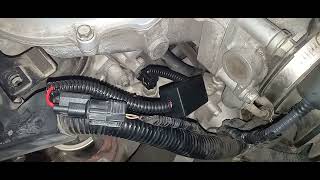
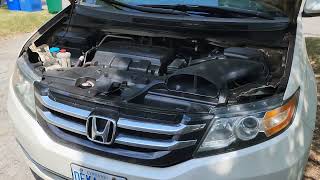
Technical Specifications
OEM Part Numbers: 25450-P4V-013
Vehicle Application: 2010 Honda Accord 3.5L V6 FWD; Transmission Family: Honda H5; Transmission Type: 5-Speed Automatic Transaxle; Mounting: Transverse; Production Years: 2008-2012; VIN Codes (4-6th digits): CS2 (Coupe), CP3 (Sedan); Transmission Codes: B97A, P79A, M97A; Fluid Type: Honda Genuine ATF DW-1; Fluid Capacity (Dry Fill): 7.9 quarts; Fluid Capacity (Drain/Fill): 3.5 quarts; Weight (Approximate): 200 lbs
We Have This Part in Stock


The information in this article is provided for general reference and educational purposes only. Vehicle specifications, procedures, and part compatibility can vary by production date, trim level, and region. Always consult your vehicle's factory service manual and verify part numbers before purchasing or performing repairs. Safety-critical components such as airbags, seat belts, and braking systems should be installed by a qualified professional.
- Honda Accord:
- 🎬 Helpful Videos
- 🛍️ Shop This Part
- Vehicle Fitment and Part Identification
- How to Confirm Fitment on Your Vehicle
- Interchangeability
- Common Failure Symptoms
- Diagnostic Flowchart
- Known Problems, Recalls, and Technical Service Bulletins (TSBs)
- NHTSA Recall 11V395000 (Honda Campaign S13/S14 / 11-035): Secondary Shaft Bearing Failure
- TSB 16-066 & 16-067: Torque Converter Lock-Up Clutch Judder
- Variable Cylinder Management (VCM) Related Issues
- Expected Service Life & Maintenance
- Replacement Cost Estimates
- Repair or Replace?
- What Fails at Every Mileage Band
- Under 60,000 Miles
- 60,000 - 100,000 Miles
- 100,000 - 150,000 Miles
- Over 150,000 Miles
- Real Owner Experiences
- Key Considerations for Used Assembly Installation
- What's Included (and Not Included)
- Installation Essentials & Gotchas
- Required Programming and Calibration
- Freight & Delivery Reality
- Driveline and Engine Pairing Cautions
- Frequently Asked Questions
- 🎟️ Get 5% Off