

2014-2019 Ford Taurus 6F50 Transmission: Problems, Identification, and Used Replacement
Identify what kills the 6F50 transaxle, diagnose common shifting issues, and learn what to look for when buying a used OEM replacement unit.
- Mandatory programming of the 13-digit Solenoid Strategy Code from the replacement unit into the vehicle's computer is required to prevent immediate shift problems and transmission failure.
- Only use Motorcraft MERCON LV transmission fluid; using any other type, including generic or older Mercon V fluids, will cause internal damage.
- The transmission fluid cooler and lines must be hot-flushed during installation to remove metal debris from the previous unit's failure, which could clog and destroy the replacement.
- Before purchasing, you must verify your vehicle is a Front-Wheel Drive (FWD) model with the 3.5L non-turbo V6 and match the transmission ID DA8P-7000-UB, as AWD and other engine variants are not compatible.
- Check for open safety recalls with your VIN, specifically NHTSA 14V-393 and 20V-692, which involve halfshaft failures that can cause a sudden loss of power.
Is This the Right Transmission for Your Taurus?


This article covers the 6-speed 6F50 automatic transmission assembly used in 2014-2019 Ford Taurus sedans equipped with the naturally aspirated 3.5L V6 engine and Front-Wheel Drive (FWD). It is critical to confirm your exact vehicle configuration, as parts from other Taurus models are not compatible.
Vehicle Fitment
| Model Years | 2014, 2015, 2016, 2017, 2018, 2019 |
| Vehicle | Ford Taurus |
| Engine | 3.5L V6 (without turbocharger) |
| Drivetrain | Front-Wheel Drive (FWD) |
How to Verify on Your Car
Before purchasing a replacement, use these checks on your own vehicle to guarantee a match:
- Check the VIN: The 8th character of your Vehicle Identification Number (VIN) must be '8'. This confirms the vehicle has the 3.5L non-turbo V6 engine.
- Check the Door Sticker: On the driver's side door jamb, find the Safety Compliance Certification label. Look for the 'TR' code. For this transmission, the code is 'J'.
- Check the Transmission ID Tag: The most reliable method is to match the ID number on your current transmission. Look for a white barcode label on top of the transaxle case, often near the shifter cable bracket. The ID number for this specific unit is DA8P-7000-UB. You may also see alternate or superseded identifiers in the replacement market, such as DA8Z7000X.
Warning: All-Wheel Drive (AWD), SHO (EcoBoost Turbo), and Police Interceptor models use different transmissions. Their cases, internal gear ratios, and mounting points are not the same and they will not fit or function in a FWD non-turbo model.
Common Failure Symptoms
A failing 6F50 transmission can exhibit several symptoms. If you experience these issues, it may be time for a replacement.
- Harsh, erratic, or delayed shifting
- A noticeable shudder or vibration at highway speeds, similar to driving over rumble strips
- Complete loss of Reverse, 3rd, or 5th gears
- Sluggish acceleration from a stop
- Whining or clunking noises from the transmission area
- A sudden loss of power while driving
Diagnostic Flowchart
Known Issues, Recalls, and Service Bulletins

Several documented issues exist for this transmission family. Always check with a dealer or on the NHTSA website with your VIN to see if a recall applies to your vehicle and is still open.
Torque Converter Shudder (TSB 17-0149 / TSB 15-0047)
Years Affected: 2014-2019
Problem: Drivers may feel a severe shuddering vibration at highway speeds. This is often caused by old or degraded transmission fluid affecting the torque converter lock-up clutch. A torque converter is a fluid coupling that connects the engine to the transmission.
Remedy: The official fix involves a complete fluid exchange with fresh Motorcraft MERCON LV fluid and a software update for the Powertrain Control Module (PCM), the car's main computer. If ignored, this can lead to permanent torque converter damage requiring replacement.
No Reverse, 3rd, or 5th Gear (SSM 46069 / SSM 50861)
Years Affected: 2015-2016
Problem: An internal component, the direct clutch cylinder or tone wheel, can fail and damage the direct clutch hub. This results in a severe, complete loss of Reverse, 3rd, and 5th gears.
Remedy: This requires a major internal repair to replace the damaged direct clutch hub, or a complete replacement of the transmission.
Digital Transmission Range (TR) Sensor High Resistance (TSB 13-5-27)
Years Affected: 2014-2019
Problem: A moderate issue where the internal TR sensor develops high resistance, leading to erratic shifting or failure to recognize the selected gear.
Remedy: Replace the internal TR sensor located inside the transmission case.
NHTSA Recall 14V-393 (Ford Recall 14S10) - Unexpected Loss of Power
Years Affected: 2012-2014
Problem: The front passenger side halfshaft, a shaft that transfers power from the transmission to the wheel, could disengage. This causes a sudden, severe loss of power and could let the vehicle roll away even when in Park if the parking brake is not used.
Remedy: Dealers will inspect the halfshaft and replace the linkshaft and/or halfshaft if necessary, free of charge.
NHTSA Recall 20V-692 (Ford Recall 20S63) - Front Axle Failure
Years Affected: 2014-2015
Problem: The support bracket for the front drive axle halfshaft can fracture. Like the recall above, this is a severe issue that can cause a loss of power while driving and a potential rollaway in Park.
Remedy: Dealers will inspect and replace the front drive axle halfshaft support bracket.
Older Calibration Issues (TSB 13-3-18 & TSB 11-12-10)
While primarily affecting older units in this family, it is worth noting that 2011-2012 models suffered from sluggish acceleration and a harsh bump (TSB 13-3-18), requiring a PCM reprogram. Even earlier 2010-2011 models built before 4/15/2011 had sluggish acceleration and slip on take-off (TSB 11-12-10), which required reprogramming the PCM and modifying the valve body by replacing separator plates and removing a check ball.
What Fails at Every Mileage Band
Pro Tip: These mileage bands describe used replacement units of that mileage. The checklists are things to do WHILE INSTALLING the purchased engine, not maintenance for your current engine.
Under 60,000 Miles
Even low-mileage units can experience internal "drum" failures causing no reverse and hesitation going forward. Torque converter shudder may begin to appear, often addressed by a fluid exchange and PCM update under TSB 17-0149. Early signs of harsh or erratic shifting can sometimes be resolved by resetting the transmission's adaptive learning tables. You must also ensure NHTSA Recall 14V-393 (Ford Recall 14S10) and NHTSA Recall 20V-692 (Ford Recall 20S63) have been addressed.
- ✓Do during install (required): Verify all applicable recalls (14S10, 20S63) have been performed on the vehicle. Perform a complete transmission fluid exchange with MERCON LV to establish a new baseline, even on a low-mileage unit.
- ✓Do during install (recommended): Ensure the Powertrain Control Module (PCM) has the latest calibration to address potential shift quality issues.
- ✓Cheap insurance while the engine is out: Replace external seals such as CV axle seals and the torque converter hub seal as a preventative measure.
60,000 - 100,000 Miles
Torque converter shudder becomes much more common in this band, manifesting as a vibration like driving over rumble strips. You may notice delayed or harsh engagement into Drive or Reverse, sometimes accompanied by a clunk. Failures of the Turbine Shaft Speed (TSS) or Output Shaft Speed (OSS) sensors lead to erratic shifting, hard shifts, and potentially a wrench light on the dash. Valve body and solenoid issues, as well as Digital Transmission Range (TR) Sensor failure (TSB 13-5-27), also emerge here.
- ✓Do during install (required): Perform a mandatory hot-flush of the transmission cooler and lines to remove any debris from the previous unit.
- ✓Do during install (recommended): Replace the TSS and OSS sensors while the transmission is out, as they are a known failure point. Install a valve body repair kit (e.g., TransGo, Sonnax) to address wear in the solenoid pressure regulator and TCC regulator bores, which can prevent future shift quality issues.
- ✓Cheap insurance while the engine is out: Strongly consider replacing the torque converter with an updated unit, especially if any shudder was present in the old transmission. Replace the transmission filter and pan gasket if the design allows for it without a full teardown.
100,000 - 150,000 Miles
There is an increased likelihood of internal wear leading to slipping, RPM flares between shifts (e.g., 3-4 upshift), or complete loss of gears due to Direct clutch failure for Reverse, 3rd, and 5th. Torque converter failure becomes highly probable if not previously addressed. Valve body wear becomes more pronounced, leading to persistent shift quality problems that fluid changes alone may not fix. Leaks from worn axle seals and the pan gasket are also more common.
- ✓Do during install (required): Assume the replacement transmission will need a new torque converter, regardless of the condition of the one it comes with. It is highly recommended to have the valve body rebuilt or a remanufactured unit installed with a new solenoid pack.
- ✓Do during install (recommended): Replace all external seals and sensors (TSS/OSS) as a matter of course.
- ✓Cheap insurance while the engine is out: Given the mileage, replacing the thermal bypass valve and external fluid lines is cheap insurance against leaks and future cooling issues.
Over 150,000 Miles
At this mileage, failures are typically due to accumulated wear and tear on internal hard parts like clutch packs, seals, and bushings. Complete transmission failure requiring a full rebuild or replacement is the most common outcome. Pump failure can also occur due to restricted flow from a clogged, non-serviceable internal filter and contaminated fluid.
- ✓Do during install (required): If installing a used high-mileage unit, a full reseal, new torque converter, new sensors, and a rebuilt valve body should be considered mandatory.
- ✓Do during install (recommended): Thoroughly flush and inspect the cooling system, including the radiator and any auxiliary coolers, for blockages that could cause the replacement unit to overheat.
- ✓Cheap insurance while the engine is out: A used transmission in this mileage band is a significant risk. A remanufactured unit is a much safer investment.
Real Owner Experiences
| Source | Mileage | What Happened | Cost |
|---|---|---|---|
| CarComplaints.com | 11,000 | Automatic transmission would not go into reverse and hesitated going forward. The dealer replaced an internal drum under warranty. | $2,200 (covered by warranty) |
| 72,000 | 2015 Focus: Replaced Clutch, TCM, and Shift Actuators. | Quoted $8,300, paid $3,000 | |
| Car Talk Community | 75,000 | Car developed a slight shudder, which temporarily went away after topping off low transmission fluid, but returned intermittently. | Not specified |
| Ford Truck Enthusiasts Forums | 77,000 | Vehicle exhibited a 'reverse clunk' since purchase. A fluid change at the dealer showed dark fluid. Later experienced a wrench light and OSS code, requiring sensor replacement. | Not specified |
| 94,000 | 2014 Focus: Transmission went out. | Quoted $8,100 | |
| 100,000 | 2017 Focus: Considering replacement due to jerking and stuttering. | Quoted $3,200 - $3,800 | |
| RepairPal | 131,000 | Owners report issues like delayed gear engagement, slipping, and rough shifting, sometimes leading to a no-move situation. | Varies, potentially thousands for rebuild/replacement |
| Ecoboost Performance Forum | 145,000 | Car began to shudder, sometimes violently, at light throttle right after torque converter lockup in 3rd gear. Also showed signs of a bad Transmission Range Sensor. | Not specified |
| ALLDATA Tech-Tip | 162,556 | Vehicle had a 'transmission slipping' complaint with an RPM flare during the 3-4 upshift. No DTCs were present. Resetting the transmission adaptive tables resolved the issue in this case, though it often points to internal wear. | Diagnostic/labor time |
| Reddit r/FordTaurus | 190,000 | Owner reports their Taurus is still running at this mileage, but notes that maintenance is key and suggests front end and torque converter rebuilds help them last. | Ongoing maintenance |
| Ford Edge Forum | 358,000 | An owner of a Ford Edge with the same 6F50 transmission reported reaching 358,000 miles on the original unit by performing fluid changes every 30,000 miles. | Consistent fluid changes |
Repair or Replace?
When facing 6F50 transmission problems, you must decide whether to repair the existing unit or replace it entirely. General transmission replacement costs can range from $3,000 to $7,000.
When Repair Makes Sense
- Torque Converter Shudder ($600 - $1,000): When the issue is isolated to the torque converter and there is no other internal transmission damage. The repair involves replacing the torque converter, which is significantly cheaper than a full transmission replacement.
- Firm/Delayed Shifts ($200 - $3,000): If diagnostics confirm the issue is with the solenoid pack and not internal mechanical parts. Replacing the solenoid body is less labor-intensive than a full rebuild.
- Transmission Fluid Leaks ($200 - $600): For minor leaks from external seals or gaskets. This is a common and relatively inexpensive repair.
When Replacement is Smarter
Replacement is the smarter option when there is major internal damage, such as broken gears, multiple worn clutch packs, or a catastrophic failure of the direct clutch. If repair estimates approach or exceed 50% of the cost of a remanufactured unit, replacement offers better long-term value and often comes with a warranty.
Questions to Ask Your Installer
- Do you have experience with the Ford 6F50 transmission?
- Will you be programming the new solenoid strategy code to the PCM using a Ford-specific tool like IDS or FORScan?
- Does your quote include a mandatory hot flush of the transmission cooler and lines?
- How will you verify the torque converter is properly seated before mating the transmission to the engine?
- Does the quoted price include the 11 quarts of Motorcraft Mercon LV fluid and new CV axle seals?
- What warranty do you provide on your labor and the supplied transmission unit?
- Can you show me the old parts that were replaced?
Replacement: What to Expect


What's Included in a Used Assembly?
A used transmission assembly is typically sold as a complete unit. Based on industry standards, here is what you should expect to be included and what you will need to transfer from your old unit.
- What It Includes: The transmission case, oil pan, all internally lubricated parts, the valve body (the hydraulic brain of the transmission), internal solenoids, extension/tail housing, and the torque converter.
- What It Does NOT Include: External sensors (TSS/OSS), external wiring harnesses, shifter linkage/cables, the engine flexplate/flywheel, external transmission fluid cooler lines, and the Transmission Control Module (TCM), which is part of the main PCM in this vehicle.
Freight and Delivery Reality
A replacement 6F50 transmission is a heavy, bulky industrial part. It weighs approximately 246 lbs and measures roughly 33" x 28" x 25" before crating. Because of this, it ships as LTL (Less-Than-Truckload) freight on a wooden pallet—NOT as a standard parcel. If you are having it delivered to a residential address, you will require liftgate service to get the pallet off the truck. Always inspect the transmission for physical damage to the case, pan, or sensors before signing the delivery receipt. A thorough pre-purchase verification interview with the seller is an industry best practice to ensure you are getting the exact DA8P-7000-UB FWD 3.5L NA unit you need.
Installation and Programming
Pro Tip: Before installing the used transmission, take a clear photo of the 13-digit Solenoid Strategy Code tag on the top of the case. This number is required for programming and is impossible to see once the transmission is in the vehicle.
Installation is complex and rated for expert-level mechanics. It typically takes a professional shop between 8.3 and 10.0 hours. Special tools like an engine support bar, transmission jack, torque converter holding tool/strap, and a Ford-compatible diagnostic scan tool (Ford IDS or FORScan) are required.
Warning: This transmission requires mandatory programming. Failure to do so will cause severe shift problems and will quickly destroy the replacement transmission.
The 6F50 uses a system called Solenoid Body Strategy. Each transmission's valve body has slightly different hydraulic characteristics, which are measured at the factory. This data is printed on the case as a 13-digit Solenoid Strategy Code and a 7-digit Solenoid Body ID. When the transmission is installed, these codes must be programmed into the vehicle's PCM using a Ford-specific scan tool. This programming ensures the computer sends the correct electrical signals for smooth, precise shifts. Skipping this is a common buyer mistake that leads to immediate shift flares and harsh engagement.
Critical Installation Steps
- Torque Converter Seating: The torque converter must be carefully installed onto the transmission's input shaft. It must be seated vertically and drop three distinct steps or "clicks." Failure to fully seat it will crack the internal oil pump gear upon bellhousing bolt tightening.
- Use MERCON LV Fluid: Only use Motorcraft MERCON LV automatic transmission fluid. Using any other type, including generic multi-vehicle fluids or older Mercon V, will cause damage. A dry transmission requires approximately 11 quarts on hand for a dry fill and level check.
- Flush Cooler Lines: The external transmission fluid cooler and its lines must be hot-flushed with a solvent to remove any metal debris from the previous transmission's failure. Skipping this step will clog the non-serviceable internal filter.
- Fluid Level Check: The fluid level must be checked at operating temperature (175°F to 190°F) with the engine idling in Park.
- Replace Seals: Reusing old CV axle seals is a common mistake that results in fluid leaks. Always install new left and right CV axle shaft seals and a new torque converter hub seal (input shaft seal).
Estimated Replacement Costs
| Part / Service | Estimated Cost (USD) |
|---|---|
| New (OEM) | $6,000 - $8,300 |
| Remanufactured | $2,495 - $3,700 |
| Used (OEM) | $240 - $500 |
| Labor to Install | $1,116 - $2,000 |
Frequently Asked Questions (FAQ)
Do I absolutely have to program this transmission?
Yes. The 13-digit Solenoid Strategy Code and 7-digit Solenoid Body ID from the replacement transmission must be programmed into your vehicle's computer using Ford IDS or FORScan. If this step is skipped, the transmission will have incorrect line pressures, harsh shifts, poor performance, and will fail prematurely.
Can I use this transmission in my All-Wheel Drive (AWD) Taurus?
No. This FWD unit is physically different from the AWD version. The transmission case and output shaft are not designed to connect to a Power Transfer Unit (PTU) for the rear wheels. Ordering a FWD version for an AWD vehicle is a common and costly mistake.
What fluid does the 6F50 transmission use?
It requires Motorcraft MERCON LV fluid. Do not use older Mercon V or any other type of generic multi-vehicle fluid, as this can cause internal damage and shift quality issues.
Is the torque converter included with a used 6F50?
Yes, a used transmission assembly typically includes the torque converter. It is critical that the torque converter that comes with the replacement unit is used and that it is installed correctly with three distinct clicks.
What special tools are required to install this transmission?
Because of the transverse mounting and programming requirements, you will need an engine support bar, a transmission jack, a torque converter holding tool or strap, and a Ford-compatible diagnostic scan tool (like Ford IDS or FORScan) to complete the installation.
How long does the 6F50 transmission typically last?
With proper maintenance, the Ford 6F50 transmission can last well over 150,000 to 200,000 miles. The single most critical factor for longevity is regular transmission fluid service. While Ford has suggested 'lifetime' fluid, mechanics overwhelmingly recommend fluid changes every 30,000 to 60,000 miles. One owner reported reaching 358,000 miles with diligent 30,000-mile fluid changes.
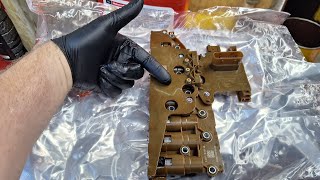
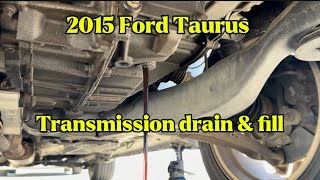
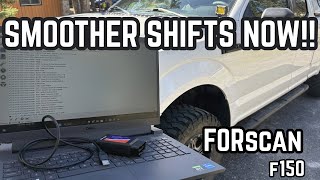
Helpful Videos

Technical Specifications
OEM Part Numbers: DA8P-7000-UB DA8Z7000X
Weight: ~246 lbs; Dimensions: ~33" x 28" x 25"; Fluid Type: Motorcraft MERCON LV; Fluid Capacity: ~11 quarts (dry fill); Solenoid Body ID: 7-digit; Solenoid Strategy Code: 13-digit
We Have This Part in Stock


The information in this article is provided for general reference and educational purposes only. Vehicle specifications, procedures, and part compatibility can vary by production date, trim level, and region. Always consult your vehicle's factory service manual and verify part numbers before purchasing or performing repairs. Safety-critical components such as airbags, seat belts, and braking systems should be installed by a qualified professional.
- Ford Taurus:
- 🎬 Helpful Videos
- 🛍️ Shop This Part
- Is This the Right Transmission for Your Taurus?
- Vehicle Fitment
- How to Verify on Your Car
- Common Failure Symptoms
- Diagnostic Flowchart
- Known Issues, Recalls, and Service Bulletins
- Torque Converter Shudder (TSB 17-0149 / TSB 15-0047)
- No Reverse, 3rd, or 5th Gear (SSM 46069 / SSM 50861)
- Digital Transmission Range (TR) Sensor High Resistance (TSB 13-5-27)
- NHTSA Recall 14V-393 (Ford Recall 14S10) - Unexpected Loss of Power
- NHTSA Recall 20V-692 (Ford Recall 20S63) - Front Axle Failure
- Older Calibration Issues (TSB 13-3-18 & TSB 11-12-10)
- What Fails at Every Mileage Band
- Under 60,000 Miles
- 60,000 - 100,000 Miles
- 100,000 - 150,000 Miles
- Over 150,000 Miles
- Real Owner Experiences
- Repair or Replace?
- When Repair Makes Sense
- When Replacement is Smarter
- Questions to Ask Your Installer
- Replacement: What to Expect
- What's Included in a Used Assembly?
- Freight and Delivery Reality
- Installation and Programming
- Critical Installation Steps
- Estimated Replacement Costs
- Frequently Asked Questions (FAQ)
- 🎟️ Get 5% Off