

2015-2017 Ford Mustang 2.3L EcoBoost 6R80: Problems, Identification, and Used Replacement
Identify common lead frame and valve body failures, and learn exactly what to look for when buying a used replacement transmission.
- A replacement 6R80 transmission MUST be programmed to the vehicle's computer with its unique 13-digit Solenoid Strategy ID to prevent severe shift problems and internal damage.
- Verify you are purchasing the correct transmission for the 2.3L EcoBoost, as units from V6 or V8 Mustangs have a different bellhousing and are not compatible.
- The internal molded lead frame is a primary failure point causing sudden downshifts and limp mode; consider replacing it preventatively on any used unit over 60,000 miles.
- Always use the torque converter supplied with the replacement unit and ensure it is fully seated (three distinct clicks) during installation to avoid destroying the transmission's front pump.
- Use only Ford MERCON LV fluid and an OEM Motorcraft FT-188 filter, as aftermarket filter O-rings are known to fail and cause fluid pressure issues.
Part Identification: Is This the Right Transmission for Your Mustang?

The automatic transmission in the 2015-2017 Ford Mustang with the 2.3L EcoBoost engine is the Ford 6R80. This is a six-speed, rear-wheel-drive unit featuring direct injection and turbocharger compatibility. However, it is crucial to know that not all 6R80 transmissions are the same. The version used in the 2.3L EcoBoost Mustang is specific to this engine and is not interchangeable with those from the 3.7L V6, 5.0L V8, or F-150 truck models.
To ensure you are getting the correct transmission for your vehicle, verify the following during your pre-purchase verification interview:
- Vehicle Identification Number (VIN): Check that the 8th digit of your Mustang's VIN is 'H'. This confirms the vehicle is equipped with the 2.3L EcoBoost engine.
- Transmission Identification Tag: Look for a white sticker on the driver's side (left side) of the transmission case. This tag will have identifying part numbers. Key numbers for this specific unit include FR3P-7000-CB, FR3P-CB, FR3P-7000-CA, FR3P-CA, and the OEM service part number FR3Z-7000-C.
Warning: The 6R80 transmission from a V6 or V8 Mustang will not fit or function in a 2.3L EcoBoost model. The bellhousing bolt pattern, which connects the transmission to the engine, is completely different. Internally, the clutch capacities, torque converter stall speed, and electronic calibrations are all specifically designed for the EcoBoost engine's power delivery.
Is Your Transmission Failing? Common Symptoms
A failing 6R80 transmission in an EcoBoost Mustang can exhibit several distinct symptoms. The car's main computer, the Powertrain Control Module (PCM), monitors the transmission and will often trigger a check engine light or a wrench-shaped warning light on the dashboard.
Common signs of failure include:
- Sudden, Unexpected Downshifts: The transmission may abruptly shift to a much lower gear (like 2nd gear) while driving at highway speeds, causing a sudden, sharp deceleration.
- Harsh Shifting or Clunking: You may feel a noticeable clunk or shake when shifting out of Park or between gears.
- Stuck in Gear (Limp Mode): The transmission may lock itself into a single gear, typically 3rd or 5th, to prevent further damage. This is a protective state known as "limp mode."
- Intermittent Loss of Reverse: The transmission may occasionally fail to engage Reverse.
- Shuddering or Vibration: A shudder or vibration felt during light to moderate acceleration (often between 40-60 mph) can indicate a failing torque converter.
Diagnostic Flowchart
 🎬 Watch: Step-by-step 6R80 molded lead frame replacement guide of a Ford 6R80 transmission." loading="lazy" style="max-width:100%;height:auto;border-radius:6px;display:block;box-shadow:0 2px 8px rgba(0,0,0,0.1);" />
Known Issues, Recalls, and Technical Service Bulletins (TSBs)

Several known issues affect the 2015-2017 Mustang 6R80 transmission. Some have official recalls or Ford-issued Technical Service Bulletins (TSBs) that outline the specific problem and repair.
Unexpected Downshift (NHTSA Recall 26V237 / Ford Recall 26S28)
A widespread recall was issued for nearly 1.4 million Ford vehicles with the same 6R80 transmission design. The issue stems from the degradation of electrical connections on the internal molded lead frame (conductor plate). This can cause a loss of signal from the Transmission Range Sensor (TRS), tricking the computer into commanding a sudden downshift. While the recall heavily targeted F-150s, the Mustang shares the exact same basic lead frame design, making it a severe potential point of failure. The official remedy from Ford is a PCM software update that helps the system better tolerate intermittent signal loss.
General Lead Frame Failures (Limp Mode)
Separate from the downshifting recall, the molded lead frame is a common failure point. This component contains the Output Shaft Speed (OSS), Turbine Shaft Speed (TSS), and Transmission Fluid Temperature (TFT) sensors. Failure of these sensors or their electrical contacts can cause the transmission to enter limp mode, getting stuck in 3rd or 5th gear. The only fix is to replace the entire molded lead frame assembly inside the transmission.
Intermittent Loss of Reverse (TSB 20-2060)
For 2015-2017 models, Ford issued TSB 20-2060 to address an intermittent loss of the Reverse gear. This problem can occur during specific low-speed shifting patterns and may not set any diagnostic trouble codes. The official repair is to reprogram the vehicle's Powertrain Control Module (PCM) with updated software provided by Ford.
Valve Body and Torque Converter Issues
Some earlier 2015-2016 models experienced clunking or harsh shifts from the valve body, a complex hydraulic control center. Ford later released an updated valve body design to correct this. Additionally, a persistent shudder during acceleration is often linked to the torque converter. A fluid and filter change can sometimes resolve minor shudders, but if the problem continues, the torque converter likely needs replacement.
What Fails at Every Mileage Band
Pro Tip: The mileage bands below describe used replacement units of that mileage. The checklists provided are things to do WHILE INSTALLING the purchased unit, not maintenance for your current transmission.
Under 60,000 Miles
Transmissions in this range are generally healthy, but early signs of valve body issues (harsh shifting, clunking from Park) can appear. Lead frame failures (sudden downshifts, limp mode) are less common at this mileage but still possible. Solenoid failures can also occur, especially if the donor vehicle has been sitting for an extended period.
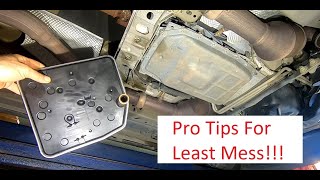
- ✓Do during install (required): Replace transmission fluid with Ford Mercon LV Automatic Transmission Fluid (WSS-M2C938-A) and use a new OEM Motorcraft FT-188 Transmission Filter (BL3Z-7A098-A). Aftermarket filter O-rings are known to fail, causing pressure issues.
- ✓Do during install (recommended): Replace the wiring harness connector sleeve (bulkhead sleeve). It is an inexpensive part and a common leak point that requires valve body removal to access later. Replace the front pump seal (National 710484 or Ford BC3Z-7A248-A) and extension housing seal.
- ✓Cheap insurance while the engine is out: Flush the transmission cooler and lines with an Aerosol Transmission Cooler Flush (e.g., Lubegard Kooler Kleen).
60,000 - 100,000 Miles
At this stage, torque converter shudder becomes a frequent complaint, often feeling like driving over rumble strips at steady speeds (40-60 mph). This is frequently linked to fluid breakdown. Molded lead frame failures become much more prevalent, causing erratic shifting or no-start conditions. Shift flares (RPMs jumping between shifts) due to valve body wear also begin to surface.
- ✓Do during install (required): Perform a full fluid (Mercon LV) and OEM filter service. Replace all external seals (front pump, extension housing) and the wiring harness connector sleeve.
- ✓Do during install (recommended): Replace the molded lead frame as a preventative measure. It is a known major failure point and requires significant labor to access once the transmission is installed.
- ✓Cheap insurance while the engine is out: If the budget allows, replace the torque converter. If the donor vehicle's history is unknown, the original converter could be worn or contaminated.
100,000 - 150,000+ Miles
There is an increased likelihood of all previously mentioned issues. Internal mechanical wear becomes a significant concern. Soft parts like clutches, seals, and bushings are nearing the end of their service life. A lead frame or solenoid failure at this mileage may be a symptom of a larger mechanical issue, including transmission oil pump failure.
- ✓Do during install (required): Assume this unit will require significant reconditioning. Treat it as a 'builder' core.
- ✓Do during install (recommended): At a minimum, replace the torque converter, molded lead frame, all seals, and all bushings.
- ✓Cheap insurance while the engine is out: Perform a full rebuild, including new clutch packs, steels, seals, bushings, lead frame, and torque converter. Simply installing a high-mileage used unit without these steps carries a very high risk of near-term failure.
Real Owner Experiences
| Source | Mileage | What Happened | Cost |
|---|---|---|---|
| The Mustang Source Forums | 27,000 | Owner reported the vehicle had been to the shop 8 times for incorrect and harsh shifting, popping noises, and stalling. The lead frame and solenoids were replaced, but issues persisted. | Warranty/Undisclosed |
| Reddit r/Mustang | 60,000 km (~37,300 miles) | After sitting for 3-5 years, the transmission exhibited a loud bang when shifting into gear, delayed engagement from a stop, and would enter limp mode. A diagnostic scan showed a code for 'solenoid E'. | Undisclosed |
| Reddit r/askcarguys | 61,000 | Dealer quoted for a manual transmission replacement, but owner had a warranty. | $9,000 quote |
| f150forum.com | 67,000 | Dealer quoted for valve body replacement to fix hard shifting in cold weather. | $1,200 quote |
| Reddit r/f150 | 72,000 | Owner reported torque converter shudder. | Fluid change / converter replacement |
| Ford F150 Forum | 92,500 | Owner purchased a truck with intermittent torque converter shudder. A fluid change with an anti-shudder additive resolved the issue for at least 8,500 miles. | Cost of fluid change and additive |
| Reddit r/f150 | ~100,000 | Transmission began throwing codes for an input shaft speed sensor fault, which is integrated into the lead frame. | $2500 deductible (Warranty) |
| Ford F150 Forum | 145,000 | Transmission failed despite what the owner described as 'OCD maintenance'. | Rebuild or replacement cost |
| Ford Expedition Forum | Just before 150,000 | Wiring harness connector sleeve failed, causing a leak. | Minor parts cost + labor |
| Ford F150 Forum | Approaching 152,000 | Transmission became unresponsive and would shift extremely harshly after deceleration, suggesting significant internal wear and/or electronic issues. | Shop diagnosis and likely rebuild/replacement |
| mustang6g.com | 155,000 | Owner purchased a remanufactured transmission for ~$2,500 and performed the installation themselves after being quoted $1,000 for labor. | ~$2,500 (parts only) |
| mustang6g.com | Unknown | Dealer rebuilt the transmission under warranty due to a failed 5th gear synchro. | $0 (Warranty) |
| Reddit r/MechanicAdvice | Unknown | Owner diagnosed a lead frame issue, bought the OEM part online, and paid a local mechanic for the installation. | $400 (labor) + $2,500-$3,000+ quote originally |
Repair or Replace?
When facing a 6R80 failure, deciding whether to repair your current unit or replace it entirely depends on the specific failure mode and the overall mileage.
| Failure Mode | Typical Repair Cost | Notes |
|---|---|---|
| Lead Frame Failure | $400 - $800 | Cost-effective if no other mechanical issues are present. |
| Valve Body Issues | $800 - $1,500 | Viable for isolated harsh shifting. Reman valve bodies are ~$590; new Ford assembly is ~$740. |
| Torque Converter Shudder | $800 - $1,500 | Resolves shudder if it's the only symptom. Performance converters cost ~$1,000. |
When Replacement is Smarter: Replacement is the better option when there are multiple simultaneous failures (e.g., lead frame failure combined with clutch pack damage) or when the vehicle has high mileage and the transmission has never been serviced. General repair costs can range from $1,000 to $3,500, while a full replacement can be between $3,000 and $7,000. A quality used or remanufactured unit often provides more peace of mind than a series of smaller, expensive repairs.
Questions to Ask Your Installer
- Have you worked on the Ford 6R80 transmission before?
- Are you able to program the new Solenoid Strategy ID to my car's computer (PCM)?
- Does your quote include flushing the transmission cooler and lines?
- Will you be using new, OEM-spec Mercon LV fluid?
- Does the price include a new filter, pan gasket, and all necessary seals?
- How will you verify the torque converter is fully seated before bolting the transmission to the engine?
- What warranty do you provide on your labor and on the replacement unit?
Replacement Cost for a 2015-2017 Mustang 2.3L Transmission
The cost of replacing a 6R80 transmission varies based on the type of replacement unit you choose. Labor costs for the swap are also a significant factor.
| Part Type | Estimated Cost (Part Only) |
|---|---|
| New OEM | >$4,000 |
| Remanufactured OEM | $2,600 - $4,000 |
| Used OEM | $450 - $1,800 |
Labor and Installation Costs
A professional repair shop will typically charge for 5 to 8 hours of labor to remove and replace the transmission. With labor rates varying, you can expect installation costs to be between $600 and $1,500. The DIY difficulty is rated as Advanced to Expert and requires special tools like a transmission jack, a fluid pump or pressurized filler, a scan tool with Ford-specific software (FORScan or Ford IDS), and heavy-duty heat-resistant gloves.
Key Considerations for Installation and Programming

Proper installation and programming are critical for the long-term health of a replacement 6R80 transmission.
Warning: Required Programming - Do Not Skip This Step! A replacement 6R80 transmission cannot simply be installed and driven. The vehicle's main computer (PCM) must be programmed with the unique calibration data from the replacement unit. This data includes a 13-digit Solenoid Strategy and a 12-digit Solenoid ID, found on a tag on the side of the transmission case. Skipping this step will cause severe, harsh shifting that can quickly destroy the transmission's internal clutches. Additionally, the adaptive shift strategy must be reset and a specific drive cycle performed.
Installation Gotchas and Common Mistakes
- Torque Converter Seating: The torque converter must be carefully installed onto the transmission's input shaft. It needs to click and drop backward three distinct times. If it is not fully seated, bolting the transmission to the engine will crack the front pump gears and destroy the new unit.
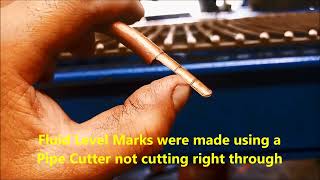
- Checking Fluid Level: This transmission does not have a traditional under-hood dipstick. The fluid level must be checked via a short dipstick under a 19mm cap on the passenger side of the case, right next to the hot catalytic converter. The engine must be idling, the vehicle level, and the fluid temp at 175-185°F (80-85°C). Wear heat-resistant gloves. Checking the fluid with the engine off shows an artificially high level, leading to running the transmission low on fluid.
- Do Not Pull Transmission with Bolts: Never force the engine and transmission together using bellhousing bolts.
- Bellhousing Alignment Dowels: Ensure both alignment dowel pins are present in the engine block to prevent rapid front pump seal leaks and input shaft failure.
Warning: If the old transmission failed internally, it likely sent metal debris into the torque converter. Reusing a contaminated converter will pump that debris directly into your replacement transmission, causing it to fail quickly. Always use the new torque converter that comes with the replacement unit.
What's Included With a Used Transmission Assembly?
When buying a used 6R80, it's important to know what parts are typically included. Based on standard auto recycling industry guidelines, a used assembly includes:
- Transmission case and all internally lubricated parts
- Valve body and internal solenoids
- Transmission oil pan
- Extension housing (tail housing)
- Torque converter
- Internal molded lead frame (conductor plate) with OSS, TSS, and TFT sensors
Parts that are generally not included and must be transferred from your old unit or purchased new are:
- External sensors and wiring harness
- Shifter, linkage, and cables
- Transmission cooler lines
- Flexplate/flywheel
Pro Tip: The Transmission Control Module (TCM) for this vehicle is not part of the transmission. Control functions are handled by the main Powertrain Control Module (PCM), which is located externally. Ensure the wiring harness connector is clean and undamaged so the internal molded lead frame can communicate correctly with the PCM.
Freight and Delivery Reality

If you are ordering a used 6R80 transmission online, be prepared for freight delivery. This assembly weighs approximately 230 lbs and measures roughly 38" x 24" x 24" before crating. It ships as LTL (Less Than Truckload) freight on a wooden pallet—it is NOT a standard parcel delivery.
Because of its size and weight, delivery to a residential address will require a truck equipped with a liftgate. Always inspect the transmission thoroughly while it is still on the pallet before signing the delivery driver's paperwork. Check for any damage to the transmission pan, bellhousing, or electrical connectors that may have occurred during transit.
Frequently Asked Questions
Will a transmission from a V6 or V8 Mustang fit my 2.3L EcoBoost?
No. The 2.3L EcoBoost engine uses a unique version of the 6R80 transmission with a different bellhousing bolt pattern. It is not physically compatible with the V6 or V8 models.
Does this transmission have a dipstick to check the fluid?
No, there is no dipstick in the engine bay. The fluid level must be checked via a short dipstick located under a 19mm cap on the passenger side of the transmission case. This must be done while the engine is idling and the fluid is at an operating temperature of 175-185°F.
Does a used 6R80 transmission need to be programmed?
Yes, absolutely. The vehicle's computer must be programmed with the 13-digit Solenoid Strategy ID and 12-digit Solenoid ID from the replacement transmission's tag. Failure to do so will result in poor shift quality and can lead to premature transmission failure.
What fluid does the 2015-2017 Mustang 6R80 use?
This transmission requires Ford MERCON LV automatic transmission fluid (Ford specification WSS-M2C938-A).
How long does the 6R80 transmission typically last?
Pro Tip: The 6R80 is a robust transmission capable of lasting 200,000 to 300,000+ miles. However, this longevity is entirely dependent on proactive maintenance. The single most critical factor is performing a fluid and filter change every 30,000 to 60,000 miles, rather than following Ford's official 150,000-mile interval, which often leads to premature wear.
What special tools do I need to replace this transmission myself?
If you are tackling this Advanced to Expert level DIY job, you will need a heavy-duty transmission jack, a fluid pump or pressurized filler to add fluid from underneath the car, a scan tool with Ford-specific software (like FORScan or Ford IDS) for the required programming, and heavy-duty heat-resistant gloves for checking the fluid level next to the hot exhaust.
Helpful Videos
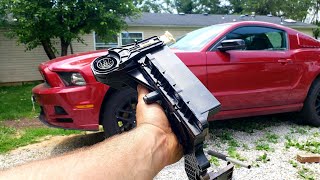
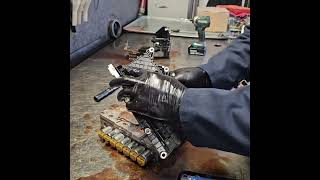
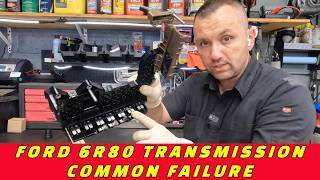
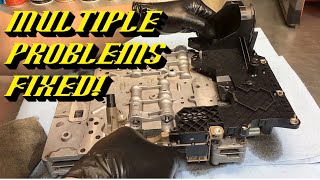
Technical Specifications
OEM Part Numbers: FR3P-7000-CB FR3P-CB FR3P-7000-CA FR3P-CA FR3Z-7000-C BL3Z-7A098-A BC3Z-7A248-A
Name: Ford 6R80; Type: 6-Speed Automatic; Drivetrain: Rear-Wheel-Drive (RWD); Engine Compatibility: 2.3L EcoBoost I4; Fluid Type: Ford MERCON LV; Fluid Specification: WSS-M2C938-A; Weight: Approx. 230 lbs; Key Feature: Specific bellhousing and calibration for 2.3L EcoBoost engine.
We Have This Part in Stock



The information in this article is provided for general reference and educational purposes only. Vehicle specifications, procedures, and part compatibility can vary by production date, trim level, and region. Always consult your vehicle's factory service manual and verify part numbers before purchasing or performing repairs. Safety-critical components such as airbags, seat belts, and braking systems should be installed by a qualified professional.
- Ford Mustang:
- 🎬 Helpful Videos
- 🛍️ Shop This Part
- Part Identification: Is This the Right Transmission for Your Mustang?
- Is Your Transmission Failing? Common Symptoms
- Diagnostic Flowchart
- Known Issues, Recalls, and Technical Service Bulletins (TSBs)
- Unexpected Downshift (NHTSA Recall 26V237 / Ford Recall 26S28)
- General Lead Frame Failures (Limp Mode)
- Intermittent Loss of Reverse (TSB 20-2060)
- Valve Body and Torque Converter Issues
- What Fails at Every Mileage Band
- Under 60,000 Miles
- 60,000 - 100,000 Miles
- 100,000 - 150,000+ Miles
- Real Owner Experiences
- Repair or Replace?
- Questions to Ask Your Installer
- Replacement Cost for a 2015-2017 Mustang 2.3L Transmission
- Labor and Installation Costs
- Key Considerations for Installation and Programming
- Installation Gotchas and Common Mistakes
- What's Included With a Used Transmission Assembly?
- Freight and Delivery Reality
- Frequently Asked Questions
- 🎟️ Get 5% Off